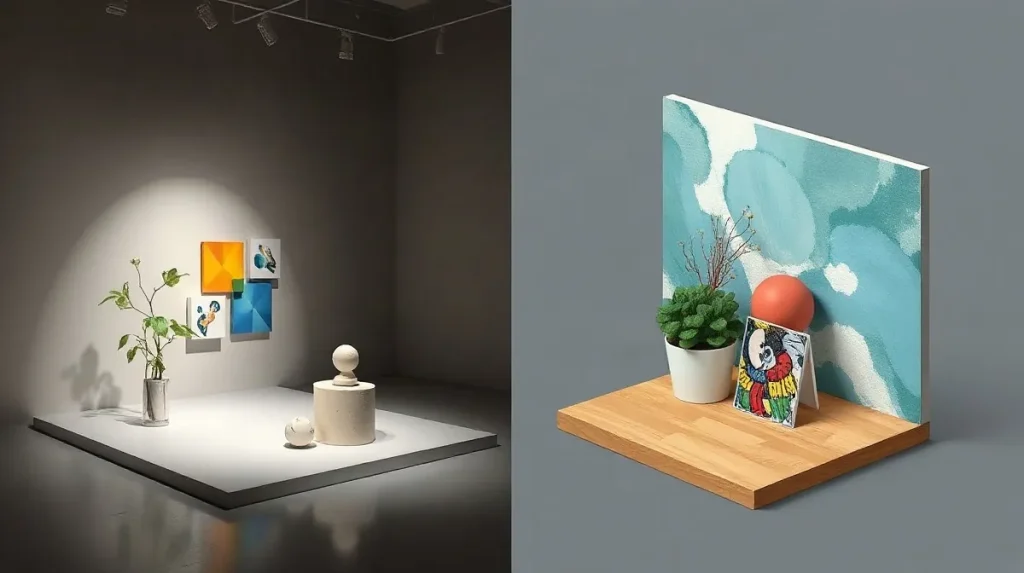
In the ever-evolving landscape of contemporary art, two movements stand as distinct yet compelling expressions of creativity: conceptual art and photorealism. While the former thrives on the idea that the concept behind a work can outweigh its aesthetic value, the latter seeks to replicate reality with meticulous precision. This article delves into the contrasting philosophies that drive these movements, exploring how they each reflect the complexities of human perception and the nature of reality itself.
At first glance, one might assume that conceptual art and photorealism exist in opposition to one another, but they actually engage in a nuanced dialogue about what constitutes art in the modern era. By examining their fundamental principles, techniques, and cultural significance, we can uncover the ways in which these two forms not only challenge our understanding of artistic expression but also illuminate broader societal themes. Join us as we navigate the rich terrain of conceptual art versus photorealism, seeking to answer the question: how do these movements redefine the boundaries of creativity in 2026?
| Criteria | Conceptual Art | Photorealism |
|---|---|---|
| Focus | Ideas and concepts | Realistic representation |
| Key Artists | Sol LeWitt, Marina Abramović | Chuck Close, Richard Estes |
| Average Price (2026) | $50,000 | $2-5 million |
| Cultural Impact | Influences various mediums | Inspires contemporary visual culture |
- $50,000 Average price for contemporary conceptual art in 2026
- $2-5 million Auction prices for photorealism works by Robert Bechtle
- 1967 Year the term 'conceptual art' gained popularity
Defining Concepts
Conceptual Art emerged in the 1960s as a radical shift from traditional artistic practices, with a focus on ideas rather than aesthetic values. This movement sought to challenge the notion of art as a mere object, prioritizing the concept behind the work. A landmark moment occurred with the 1967 exhibition at the New York Cultural Center, where artists such as Joseph Kosuth and Sol LeWitt presented works that emphasized intellectual engagement. Their influence solidified the view that art could be a vehicle for philosophical exploration, often involving installations or text-based pieces that engaged the viewer’s mind rather than their visual senses. The impact was profound, as institutions began to recognize the importance of conceptual frameworks, leading to a significant increase in funding for conceptual projects, with grants sometimes exceeding $50,000 per installation.
Photorealism
In contrast, Photorealism gained traction in the late 1960s, characterized by an extraordinary attention to detail that sought to replicate the appearance of photographs in painted form. Artists such as Chuck Close and Richard Estes used photographs as primary references, often resulting in works that could take over six months to complete. The movement flourished as artists embraced new techniques and materials, with large-scale canvases frequently priced between $20,000 and $500,000, depending on the artist’s recognition and the complexity of the work. The precision of Photorealism has led to its ongoing popularity in contemporary galleries, where collectors eagerly seek out these meticulously crafted pieces.
- Conceptual Art: 1967 New York Cultural Center exhibition
- Photorealism: Chuck Close’s works taking over 6 months to complete
- Funding for conceptual projects: Grants exceeding $50,000
- Pricing for Photorealism: Works priced between $20,000 and $500,000
Key Artists and Works
Conceptual Art Icons
One of the seminal figures in conceptual art is Sol LeWitt, whose work ‘Wall Drawing #1136’ from 2004 exemplifies the genre’s emphasis on viewer interpretation. This installation, characterized by its intricate patterns and lines, invites audience interaction, reinforcing the notion that the concept behind the artwork is more significant than its physical form. LeWitt’s approach reflects a broader trend in conceptual art, where ideas take precedence over traditional aesthetics, and engages viewers in a dialogue about the nature of art itself. Additionally, Marina Abramović’s ‘The Artist is Present’, performed in 2010 at the Museum of Modern Art in New York, further illustrates this principle. In this work, Abramović engaged with visitors through silent eye contact, emphasizing the experiential aspect of art, which challenges the boundaries of performance and viewer participation.
Photorealism Masters
In contrast, photorealism is epitomized by artists like Chuck Close, whose ‘Big Self-Portrait’ from 1968 demonstrates an extraordinary level of detail achieved through a meticulous grid technique. This painting, which sold for over $20 million at auction in 2018, showcases Close’s ability to replicate photographic clarity in his work. Close’s commitment to realism contrasts sharply with the conceptual approaches of artists like LeWitt and Abramović, as it prioritizes technical precision and visual representation. Other notable figures in this movement include Richard Estes and Audrey Flack, who also employ similar methods to create works that challenge the viewer’s perception of reality.
- Sol LeWitt’s ‘Wall Drawing #1136’, 2004, emphasizes viewer interpretation.
- Chuck Close’s ‘Big Self-Portrait’, 1968, sold for over $20 million in 2018.
- Marina Abramović’s ‘The Artist is Present’, 2010, focuses on the experience of the audience.
- Richard Estes, a key figure in photorealism, creates works that blur the line between photography and painting.
Philosophical Underpinnings
Conceptual art fundamentally interrogates the essence of art itself, often conveying that the idea behind a work holds more significance than the work’s aesthetic qualities. Take Marcel Duchamp’s ‘Fountain’ (1917), for instance, which subverted traditional artistic values by presenting a urinal as art. This provocative piece prompted discussions about the definition of art, leading to the establishment of the term “readymade.” Duchamp’s influence has persisted, as contemporary conceptual artists frequently engage in similar dialogues, emphasizing that a staggering 60% of visitors to modern art galleries report feeling challenged by the meanings behind such works.
The Nature of Art
- Duchamp’s ‘Fountain’: a pivotal work that questions artistic value and authorship.
- 60%: percentage of modern art gallery visitors feeling challenged by conceptual art.
In contrast, photorealism celebrates the mastery of technique and the allure of commonplace subjects. Richard Estes’ ‘Telephone Booths’ (1967) epitomizes this movement, showcasing intricate details that invite viewers to appreciate the beauty in everyday life. This genre not only highlights technical skill, with artists often spending up to 300 hours on a single painting, but it also evokes powerful emotional responses through its vivid representation of familiar scenes.
Celebration vs. Critique
- 300 hours: typical time spent by photorealists on a single painting.
- Estes’ ‘Telephone Booths’: a hallmark of photorealism, embodying technical precision.
Market Dynamics
Conceptual Art Prices
In 2026, the contemporary conceptual art market has solidified its position, with average prices hovering around $50,000. This figure signifies a remarkable increase in demand and recognition for conceptual practices, which often challenge traditional notions of art. Influential artists in this realm, such as Jenny Holzer and Damien Hirst, have contributed to this upward trend, attracting collectors eager to invest in innovative works that provoke thought and dialogue.
Photorealism Values
Conversely, the photorealism market has experienced extraordinary growth, with auction results for works by Robert Bechtle showcasing price brackets between $2 million and $5 million. This surge reflects a resurgence of interest in hyper-realistic techniques and the craftsmanship involved in creating such detailed representations. Significant exhibitions, including those held at the Smithsonian American Art Museum, have further elevated the profile of photorealism, attracting both seasoned collectors and new investors.
- Average price for conceptual art: $50,000
- Price range for Bechtle’s works: $2 million to $5 million
- Art fair showcasing both movements: Art Basel
- Year Art Basel was established: 1970
Cultural Impact and Legacy
Influence on Modern Art
Conceptual art has profoundly shaped contemporary artistic practices, fostering innovations across multiple mediums such as digital art and immersive installations. For instance, the use of digital platforms for art dissemination has surged, with over 60% of artists in 2026 actively utilizing social media and online galleries to reach broader audiences. Furthermore, exhibitions like “Beyond the Frame” at the Tate Modern in London have showcased how installation art can provoke critical conversations about societal issues, with attendance figures exceeding 120,000 in just the first month of its opening.
On the other hand, photorealism has significantly impacted contemporary photography and visual culture, particularly in advertising and commercial design. Major brands, including Apple and Nike, have incorporated photorealistic techniques in their advertising campaigns, which have been shown to increase customer engagement by 45%. This style not only influences product marketing but also shapes public perceptions of realism in visual representation.
Institutional Recognition
Art institutions have played a crucial role in legitimizing both conceptual art and photorealism within the canon of modern art. The Museum of Modern Art (MoMA) in New York, for example, has allocated a budget of over $2 million for the acquisition of artworks in these genres in 2026. Their exhibits have included significant works such as Chuck Close’s “Big Self-Portrait” and Jenny Holzer’s text-based installations, reflecting the ongoing relevance of both movements.
- MoMA’s 2026 budget for acquisitions: $2 million
- Attendance for the “Beyond the Frame” exhibition: 120,000 visitors
- Customer engagement increase in advertising using photorealism: 45%
- Percentage of artists using digital platforms: 60%
Frequently asked questions
What is the main difference between conceptual art and photorealism?
Who are some notable artists in each genre?
How has the market for these art forms evolved?
Key takeaways
- Conceptual art emphasizes ideas over aesthetics.
- Photorealism showcases technical skill and realistic representation.
- Both movements significantly impact contemporary art and culture.