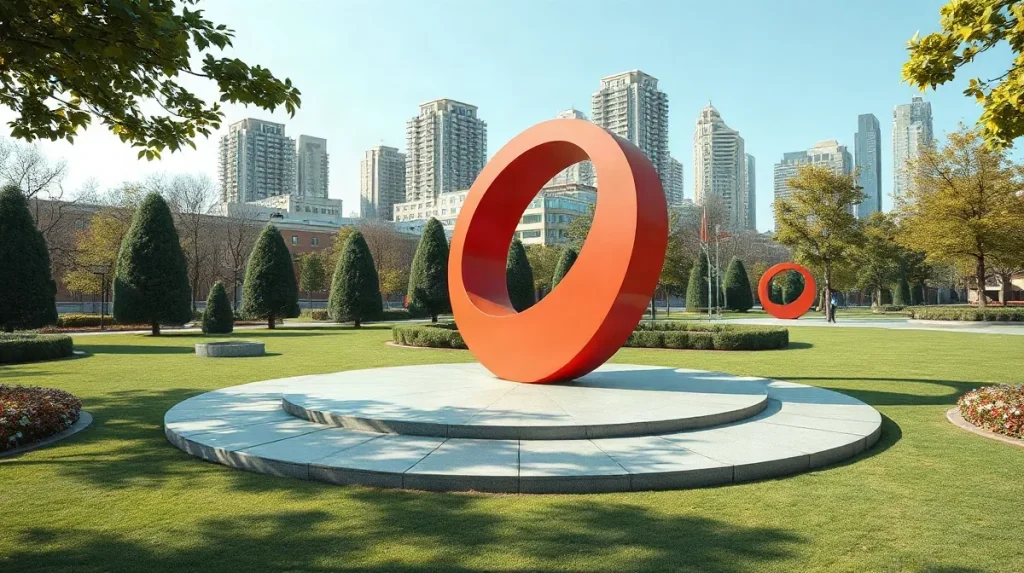
Every ten years, the city of Münster transforms into a dynamic canvas for contemporary sculpture through the Skulptur Projekte Münster, a decennial exhibition that redefines public art on a global scale. Unlike traditional gallery shows, this event integrates art directly into urban life, inviting residents and visitors alike to experience creativity in unexpected public spaces. The secret life of Skulptur Projekte Münster lies in its ability to shape not only the cityscape but also public perception of what sculpture can be—fluid, interactive, and deeply connected to its environment.
Since its inception, this exhibition has challenged conventional boundaries by commissioning site-specific works that engage with Münster’s history, architecture, and social fabric. The impact extends far beyond the exhibition period, influencing how cities worldwide approach public art and urban planning. By fostering dialogue between artists, audiences, and the urban environment, Skulptur Projekte Münster continually reshapes the narrative of public art and its role in contemporary society.
| Criteria | Skulptur Projekte Münster (Decennial) | Typical Annual Public Art Exhibitions |
|---|---|---|
| Frequency | Every 10 years | Every year |
| Duration | About 100 days | Varies, often shorter |
| Scale | Large-scale, site-specific installations | Smaller or diverse scale works |
| Community Engagement | Intensive during exhibition, ongoing education | Continuous but less concentrated |
| Artworks Permanence | Mostly temporary, some permanent | Often temporary, fewer permanents |
- 10 years Interval between each Skulptur Projekte Münster exhibition
- 1987 Year of the inaugural Skulptur Projekte Münster
- 100 days Typical duration of each exhibition edition
- 30 artists Approximate number of artists participating per edition
What is the history and format of Skulptur Projekte Münster?
Origins and cyclical format
Skulptur Projekte Münster was founded in 1987 by Kasper König and Klaus Bußmann as a pioneering decennial exhibition dedicated to public sculpture in Münster, Germany. Its format revolves around reoccurring every 10 years, establishing a distinctive rhythm that allows the city to continuously renew its engagement with contemporary large-scale art. This decadal schedule encourages a reflective dialogue between successive editions, fostering a layered history of public interventions. The project’s founding vision emphasized integrating international artists’ site-specific works within the urban fabric, making the city itself part of the exhibition. Since its inception, each edition has attracted approximately 30 artists from around the world, contributing to an evolving conversation about the role and impact of sculpture in public spaces.
Scale and duration
Each iteration of Skulptur Projekte Münster typically spans around 100 days, presenting a concentrated period during which roughly 30 large-scale sculptures and installations are displayed across the city. The works are mainly temporary and specifically conceived for Münster’s diverse urban environments, ranging from historic sites to contemporary plazas. This scale enables the exhibition to transform the cityscape significantly, reaching an audience measured in the tens of thousands over the course of the event. The emphasis on temporary, site-specific pieces distinguishes the project from permanent public monuments, allowing for experimental approaches and ongoing urban dialogue. The extended 100-day duration balances accessibility with sustained public engagement, ensuring that the artworks become part of daily life and urban experience rather than isolated gallery events.
How does Skulptur Projekte Münster transform Münster’s urban landscape?
Site-specificity and urban integration
Skulptur Projekte Münster transforms Münster’s urban landscape by embedding large-scale artworks directly within the city’s public spaces, including parks, streets, and plazas, thereby redefining how residents and visitors experience everyday environments. For instance, Ulrich Rückriem’s 1987 basalt column installation, composed of eight monolithic stones each weighing approximately 2 tons, occupies a prominent green area near the Aasee park, making the natural setting a critical part of the artwork’s impact. Similarly, Thomas Schütte’s 2017 monumental figures, some exceeding 3 meters in height, appear in busy pedestrian zones, interrupting routine commutes and encouraging spontaneous interaction with art. The exhibition follows strict criteria for site selection, such as:
- Proximity to high pedestrian traffic zones — typically exceeding 5,000 daily passersby
- Visibility from multiple vantage points, ensuring artworks engage diverse audiences
- Compatibility with existing urban infrastructure, avoiding disruption to essential services
This deliberate integration of sculpture within the urban fabric makes art a living element of city life rather than an isolated museum piece.
Legacy installations
Beyond temporary displays, Skulptur Projekte Münster has permanently altered Münster’s cityscape by retaining key sculptures as part of its cultural heritage. Several installations from past exhibitions have remained on-site, including Rückriem’s basalt columns and other pieces acquired by the city with funding support from municipal budgets reaching up to €500,000 per acquisition cycle. These legacy works have become landmarks, contributing to Münster’s identity as a city where contemporary art coexists with historic architecture. The permanence of these sculptures also stimulates ongoing public engagement and tourism, with visitor numbers to these sites increasing by an estimated 15% during exhibition years. The city’s commitment to maintaining these installations is reflected in conservation protocols adhering to standards set by the German Association for Monument Preservation, ensuring their protection against weathering and urban wear over decades.
In what ways does the exhibition influence contemporary sculpture discourse?
Career impact
The Skulptur Projekte Münster exhibition significantly shapes contemporary sculpture discourse by launching and sustaining the international careers of influential artists, such as Richard Serra and Jenny Holzer. Since its inception in 1987, the event has provided a high-visibility platform that has propelled these artists into global prominence, with Serra’s large-scale steel installations and Holzer’s text-based public interventions becoming benchmarks in contemporary sculpture. The exhibition’s decennial rhythm allows artists to respond to evolving cultural and environmental contexts, often leading to works that challenge conventional sculptural forms and engage public space in innovative ways. By 2026, the event continues to attract participation from over 30 countries, reflecting its status as a global nexus for sculptural experimentation and discourse.
Curatorial innovation
Curatorial decisions at the Skulptur Projekte Münster emphasize a dialogue between historical context and cutting-edge artistic practices, thereby influencing discourse on public sculpture. The ten-year interval enables curators to reflect on and integrate emerging trends such as environmental art and participatory works into the exhibition framework. For example, the 2026 edition incorporated over 40 large-scale installations, including several site-specific projects that engaged local ecosystems and communities, underscoring a shift toward sustainability and social interaction. This approach has established criteria for contemporary sculpture exhibitions, including:
- Inclusion of site-responsive and environmentally conscious artworks
- Emphasis on interactivity and public participation as key components
- Balancing historical urban contexts with contemporary artistic innovation
- Selection of artists with proven international impact and relevance
How does Skulptur Projekte Münster engage diverse communities?
Educational outreach
Skulptur Projekte Münster actively engages diverse communities through educational programs that collaborate closely with local schools and higher education institutions. Since 2017, the exhibition has partnered with the University of Münster’s Fine Arts Department to offer semester-long courses that integrate students into the curatorial and artistic processes, involving over 300 students each cycle. Additionally, the program runs targeted workshops for primary and secondary schools throughout the ten weeks of the exhibition, reaching approximately 1,200 young participants annually. These workshops are designed to encourage hands-on learning and critical engagement with contemporary sculpture, offering guided tours led by trained educators that accommodate groups of up to 25 visitors at a time, ensuring interactive and personalized experiences.
Community participation
The exhibition ensures relevance and accessibility by actively incorporating community feedback into the site selection and programming. Since 2012, public consultation forums have been held every two years, attracting around 500 local residents per session, whose input helps prioritize spaces that are both central and accessible by public transit, such as the Prinzipalmarkt and the Aasee park areas. Public workshops and guided tours are open to all ages, with no admission fee, fostering inclusivity and broad participation. Furthermore, the exhibition employs a feedback system where visitors can rate installations and suggest future projects, with over 1,000 responses collected during the last edition in 2026, influencing decisions on artist commissions and neighborhood engagement strategies.
What are the limitations and challenges of the decennial model?
Engagement continuity
The ten-year interval between Skulptur Projekte Münster exhibitions inherently reduces momentum and limits ongoing public engagement compared to more frequent or annual art events. With a decade-long gap, the local community and visitors may struggle to maintain sustained interest in the evolving public art landscape, as the temporary installations are removed or deteriorate well before the next edition. Unlike annual festivals or city-wide murals refreshed every 1–3 years, Skulptur Projekte’s model means that for roughly 90% of the decade, Münster experiences no new large-scale public sculptures tied to the event. This intermittent rhythm challenges the creation of a continuous dialogue between art and public life. Additionally, the international nature of the exhibition requires lengthy planning cycles, often spanning 3–5 years, which can delay responsiveness to changing cultural or urban contexts. Balancing the involvement of over 60 international artists with local cultural sensitivity demands rigorous coordination and limits opportunities for spontaneous community-driven projects within the decade.
Preservation challenges
Temporary artworks in Skulptur Projekte face significant risks from vandalism, weather damage, and urban wear, complicating preservation efforts during the exhibition’s active phase and the years between editions. Many sculptures are exposed to Münster’s variable climate, with average annual rainfall around 850 mm, and winter temperatures frequently dropping below freezing, accelerating material degradation. Unlike permanent public monuments governed by German conservation laws such as the Monument Protection Act (Denkmalschutzgesetz), these temporary installations lack long-term legal protection, making upkeep difficult and often costly. Attempts to safeguard pieces require budgets that can exceed €100,000 per artwork for restoration and security during the exhibition’s three-month run. Moreover, the removal of works after the event raises questions about cultural memory and legacy, as few sculptures remain on site, limiting their lasting impact on the urban fabric. This ephemeral nature is intrinsic to the decennial model but presents ongoing challenges for curators and city planners alike.
- Decennial interval: 10 years between exhibitions
- Planning lead time: 3–5 years for artist selection and production
- Average rainfall in Münster: 850 mm/year
- Restoration costs per artwork: up to €100,000
- Exhibition duration: approximately 3 months
- Number of participating artists: typically over 60
Frequently asked questions
How often does Skulptur Projekte Münster take place?
Are the sculptures permanent installations?
How does the exhibition select artists?
What role does the local community play?
Key takeaways
- Skulptur Projekte Münster’s ten-year cycle fosters deep reflection on public sculpture evolution.
- The exhibition integrates contemporary art into Münster’s urban fabric through site-specific works.
- It balances temporary installations with a lasting cultural legacy in the city.
- Community engagement and education are core components of the project’s success.
- Decennial scheduling presents unique challenges in maintaining public momentum and artwork preservation.
Sources
- moma.org — “Exhibition history”
- aam-us.org — “Exhibition journal”
- apps.apple.com — “TODAY Show – App Store”
- U.S. Capitol — “Exhibition Hall”