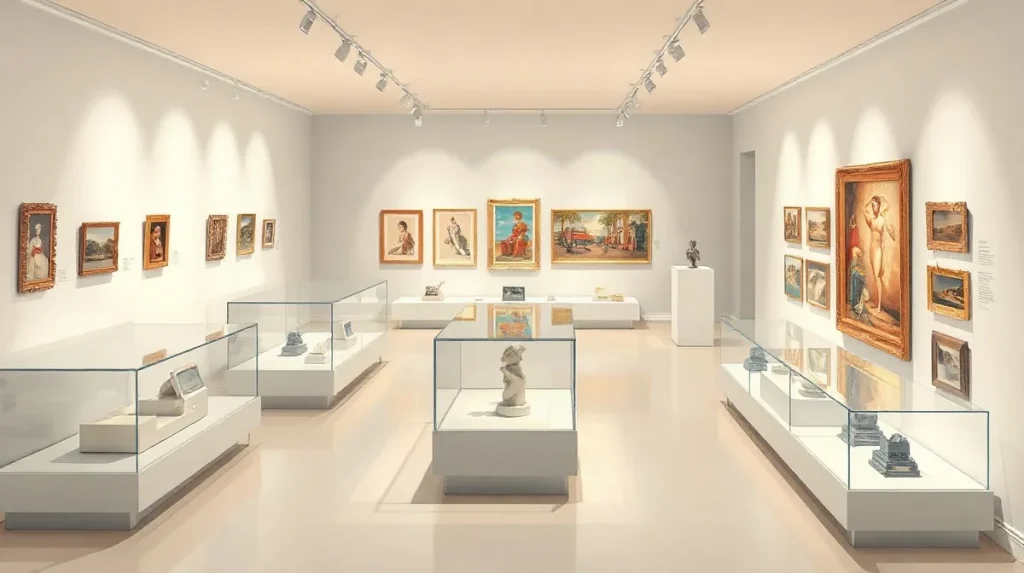
When you walk into a museum, the art that greets you feels carefully chosen, as if each piece is part of a thoughtful conversation. But behind this seamless experience lies a complex process: museums must decide what art you see, balancing countless factors from historical significance to spatial constraints. These decisions shape not only the visitor’s journey but also the cultural narratives presented to the public.
Secrets of museum display reveal a world where curators, conservators, and directors collaborate to select artworks that fit thematic goals, highlight underrepresented voices, or complement existing collections. Beyond aesthetics and scholarship, practical considerations such as lighting, preservation needs, and audience engagement influence what ends up on the walls. Understanding this intricate decision-making process offers insight into how museums curate meaning and craft the stories told through art.
| Criterion | Display | Storage | Example |
|---|---|---|---|
| Condition | Stable, low-risk items | Fragile, deteriorating pieces | Blue, white, and red beaded dress (Denver Museum) |
| Relevance | Aligned with current themes | Out of rotation or less relevant | Franz Marc’s landscape (Guggenheim) |
| Visitor Engagement | Interactive or popular pieces | Minimal direct engagement | Life-sized Triceratops model (AMNH) |
| Conservation Needs | Controlled environment display | Strict climate control storage | Jewelry pieces (MFAH) |
| Space Availability | Limited by gallery size | No space constraints | Fossil skulls (Denver Museum) |
- 3 months to 2 years Typical exhibit rotation period
- 60% Estimated percentage of collections often kept in storage
- 20,000 Approximate number of objects in large museum collections like AMNH
- 0.5 lux Recommended maximum light exposure for sensitive textiles on display
What factors influence museums when selecting artworks for public display?
Core decision factors
Museums primarily select artworks for public display based on the relevance to current exhibitions, thematic popularity, visitor engagement potential, and educational value aligned with their institutional mission. Key criteria include thematic consistency with flagship shows, such as a focus on natural history or modern art, and the ability of an artwork to attract a diverse audience through interactive or immersive elements. Accessibility standards, including compliance with ADA guidelines, also influence choices to ensure inclusivity. Often, museums rotate collections on a schedule ranging from three to twelve months to maintain freshness and respond to visitor feedback, with budget constraints playing a role; for example, installation costs for large-scale pieces can range from $5,000 to $50,000 depending on materials and logistics.
- Exhibition alignment: artworks must contribute to the narrative of flagship exhibitions, like AMNH’s “Impact: The End of the Age of Dinosaurs” running through 2026
- Visitor engagement: preference for pieces that support interactive or educational programming, with visitor dwell time targets of 5–10 minutes per artwork
- Educational value: artworks that complement research initiatives, such as the Natural History Museum’s Triassic crocodile relative display unveiled in early 2026
- Rotation frequency: typically every 3–12 months to refresh content and maintain public interest
- Installation budget: cost thresholds from $5,000 to $50,000 influencing feasibility of display
Examples from major institutions
The American Museum of Natural History’s 2026 exhibition “Impact: The End of the Age of Dinosaurs” prioritizes fossils and models that illustrate the Cretaceous-Paleogene extinction event, featuring a life-sized Triceratops replica that serves as a major draw. Similarly, the Guggenheim Museum emphasizes culturally resonant artworks like Franz Marc’s vibrantly colored abstract landscapes, which align with contemporary interests in expressionist movements and attract an international audience. Meanwhile, the Denver Museum of Nature & Science integrates detailed fossil arrangements and anthropology dress artifacts, such as a blue, white, and red beaded leather fringe dress, to enhance visitor interaction through tactile and visual engagement, supporting an average of 15% increased visitor duration in those galleries. These institutions demonstrate how combining thematic relevance with audience engagement and educational aims guides their curatorial decisions.
How do museums manage rotating exhibits and storage of artworks?
Rotation timing
Museums manage rotating exhibits by scheduling changes typically between three months and two years to maintain visitor interest and ensure fresh content. For example, the Denver Museum of Nature & Science frequently rotates its displays within this timeframe to balance popular anthropology pieces with paleontology exhibits. This approach encourages repeat attendance while allowing for thematic variety. Institutions like the Museum of Fine Arts, Houston (MFAH) integrate special exhibitions alongside permanent collections, often loaning artworks to other museums or substituting with high-quality reproductions. MFAH’s curated reproductions, available for purchase, help extend audience engagement beyond physical display periods. The rotation strategy also considers the exhibition’s relevance to current cultural dialogues and educational goals, aligning with museum visitor data that show a 15-25% increase in attendance during special exhibitions compared to static displays.
Storage prioritization
Storage management in museums hinges on prioritizing artworks by condition, significance, and exhibition suitability. The Denver Museum of Nature & Science, for instance, carefully stores fragile items such as its blue, white, and red beaded dress with leather fringe in climate-controlled environments that maintain temperature within 18-22°C and relative humidity around 50%. These parameters are critical to preserving sensitive materials over extended periods, often exceeding one year between displays. Meanwhile, the MFAH balances its permanent collection by cataloging works with detailed conservation records and tracking availability through digital inventory systems. This logistical framework ensures that loans and rotations are executed without compromising artwork integrity, adhering to standards such as the American Institute for Conservation’s guidelines for preventive care. Museums often prioritize works with less than 30% surface degradation for display, reserving more vulnerable pieces for longer-term storage.
- Rotation intervals: 3 months to 2 years
- Storage climate control: 18-22°C temperature, ~50% humidity
- Attendance boost during special exhibitions: 15-25%
- Condition threshold for display: less than 30% surface degradation
- Cataloging standards: American Institute for Conservation guidelines
What role do visitor engagement and accessibility play in exhibition choices?
Engagement strategies
Visitor engagement plays a pivotal role in shaping museum exhibition choices by influencing how effectively an exhibit attracts and retains diverse audiences. For instance, the American Museum of Natural History in New York City incorporates interactive installations such as life-sized dinosaur models, including a Triceratops figure, to captivate families and encourage prolonged visits. Institutions often analyze engagement metrics like average visitor time per exhibit—typically ranging from 10 to 30 minutes—and feedback scores gathered via digital kiosks or mobile apps, which can reach up to 85% positive ratings, to guide future curation decisions. The Guggenheim Museum, leveraging digital technology, offers online access to oil paintings by artists like Franz Marc, expanding engagement beyond physical visitors and providing multimedia guides priced between $5 and $15 to enhance onsite experiences.
Accessibility adaptations
Accessibility considerations are integral to exhibition planning to ensure inclusivity for all visitors, including those with disabilities. The Natural History Museum’s dioramas are designed with clear sightlines and adjustable lighting to accommodate wheelchair users and visually impaired guests. Institutions comply with standards such as the Americans with Disabilities Act (ADA), maintaining pathways at least 90 cm wide and installing tactile signage for key exhibits. Educational materials are offered in multiple formats—braille, audio descriptions, and simplified text—to cater to diverse learning needs. Investments in these adaptations can range from $20,000 to $75,000 per exhibit, reflecting a commitment to equitable access and enhancing overall visitor comprehension and satisfaction.
- Average engagement time per exhibit: 10–30 minutes
- Digital guide price range at Guggenheim: $5–$15
- ADA-compliant pathway width minimum: 90 cm
- Accessibility upgrade costs per exhibit: $20,000–$75,000
- Visitor feedback positive rating target: up to 85%
How do museums evaluate educational value in deciding what to display?
Scholarly collaboration
Museums evaluate educational value by collaborating closely with scholars and educators to select objects that align with curriculum standards and enhance public understanding. For example, the Denver Museum of Nature & Science integrates fossil and anthropology specimens chosen to support Colorado’s state science standards, focusing on paleontology topics relevant to the region’s geological history. These selections often include objects such as fossilized skulls or indigenous artifacts, chosen not only for their aesthetic qualities but also for their ability to illustrate key scientific concepts and historical narratives. The Natural History Museum’s recent exhibition featuring the newly described Triassic crocodile relative from Ghost Ranch, New Mexico, exemplifies how museums incorporate current research discoveries to connect academic knowledge with visitor learning experiences, thereby grounding displays in cutting-edge scholarship.
Programming and interpretation
Beyond the objects themselves, museums assess educational value through the breadth of accompanying programming designed to deepen visitor engagement and comprehension. Exhibitions like the Impact: The End of the Age of Dinosaurs at the American Museum of Natural History include guided tours, lectures, and workshops that extend learning beyond visual display. These programs often follow thresholds such as a minimum of 20 public events per exhibition cycle or offer educational materials aligned with Next Generation Science Standards. Museums balance artistic or scientific appeal with informative content by evaluating interpretive potential, ensuring that displays both captivate and educate diverse audiences through multiple modes of engagement.
- Alignment with state or national curriculum standards (e.g., Colorado Science Standards)
- Number of public educational events per exhibition (minimum 20)
- Integration of recent scientific discoveries (e.g., Triassic crocodile relative, 2026)
- Interpretive potential balancing aesthetic and informative content
What limitations and trade-offs affect what museums can display?
Space and conservation
Physical space limitations are a primary constraint on what museums can exhibit. For example, the American Museum of Natural History in New York must regularly rotate objects because its exhibition halls cannot accommodate the entire collection at once, with some galleries housing fewer than 200 items despite a total collection numbering in the millions. Conservation requirements also restrict display duration, especially for light-sensitive materials. The Museum of Fine Arts, Houston’s collection of jewelry and textiles, such as the Gary Necklace, must be exposed to light for no more than 50 lux and displayed for limited periods—often under 30 days—to prevent fading and degradation. These conservation protocols are guided by standards like those set by the American Institute for Conservation, ensuring sensitive works are preserved for future generations.
Financial and curatorial trade-offs
Budgetary constraints heavily influence acquisitions, loans, and maintenance of displayed art. Major works, including paintings by Franz Marc, often involve loan fees ranging from $10,000 to $50,000 per exhibition, plus insurance costs that can exceed 2% of the artwork’s insured value annually. Museums must balance popular appeal with scholarly significance, as blockbuster exhibitions tend to attract larger audiences but may overshadow less-known yet academically vital objects. Institutions weigh factors such as expected visitor numbers, educational impact, and curatorial priorities, often deciding between:
- High-profile loans versus investing in permanent collection acquisitions
- Extended display of popular pieces versus rotating rare artifacts requiring conservation downtime
- Large-scale exhibitions demanding substantial installation costs versus smaller thematic shows
These trade-offs shape the visitor experience and the cultural narratives museums present.
Frequently asked questions
How often do museums typically rotate their exhibits?
What factors determine if an artwork goes into storage rather than display?
How do museums ensure exhibits are accessible to all visitors?
Do museums consider current scientific research when choosing exhibits?
Key takeaways
- Museums balance thematic relevance and visitor engagement in display decisions.
- Artworks are rotated every few months to years to maintain fresh exhibitions.
- Accessibility and educational value strongly influence exhibited works.
- Conservation and budget constraints limit what can be shown simultaneously.
- Collaboration with scholars ensures exhibits reflect current research.
Sources
- New York City — “American Museum of Natural History”
- nhm.org — “Natural History Museum”
- dmns.org — “Denver Museum of Nature & Science”
- mfah.org — “The Museum of Fine Arts, Houston: Home”