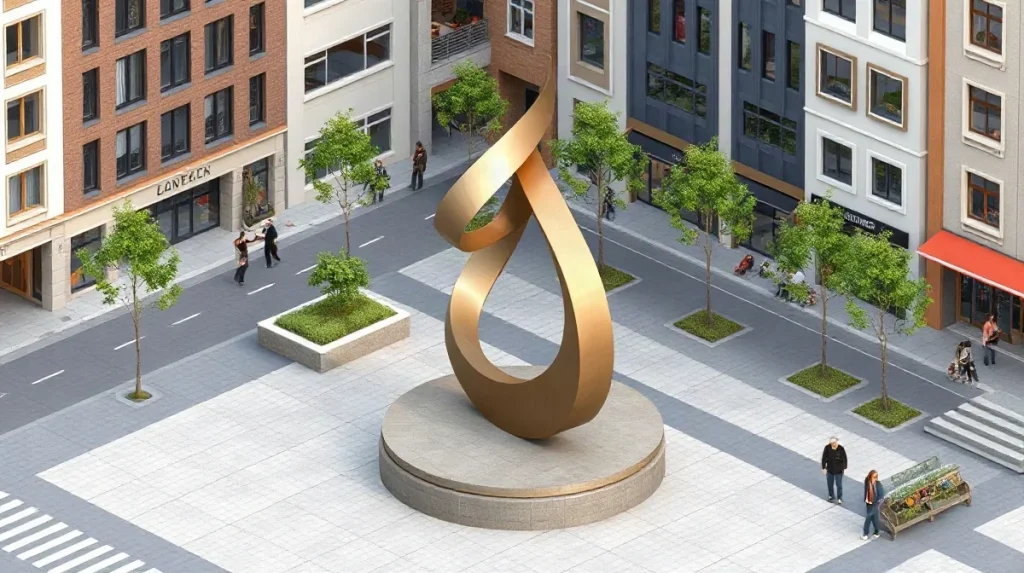
Skulptur Projekte Münster stands as a landmark event in the landscape of contemporary art, challenging traditional notions of public sculpture with each decennial edition. Since its inception, this exhibition has transformed the city of Münster into a dynamic open-air gallery, where art interacts with everyday urban life in unpredictable and thought-provoking ways. Rather than merely placing objects in public spaces, Skulptur Projekte Münster redefines public sculpture by emphasizing context, participation, and the evolving relationship between artwork, environment, and community.
By inviting artists to respond to the city’s unique social and spatial conditions, the exhibition disrupts conventional expectations of monumentality and permanence. It embraces temporality, site-specificity, and social engagement, pushing public sculpture beyond static display toward a living dialogue with its audience. This approach not only broadens the possibilities for artistic intervention in public spaces but also invites viewers to reconsider how art shapes and reflects collective experience in contemporary society.
| Edition Year | Curatorial Team | Key Artistic Theme | Notable Artist(s) |
|---|---|---|---|
| 1977 | Kasper König | Reintroducing sculpture to public space | George Rickey |
| 1987 | Kasper König | Expanding urban dialogue | Rebecca Horn |
| 1997 | Kasper König | Postmodern engagement | Tony Cragg |
| 2007 | Kaspar König and team | Temporal and social processes | Thomas Schütte |
| 2017 | Susanne Pfeffer | Human, non-human interactions | Pierre Huyghe |
| 2027 | What, How & for Whom | Art and public space ambivalence | TBA |
- 10 years Interval between each Skulptur Projekte Münster exhibition
- 1977 Year of the inaugural Skulptur Projekte Münster exhibition
- 2027 Year of the upcoming sixth edition of Skulptur Projekte Münster
- 5 Number of editions held through 2017
- 0 € Admission price to all public artworks during the exhibition
What is the historical significance and frequency of Skulptur Projekte Münster?
Origins and Scheduling
Founded in 1977, Skulptur Projekte Münster holds significant historical importance as a pioneering decennial public art exhibition that redefined the integration of sculpture within the urban fabric. Its inception marked a bold commitment by the Münster City Council to engage contemporary international artists in creating site-specific works accessible free of charge across multiple city locations. The exhibition’s scheduling every ten years allows it to reflect evolving artistic practices and societal contexts, making it both a long-term cultural investment and a periodic highlight in the global art calendar. Notably, Skulptur Projekte Münster coincides with every second cycle of the famed Documenta exhibition in Kassel, aligning itself with major contemporary art events in Germany and attracting a broad audience eager to experience innovative public sculpture.
Frequency and Impact
Skulptur Projekte Münster’s ten-year interval fosters anticipation and allows artists to deeply engage with Münster’s urban environment, resulting in works that challenge conventional notions of sculpture and public space. Each edition involves dozens of international artists who create site-responsive installations, often transforming everyday locations such as parks, streets, and plazas. The exhibition’s free public access across approximately 20 urban sites encourages broad community interaction and participation. This model has influenced other public art initiatives worldwide by demonstrating how sustained, periodic interventions can generate lasting cultural dialogue and urban identity. The next event, scheduled for 2027, continues this tradition, promising new artistic contributions that reflect contemporary global and local concerns.
- Founded: 1977
- Interval: Every 10 years
- Coincides with: Every second Documenta exhibition
- Number of urban sites featured: Around 20
- Public access: Free of charge
How do artists engage with Münster’s public spaces in Skulptur Projekte?
Urban Integration
Artists engage with Münster’s public spaces in Skulptur Projekte by creating sculptures and installations that are deeply embedded in the city’s urban fabric, responding to its architecture and historical landmarks. For example, Pierre Huyghe’s 2017 installation incorporated living organisms within a former municipal building, transforming the space into a dynamic ecosystem that blurred boundaries between nature and urbanity. The exhibition strategically utilizes diverse sites such as plazas, parks, streets, and heritage buildings across Münster, ensuring that each commissioned work dialogues with its surroundings. This contextual approach requires artists to consider local spatial dimensions, often working within constraints like the 500-square-meter limit for installations in public squares or adhering to preservation laws governing historical sites dating back to the 19th century.
Public Participation
Public interaction is a crucial aspect of how artists engage with Münster’s spaces during Skulptur Projekte, often inviting visitors to become active participants rather than passive observers. Commissioned sculptures are frequently designed to encourage tactile engagement, movement, or social interaction, fostering a communal experience. For instance, some works feature interactive elements that respond to human presence or sound, while others serve as temporary gathering points for workshops or performances during the exhibition’s typical 100-day duration. These participatory criteria include ensuring accessibility for at least 90% of visitors and compliance with city regulations on public safety and crowd management, which guide artists in shaping works that are both engaging and safe for diverse audiences.
What are the curatorial strategies that shape each edition of Skulptur Projekte?
Conceptual Framework
The curatorial strategies of each Skulptur Projekte Münster edition revolve around a distinct conceptual framework that addresses pressing contemporary themes, most recently the complex and ambivalent relationship between art and public space. For the 2027 edition, the Croatian collective What, How & for Whom devised a concept that critically engages with how sculptures intervene in urban environments, challenging the notion of public space as neutral or uncontested. This approach reflects the exhibition’s ongoing evolution since its inception in 1977, with each decennial event focusing on site-specific works that provoke dialogue with Münster’s architecture, social dynamics, and historical layers. The curators emphasize artworks that foster active public engagement over passive viewing, aligning with the project’s commitment to free access and urban integration.
Artist Selection
The selection criteria for artists at Skulptur Projekte Münster prioritize those who create site-specific commissions rather than gallery-oriented pieces, ensuring that each work responds to Münster’s unique spatial and social context. Curators typically invite around 20 to 30 international artists who demonstrate a capacity for innovative spatial interventions and conceptual rigor. For example, the 2027 curators have set thresholds including a minimum project duration of 90 days to allow public interaction, and a requirement that at least 40% of the commissioned works incorporate elements of community participation or local collaboration. This rigorous artist selection process supports the exhibition’s strategy of transforming public spaces into dynamic platforms for discourse and reflection through sculpture.
What social and cultural impacts has Skulptur Projekte Münster had over its five decades?
Community Engagement
Skulptur Projekte Münster has significantly reshaped public interaction with urban space and community identity by inviting residents and visitors to actively engage with site-specific artworks. Since its inception in 1977, the exhibition has consistently challenged traditional perceptions of public sculpture, encouraging an ongoing dialogue about art’s role in everyday life. For example, the 2017 edition featured over 30 international artists presenting works in more than 15 locations throughout Münster’s city center, fostering accessibility and inclusivity. This engagement is further amplified by the exhibition’s free admission policy, which ensures no financial barriers restrict participation, enabling thousands of visitors to experience the artworks over the typical 100-day exhibition period. The project also provokes critical discussions on how public art can reflect social diversity and historical context, emphasizing collaboration between artists, citizens, and local authorities.
Economic Effects
The decennial exhibition also delivers a measurable boost to Münster’s local economy, primarily through cultural tourism. During the last edition in 2017, the city reported an estimated 300,000 visitors, generating an influx of revenue for local businesses including hotels, restaurants, and retail outlets. The average tourist expenditure during the exhibition period is estimated to range between €150 and €250 per day, significantly raising the city’s hospitality income. Furthermore, the exhibition supports local employment by contracting over 100 temporary staff for installation, maintenance, and visitor services. This economic stimulation underscores how large-scale public art events like Skulptur Projekte Münster can serve as catalysts for urban regeneration and community prosperity.
- Exhibition duration: approximately 100 days per edition
- Visitor count during 2017 edition: around 300,000
- Average tourist daily spending: €150–€250
- Number of temporary jobs created: over 100
What are the limitations or criticisms commonly associated with Skulptur Projekte Münster?
Access and Inclusivity
One major limitation of Skulptur Projekte Münster arises from its strong emphasis on site-specificity, which can restrict accessibility for certain audiences due to the spatial distribution and urban geography of Münster. The exhibition’s sculptures are dispersed across the city’s public spaces, often located in areas that require walking several kilometers or navigating uneven terrain, which may pose challenges for visitors with mobility impairments. For example, some key installations in the 2017 edition were placed in peripheral neighborhoods up to 5 kilometers from the city center, complicating access without private transport. Moreover, the curatorial approach that prioritizes integration with Münster’s unique architectural and historical context sometimes results in artworks that engage deeply with local narratives, potentially limiting their immediate resonance with international visitors or those unfamiliar with the city’s cultural landscape. This tension between local specificity and broad appeal reflects ongoing challenges in balancing artistic freedom with public inclusivity.
Sustainability and Costs
The decennial nature of the exhibition combined with the scale of outdoor installations introduces significant financial and logistical challenges. Large-scale sculptures often require extensive structural support, specialized materials, and installation teams, with costs escalating into the millions of euros. For instance, the 2017 edition reportedly involved expenditures exceeding €4 million, covering fabrication, transport, and maintenance over the exhibition’s typical 100-day duration. Additionally, the temporary framework of the event raises questions about the lasting impact on Münster’s urban environment, as many sculptures are dismantled after the exhibition, generating waste and necessitating repeated resource-intensive setups. The City Council and supporting institutions must therefore weigh the cultural benefits against the environmental footprint and recurring financial demands inherent to such ambitious public art projects.
- Walking distance to key installations: up to 5 km
- Typical exhibition duration: approximately 100 days
- Estimated budget for 2017 edition: over €4 million
- Interval between exhibitions: 10 years
Frequently asked questions
How often does Skulptur Projekte Münster take place?
Are the sculptures permanent installations?
How does Skulptur Projekte Münster differ from traditional sculpture exhibitions?
Who curates the exhibition?
Is there an entry fee to visit the exhibition?
Key takeaways
- Skulptur Projekte Münster transforms urban spaces every decade with site-specific sculptures.
- International artists create works that engage directly with Münster’s public environment.
- Curatorial concepts address contemporary social and spatial questions each edition.
- The exhibition fosters public participation and dialogue around art in everyday life.
- Challenges include balancing temporary installations with lasting urban impact.
Sources
- news.artnet.com — “Pierre Huyghe’s Mindblowing Installation and 4 Other Highlights From Skulptur Projekte Münster”
- artnews.com — “Skulptur Projekte Münster”
- Sculpture Network — “Judith Collins on Skulptur Projekte Münster”
- biennialfoundation.org — “Skulptur Projekte Münster (Germany) – Biennial Foundation”