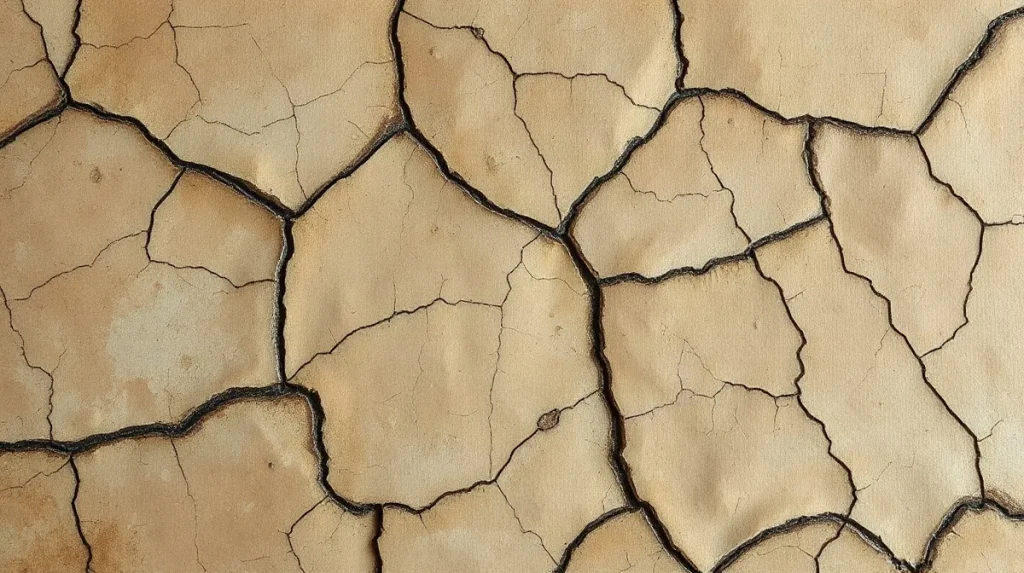
Craquelure, the intricate network of fine cracks that often appears on the surface of aged paintings, plays a crucial yet complex role in the field of art conservation. Far from being merely a sign of deterioration, craquelure provides valuable insights into an artwork’s history, materials, and environmental interactions. Understanding craquelure’s role in art conservation is essential for preserving the integrity of masterpieces while respecting their authentic aging processes.
Conservators study craquelure patterns to identify the original techniques used by artists, detect previous restorations, and assess the current stability of a painting. This delicate balance between appreciating craquelure as part of a work’s character and managing it as a potential vulnerability underlines the nuanced approach required in conservation practices. By delving into the science and aesthetics behind craquelure, specialists can make informed decisions that protect cultural heritage for future generations.
| Varnish Type | Aging Behavior | Effect on Craquelure Visibility | Reversibility |
|---|---|---|---|
| Damar Resin | Yellowing and hardening over decades | Can mask craquelure, requiring solvent removal | Moderate |
| Regalrez 1094 (synthetic) | Stable with minimal yellowing | Maintains craquelure visibility | High |
| Natural Mastic | Brittle, prone to cracking | Enhances craquelure but fragile | Low |
| Copal Resin | Hardens and darkens | May obscure craquelure | Low |
- 50-100 years Typical timespan for visible craquelure formation
- 50 ± 5% Recommended relative humidity range for painting preservation
- 20°C Recommended stable temperature for art conservation
- 200 lux Maximum lighting level to avoid heat damage to paintings
What is craquelure and how does it form on paintings?
Craquelure is the fine network of cracks that appears on the surface of paintings, primarily oil paintings, as a result of natural aging and environmental stresses. This crackling pattern typically develops over several decades, often becoming visible between 50 and 100 years after the artwork’s creation, depending on the materials used and the conditions in which the painting has been kept. Fluctuations in humidity and temperature, as well as the drying and shrinking properties of oil paint layers, contribute significantly to craquelure formation. For example, paintings from the 17th century Dutch Golden Age, which commonly used linseed oil-based paints, exhibit distinctive craquelure patterns linked to the oil’s aging process and the canvas’s tension changes.
Formation Mechanisms
Craquelure forms primarily due to the physical stresses that occur as paint layers dry and contract over time. When an oil paint layer loses moisture and shrinks, it can no longer flexibly accommodate the canvas’s natural expansion and contraction caused by environmental changes. This mismatch creates tension that leads to cracking. Additionally, varnishes applied to paintings can become brittle after decades, contributing to surface fissures. The rate at which craquelure develops varies, but it commonly begins to appear after 50 years, accelerating in conditions where relative humidity fluctuates beyond the 40–60% range or where temperature swings exceed 10°C within short periods.
Material Influence
- Linseed oil-based paints: Predominant in 17th-century European oil paintings, these paints dry slowly and develop characteristic craquelure after several decades.
- Acrylic paints: Introduced widely in the mid-20th century, acrylics are more flexible and less prone to cracking, showing minimal craquelure even after 50 years.
- Canvas tension: Variations in canvas tightness, often caused by climate, can produce different crack patterns; a tension drop of more than 10% can accelerate craquelure.
- Humidity fluctuations: Changes above 20% relative humidity within months increase risk of crack propagation in oil paintings.
How do conservators use craquelure to authenticate artworks?
Pattern Matching
Conservators use craquelure as a crucial visual fingerprint to authenticate artworks by comparing the crack patterns against established databases like the Getty Provenance Index, which catalogs craquelure characteristics of known artists and periods. Authentic Old Master paintings typically exhibit a uniform craquelure network consistent with their documented age, often spanning centuries, while irregular or inconsistent crack patterns may point to modern forgeries or recent overpainting. For example, a painting purportedly from the 17th century should show a craquelure pattern formed over at least 300 years, with crack widths generally under 0.1 millimeters. Deviations from these benchmarks raise red flags regarding authenticity.
Technological Tools
Institutions such as the Courtauld Institute employ high-resolution imaging technology, including models like the Phase One iXH 150MP camera, to document craquelure in detail and support connoisseurship. In 2026, these images are combined with infrared reflectography scans to verify underdrawings and paint layers consistent with historical techniques. This dual approach enables conservators to distinguish genuine stratigraphy from modern retouching. Criteria for authentication often involve confirming that underdrawing styles and pigment layers align with known historical methods, verified through spectral analysis thresholds established by the Getty Conservation Institute.
- Getty Provenance Index: database for craquelure pattern comparison
- Craquelure crack width threshold: typically below 0.1 mm in authentic Old Master works
- Phase One iXH 150MP: high-resolution camera used for craquelure documentation
- Infrared reflectography: technique to reveal underdrawings consistent with period methods
- Spectral analysis standards from Getty Conservation Institute for pigment verification
What insights does craquelure offer about a painting’s condition and history?
Environmental Effects
Craquelure provides valuable evidence about the environmental conditions a painting has endured, such as exposure to humidity and temperature fluctuations. For example, artworks subjected to relative humidity levels exceeding 60% tend to develop more pronounced and deeper cracking patterns. These cracks often result from the differential expansion and contraction of paint and canvas layers under moisture stress. Additionally, the density and depth of craquelure can indicate prolonged exposure to such conditions, allowing conservators to assess the painting’s vulnerability to future environmental damage. Oil paintings varnished with resins like Damar, commonly applied in the early 20th century, often develop a thick, yellowed varnish layer that obscures underlying craquelure. This necessitates careful analysis using microscopic or infrared techniques to reveal the crack network beneath and evaluate the painting’s true state.
Restoration History
Variations in craquelure patterns serve as key indicators of previous restoration efforts and mechanical stresses experienced by a painting. Restorers detect prior interventions when craquelure continuity is disrupted, such as areas where newer varnish layers or retouching have filled or obscured cracks. Mechanical damage, including canvas stretching or localized tension, often manifests as irregular craquelure or widened fissures, guiding conservators in planning structural stabilization. Close examination of craquelure can help distinguish between original aging and damage caused by restoration materials or improper handling, which is critical in valuing and preserving artworks.
- Relative humidity threshold: 60% for increased craquelure formation
- Damar resin varnish: typical early 20th-century coating that can mask craquelure
- Detection methods: microscopic analysis and infrared imaging for obscured cracks
- Indicators of restoration: discontinuities in craquelure and presence of newer varnish layers
What are the best practices for preventing or minimizing craquelure in canvas paintings?
Environmental Controls
Maintaining a stable and controlled environment is essential for minimizing craquelure in canvas paintings. Museums and conservation facilities typically aim to keep relative humidity steady at around 50 ± 5% and temperature near 20°C, as fluctuations beyond these ranges cause expansion and contraction stresses that lead to fine cracking. Display cases with integrated humidity regulation and climate control systems, such as those using silica gel buffering or HVAC automation, help maintain these parameters consistently. Additionally, LED lighting emitting less than 200 lux is preferred to prevent heat buildup on the paint surface, since traditional incandescent or halogen lamps can accelerate varnish aging and crack formation. For instance, the Getty Conservation Institute recommends these thresholds to reduce mechanical and thermal stress on sensitive artworks.
Material Choices
Using appropriate materials during both creation and conservation phases significantly reduces the risk of craquelure development. Modern synthetic varnishes like Regalrez 1094, produced by ExxonMobil Chemical, are favored over natural resins because their reversible and flexible nature accommodates aging without brittle cracking. Proper canvas tensioning methods are critical; conservators use inert stretcher bars and adjust tension to avoid excessive strain that contributes to crack propagation. The application of inert backing boards, such as acid-free foam core panels costing between $15 and $30 each, provides additional mechanical support and limits deformation caused by environmental changes. These preventive measures, combined with careful varnish selection and mechanical stabilization, form the core of best practices for protecting canvas paintings from craquelure.
- Relative humidity: 50 ± 5%
- Temperature: ~20°C
- Lighting intensity: below 200 lux (LED preferred)
- Varnish: Regalrez 1094 (synthetic, reversible)
- Backing boards: acid-free, inert foam core ($15–30 each)
When can craquelure be misleading or insufficient in art conservation?
Forgery Challenges
Craquelure can be misleading in art conservation when forgers artificially induce it to mimic natural aging, complicating authentication efforts. Techniques such as applying heat or chemical treatments are used to create convincing crack patterns, with some forgers investing between $3,000 and $10,000 in specialized equipment to simulate these effects. For instance, the use of controlled infrared lamps or nitric acid washes can produce craquelure resembling centuries-old paintings, making visual inspection unreliable. Moreover, synthetic modern paints, such as acrylics produced by companies like Golden Artist Colors since the 1950s, develop craquelure differently than traditional oil-based paints, so relying solely on crack patterns can lead to misdating 20th-century works by several decades. In such cases, conservators must combine craquelure analysis with other scientific methods, including pigment analysis or radiocarbon dating, to avoid false attributions.
Restoration Artifacts
Paintings that have undergone multiple restorations may display patchy or inconsistent craquelure patterns that fail to reflect their original materials or age accurately. For example, a canvas restored three or more times over the past 50 years often shows irregular crack networks due to the application of newer varnishes or retouching paints, such as synthetic varnishes like Regalrez 1094. Environmental fluctuations during storage or transport—such as humidity swings exceeding 60% relative humidity or temperature changes greater than 15°C—can also cause unusual craquelure unrelated to the artwork’s original condition. These factors mean that craquelure alone is insufficient for determining authenticity or conservation needs without considering the painting’s complete treatment history and environmental exposure.
- Forgery equipment cost range: $3,000–$10,000
- Humidity threshold affecting craquelure: >60% relative humidity
- Temperature fluctuation impacting craquelure: >15°C change
- Restoration varnish example: Regalrez 1094
- Acrylic paint production start: 1950s by Golden Artist Colors
Frequently asked questions
How old does a painting typically need to be before craquelure appears?
Can craquelure patterns definitively prove a painting’s authenticity?
What environmental conditions accelerate craquelure formation?
Are there modern materials that prevent craquelure?
Key takeaways
- Craquelure forms mainly from drying and environmental stress over decades
- Conservators use craquelure patterns with imaging tools for authentication
- Craquelure reveals environmental exposure and restoration history
- Stable climate control is key to preventing further craquelure
- Artificial craquelure and restoration complicate interpretation
Sources
- Painting Best Practices — “art conservation”
- Painting Best Practices — “Understanding Craquelure in Canvas Painting: Techniques for Prevention and Preservation”
- en.citaliarestauro.com — “What is Craquelure – learn how to identify – Citaliarestauro”
- canonburyantiques.com — “What is Craquelure?”
- gerrymartinez.com — “Craquelure in Art: Meaning and Hidden Stories Behind the Cracks”