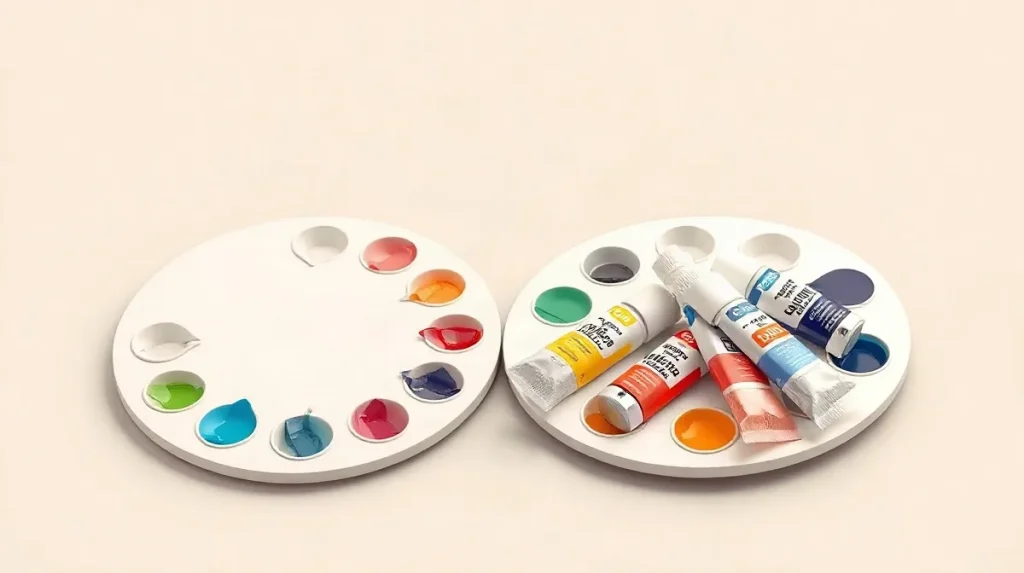
Gouache is a distinctive painting medium celebrated for its rich, opaque colors and uniquely matte finish. Unlike watercolor, which is translucent and delicate, gouache offers artists the ability to layer vibrant pigments with bold coverage, creating images that pop with intensity yet retain a soft, velvety texture. This quality makes gouache ideal for designers, illustrators, and fine artists seeking a balance between vividness and subtlety in their work.
Artists choose gouache for matte vibrance because it allows them to achieve striking color saturation without the glare or shine associated with other paints. Its quick-drying nature and versatility—ranging from thick, solid applications to thin, wash-like effects—give creatives the freedom to experiment across styles and surfaces. In 2026, gouache’s resurgence in popularity reflects a broader appreciation for tactile, handcrafted aesthetics in a digital era dominated by glossy screens and slick finishes.
| Criterion | Gouache | Watercolor | Acrylic |
|---|---|---|---|
| Opacity | Opaque due to chalk filler | Transparent | Opaque to semi-opaque |
| Drying Time | About 15 minutes (thin layers) | Minutes to hours (depending on water) | 15 minutes (fast) |
| Finish | Matte, velvety | Luminous, translucent | Glossy or matte (varies) |
| Reactivation After Drying | Yes, reactivated with water | Yes, reactivated with water | No, permanent |
| Typical Use | Illustration, graphic design, fine art | Landscape and wash effects | Versatile, including heavy textures |
- 60% Typical pigment concentration in high-quality gouache
- 15 minutes Approximate drying time for thin gouache layers
- $20 Price for standard student-grade gouache sets (12 tubes)
- 1930s Period when gouache became standard in Soviet graphic arts education
What is gouache and how is it made to achieve its opacity?
Composition
Gouache is a water-based paint formulated by combining finely ground pigment with gum arabic as a binder and inert white fillers such as chalk or calcium carbonate to achieve its signature opacity. The binder ensures adhesion to surfaces while maintaining a creamy, smooth consistency, differentiating gouache from transparent watercolor. For example, popular brands like Winsor & Newton and M. Graham incorporate these materials carefully, with M. Graham’s gouache containing pigment concentrations above 60% by weight. These fillers scatter light within the paint film, blocking underlying layers and creating the characteristic matte finish that artists prize for illustration and graphic design work.
Pigment Load and Finish
The opacity of gouache is primarily due to its high pigment content combined with the white fillers. Quality gouache paints typically have pigment loads exceeding 50%, which results in vibrant, solid color coverage that does not rely on layering to build opacity. This is in contrast to watercolors, which are transparent and depend on paper whiteness for brightness. When dry, gouache exhibits a velvety matte surface that prevents light reflection, ideal for reducing glare in artwork. The presence of chalk or other fillers also affects the paint’s drying time and texture, contributing to its quick drying—often within 15 to 30 minutes—and smooth, even finish.
- Pigment concentration: Above 60% in premium gouache (e.g., M. Graham)
- Typical drying time: 15 to 30 minutes
- Common fillers: Chalk (calcium carbonate), inert white pigments
- Binder used: Gum arabic
How does gouache differ from watercolor and acrylic paints in properties and use?
Opacity and Layering
Gouache differs from watercolor and acrylic primarily through its opacity and layering capabilities. Unlike watercolor, which is transparent and relies on the white of the paper to create luminosity, gouache contains a higher pigment concentration—often over 40% by volume in professional-grade brands like Holbein and Winsor & Newton—resulting in full opacity. This allows artists to paint light colors over dark backgrounds without the muddiness typical of watercolor. In contrast, acrylic paints also offer opacity but dry permanently within approximately 15 minutes, making layering more rigid. Gouache’s opacity and layering flexibility make it a favorite for illustration and graphic design, where precise color blocking and clean edges are essential.
Reactivation and Finish
Gouache stands out with its unique ability to be reactivated with water after drying, enabling artists to adjust or correct work even days later—a property watercolor shares but acrylic does not. Acrylic paint cures into a permanent, glossy film that resists rewetting, while gouache retains a velvety matte finish prized for its non-reflective surface. This matte quality, combined with reactivation, makes gouache ideal for artists seeking vibrant yet subtle textures in projects ranging from commercial art to fine illustration. Products like M. Graham’s gouache typically dry in under 30 minutes but can be reworked within days, whereas acrylics lose this flexibility almost immediately.
- Professional gouache pigment load: >40% (Holbein, Winsor & Newton)
- Gouache drying time: ~30 minutes (M. Graham)
- Acrylic drying time: ~15 minutes, permanent finish
- Typical gouache price range: $10–$25 per 15 ml tube
- Watercolor transparency: 80–90% light transmission
Why do artists favor gouache for vibrant, matte artworks?
Color Vibrancy
Artists favor gouache for its exceptionally rich pigmentation, which results in vibrant, saturated colors that stand out with a velvety matte finish. High-quality gouache brands like M. Graham and Winsor & Newton contain pigment loads often exceeding 40% by weight, ensuring opacity and intensity unmatched by many other water-based paints. This dense pigment concentration allows colors to remain vivid even after drying, making gouache ideal for bold graphic work and fine art pieces that demand eye-catching flatness without glossy reflections.
Workflow Efficiency
Gouache’s quick drying time—typically under 15 minutes for thin layers—enables artists to work rapidly and apply multiple layers without long delays. This fast turnaround supports dynamic layering and corrections, a feature that Eastern European modernists exploited in mid-20th century graphic posters and book illustrations, where time efficiency was crucial. Additionally, gouache’s rewettable nature allows for easy reactivation, which many commercial illustrators rely on to adjust colors on the fly. Compared to acrylics, which can take hours to cure fully, gouache offers a balance of speed and control prized in professional studios.
- Pigment concentration over 40% in premium gouache (e.g., M. Graham)
- Typical drying time under 15 minutes for 1-2 mm layers
- Price range: $15–$30 per 15 ml tube from major brands
- Reactivation capability for corrections versus acrylic’s permanent finish
What are the common limitations and challenges when working with gouache?
Durability Issues
One common limitation when working with gouache is its vulnerability to cracking, especially if applied in thick layers or dried too rapidly. This problem is exacerbated in lower-quality gouache paints that contain a high proportion of fillers rather than pigments. For instance, some budget brand tubes priced under $5 may have up to 40% inert fillers, which reduce flexibility and increase brittleness. In contrast, premium brands like Holbein and Schmincke maintain pigment loads above 70%, resulting in better adhesion and less cracking. Artists must therefore apply gouache in moderate layers and allow gradual drying times to minimize surface fissures, which can appear within days if conditions are too dry or paint thickness exceeds 0.5 millimeters.
Water Sensitivity
Another significant challenge of gouache is its persistent water solubility after drying, which makes artworks prone to smudging or accidental reactivation. Unlike acrylics, which form a permanent film, gouache requires protective sealing to ensure longevity. The use of fixatives or varnishes—such as Winsor & Newton’s workable fixative priced around $15 per spray can—is essential to prevent color disturbance. Additionally, gouache pigments often shift in hue during drying due to binder-pigment interactions, with color changes up to 15% in saturation reported in some tests. This variability means artists must test batches from reliable manufacturers like Schmincke or Holbein to ensure consistent color matching, especially when working on projects demanding precise tonal control.
How has gouache influenced Eastern European art traditions and contemporary practice?
Historical Use
Gouache has significantly shaped Eastern European art traditions, especially during the Soviet era, when its boldness and affordability made it a preferred medium for propaganda posters and book illustrations. Soviet artists exploited gouache’s vibrant matte finish to create visually striking imagery that communicated ideological messages clearly and effectively. For example, production costs for a standard 50-ml tube of Soviet-era gouache remained below 30 ₽ throughout the 1950s, making it accessible for mass graphic work. The medium’s quick drying time and strong pigmentation allowed for rapid reproduction and dissemination of state-approved visuals across the USSR. This practical and economic advantage cemented gouache as a staple in public visual culture during this period.
Academic Training
The Moscow State Academic Art Institute incorporated gouache into its graphic arts curriculum starting in the 1930s, training generations of artists in techniques that balanced technical skill with ideological expression. This formal education emphasized gouache’s unique ability to deliver flat, opaque color fields essential for state-sanctioned graphic design. Contemporary Eastern European artists in Russia and Poland have revived gouache in recent decades, drawn to its historical resonance and tactile matte quality showcased in exhibitions. Modern professional-grade gouache brands like Schmincke and Winsor & Newton, priced between $10 and $18 per 14-ml tube, provide these artists with rich pigmentation and consistency that echo traditional practices while supporting innovative applications.
- 1930s: Introduction of gouache training at Moscow State Academic Art Institute
- 30 ₽: Approximate Soviet-era cost for 50-ml gouache tubes
- $10–$18: Price range for contemporary professional gouache tubes (14 ml) from major brands
Frequently asked questions
Is gouache suitable for beginners?
How should finished gouache artworks be preserved?
Can gouache be used on surfaces other than paper?
What are some top gouache brands artists trust in 2026?
Key takeaways
- Gouache’s opacity and matte finish derive from high pigment content and chalk fillers
- It combines watercolor’s reactivation with acrylic-like vibrancy but requires sealing
- Eastern European art traditions extensively employed gouache for bold graphic works
- Modern brands like M. Graham and Holbein deliver reliable, vibrant gouache paint
- Handling gouache requires awareness of cracking and water sensitivity
Sources
- Domestika — “Gouache Paint 101 for Artists”
- fearlessbrush.com — “Comparing all the Gouache Brands – MY RANKINGS”
- greenpalmgallery.com — “Gouache painting: Distinctive visual language in contemporary art”
- lemon8-app.com — “Gouache Pros & Cons: My Honest Take (vs. Watercolor & Acrylic!)”
- jennarainey.com — “Gouache vs Watercolor: What’s the Difference and Which One Should You Use?”