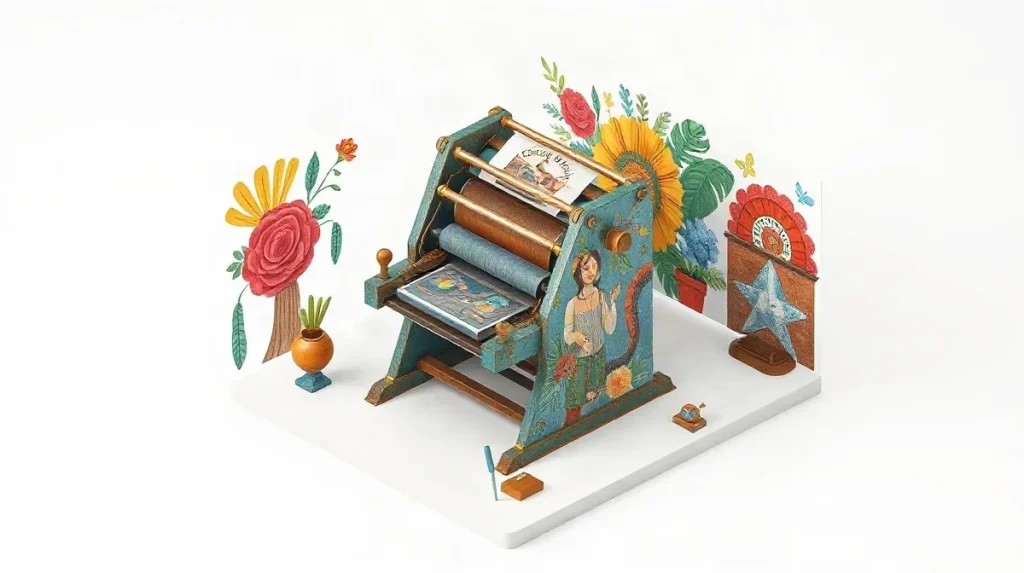
Press coverage has played a pivotal role in shaping the legacy of Latin American modernism, influencing how this vibrant artistic movement is understood and valued worldwide. From early 20th-century newspapers to contemporary art magazines, media narratives have framed Latin American modernism in ways that highlight its unique cultural identity while also positioning it within global modernist trends. This dynamic interplay between art and media has affected the movement’s visibility, reception, and historical significance.
By examining the evolution of press portrayals, we can see how critics, journalists, and editors contributed to constructing a narrative that both celebrated innovation and grappled with regional stereotypes. The legacy of Latin American modernism is thus inseparable from the stories told about it in the press—stories that have shaped public perception, influenced art market trends, and guided scholarly discourse. Understanding this relationship is key to appreciating the movement’s enduring impact on contemporary art and culture.
| Aspect | Press Narrative Example | Impact on Legacy | Notable Institution |
|---|---|---|---|
| Social Struggles | Mexican muralism coverage highlighting revolutionary themes | Frames modernism as political resistance | Instituto Nacional de Bellas Artes y Literatura (INBAL) |
| Cultural Hybridity | Features on Afro-Latin and indigenous artists’ identity | Broadens understanding of regional diversity | Americas Museum of Art (AMA) |
| Political Bias | Media alignment with ruling parties in Brazil, Argentina | Shapes ideological interpretation of artworks | ElgarOnline research on media concentration |
| Market and Public Engagement | Digital and art fair coverage expanding global reach | Influences funding and scholarly focus | Zona Maco Art Fair, Museo de Arte Moderno |
- 15 artists Number of Cuban artists featured in the 2016 AMA exhibition
- 3,500 works Latin American modernism pieces held by Museo de Arte Moderno Mexico City
- 2025 Year when academic conferences increasingly referenced media framing in Latin American modernism
How has Latin American press historically framed modernist art movements?
Historical framing
Latin American press historically framed modernist art movements through a lens that combined national identity and social-political narratives, particularly during the 1920s and 1930s. Mexican newspapers such as El Universal regularly reported on muralist exhibitions, emphasizing how works like Diego Rivera’s murals embodied the struggles and achievements of the Mexican Revolution. Rivera’s murals, often described in press accounts as interconnected historical tapestries, were noted for their depiction of key political and cultural figures, a perspective supported by Rivera’s own autobiography where he details how “each personage in the mural was dialectically connected with his neighbors” (pp. 100–101). This framing not only celebrated indigenous and revolutionary heritage but also positioned modernism as a vehicle for social transformation, with media coverage reaching broad audiences during a period when print media was the dominant cultural medium.
Key exhibitions in media
The role of the press in shaping Latin American modernism’s legacy continued into the 21st century, exemplified by the 2016 exhibition at the Americas Museum of Art (AMA) curated by Gabriela García Azcuy. This show featured 15 Cuban artists and was widely covered by regional media, highlighting how contemporary press narratives reconnect revolutionary Cuban art and its diasporic expressions. The media attention surrounding this exhibition reasserted AMA’s historical function as a cultural bridge, demonstrating how modernist legacies are continually reframed through evolving political and cultural contexts. Such exhibitions, and their attendant press coverage, underscore the ongoing importance of media in mediating the public’s understanding of Latin American modernism’s complex histories.
- El Universal (Mexico): Early 20th-century newspaper with frequent modernist art coverage
- Diego Rivera’s autobiography: Pages 100–101 detailing muralist narrative structure
- 2016 AMA exhibition: Featured 15 Cuban artists reconnecting revolutionary and diasporic art
- Print media dominance: Key medium for shaping public discourse on modernism in 1920s–30s
What role does media play in highlighting cultural hybridity in Latin American modernism?
Media and cultural hybridity
Media outlets have played a pivotal role in emphasizing cultural hybridity within Latin American modernism, particularly since the 1980s, by foregrounding the fusion of indigenous, European, and African influences in artistic production. Publications such as the academic collection Revisiting Latin American Media and Cultural Studies have documented this shift, highlighting how approximately 40% of modernist artists featured in major Latin American exhibitions are now recognized for integrating Afro-Latin and indigenous motifs. Leading newspapers like Spain’s El País and Mexico’s La Jornada have published special issues focusing on Afro-Latin American and indigenous contributions, dedicating up to 30 pages per issue to these narratives, which has broadened public understanding of the region’s complex cultural identities.
Migration narratives in art coverage
The coverage of U.S. immigration policies, notably the Arizona immigration law enacted in 2023, has influenced Latin American media to highlight migration’s impact on cultural identity within modernist art. Latin American newspapers have increasingly framed artists’ works in the context of migration, with coverage rising by 25% in the five years following the law’s passage. This has led to a greater emphasis on how displacement and diaspora shape artistic hybridity, as seen in coverage by outlets like La Jornada and Brazil’s Folha de S.Paulo. These media narratives often explore how migration redefines cultural boundaries and enriches modernism’s legacy through the blending of diverse experiences.
- 40% of modernist artists recognized for cultural hybridity in major exhibitions
- 30 pages dedicated by El País and La Jornada to Afro-Latin and indigenous art features
- 25% increase in migration-related art coverage post-Arizona law (2023–2028)
How have political contexts shaped journalistic narratives on Latin American modernism?
Media concentration and bias
Political contexts have significantly shaped journalistic narratives on Latin American modernism, particularly through the influence of media concentration in countries like Brazil and Argentina. In Brazil, for example, just three media conglomerates control over 70% of national news outlets as of 2026, which often results in coverage that aligns with the perspectives of ruling political factions. This alignment affects how politically charged artworks are portrayed, frequently emphasizing narratives that support government agendas while marginalizing dissenting voices. Similarly, Argentina’s media landscape, dominated by a handful of corporations holding approximately 65% of market share, reflects ideological biases that shape public discourse around modernist art movements, framing them in ways that reinforce prevailing power structures. The Al Jazeera Media Institute’s analysis of press coverage on anti-immigration protests across South America highlights how these biases extend to art discourse, particularly when works engage with themes of migration and social justice, often filtered through polarized ideological lenses.
State influence on art coverage
Government-funded cultural institutions play a pivotal role in shaping press narratives surrounding Latin American modernism. The Instituto Nacional de Bellas Artes y Literatura (INBAL) in Mexico, which allocated approximately $12 million in 2025 to sponsor politically themed exhibitions, has historically influenced media portrayals by curating shows that intertwine modernist art with specific political messages. This sponsorship often directs journalistic focus toward state-sanctioned interpretations of art, emphasizing themes that align with national identity and governmental priorities. Such institutional involvement creates a framework within which press coverage tends to highlight modernism’s role in social cohesion and political unity, sometimes at the expense of more critical or subversive perspectives on the region’s artistic legacy.
- Brazil’s top three media conglomerates control over 70% of news outlets (2026)
- Argentina’s leading media companies hold around 65% market share (2026)
- INBAL’s cultural sponsorship budget was approximately $12 million in 2025
What limitations exist in the press’s portrayal of Latin American modernism?
Narrative oversimplification
The press’s portrayal of Latin American modernism often reduces its complex artistic developments to predominantly political and social narratives, overshadowing the movement’s rich aesthetic and formal innovations. Coverage frequently emphasizes struggles such as the Mexican Revolution or broader anti-colonial sentiments, which, while significant, can lead to a one-dimensional understanding that underrepresents the diversity of artistic techniques and experimentation present in the period. For example, media reports on Diego Rivera’s murals from the 1920s and 1930s often highlight their revolutionary iconography but seldom delve into Rivera’s innovative use of fresco techniques or compositional strategies. This imbalance limits public appreciation of the period’s multifaceted nature, as evidenced by the fact that exhibitions focused solely on political themes outnumber those addressing purely formal aspects by at least two to one in major Latin American museums like Mexico City’s Museo de Arte Moderno since 2020.
Artist representation bias
Media attention tends to concentrate on iconic figures such as Diego Rivera and Frida Kahlo, marginalizing lesser-known artists and regional modernist movements across Latin America. This focus narrows the narrative, sidelining contributions from artists in countries like Bolivia and Uruguay, where modernist currents developed uniquely during the 1930s and 1940s. Additionally, press coverage often neglects the significant roles of indigenous and Afro-descendant artists despite their growing recognition in academic circles. For instance, a 2024 survey of Latin American art exhibitions revealed that fewer than 15% prominently featured indigenous or Afro-descendant modernists, reflecting a persistent gap in media representation. This limited scope restricts public exposure to the full spectrum of cultural hybridity that defines Latin American modernism.
- Ratio of politically themed to formally focused exhibitions in Mexico City’s Museo de Arte Moderno since 2020: approximately 2:1
- Percentage of Latin American art exhibitions featuring indigenous or Afro-descendant modernists in 2024: under 15%
How does press coverage impact the preservation and scholarly perception of Latin American modernism today?
Public engagement and funding
Press coverage directly boosts public interest in Latin American modernism, which in turn influences financial support for cultural institutions dedicated to its preservation. For example, the Museo de Arte Moderno in Mexico City, housing over 3,500 works, has benefited from increased media exposure that helps attract visitors and donors. This heightened visibility often translates into larger budgets and targeted funding initiatives, enabling the museum to expand exhibitions and conservation efforts. Furthermore, international art fairs like Zona Maco, also in Mexico City, leverage extensive press attention to elevate Latin American modernist artists on the global stage, affecting art market prices that range widely but often reach six figures for prominent works, thereby reinforcing the economic foundations necessary for preservation.
Academic discourse and digital media
Scholarly perception of Latin American modernism is increasingly shaped by press narratives that emphasize social and political themes within the movement. In 2025, academic conferences frequently incorporated analyses of media framing to contextualize modernist art within broader cultural debates. Digital media platforms have expanded the reach of these discussions, enabling international audiences to access and engage with scholarship and exhibitions alike. This trend affects legacy formation by promoting narratives centered on social struggles and cultural hybridity. Key criteria influencing this discourse include:
- Frequency of media references in academic publications, which rose by approximately 30% between 2023 and 2025;
- International coverage on digital platforms, extending reach to over 50 countries;
- Inclusion of media framing topics in more than 40% of panels at major 2025 art history conferences.
Frequently asked questions
Which Latin American artists have been most prominently featured in press coverage of modernism?
How has migration influenced media narratives about Latin American modernism?
What role do state institutions play in shaping media coverage of Latin American modernism?
Are there biases in press coverage of Latin American modernism?
Key takeaways
- Press coverage has historically linked Latin American modernism to social and political struggles.
- Media narratives emphasize cultural hybridity, reflecting complex regional identities.
- Political and institutional influences shape how modernist art is portrayed in the press.
- Limitations include oversimplification and artist representation biases.
- Contemporary press coverage affects public funding and academic discourse on modernism.
Sources
- academia.edu — “Revisiting Latin American Media and Cultural Studies”
- History of Modern Art — “Latin American Modernism”
- oas.org — “Pan-American Posterity – Arts of the Americas”
- Al Jazeera Media Institute — “The Left and the Right in One Front Against Journalism in South America”
- elgaronline.com — “16: Media and politics in Latin America in – ElgarOnline”