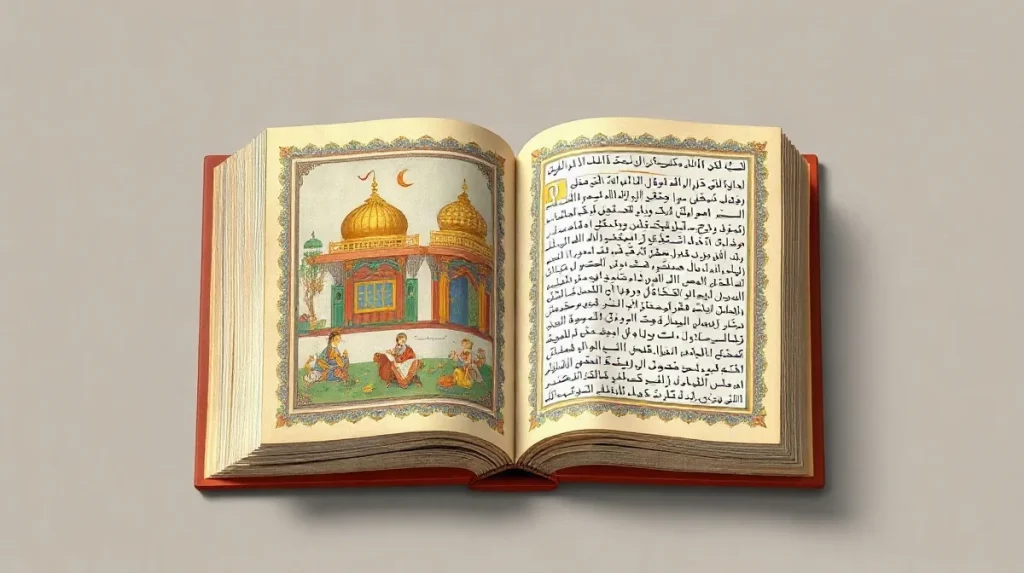
Mughal miniature painting stands as a remarkable artistic tradition that flourished in South Asia during the Mughal Empire, blending intricate craftsmanship with rich cultural narratives. These delicate, small-scale paintings captivate viewers with their meticulous detail, vibrant colors, and the seamless fusion of Persian, Indian, and Islamic artistic influences. At its core, Mughal miniature painting is not only a visual art form but also a window into the social, political, and religious life of the era.
The techniques employed in creating these miniatures reveal a sophisticated process involving fine brushwork, natural pigments, and layered compositions that bring stories and portraits to life. Beyond their aesthetic appeal, these paintings carry deep cultural significance, reflecting the empire’s values, power structures, and intercultural dialogues. Exploring Mughal miniature painting offers insight into how art can embody historical identity while continuing to inspire contemporary appreciation worldwide.
| Artistic Tradition | Key Characteristics | Example Techniques | Cultural Contribution |
|---|---|---|---|
| Persian | Intricate line work, flat perspective | Detailed brush strokes with fine lines | Foundation for Mughal style and ornamental design |
| Indian | Vivid storytelling, local flora and fauna depiction | Use of bright natural pigments and narrative scenes | Incorporation of indigenous themes and motifs |
| European | Naturalistic shading, foreshortening | Chiaroscuro and perspective techniques | Enhanced realism and depth in compositions |
- 1556–1605 Reign of Emperor Akbar, peak period for Mughal miniature painting
- 5 cm Typical scale of detailed miniature paintings
- 16th–17th centuries Active period of Mughal miniature painting tradition
- 3 to 5 layers Typical thin pigment layers applied to achieve vibrant colors
What are the key techniques used in Mughal miniature painting?
Brushwork and Pigments
The key techniques in Mughal miniature painting center on the use of ultra-fine brushes crafted from squirrel hair, enabling artists to execute precise line work essential for the detailed miniatures. These brushes allowed for control down to strokes as thin as 0.1 millimeters, crucial for rendering intricate facial expressions and elaborate textiles. Artists applied natural pigments derived from minerals and plants, with lapis lazuli prized for producing a deep, vibrant blue, often costing up to $1,000 per kilogram in modern valuation due to its rarity. Gold leaf was frequently employed to accentuate ornamental details, lending the paintings a luminous quality. The color application involved layering thin washes, sometimes over 15 layers, to achieve depth and vibrancy without obscuring the underlying fine details, a technique that demanded patience and skill over weeks or even months per work.
European Influence in Technique
Mughal artists incorporated European artistic principles such as foreshortening and naturalistic shading, which were introduced to the Indian subcontinent through Jesuit missionaries and European prints during the 16th and 17th centuries. This fusion resulted in more realistic spatial depth and three-dimensionality in figures and landscapes, distinguishing Mughal miniatures from earlier Persian models. The adoption of chiaroscuro techniques—graduated shading to suggest light and shadow—allowed painters to create volume and lifelike textures. These innovations were applied selectively alongside traditional flat color areas, demonstrating a hybrid visual language unique to the Mughal court’s artistic agenda.
- Squirrel hair brushes enabling line widths as fine as 0.1 mm
- Lapis lazuli pigment costing approximately $1,000 per kg
- Use of over 15 thin pigment layers for color vibrancy
- Introduction of foreshortening and chiaroscuro from 16th-century European art
How did Mughal miniature painting evolve historically and culturally?
Mughal Imperial Patronage
The historical and cultural evolution of Mughal miniature painting was shaped decisively by imperial patronage starting in the 16th century under Emperor Babur, who established the Mughal Empire in 1526. This art form emerged as a synthesis of Persian miniature traditions with indigenous Indian artistic elements, evolving rapidly during the reigns of Akbar (1556–1605) and Jahangir (1605–1627). Akbar’s court employed teams of artists, sometimes numbering over 30, to produce richly illustrated manuscripts such as the Akbarnama, using natural pigments and gold leaf to achieve luminous effects on paper sized typically under 30 by 20 centimeters. Jahangir’s patronage further refined the style with meticulous attention to realism and naturalistic detail, elevating portraiture and natural history illustrations. These miniatures were often commissioned as muraqqa (albums), prized by elite collectors of the Mughal court, reflecting both political power and cultural sophistication.
Themes and Subjects
Culturally, Mughal miniature paintings vividly portray the grandeur of courtly life, blending visual narratives of hunting expeditions, royal portraits, and botanical studies. Hunting scenes, for example, often depict the emperor with his retinue, using dynamic compositions within a compact format rarely exceeding 25 by 18 centimeters. Portraiture focuses on individual emperors and nobles, emphasizing facial detail and luxurious textiles. Natural history illustrations document flora and fauna with scientific precision unusual for the period, supporting the Mughal interest in empire-wide biodiversity. These works were produced primarily as book illustrations or as standalone works in albums, serving both aesthetic and documentary purposes, while also symbolizing the empire’s reach and cultural integration.
- Size range of typical miniatures: 20–30 cm in length or width
- Number of artists employed in Akbar’s atelier: over 30
- Key manuscripts: Akbarnama (circa 1590)
- Dates of major flourishing: Akbar’s reign (1556–1605), Jahangir’s reign (1605–1627)
Which materials and tools were essential for Mughal miniature artists?
Pigments and Paper
Mughal miniature artists relied heavily on natural pigments sourced from minerals and organic materials to achieve their vivid color palette. Green hues were commonly derived from malachite, while cinnabar provided the intense reds characteristic of many compositions. These pigments were ground finely and mixed with binders to ensure smooth application and durability. Additionally, gold and silver leaf were meticulously applied to add shimmering decorative highlights, enhancing the opulence of courtly scenes. The preferred support was handmade paper, often imported from Kashmir and Rajasthan, prized for its fine texture and smooth surface achieved through burnishing. This paper had to meet strict quality standards, typically measuring around 30 by 20 centimeters, to facilitate the intricate detailing required. Historical records from the Mughal imperial workshops indicate that the procurement cost for such papers could reach up to several rupees per sheet during the late 16th century, reflecting their premium status.
Brushes and Application
Brushes with ultra-fine tips, crafted from squirrel hair, were essential tools allowing Mughal painters to execute minute details within compositions often no larger than 5 centimeters in height or width. The softness and resilience of squirrel hair enabled precise control over delicate line work and subtle shading, critical for rendering faces, textiles, and natural elements with remarkable clarity. Artists typically maintained multiple brushes with tip diameters below 1 millimeter to accommodate varying degrees of detail. The layering technique involved applying pigment in thin washes, often requiring several days to complete a single miniature due to the drying time between layers. This painstaking process was supported by imperial patronage, which valued the technical skill and meticulous craftsmanship embodied in each work.
What cultural significance did Mughal miniature paintings hold within the empire?
Imperial Symbolism
Mughal miniature paintings symbolized imperial authority and sophistication by visually celebrating the grandeur of emperors and their courts. Emperors such as Akbar (reigned 1556–1605) and Jahangir (reigned 1605–1627) commissioned detailed portraits and court scenes that emphasized their power and divine right to rule. These artworks often featured vibrant pigments derived from natural minerals and plants, with gold leaf accents applied in layers less than 0.1 mm thick, underscoring the luxury associated with the Mughal court. The paintings were used to display the emperor’s refined tastes and political stature, with scenes of royal ceremonies and festivities serving as visual affirmations of the dynasty’s legitimacy and cultural sophistication. By blending Persian artistic elegance with Indian motifs and European techniques like foreshortening, the miniatures also reflected the cosmopolitan nature of the empire’s ruling elite.
Historical Record and Storytelling
Beyond their aesthetic appeal, Mughal miniatures functioned as important historical documents, recording significant events such as battles, royal hunts, and diplomatic encounters. For example, the Akbarnama, completed in 1590, contains over 100 illustrations that narrate Emperor Akbar’s military campaigns and administrative reforms. These paintings preserved the empire’s legacy by encapsulating narratives visually, enabling storytelling across generations. The Mughal ateliers produced muraqqas—albums containing individual paintings and calligraphy—that served as repositories of history and culture. The synthesis of Persian, Indian, and European visual languages within these works allowed for nuanced storytelling that conveyed both factual events and the ideological messages promoted by the court.
- Akbarnama manuscript: over 100 illustrated folios completed by 1590
- Gold leaf application thickness: typically under 0.1 mm
- Mughal emperors prominently featured: Akbar (1556–1605), Jahangir (1605–1627), Shah Jahan (1628–1658)
- Use of natural mineral pigments for vibrant colors
- Integration of Persian, Indian, and European artistic techniques
When do the limitations and challenges of Mughal miniature painting become apparent?
Scale and Detail Constraints
The limitations of Mughal miniature painting become evident primarily due to its inherently small scale, which restricted the number of figures and the complexity of scenes that artists could depict without sacrificing intricate detail. Typically measuring between 20 to 30 centimeters in height, these miniatures required artists to use extremely fine brushes, often with just a single hair, to achieve precision. This scale limited compositions to a few central figures—usually no more than five to six—to maintain clarity. Additionally, the integration of European perspective techniques in the 17th century sometimes conflicted with the traditional flatness and decorative style favored in Indian art, creating a stylistic tension that challenged artists’ visual balance. The use of natural pigments such as lapis lazuli and vermilion, while vibrant, also posed a constraint as they tended to fade over centuries unless preserved in controlled environments with stable humidity and temperature.
Preservation and Decline
The preservation challenges and the dependence on imperial patronage reveal significant hurdles in the longevity and production of Mughal miniature paintings. Natural pigments often deteriorated unless kept in conditions maintained near 50% relative humidity and temperatures around 20°C, standards that many historical collections only began implementing in the 20th century. Moreover, the art form’s survival was closely tied to the Mughal Empire’s political stability. Following the empire’s decline after the mid-18th century, patronage sharply decreased, leading to a dramatic reduction in artistic output. By the late 1700s, the once-flourishing Mughal workshops experienced a near collapse, as evidenced by the scarcity of dated works post-1750. This dependence on imperial commissions meant that without sustained support from rulers like Akbar or Jahangir, the miniature tradition struggled to adapt to changing artistic and economic landscapes.
Frequently asked questions
What time period marks the height of Mughal miniature painting?
How did Mughal miniatures differ from Persian miniatures?
What materials were used to create the vivid colors in Mughal paintings?
Why were Mughal miniatures often produced as albums (muraqqa)?
Key takeaways
- Mughal miniatures blend Persian, Indian, and European artistic influences
- Natural pigments and gold leaf create vibrant, durable colors
- Fine squirrel-hair brushes enable details on canvases as small as 5 cm
- Paintings served imperial propaganda, historical record, and storytelling
- Artistic production declined after the Mughal empire’s weakening post-18th century
Sources
- ijrar.org — “[PDF] MUGHAL ART AND MINIATURE PAINTING: THEMES … – IJRAR.org”
- Classics — “Mughal Miniature Paintings Explored | PDF | History”
- artflute.com — “Mughal Miniature Art – Origin, Techniques & Famous Paintings”
- memeraki.com — “Development of Indian Miniature Paintings: From Origins to the Mughal Era”