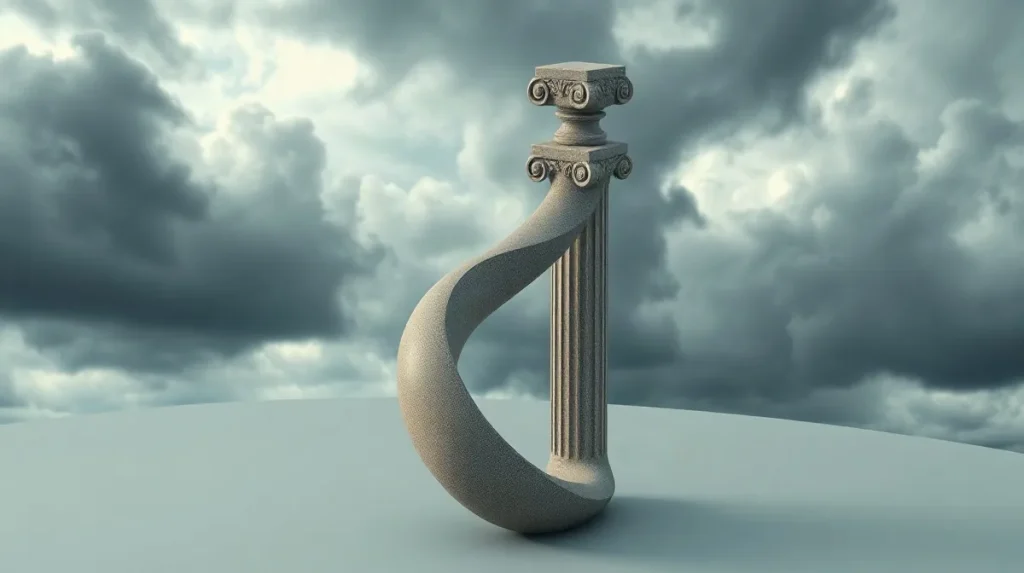
Mannerism is an artistic style that emerged in the late Renaissance, known for its inventive exaggerations, complex compositions, and emotional intensity. It broke away from classical balance and harmony to explore elongated forms, unusual perspectives, and dramatic tension, leaving a lasting influence on the evolution of European art.
Emerging in the early 16th century as a reaction to the perfection of High Renaissance masters, Mannerism challenged traditional ideals by prioritizing artistic expression and experimentation. This movement reflected a period of cultural and social upheaval, where artists sought new ways to convey complexity and ambiguity in human experience. Exploring Mannerism’s key innovations helps us understand how it expanded the boundaries of visual language and paved the way for later movements like Baroque.
Today, Mannerism continues to captivate scholars, artists, and viewers for its bold departure from convention and its striking, often enigmatic imagery. By examining its defining characteristics and enduring impact, this article sheds light on why Mannerism remains a vital chapter in the history of art worldwide.
| Feature | High Renaissance | Mannerism | Baroque |
|---|---|---|---|
| Period | c. 1490–1520 | c. 1520–1600 | c. 1600–1750 |
| Figure Proportions | Natural, balanced | Elongated, exaggerated by up to 30% | Realistic, dramatic |
| Composition | Symmetrical, harmonious | Asymmetrical, complex | Dynamic, theatrical |
| Emotional Tone | Calm, idealized | Tense, artificial | Intense, dramatic |
| Key Artists | Leonardo da Vinci, Raphael | Pontormo, Parmigianino | Caravaggio, Bernini |
- 1520–1600 Period during which Mannerism flourished
- 40+ Number of Mannerist paintings in the Uffizi Gallery collection
- 30% Approximate elongation of human figures in key Mannerist works
What are the defining features of Mannerism in art?
Mannerism in art is defined by its deliberate distortion of human proportions and complex compositions that reject the balanced harmony of the High Renaissance, pushing figures to elongated forms and spatial tension that evoke elegance and emotional intensity. Key examples include Parmigianino’s “Madonna with the Long Neck” (c. 1535), where figures extend beyond natural proportions by approximately 20–30%.
Visual Style
The visual style of Mannerism is characterized by elongated figures that often exceed typical human proportions by one-fifth to nearly one-third, intensifying grace and artificiality. Parmigianino’s masterpiece demonstrates this with the Virgin’s unnaturally long neck, a hallmark of the style’s aesthetic exaggeration during the 1530s. The color palette tends to be unusual, employing acid or pastel tones that contrast with the rich naturalism of earlier Renaissance works. Facial expressions and gestures are often enigmatic or emotionally charged, departing from the serene idealism of artists like Raphael.
Composition Techniques
- Asymmetry: Mannerist compositions favor complex, off-balance arrangements rather than the symmetrical balance seen in Raphael’s “School of Athens” (1509–1511).
- Exaggerated Poses: Figures are often twisted into intricate, serpentine shapes, creating dynamic tension and movement within the frame.
- Spatial Ambiguity: Depth is manipulated to confuse or compress space, enhancing a sense of artificiality and theatricality.
These compositional choices underscore the Mannerist break from naturalistic representation, emphasizing style and intellectual sophistication over direct realism, a trend that dominated European art in the decades following the High Renaissance peak around 1520.
When and where did Mannerism develop, and which artists were central to it?
Historical Timeline
Mannerism developed in Italy around 1520, emerging as a distinctive artistic style after the High Renaissance and flourishing until approximately 1600, when Baroque art began to dominate. This period marks a shift from the balanced harmony of artists like Raphael to a more expressive, elongated, and complex aesthetic. The style first took root in Florence, where artists responded to the cultural and political upheavals of the early 16th century by experimenting with form and composition. Key works such as Jacopo Pontormo’s “Deposition from the Cross” (1528) illustrate the style’s characteristic tension, unusual spatial arrangements, and vivid color palette. By the late 16th century, Mannerism spread throughout Italy and into other parts of Europe, influencing both religious and secular art until it gradually gave way to the Baroque movement around 1600.
Leading Artists
Central figures in the development of Mannerism include Jacopo Pontormo and Rosso Fiorentino, both active in Florence during the 1520s. Pontormo’s “Deposition from the Cross” remains a seminal example of Mannerist innovation, notable for its emotional intensity and departure from naturalism. Rosso Fiorentino contributed with works such as the “Descent from the Cross” (circa 1521), which also features distorted figures and dramatic poses. Other important artists who shaped the movement include Parmigianino, known for his elongated proportions, and Bronzino, whose portraits combine elegance with psychological complexity. These artists collectively pushed the boundaries of Renaissance ideals, paving the way for new artistic expressions in the later 16th century.
- Origin period: circa 1520–1600
- Key location: Florence, Italy
- Exemplary work: Pontormo’s “Deposition from the Cross” (1528)
- Notable artists: Jacopo Pontormo, Rosso Fiorentino, Parmigianino, Bronzino
How did Mannerism influence later art movements?
Baroque Continuation
Mannerism influenced later art movements primarily by providing a foundation of emotional intensity and complex poses that Baroque artists adapted into their dramatic visual language. For example, Caravaggio, active in the early 17th century, integrated Mannerist exaggerated gestures with stark chiaroscuro lighting, a technique that contrasts light and shadow to heighten drama. This fusion can be seen in Caravaggio’s “The Calling of Saint Matthew” (circa 1599-1600), where the theatricality and tension echo Mannerist expressiveness. The Baroque period, roughly spanning 1600 to 1750, embraced such emotional dynamism, making Mannerism’s influence a cornerstone in the evolution of Western art’s narrative and visual power.
Reaction and Revival
In the 18th century, Neoclassical artists reacted against Mannerism’s elaborate complexity by returning to clearer, more restrained classical forms inspired by ancient Greek and Roman ideals. This movement, flourishing around 1750 to 1850, emphasized harmony and proportion, visible in the works of Jacques-Louis David, whose paintings adhere to strict compositional rules. However, Romanticism, emerging in the late 18th century and persisting through the mid-19th century, revived Mannerism’s emotional expressiveness and individualism. Romantic artists like Eugène Delacroix employed vivid color and dynamic movement echoing Mannerist intensity to evoke passion and drama, marking a cyclical re-engagement with Mannerism’s core principles.
- Baroque period: circa 1600–1750
- Caravaggio’s “The Calling of Saint Matthew”: painted c. 1599–1600
- Neoclassical era: approximately 1750–1850
- Romanticism: late 18th to mid-19th century
- Jacques-Louis David’s adherence to classical harmony and proportion
- Eugène Delacroix’s revival of emotional intensity and dynamic movement
What limitations or criticisms have been associated with Mannerism?
Artistic Critiques
Mannerism faced criticism primarily for its deliberate artificiality and distortion of human anatomy, which compromised realistic representation. For example, figures in many Mannerist paintings exhibit elongations exceeding natural human proportions by up to 30%, a departure from the balanced anatomy championed during the Renaissance. This exaggeration often emphasized elegance over accuracy, as seen in works by artists like Parmigianino, whose “Madonna with the Long Neck” epitomizes these stretched forms. Such departures from anatomical correctness led critics to argue that Mannerism sacrificed the Renaissance ideals of harmony and naturalism in favor of stylized complexity.
Decline Factors
The complexity and irregularity of Mannerist compositions were also factors contributing to its decline around 1600. Unlike the clear, balanced compositions of the High Renaissance, Mannerist works often featured crowded spatial arrangements and ambiguous perspectives that some viewers found confusing. This shift away from clarity was less accessible to patrons and audiences accustomed to the harmonious visual language of earlier periods. Consequently, the movement lost favor, paving the way for the Baroque style, which re-emphasized dramatic clarity and emotional engagement.
- Elongation of human figures by up to 30% beyond natural proportions
- Period of decline around the year 1600
- Shift from Renaissance clarity to complex, irregular compositions
How is Mannerism studied and preserved in modern institutions?
Collections
The Uffizi Gallery in Florence plays a pivotal role in studying and preserving Mannerism by housing over 40 key paintings, including masterpieces by Pontormo and Bronzino. These works provide an essential resource for scholars and conservators, supporting detailed research on the style’s characteristic elongation and complex compositions. Preservation efforts at the Uffizi follow stringent conservation standards, with climate-controlled galleries maintaining relative humidity levels around 50% to prevent paint deterioration, reflecting best practices in art preservation established in the 21st century.
Exhibitions
Major exhibitions continue to illuminate Mannerism’s artistic innovations and historical context, notably the 2016 National Gallery London show, “Maniera: Pontormo, Rosso Fiorentino and the Origins of Mannerism.” This exhibition gathered over 100 works from European collections, demonstrating the style’s evolution and its lasting impact on visual culture. Such exhibitions rely on cross-institutional loans and advanced display technology, including LED lighting designed to limit light exposure to under 50 lux, aligning with contemporary preservation guidelines.
- Uffizi Gallery: over 40 Mannerist paintings, climate control at ~50% humidity
- 2016 National Gallery exhibition: 100+ works, LED lighting under 50 lux
- Research focus: Pontormo and Bronzino’s stylistic contributions
- Conservation techniques: controlled environment standards from 2000s onwards
Frequently asked questions
What distinguishes Mannerism from the High Renaissance?
Which painting is considered a quintessential example of Mannerism?
Did Mannerism influence architecture as well as painting?
Why did Mannerism decline around 1600?
Key takeaways
- Mannerism introduced exaggerated proportions, with figures elongated by up to 30%
- It developed in Italy between 1520 and 1600, led by artists like Pontormo and Rosso Fiorentino
- The style influenced Baroque art’s emotional drama and Romanticism’s expressiveness
- Critics cite Mannerism’s artificiality and compositional complexity as reasons for its decline
- Major collections at the Uffizi Gallery and exhibitions like 2016’s 'Maniera' promote ongoing study