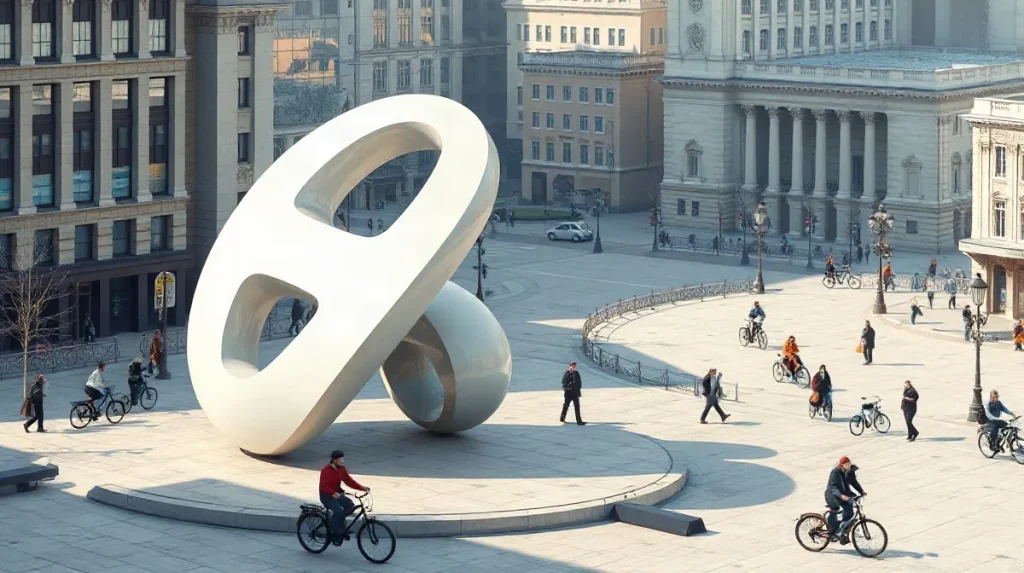
Skulptur Projekte Münster is a groundbreaking decennial exhibition that has profoundly influenced public art worldwide by redefining the relationship between sculpture, urban space, and community engagement. Its innovative approach to site-specific works and international artist participation has set a global standard for how contemporary sculpture interacts with cities and audiences.
Since its inception in 1977, Skulptur Projekte Münster has evolved into a pivotal event in the art world, occurring every ten years in Münster, Germany. By commissioning artists to create sculptures and installations tailored to the city’s unique architectural and social landscape, the exhibition challenges traditional museum boundaries and invites viewers to experience art as an integral part of daily life. This approach has inspired numerous public art initiatives and biennials around the world, highlighting the exhibition’s lasting impact on contemporary art practice.
Understanding Skulptur Projekte Münster means appreciating not only its artistic significance but also its role in shaping global conversations about public space, cultural identity, and the power of art to engage diverse communities. As the exhibition continues to evolve in 2026, its legacy offers valuable insights into the future of sculpture and urban artistic intervention on the international stage.
| Event | Frequency | Duration | Number of Artists |
|---|---|---|---|
| Skulptur Projekte Münster | Every 10 years | 100 days | Approx. 35 |
| Istanbul Biennial | Every 2 years | 90 days | 50-60 |
| Venice Architecture Biennale | Every 2 years | 180 days | 40-50 |
- 100 days Duration of each Skulptur Projekte Münster exhibition
- €4 million Approximate budget for the 2017 exhibition edition
- 10 tons Weight threshold for some large sculptures installed
- 300 km² Urban area of Münster covered by the exhibition
- 35 Number of new sculptures and installations typically presented
What is the format and frequency of Skulptur Projekte Münster?
Decennial Cycle
Skulptur Projekte Münster is held every ten years, with its inaugural edition in 1977 and the upcoming event scheduled for 2027. This decennial rhythm allows for extensive planning and the commissioning of new works, establishing the exhibition as a long-term cultural project rather than an annual fair or festival. Each edition runs for approximately 100 days, giving visitors a substantial window to experience the artworks dispersed throughout the city.
Scale and Scope
The exhibition features around 35 new sculptures and installations installed across Münster’s expansive urban area of about 300 square kilometers. This wide distribution transforms the entire city into an open-air museum, encouraging exploration beyond traditional gallery spaces. The event is organized by the Skulptur Projekte Münster Association, which collaborates closely with the city government and receives financial support from cultural funds of North Rhine-Westphalia, ensuring both local engagement and institutional backing.
- Cycle frequency: every 10 years, since 1977
- Duration: approximately 100 days per edition
- Number of new artworks: about 35 sculptures and installations
- Geographical coverage: 300 km² urban area of Münster
- Organizers: Skulptur Projekte Münster Association with city and state cultural funds
How does Skulptur Projekte Münster impact public art worldwide?
Global Influence
Skulptur Projekte Münster has fundamentally shaped the framework for large-scale, site-specific public art exhibitions worldwide by pioneering an innovative model focused on urban context and community engagement. Its influence is evident in major international events such as the 2025 Istanbul Biennial, which adopted a similar approach to integrating local history and geography into its commissioned works, and the 2026 Venice Architecture Biennale, where site-specific installations echoed Münster’s emphasis on urban narratives. This model has set a precedent for curators and artists aiming to create meaningful, place-based public art.
Urban and Institutional Impact
Beyond inspiring biennials, Skulptur Projekte Münster has affected public art policies in over 20 countries, fostering urban regeneration through art-driven initiatives. Cities have leveraged site-specific sculpture exhibitions to revitalize neglected areas, supported by policy frameworks that encourage long-term integration of public art into urban planning. Major institutions like the Museum of Modern Art in New York and Tate Modern have incorporated works originally commissioned for Münster, expanding these sculptures’ reach and influence within global art discourse. This dual impact on cities and museums underscores Münster’s role in redefining public art’s scope and legacy.
- 20+ countries adopting public art policies inspired by Münster’s model
- 2025 Istanbul Biennial and 2026 Venice Architecture Biennale influenced by Münster’s site-specific approach
- Museum of Modern Art New York and Tate Modern exhibiting Münster-commissioned works
What types of artworks and artists are featured in the exhibition?
Artist Profiles
The exhibition features a diverse roster of both emerging talents and internationally established artists, ensuring a broad representation of contemporary sculpture practice. For example, the 2017 edition included renowned figures such as Ai Weiwei, whose politically charged installations have global recognition, alongside Alicja Kwade, noted for her innovative material explorations. This blend of artists supports a dynamic dialogue between different generations and cultural backgrounds.
Artistic Media and Themes
Artworks span a wide spectrum, from abstract sculptures to interactive installations, frequently incorporating industrial and urban materials. Commonly utilized substances include steel, glass, and recycled debris sourced from urban environments, emphasizing sustainability and site-specificity. The selection process is overseen by an international advisory panel complemented by local curators, who evaluate proposals based on criteria such as relevance to Münster’s urban context and innovative use of materials.
- Materials: steel, glass, recycled urban debris
- Artist status: emerging and established figures
- Selection criteria: diversity, environmental relevance
- Advisory structure: international panel plus local curators
What are the logistical and financial challenges of hosting Skulptur Projekte Münster?
Budgeting and Funding
The financial demands of hosting Skulptur Projekte Münster are substantial, with the 2017 edition operating on a budget of around €4 million. This funding, sourced from a combination of public grants and private sponsorships, is allocated to cover the costs of sculpture installation, ongoing maintenance, and the extensive programming that accompanies the 100-day exhibition period.
Installation Complexity
Logistical challenges stem from the need to coordinate large-scale installations across Münster’s public spaces, requiring meticulous planning and heavy equipment. Transporting and setting up sculptures weighing over 10 tons involves the use of up to 20 heavy-duty trucks and cranes, emphasizing the scale and complexity of the operation.
- Budget: Approximately €4 million for the 2017 exhibition
- Exhibition duration: 100 days
- Heavy equipment: Up to 20 trucks and cranes for transport and installation
- Sculpture weight: Some pieces exceed 10 tons
- Funding sources: Public grants and private sponsors
When does Skulptur Projekte Münster face limitations or criticisms?
Skulptur Projekte Münster faces limitations and criticisms primarily related to its ten-year interval, the impact on local residents, and concerns over the environmental and aesthetic effects of large-scale sculptures. These factors shape public and critical responses to the exhibition’s scope and execution.
Temporal Relevance
The decade-long gap between each Skulptur Projekte Münster edition can cause artworks to feel temporally disconnected from evolving social and political contexts by the time they are displayed. For instance, artworks conceived in 2016 may not fully engage with societal changes or pressing issues emerging by 2026. This challenge affects the exhibition’s ability to resonate with current audiences, as the cultural and political landscape can shift significantly over ten years, potentially diminishing the immediacy of the messages embedded in the sculptures.
Community and Environmental Concerns
Residents near installation sites frequently express frustration over disruptions, particularly in traffic-heavy zones like Münster’s Prinzipalmarkt, where pedestrian and vehicle flow can be impeded during the exhibition period of approximately 100 days. Additionally, the considerable size and permanence of some sculptures provoke debates around environmental impact and urban aesthetics. For example, the installation of large-scale works weighing several tons raises concerns about soil compaction and local flora damage. These debates often involve city planners and environmental standards, such as the German Federal Nature Conservation Act, which guides permissible interventions in urban green spaces.
- Exhibition interval: 10 years, affecting artwork relevance
- Exhibition duration: around 100 days, impacting local traffic
- Environmental regulations: German Federal Nature Conservation Act (2026 standards)
- Size and weight of sculptures: several tons, influencing urban ecology
Frequently asked questions
How long does each Skulptur Projekte Münster exhibition last?
Who funds Skulptur Projekte Münster?
How often is Skulptur Projekte Münster held?
What types of artists participate in the exhibition?
Key takeaways
- Skulptur Projekte Münster is a decennial event lasting 100 days
- It has a €4 million budget supported by public and private funds
- The exhibition features site-specific sculptures by international artists like Ai Weiwei
- It influences global public art models and urban cultural policy
- Challenges include logistical complexity and community impact debates