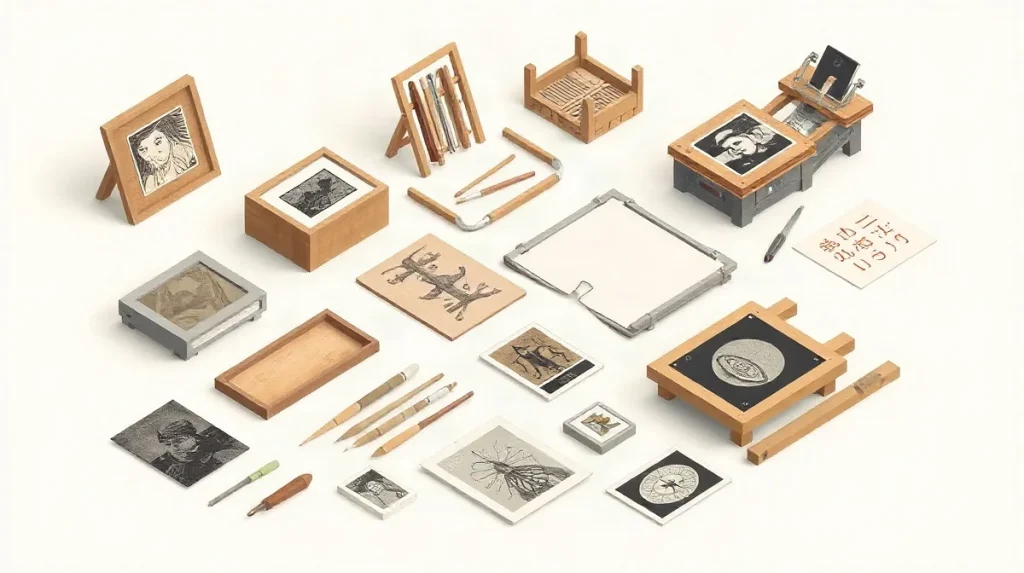
Exploring the diverse world of printmaking reveals a fascinating array of techniques, each with its own unique aesthetic and technical approach. Among these, lithography, etching, and screenprint stand out as enduring methods that have shaped artistic expression for centuries. Comparing lithography, etching, and screenprint techniques offers insight into how artists manipulate materials and processes to achieve distinct textures, tones, and visual effects.
While lithography relies on the chemical repulsion between oil and water to transfer images from stone or metal plates, etching involves incising designs onto a metal surface using acid. Screenprint, on the other hand, uses a stencil and mesh screen to apply layers of ink in bold, vibrant colors. Understanding these differences not only highlights the technical challenges and creative possibilities of each method but also deepens appreciation for the skill and innovation behind every printed work.
| Criterion | Lithography | Etching | Screenprinting |
|---|---|---|---|
| Printing Matrix | Limestone or aluminum plate | Copper/zinc metal plate | Polyester mesh screen |
| Image Creation | Grease and water repulsion | Acid-etched lines | Ink pushed through mesh |
| Color Capability | Fine tonal gradations | Line-based textures | Bold, flat colors, multi-screen for colors |
| Typical Uses | Fine art prints, detailed editions | Detailed line art, textured prints | Textiles, posters, ceramics |
| Setup Complexity | High – plate preparation | High – acid baths and grounds | Moderate – multiple screens |
| Production Speed | Moderate print runs | Slower etching process | Fast once screens prepared |
- 50–200 copies Typical lithography print edition size
- 1971 Year Robert Rauschenberg’s notable lithograph series was created
- 3,000 USD Upper price range for limited-edition lithographs in galleries
- 1 screen per color Number of separate screens needed in screenprinting for each color
- Polyester mesh Common screen material used in screenprinting
What distinguishes lithography from etching and screenprinting in print quality?
Resolution and Detail
Lithography distinguishes itself by delivering high-resolution prints with subtle gradations of tone, making it ideal for artworks requiring fine detail and smooth shading. For example, Robert Rauschenberg’s 1971 lithographs of Cardbird door demonstrate the technique’s capacity to capture intricate textures and tonal transitions across a print size of approximately 100 by 150 cm. This level of detail is achievable because lithography transfers images from a flat stone or metal plate treated chemically to retain ink only in image areas, allowing for continuous tones rather than just lines. In contrast, etching achieves detail through acid-etched lines on metal plates, enabling delicate line work but generally limited to linear textures and hatching to suggest shading. The Metropolitan Museum of Art’s collection of 19th-century etchings illustrates this with line widths often below 0.1 mm, revealing meticulous craftsmanship but a different type of resolution focused on line precision rather than tonal gradation.
Color and Texture
Screenprinting stands out in color saturation and texture, applying ink through a fine mesh screen to produce bold, vivid colors that lithography and etching cannot match in intensity. This method is popular for commercial and artistic prints where vibrant color impact is essential, such as silkscreen prints made by Andy Warhol in the 1960s, which used up to 6 separate screens for multi-color layering. However, screenprinting’s reliance on separate stencils for each color limits its ability to render subtle tonal variations, making it less suitable for nuanced shading. When evaluating print quality based on color and texture, consider these criteria:
- Lithography: capable of continuous tone gradations and subtle texture variations, suitable for prints up to 150 cm wide.
- Etching: excels in crisp, fine line work with line widths down to 0.1 mm, ideal for linear detail but limited in tonal depth.
- Screenprinting: produces bold, saturated colors with up to 6 color layers per print but limited to flat color fields without smooth tonal transitions.
How do the materials and processes differ among lithography, etching, and screenprinting?
Substrate and Tools
Lithography, etching, and screenprinting differ fundamentally in the materials and tools each technique employs. Lithography uses a smooth limestone or aluminum plate as its printing surface; the process depends on greasy ink adhering only to the drawn image area, with moisture repelling ink from the non-image parts. Etching requires a metal plate, commonly copper or zinc, coated with an acid-resistant ground. The artist scratches through this ground to expose the metal, which is then submerged in an acid bath that etches the exposed lines into the plate. Screenprinting utilizes a polyester mesh screen stretched over a frame, with separate screens prepared for each color layer. This method is versatile for substrates such as paper, textiles, and ceramics and allows for relatively quick production runs. For context, a high-quality lithographic limestone slab can cost upwards of $200 in art supply stores, while a 20×30 inch polyester screen frame typically ranges from $50 to $100 depending on mesh density.
Color Application
The application of color differs markedly among these printmaking techniques. Lithography uses greasy inks that interact chemically with the water-treated plate, enabling fine gradations and detailed shading. Etching inks are oil-based and applied by hand into the etched grooves, with excess wiped off the surface to leave lines that print in crisp detail. Screenprinting applies ink by forcing it through the mesh screen with a squeegee, one color at a time, requiring a separate screen for each hue. This layering technique is essential for achieving vivid, solid areas of color, often seen on textiles and posters. A typical multi-color screenprinting project may involve five or more screens, and professional print shops like Ryonet offer starter kits around $300 that include multiple screens and squeegees to facilitate this process.
- Lithography plate: limestone or aluminum, $200+ per slab
- Etching plate: copper or zinc, acid-resistant ground applied
- Screenprinting mesh: polyester screens, $50–$100 per 20×30 inch frame
- Color layers in screenprinting: separate screen required per color, often 5+ layers
- Ink type: greasy inks for lithography; oil-based inks for etching; thick, often plastisol or water-based inks for screenprinting
Which applications or artworks suit each technique best?
Fine Art
Lithography is best suited for fine art prints that demand nuanced tonal variation and sharp detail, frequently seen in limited edition runs priced between $500 and $3,000 at galleries such as the Gagosian Gallery in New York. This technique captures subtle gradations and precise imagery, making it ideal for artists aiming to produce high-resolution works on paper. Etching, on the other hand, excels in artworks that emphasize intricate line work and textural depth, qualities appreciated in museum collections like those of the Metropolitan Museum of Art. Artists using etching often create pieces where acid-etched metal plates reveal fine hatchings and crosshatchings, suitable for editions typically ranging from 30 to 100 prints, allowing for unique detail and expression.
Commercial Use
Screenprinting is particularly effective for producing bold, vibrant designs on a variety of materials, from textiles to ceramics, making it a staple in commercial printing and the fashion industry. Companies such as Kornit Digital manufacture screenprinting equipment that supports multi-color prints requiring separate screens for each hue, commonly used in runs exceeding 1,000 units for apparel and promotional products. Screenprinting’s durability and color saturation also suit signage and packaging, where vividness and material versatility are paramount. In contrast, lithography and etching are less practical for high-volume commercial applications due to their labor-intensive processes and higher per-unit costs.
- Fine Art Lithography: Limited editions priced $500–$3,000 at galleries like Gagosian
- Etching Editions: Typically 30–100 prints with detailed line work, featured in museums such as the Met
- Screenprinting Production Runs: Often exceed 1,000 units for textiles and commercial products
- Screenprinting Equipment: Brands like Kornit Digital enable multi-color prints with separate screens per color
What are the cost and time considerations for each printmaking technique?
Setup Costs
Lithography entails higher initial expenses due to the need for specialized limestone or aluminum plates and intricate preparation procedures. Acquiring high-quality Bavarian lithographic limestone can cost upwards of $500 per stone, while aluminum plates from suppliers like Grafix range between $20 and $50 each. The chemical treatments and the use of greasy crayons or tusche also add to setup complexity. However, once the stones or plates are prepared, the method becomes cost-effective for moderate print runs, typically between 50 and 200 copies, balancing setup investment with output volume.
Screenprinting demands separate screens for each color, which significantly elevates setup costs and time, especially for multi-color projects. A standard polyester mesh screen, such as those produced by Speedball, costs around $30 to $70, and each color requires its own screen. For example, a four-color print involves four distinct screens, multiplying preparation time and materials. This upfront investment can be justified when producing large batches, as the printing speed thereafter is rapid. Conversely, etching involves relatively lower material costs, with copper plates from companies like Printmaking Supply costing about $40 to $60, but the preparation is labor-intensive and includes acid baths that require careful handling and equipment investment.
Production Speed
Etching is generally the slowest among the three techniques due to its reliance on extended acid exposure times, which can range from several hours to days depending on the desired depth of lines and detail. The manual nature of plate preparation, including coating, drawing, and multiple acid baths, prolongs the process. However, the resulting prints exhibit exceptional detail and tonal variation prized by fine art collectors.
Screenprinting allows for rapid reproduction once screens are prepared, making it highly efficient for large print runs. A professional print shop using automated presses, such as the M&R Sportsman EX, can produce hundreds of prints per hour. However, each additional color adds time to both setup and printing, with color registration requiring meticulous alignment that can add 10 to 15 minutes per color per run. Lithography offers a middle ground, with print speeds dependent on press size and operator skill, generally producing 50 to 100 prints per hour after initial setup, making it suitable for moderate-scale editions without lengthy drying times.
- Lithography setup cost: $20–$500 for plates/stones
- Screenprinting screen cost: $30–$70 per color
- Etching plate cost: $40–$60 per copper plate
- Etching acid exposure: Several hours to days
- Screenprint output speed: Up to hundreds of prints per hour
- Lithography print run range: 50–200 copies efficiently
When might each technique be less suitable or face limitations?
Durability and Scale
Lithography faces challenges when used for very large print runs, as the limestone or aluminum plates degrade after about 2,000 impressions, limiting the feasibility of mass production compared to digital methods. For example, a typical lithographic plate from the 2020s may cost between $150 and $300, making it less economical for extensive editions exceeding several thousand copies. Similarly, etching is constrained by the physical wear on copper or zinc plates, which typically sustain fewer than 500 strong impressions before image quality declines. Additionally, etching struggles with producing large fields of solid color due to the nature of acid biting, often resulting in uneven ink coverage. Screenprinting, while robust for medium-scale runs of up to 1,000 pieces, can require significant setup time and costs—screens can range from $50 to $200 each per color—making it less suitable for very large or highly detailed production unless justified by volume.
Detail and Color Limitations
Screenprinting is inherently limited in reproducing fine detail and subtle gradients, as the mesh screen restricts the level of intricacy achievable. Multi-color screenprints demand precise registration, with each additional color requiring a separate screen, which raises costs and complexity sharply; a four-color print involves at least four screens and alignment steps. Lithography excels at high-resolution detail and tonal variation but is less effective at achieving the vibrant and textured color saturation possible with screenprinting. Etching offers exquisite line work but cannot easily render smooth color gradients or large, uniform color blocks, limiting its use for works requiring continuous tone or photorealistic shading.
- Lithographic plate lifespan: ~2,000 impressions
- Etching plate durability: fewer than 500 strong impressions
- Screenprinting setup cost per color screen: $50–$200
- Maximum practical lithographic print run before cost rises sharply: several thousand copies
- Typical screenprint run range: up to 1,000 pieces
Frequently asked questions
What printmaking technique is best for vibrant T-shirt designs?
How does acid etching create an image on a metal plate?
Why is lithography considered high resolution?
Can screenprinting produce multiple colors in one print?
Key takeaways
- Lithography provides high-resolution detail ideal for fine art editions.
- Etching excels in line detail through acid-etched metal plates.
- Screenprinting delivers bold colors but with limited subtlety in detail.
- Setup costs and production times vary: lithography and etching need longer prep, screenprinting suits fast, multi-color runs.
- Each technique has scale and durability limits affecting suitability for projects.
Sources
- motivatingraphics.com — “Comparing Lithographic Printing with Other Techniques”
- gallerease.com — “Difference Between Print, Engraving, Etching, Woodcut, Silkscreen and Lithography in Printmaking – Gallerease”
- metmuseum.org — “Materials and Techniques – The Metropolitan Museum of Art”
- artsy.net — “9 Types of Printmaking You Need to Know”
- nga.gov.au — “Rauschenberg & Johns: significant others – Digital Publication – National Gallery of Australia”
Topic guide: Exhibitions: The Complete Guide