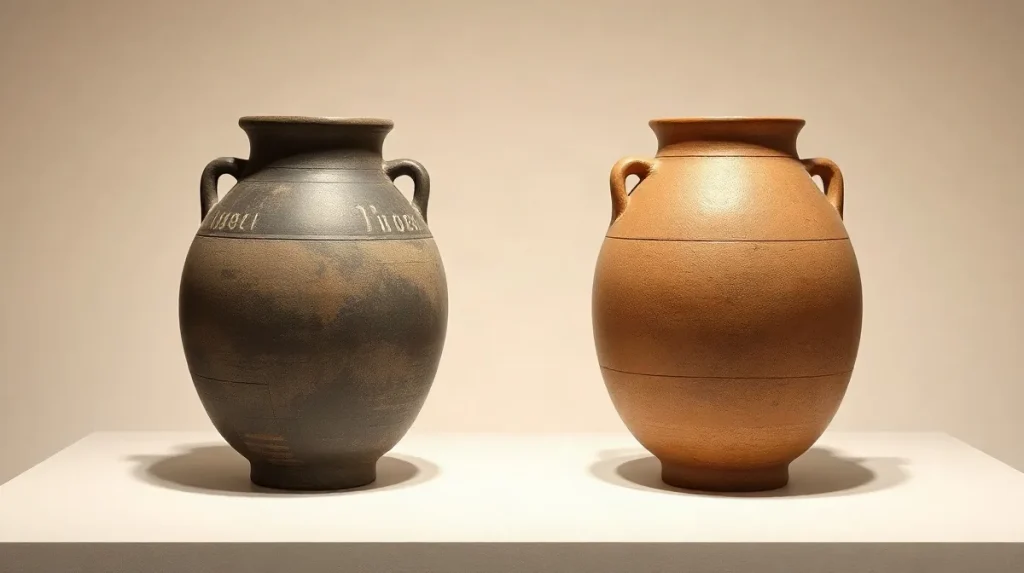
The Milwaukee Art Museum has transferred ownership of two 19th-century stoneware jars made by David Drake to his descendants, while an agreement allows the vessels to remain on long-term display. The return recognizes the family’s connection to an enslaved potter whose name and poems survive on his work. Drake’s inscriptions carried particular force in the antebellum South, where laws criminalized literacy among Black people.
A return with continued public access
The Milwaukee Art Museum’s ownership transfer gives Drake’s descendants a formal role in the future of the two jars without removing them from public view. The agreement permits long-term display, bringing family stewardship and museum access together rather than treating them as mutually exclusive.
Yaba Baker, Drake’s fourth great-grandson, described the arrangement as a recognition of an ancestor’s lasting voice, skill and creativity. His statement frames the transfer not simply as a change in title, but as an acknowledgment of the people whose history is embodied in the objects.
Who David Drake was
Drake, also known as Dave the Potter, was born into slavery around 1801 on a plantation in the Carolinas. Records indicate that, as a late teenager, he was brought by Harvey Drake and Abner Landrum to work in their pottery business in Edgefield, South Carolina.
Edgefield was a centre of ceramic production in the 19th-century American South. Drake became a master potter, particularly known for making large works. The two returned vessels therefore connect his individual practice to a regional pottery trade built under slavery.
Writing on stoneware under slavery
Drake marked pottery with his name and composed brief rhyming verses, making the jars evidence of both ceramic expertise and authorship. He learned to read and write despite the danger faced by Black people who pursued literacy in the South.
South Carolina’s Negro Act of 1740 restricted literacy for enslaved and free African Americans. The law also barred African Americans from earning their own money or moving abroad, with harsh corporal and potentially deadly penalties. Drake’s inscriptions stand against that system: the name and words on the jars asserted a presence the law sought to suppress.
Why the jars matter beyond craft
The vessels bring together material skill and a record of self-expression. Their scale reflects Drake’s reputation for throwing especially large pottery, while the incised writing preserves his words on objects made for practical use. That combination makes the jars significant as works of art and as surviving traces of a Black maker’s identity.
The museum’s continued display under the ownership agreement keeps those traces accessible while recognizing the descendants’ claim. For visitors, the objects can be read not only as examples of 19th-century stoneware, but also in relation to the restrictions imposed by the Negro Act and Drake’s decision to write on his work.
Family recognition and museum stewardship
Baker’s account places the transfer within a family history extending across generations: he is Drake’s fourth great-grandson. The return thus gives the descendants a direct connection to two specific works, rather than leaving their relationship to the jars solely in the hands of an institution.
The terms also preserve a museum role through long-term display. That balance is the central consequence of the agreement: the jars return to the family in ownership while remaining available to the public, with Drake’s pottery and inscriptions continuing to be seen together.
Takeaway: The Milwaukee Art Museum has returned two jars to David Drake’s descendants while securing their long-term display—a transfer that recognizes both his artistry and the history written into his work.
