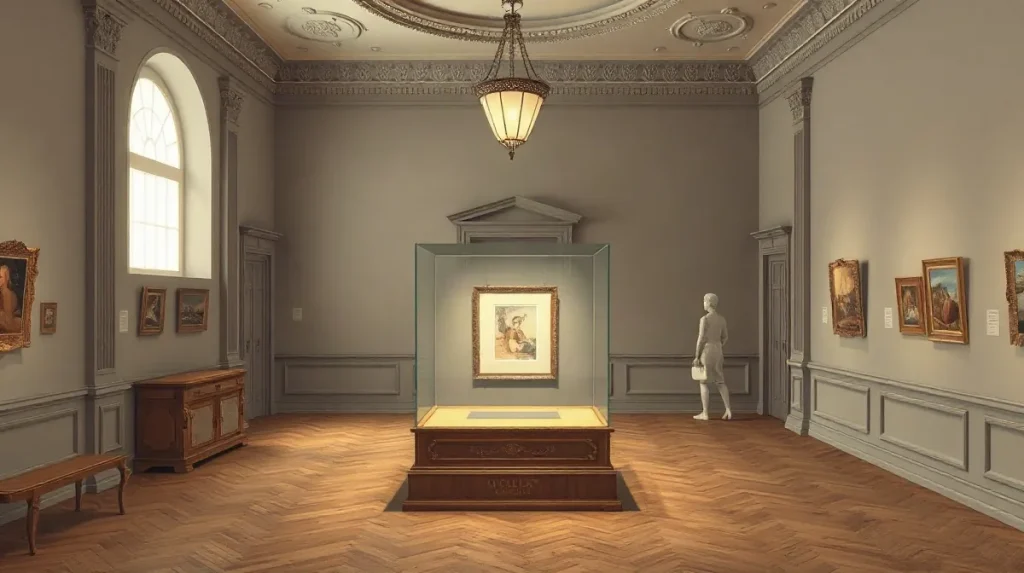
Transforming private collections into public museums is a complex journey that blends passion, vision, and meticulous planning. Behind the scenes, collectors face a host of challenges—from selecting the right location and securing funding to navigating legal frameworks and curatorial decisions. This process not only preserves invaluable artworks but also reshapes how the public experiences and engages with cultural heritage.
The secrets behind this transformation reveal the delicate balance between personal legacy and public responsibility. It involves strategic partnerships, expert advice, and often a deep commitment to education and accessibility. By understanding the careful orchestration required, we gain insight into how private treasures evolve into enduring institutions that enrich communities worldwide.
| Aspect | Example | Typical Value or Duration | Relevant Institution or Law |
|---|---|---|---|
| Legal Framework | Federal Law № 73-FZ | Effective since 2002 | Russian Ministry of Culture |
| Tax Incentives | Cultural donation deduction | Up to 20% of donation value | Russian Tax Code |
| Operational Budget | Museum staffing and conservation | $5 million per year | Various public museums |
| Dispute Resolution | Moscow Museum ownership litigation | 18 months delay | Russian courts |
| Endowment Funds | Fabergé Museum | 500 million ₽ | Private-public partnership |
- 20% Maximum tax deduction rate for cultural donations in Russia
- $5 million Typical annual operational budget for mid-sized art museums
- 18 months Duration of ownership litigation delaying a Moscow museum project in 2023
- 500 million ₽ Endowment fund size supporting the Fabergé Museum in St. Petersburg
Who are the key stakeholders involved in converting private collections into public museums?
Collectors and Institutions
Key stakeholders in converting private collections into public museums include private collectors and public cultural institutions. For example, billionaire Dmitry Rybolovlev, whose Russian art holdings are valued at over $1 billion, exemplifies the private collector whose amassed works can significantly enrich public access when shared. On the institutional side, the Tretyakov Gallery in Moscow has a long history since 1892 of integrating private collections into its holdings, providing the infrastructure and curatorial expertise necessary to present and conserve these artworks for public benefit. The interaction between collectors like Rybolovlev and institutions like the Tretyakov Gallery often involves complex negotiations over valuation, conservation standards, and exhibition planning, balancing the collector’s legacy and the institution’s public mission.
Legal and Governmental Roles
Legal advisors and government bodies play crucial roles in this transformation process, ensuring compliance with cultural heritage laws and facilitating or regulating the transfer of ownership. Specialists in Russia’s 2002 Federal Law on Cultural Heritage Protection navigate stipulations around export restrictions and preservation requirements. Meanwhile, the Ministry of Culture of the Russian Federation can influence conversions by providing funding or imposing regulatory limits, such as thresholds for acquisition costs or public accessibility standards. For instance, government grants may cover up to ₽100 million to support museum renovations when incorporating private collections. Legal frameworks and state involvement thus safeguard cultural assets while shaping how and when private art becomes publicly accessible.
What legal frameworks govern the transition of private collections to public museums?
National Laws
In Russia, the transition of private collections into public museums is primarily governed by the Federal Law № 73-FZ, enacted in 2002, which requires state registration of cultural valuables and regulates their export and transfer. This law establishes clear procedures to ensure that objects of cultural heritage, once transferred, are properly documented and legally protected, preventing unauthorized export abroad. Additionally, Russian tax legislation offers incentives to private collectors who donate cultural objects to public institutions, permitting deductions up to 20% of the donation’s appraised value from their taxable income. Donation contracts typically stipulate terms such as display duration—often a minimum of 5 years—ownership rights retention or transfer, and conservation responsibilities, ensuring long-term preservation and public accessibility of the collection.
International Standards
Internationally, the UNESCO 1970 Convention on the Means of Prohibiting and Preventing the Illicit Import, Export, and Transfer of Ownership of Cultural Property serves as a key framework influencing provenance verification and repatriation policies for collections entering public museums. This agreement encourages signatory states to establish legal controls that prevent illicit trafficking and facilitate the return of cultural objects to their countries of origin. Museums and private collectors often adhere to provenance standards that require documentation of ownership history spanning at least 50 years to comply with due diligence expectations. Contracts for collection transfers may also refer to international best practices, such as requiring conservation reports every 3 years and specifying conditions for loan durations, commonly set between 3 and 10 years, to align with global museum standards.
How are financial and operational terms negotiated in these transformations?
Pricing and Market Benchmarks
Financial terms in transforming private collections into public museums are primarily negotiated based on market benchmarks and the assessed value of the artworks. For instance, in 2025, Sotheby’s auctioned Russian avant-garde pieces for prices ranging between $10 million and $15 million, establishing a critical pricing reference for collectors and institutions. These figures often serve as a starting point during purchase negotiations, reflecting the rarity and cultural significance of the works. Additionally, private collectors and public entities may consider recent auction results, provenance, and condition reports to arrive at a mutually acceptable purchase price, which can fluctuate significantly depending on the collection’s scope and historical importance.
Budgeting and Funding Models
Operational terms involve detailed budgeting and the establishment of sustainable funding models to support ongoing museum activities. New museums typically allocate over $5 million annually for essential expenses, including staffing, security, and conservation efforts. Endowment funds play a crucial role in long-term financial stability; for example, the Fabergé Museum in St. Petersburg benefits from a 500 million ₽ endowment that underwrites its operational costs. Furthermore, private-public partnerships are common, with negotiated agreements often featuring profit-sharing arrangements from special exhibitions, frequently on a 60/40 basis favoring the public institution. These financial frameworks are critical to balancing cultural mission with economic viability.
- Purchase prices benchmarked at $10–15 million by Sotheby’s for Russian avant-garde works in 2025
- Annual operational budgets exceeding $5 million for museum staffing and conservation
- Endowment funds, such as the 500 million ₽ fund supporting the Fabergé Museum
- Profit-sharing agreements in private-public partnerships typically negotiated at 60/40 ratios
What are the main challenges and trade-offs in transforming private collections into public museums?
Control and Access Conflicts
The primary challenge in converting private collections into public museums lies in the loss of exclusive control by collectors, which often sparks disputes and legal battles. A notable example is the Moscow Museum of Modern Art project, which faced an 18-month delay in 2023 due to ownership litigation, underscoring how protracted legal processes can stall museum openings. Additionally, balancing donor stipulations with curatorial freedom frequently requires mediation or legal arbitration to reconcile conflicting interests. Public access demands introduce further complexities, as museums must implement advanced surveillance systems—such as the Avigilon Control Center platform—that can cost upwards of $200,000 to ensure both visitor safety and artwork security.
Costs of Preservation and Security
Maintaining proper conservation standards for private collections transitioning into public institutions also presents significant financial burdens. Installation of climate control systems compliant with international standards like ASHRAE 2018 HVAC guidelines can exceed $2 million for medium-sized collections, ensuring optimal temperature and humidity levels to prevent deterioration. Security upgrades are another major expense, requiring sophisticated technologies including biometric access controls and real-time monitoring tools. These investments are essential to safeguard valuable artworks while accommodating increased public footfall, yet they represent a considerable trade-off between operational costs and the imperative of public accessibility.
- Ownership litigation delay example: 18 months (Moscow Museum of Modern Art, 2023)
- Surveillance system cost: $200,000+ (Avigilon Control Center)
- Climate control installation cost: $2 million+ (ASHRAE 2018 HVAC compliant)
- Legal mediation required for donor vs. curator conflicts
How do museums ensure the ongoing relevance and accessibility of formerly private collections?
Digital and Educational Outreach
Museums ensure the ongoing relevance and accessibility of formerly private collections through comprehensive digitization and tailored educational programs. For example, the State Hermitage Museum launched its online catalog in 2024, featuring over 300,000 high-resolution images that allow global audiences to explore its collections remotely. This digital initiative enhances accessibility beyond physical visitation, significantly expanding the museum’s reach. Complementing this, institutions like the Garage Museum in Moscow run educational programs designed specifically for local communities, attracting more than 100,000 visitors annually. These programs include workshops, lectures, and interactive tours that engage diverse audiences and foster deeper understanding of the collections’ cultural and historical contexts.
Exhibition Strategies
Rotating exhibitions play a crucial role in maintaining public interest in private collections transformed into museums. Many institutions change their displayed works every 3 to 6 months to offer fresh perspectives and encourage repeat visits. The Pushkin Museum’s 2026 joint exhibition with New York’s Museum of Modern Art (MoMA) exemplifies how international collaboration can revitalize collections by introducing cross-cultural dialogues and attracting broader audiences. Such partnerships also enable museums to share resources, expertise, and artworks, enriching the visitor experience while ensuring the longevity and dynamic presentation of their holdings.
- Digitization: State Hermitage’s online catalog with 300,000+ images (launched 2024)
- Educational outreach: Garage Museum’s local programs with 100,000+ annual visitors
- Exhibition rotation cycle: 3–6 months per show
- International collaboration: 2026 Pushkin Museum–MoMA joint exhibition
Frequently asked questions
What legal protections exist to prevent private art from leaving the country after becoming public?
How are tax benefits structured for donors who give private collections to public museums?
What happens if a collector wants to regain control after donating a collection?
Are there international standards for exhibiting private collections in public museums?
Key takeaways
- Federal Law № 73-FZ governs cultural heritage transfers in Russia
- Collectors often lose exclusive control when collections become public
- Operational budgets for museums commonly exceed $5 million annually
- Tax deductions for cultural donations can reach 20% of value
- Digitization and rotating exhibits maintain public engagement