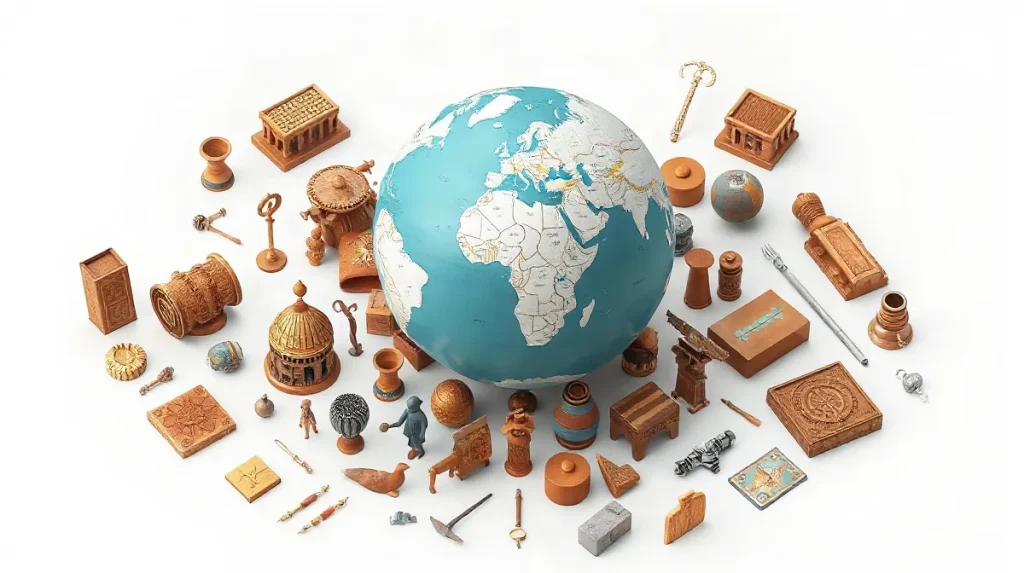
The formation of encyclopaedic museums represents one of the most ambitious cultural projects in human history, aiming to gather the breadth of human knowledge and creativity under a single roof. These institutions did not emerge overnight; rather, their origins lie in the gradual accumulation of diverse collections—artifacts, natural specimens, historical relics—assembled through centuries of exploration, trade, and scholarly curiosity. The process was shaped by evolving ideas about classification, education, and public access, reflecting both the intellectual drives and political ambitions of their times.
Understanding how encyclopaedic museums were assembled involves tracing the convergence of private collectors, royal patrons, and early academics who sought to create comprehensive repositories that transcended regional or disciplinary boundaries. As these collections expanded, so too did the organizational frameworks that allowed for systematic display and interpretation, transforming disparate objects into coherent narratives about the world and human achievement. This growth mirrors broader societal shifts, including the rise of colonial empires and scientific inquiry, which both enriched and complicated the mission of encyclopaedic museums.
| Museum | Founding Year | Founding Basis | Notable Collection Size |
|---|---|---|---|
| Kunstkamera, Saint Petersburg | 1714 | Imperial royal collection | Approx. 17,000 items initially |
| British Museum, London | 1753 | Sir Hans Sloane’s private collection | Over 71,000 items at founding |
| Neues Museum, Berlin | 1855 | Prussian royal collections and expeditions | Tens of thousands from Egypt and Nubia |
| Louvre Museum, Paris | 1793 (public opening) | Royal art collections | Over 380,000 objects today |
- 71,000 items Size of Sir Hans Sloane’s collection forming the British Museum
- 1714 Year the Kunstkamera was founded as Russia’s first encyclopaedic museum
- 1753 Year the British Museum was established
- 1970 UNESCO convention year affecting museum artifact provenance
What historical events catalyzed the creation of encyclopaedic museums?
Enlightenment and Science
The rise of encyclopaedic museums was spurred primarily by the Enlightenment era in the 18th century, which fostered a surge in scientific curiosity and systematic knowledge collection. This period saw intellectuals and collectors driven by a desire to classify and understand the natural world and human cultures comprehensively. A key example is the British Museum, founded in 1753 on the basis of Sir Hans Sloane’s extensive private collection of over 71,000 objects, including natural specimens, antiquities, and ethnographic items. The Enlightenment emphasis on empirical observation and categorization encouraged museums to expand collections methodically and publicly share knowledge, moving away from private curiosity cabinets towards institutions of learning accessible to the wider public.
Royal and Colonial Foundations
Another catalytic factor in the establishment of encyclopaedic museums was the legacy of royal collections combined with the vast influx of artifacts obtained through European colonial expeditions during the 18th and 19th centuries. Notably, the Kunstkamera in Saint Petersburg, founded by Peter the Great in 1714, was among the first state-sponsored collections meant to represent diverse cultures and natural history systematically. The period’s exploratory voyages to Africa, Asia, and the Americas contributed significantly to museum holdings, bringing in thousands of ethnographic and natural history objects. These sources combined to shape museums that aimed to offer broad, encyclopaedic representations of the world’s knowledge and heritage.
- British Museum’s founding date: 1753
- Sir Hans Sloane’s collection size: over 71,000 objects
- Kunstkamera establishment year: 1714
- Colonial expeditions’ impact: extensive acquisitions during 18th–19th centuries
How did colonial expeditions influence museum collections?
Acquisition Methods
Colonial expeditions played a central role in assembling encyclopaedic museum collections by legally acquiring artifacts through exchanges, purchases, and gifts that complied with the contemporary laws of the 18th and 19th centuries. For example, the Neues Museum in Berlin greatly expanded its holdings through Prussian-led expeditions to Egypt and Nubia between 1829 and 1844, during which thousands of objects, including monumental sculptures and papyri, were brought back under agreements with local authorities. Such acquisitions were often formalized through treaties or purchase agreements, distinguishing them from outright looting. These expeditions typically involved scientific teams documenting natural history specimens alongside ethnographic and archaeological finds, reflecting the colonial powers’ ambitions to systematically classify global diversity.
Scope of Collections
The collections amassed during colonial periods were remarkably broad, encompassing not only ethnographic artifacts but also natural history specimens and archaeological treasures. For instance, by 2026, many encyclopaedic museums still hold significant objects dating to these eras, including several thousand Egyptian antiquities at the Neues Museum and extensive botanical collections gathered during French colonial ventures in Indochina. These holdings illustrate the encyclopaedic museums’ foundational goal to represent the world’s cultural and natural heritage comprehensively. The scope of colonial acquisitions can be summarized by three main criteria:
- Ethnographic objects documenting indigenous cultures, often numbering in the tens of thousands per institution.
- Natural history specimens, including thousands of plant and animal samples collected during expeditions.
- Archaeological finds such as monumental sculptures and manuscripts, exemplified by the 8,000+ Egyptian artifacts in Berlin’s Neues Museum.
What role did private collectors and donations play in assembling encyclopaedic museums?
Key Collectors
Private collectors were instrumental in forming the initial cores of many encyclopaedic museums, providing vast and diverse assemblages that public institutions could build upon. Sir Hans Sloane’s collection, comprising over 71,000 items ranging from botanical specimens to ethnographic artifacts, was pivotal for the British Museum’s founding in 1753. Similarly, the Medici family’s Renaissance-era collections in Florence established a model for royal patronage transitioning into public cultural heritage. These private collections often contained rare objects gathered through exploration, scientific study, and trade, creating encyclopaedic breadth. Between 1800 and 1900, the transfer of such collections to public museums increased markedly, often as part of bequests or purchases, enabling encyclopaedic museums to expand their holdings dramatically in both size and scope.
Philanthropic Impact
Donations and bequests from philanthropists and aristocrats played a crucial role in enriching encyclopaedic museums, especially during the 19th century. The Smithsonian Institution, founded in 1846 with its founding collections donated by James Smithson, exemplifies this trend, incorporating extensive ethnographic and scientific specimens to promote public education. These benefactors frequently aimed to foster cultural understanding and disseminate knowledge broadly. The growing public role of encyclopaedic museums in the 19th century was supported by:
- Founding donations like Smithson’s bequest for the Smithsonian’s initial collection
- Private collections often comprising tens of thousands of items, such as Sloane’s 71,000-piece assemblage
- Increasing transfer rates of private holdings into public museums throughout the 19th century, often formalized by legal bequests or institutional acquisitions
This pattern of philanthropy and donation helped encyclopaedic museums evolve into comprehensive repositories representing global cultures and scientific knowledge by 2026, continuing to influence museum policies and acquisitions today.
How did encyclopaedic museums balance the goals of education, preservation, and representation?
Educational Ambitions
The encyclopaedic museums balanced the goal of education by opening their doors to the public with the express purpose of sharing a broad spectrum of human artistic and cultural achievement. The Louvre, inaugurated to the public in 1793, set an early precedent by assembling collections from former royal holdings and expanding them with acquisitions from colonial expeditions and scientific discoveries. These institutions curated diverse objects from natural history, archaeology, ethnography, and fine art to present a comprehensive global narrative, reflecting Enlightenment ideals of universal knowledge. By 2026, leading museums such as the British Museum and the Smithsonian Institution have integrated digital archives featuring high-resolution images and detailed provenance records, increasing accessibility worldwide. Collaborative exhibitions with source communities have become a standard approach to ensure cultural accuracy and inclusivity, meeting ethical standards established in recent decades, including compliance with the 1970 UNESCO Convention on the Means of Prohibiting and Preventing the Illicit Import, Export and Transfer of Ownership of Cultural Property.
Preservation Challenges
Preservation in encyclopaedic museums involves protecting fragile artifacts while maintaining their educational and representational roles. Institutions like the Neues Museum in Berlin utilize advanced climate control systems that maintain temperature and relative humidity within strict thresholds—typically 20±2°C and 50±5% humidity—to prevent deterioration of organic materials and pigments. Ethical acquisition practices, once less scrutinized, now follow rigorous provenance research and legal frameworks to avoid illicit trade and ensure rightful ownership. Modern conservation labs invest millions annually, such as the Getty Conservation Institute which spends approximately $10 million per year on preservation research and training. Museums also face the challenge of representing diverse cultures respectfully, counterbalancing historical imbalances by working closely with indigenous groups and implementing repatriation protocols when appropriate, reflecting evolving global standards for museum stewardship.
- Digital archives with 4K image resolution and detailed metadata accessible globally
- Climate control standards: 20±2°C temperature, 50±5% relative humidity for artifact preservation
- Annual conservation budgets in the range of $5-$15 million for leading institutions
- Compliance with international laws like the 1970 UNESCO Convention on cultural property
- Collaborative exhibitions involving source communities to ensure accurate representation
What are the limitations and controversies associated with encyclopaedic museum collections?
Repatriation Issues
Encyclopaedic museum collections face significant limitations and controversies primarily due to their colonial-era origins, which have fueled ongoing debates about the repatriation of cultural artifacts. Many collections include objects acquired during the 18th and 19th centuries through colonial expeditions or purchases that, while legal at the time, are now questioned for their ethical validity. Since the adoption of the 1970 UNESCO Convention on the Means of Prohibiting and Preventing the Illicit Import, Export and Transfer of Ownership of Cultural Property, museums worldwide have had to reassess the provenance of artifacts and respond to demands from source communities seeking the return of culturally significant items. For example, the British Museum holds over 8 million objects, including disputed pieces like the Benin Bronzes, which Nigeria has requested for repatriation, highlighting the tension between universal access and rightful ownership. A key limitation is that many collections lack complete provenance records, complicating efforts to verify rightful ownership and cultural context.
Ethical and Legal Challenges
The evolution of international legal frameworks and ethical museum standards since the late 20th century has further complicated the stewardship of encyclopaedic collections. Museums must navigate between compliance with the 1970 UNESCO Convention and national laws, such as the U.S. Native American Graves Protection and Repatriation Act (NAGPRA) enacted in 1990, which mandates the return of certain indigenous cultural items. Early acquisitions, often amassed through private collectors or colonial authorities, were not subject to today’s strict regulations, leading to contested claims. Additionally, museums face challenges in authentically representing the voices of source communities, as less than 40% of ethnographic objects in major Western institutions have documented collaborative curation involving originating cultures. This gap limits the collections’ ability to fully engage with the cultural meanings and contemporary significance of their holdings, raising questions about the role of encyclopaedic museums in a postcolonial world.
- 1970 UNESCO Convention on cultural property
- Over 8 million objects in the British Museum
- NAGPRA legislation requiring repatriation of Native American artifacts
- Less than 40% of ethnographic collections with documented community collaboration
Frequently asked questions
When and where was the first encyclopaedic museum established?
How did private collections contribute to public museums?
Why are colonial-era acquisitions controversial today?
What challenges do encyclopaedic museums face in preserving diverse cultural heritage?
Key takeaways
- Enlightenment ideals drove the encyclopaedic museum model in the 18th century
- Colonial expeditions legally expanded collections that remain central today
- Private collectors like Sir Hans Sloane were foundational to public museums
- Museums balance education, preservation, and ethical representation
- Repatriation debates highlight evolving museum responsibilities
Sources
- tlcp.law.uiowa.edu — “International Law and the Problem of Museum Repatriation”
- historyreclaimed.co.uk — “Not Looted: the world’s treasures in western encyclopedic museums – History Reclaimed”
- History of Applied Science & Technology — “The Early History of Museums in Europe”
- explorethearchive.com — “The History of Museums, from "Cabinets of Curiosity" to Today”