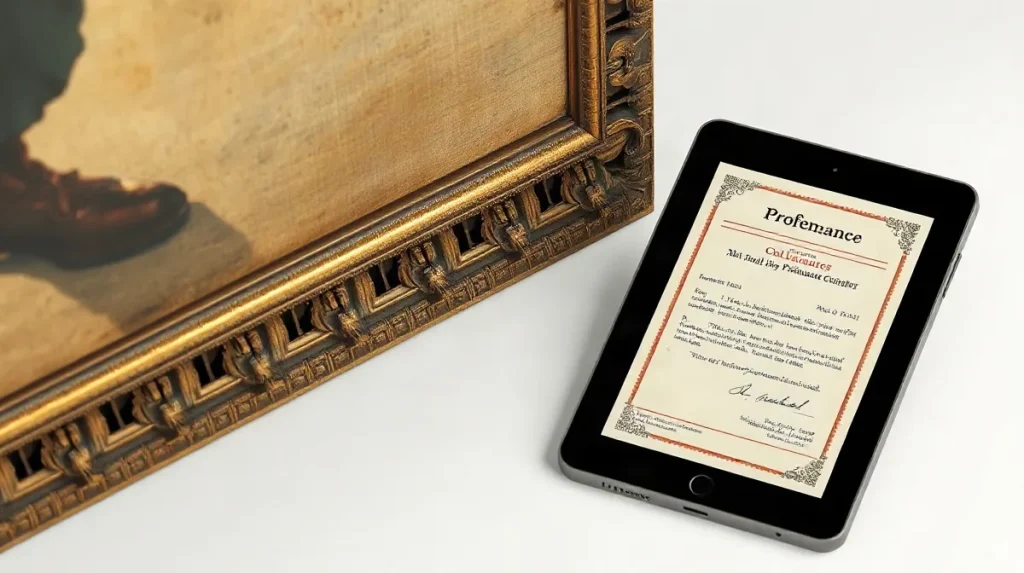
Provenance in art news serves as a critical thread weaving together the history, authenticity, and cultural significance of artworks. Understanding the journey of a piece—from its creation through various hands to its current owner—adds layers of meaning that go beyond the visual experience. This background information not only enhances appreciation but also plays a pivotal role in establishing the legitimacy and value of artworks in the art market and public collections.
However, the role of provenance extends beyond mere documentation; it influences how art news is reported and consumed. Journalists and critics must navigate the complexities of incomplete records, disputed ownership, and ethical considerations while conveying provenance details to readers. These challenges highlight both the importance and the limits of provenance in shaping narratives within the dynamic world of art reporting.
| Method | Strengths | Limitations | Notable Example |
|---|---|---|---|
| Documentary Provenance | Tracks ownership history; widely accepted | Can be incomplete or forged | Auction records from Sotheby’s since 1744 |
| Scientific Analysis | Material authentication; objective data | Costly; requires expertise | XRF pigment analysis confirming 17th-century materials |
| Blockchain Records | Immutable, transparent digital ledger | Relatively new; adoption still growing | Verisart platform launched in 2023 |
| Expert Connoisseurship | Experienced judgment on style and technique | Subjective; may vary between experts | International Foundation for Art Research (IFAR) reviews |
- 20–30% Typical price premium for artworks with documented provenance
- 1970 Year of UNESCO Convention regulating illicit art trafficking requiring provenance
- 3+ Number of authentication methods (e.g., provenance, pigment analysis, XRF) commonly combined
- $1 million Threshold above which provenance verification is critical for legal art sales
What is provenance and why is it crucial for art authentication?
Definition and Historical Context
Provenance is the documented history of an artwork’s ownership and origin, crucial for confirming its authenticity and legal status. Auction houses like Sotheby’s and Christie’s have maintained provenance records since the 18th century, providing detailed chains of custody that help verify genuine works and trace illicit transactions. In 2026, the International Foundation for Art Research (IFAR) continues to serve as a key institution by offering comprehensive provenance databases, widely referenced by collectors and museums to assess works valued from thousands to multimillion-dollar pieces. Without reliable provenance, artworks risk being misattributed or, worse, forged—an issue costing the global art market billions annually in losses and reputational damage.
Modern Authentication Tools
Advances in technology have significantly strengthened provenance verification in recent years. Blockchain platforms such as Verisart now digitally certify provenance records, ensuring transparency and tamper-proof ownership histories that can be updated in real time. This innovation helps prevent forgery, which has historically accounted for up to an estimated 20% of artworks offered on secondary markets. In addition to blockchain, scientific methods like pigment analysis and infrared imaging complement provenance research by confirming an artwork’s materials and stylistic period. Ethical standards and international regulations further support provenance integrity, requiring artworks exceeding certain price thresholds—often above $50,000—to have documented ownership histories before sale or export.
- Sotheby’s and Christie’s provenance archives dating back to the 1700s
- IFAR provenance databases used globally for authentication
- Verisart blockchain platform launched in 2026 for digital provenance certification
- Forgery prevalence estimated at up to 20% in secondary art markets
- Mandatory provenance documentation for artworks valued over $50,000 in many jurisdictions
How does provenance impact the value and market price of artworks?
Price Premiums
Provenance significantly increases the market price of artworks, with documented histories typically adding 20–30% to final auction prices, as evidenced by recent Christie’s sales data. Artworks previously owned by distinguished collectors or displayed in renowned museums can command additional millions of dollars in valuation, reflecting the enhanced prestige and desirability that provenance confers. For example, a painting linked to a major institution like the Tate Modern or a celebrated private collection often sees its price elevated beyond baseline estimates. Buyers are willing to pay such premiums because provenance reduces uncertainty about authenticity and condition, making these works more attractive investments in high-value transactions.
Legal and Ethical Value
Provenance also plays a crucial role in establishing legal ownership and ethical legitimacy, particularly for artworks sold above $1 million. The 1970 UNESCO Convention on illicit trafficking mandates proof of provenance for artworks crossing international borders, aiming to curb illegal art sales and repatriate cultural property. This legal framework enhances buyer confidence by minimizing risks associated with stolen or looted art. Additionally, provenance documentation aligns with ethical standards upheld by major auction houses and institutions, ensuring transparent sales processes and supporting the long-term integrity of the art market.
- Price increase of 20–30% for artworks with documented provenance (Christie’s data)
- Additional valuation in the millions for works linked to major collectors or institutions
- Legal threshold of $1 million for heightened provenance requirements in sales
- 1970 UNESCO Convention requiring provenance proof for international art transactions
What are the common misconceptions about provenance in art journalism?
Myths vs Reality
One common misconception in art journalism is equating provenance with an absolute guarantee of authenticity. Provenance documents the ownership history of a work but can be incomplete, inconsistent, or even forged. For example, studies show that up to 20% of provenance records in auction catalogs for pre-20th-century artworks contain gaps or unverifiable transfers. This reality challenges simplistic claims often found in headlines that imply a seamless, fully verified lineage. Additionally, the rise of modern technologies such as blockchain registers—like those employed by companies such as Verisart since 2024—has started to improve provenance reliability but remains limited to recent and digital art markets, leaving older works still vulnerable to documentation errors or fraud.
Reporting Challenges
Art journalism frequently overlooks the complexity and verification methods behind provenance, which contributes to oversimplified narratives. Reports rarely mention scientific analyses supporting authentication, such as radiocarbon dating used for works older than 300 years or X-ray fluorescence spectroscopy employed by institutions like the State Hermitage Museum. Moreover, journalists often omit discussing provenance gaps or disputes, presenting ownership history as continuous. The complexity of provenance can span several centuries, requiring examination of documents in multiple languages and legal systems, a process that may take months or years and involves specialists in art law and history. This nuance is usually lost in headlines constrained to under 100 characters, which favor definitive statements over cautious contextualization.
- Up to 20% gap or unverifiable provenance in auction catalogs for pre-20th-century artworks
- Blockchain provenance solutions like Verisart operational since 2024
- Scientific methods: radiocarbon dating for works >300 years old; X-ray fluorescence spectroscopy
- Verification processes often require months to years involving multidisciplinary experts
When and why can provenance fail to ensure authenticity or legal clarity?
Forgery and Fabrication Risks
Provenance can fail to guarantee authenticity when documentation is fabricated or incomplete, a problem especially acute for artworks sold privately or displaced during conflict periods such as World War II. Since the 1990s, several high-profile forgeries have entered the market supported by convincingly forged provenance papers, undermining trust in ownership records. For instance, fake certificates and falsified gallery receipts have been detected in cases involving works attributed to Russian avant-garde artists, leading to losses estimated in millions of dollars. The lack of standardized provenance databases exacerbates this vulnerability, making it difficult to cross-verify claims. Scientific authentication techniques—like Raman spectroscopy for pigment identification or carbon-14 dating for canvas age—serve as critical adjuncts to provenance, yet these methods remain underutilized or underreported in mainstream art market communications.
Ethical and Legal Complications
Provenance can also obscure illicit histories, notably when ownership records conceal artworks looted during the Nazi era or appropriated through colonial expropriation. The 1998 Washington Principles on Nazi-Confiscated Art set guidelines for restitution, yet many artworks with dubious provenance still circulate, complicating legal clarity and moral responsibility. In Russia and Eastern Europe, provenance gaps spanning decades often reflect political upheavals and forced sales, complicating repatriation efforts. Moreover, compliance with laws such as the 1970 UNESCO Convention on cultural property export restrictions requires transparent provenance, but incomplete records hinder enforcement. Ethical art dealers and institutions increasingly rely on provenance combined with scientific analysis to meet thresholds of due diligence, such as verifying ownership chains over at least 50 years or confirming materials predate 1900 to avoid illicit trade.
- Use of Raman spectroscopy and carbon-14 dating to complement provenance verification
- Washington Principles (1998) guide restitution of Nazi-looted art
- 50-year ownership chain verification threshold for due diligence
- 1970 UNESCO Convention standards for cultural property export
How are new technologies enhancing provenance reliability and transparency?
Blockchain and Digital Records
New technologies enhance provenance reliability and transparency primarily through blockchain platforms and advanced digital archives that create immutable and verifiable records of artwork ownership and transaction history. Since 2023, platforms like Codex Protocol and Verisart have leveraged blockchain to log provenance data securely, preventing tampering or forgery by timestamping each entry on a decentralized ledger. This approach reduces provenance-related fraud and accelerates due diligence, as records are accessible in real time and cannot be altered retroactively. Digital archives, combined with AI-driven tools, further enable rapid cross-referencing of millions of ownership records, greatly improving the efficiency and accuracy of provenance verification. For example, AI algorithms can sift through databases containing over 10 million records in days rather than months, identifying inconsistencies or confirming provenance chains with a high degree of confidence.
Scientific Authentication Techniques
Scientific methods such as X-ray fluorescence (XRF) and infrared reflectography provide objective material analysis that complements provenance documentation by verifying the physical components and underlayers of artworks. XRF can identify elemental compositions with precision, detecting pigments or metals consistent with a specific period or artist’s palette, while infrared reflectography reveals hidden sketches or alterations beneath paint layers, confirming creative processes and authenticity. These tools have become standard in major art institutions and auction houses, often costing between $1,000 and $5,000 per analysis, reflecting their specialized nature. Additionally, regulatory bodies like CINOA enforce provenance standards and ethical codes that require dealers and galleries to combine scientific evidence with documented provenance, ensuring a multilayered approach to artwork authentication.
- Codex Protocol and Verisart launched blockchain provenance tracking in 2023
- AI tools can cross-reference over 10 million provenance records within days
- XRF and infrared reflectography analyses typically range from $1,000 to $5,000
- CINOA promotes standardized provenance and ethical codes among art dealers since the 21st century
Frequently asked questions
What exactly does provenance document in art?
Can provenance alone prove an artwork’s authenticity?
How does provenance affect an artwork’s resale price?
What are the risks of relying solely on provenance in art news?
Are there technologies improving provenance accuracy today?
Key takeaways
- Provenance is a key but not infallible tool for confirming art authenticity and ownership history
- Artworks with solid provenance regularly fetch 20–30% higher auction prices
- Art journalism often oversimplifies or omits provenance uncertainties, risking misleading readers
- Forgery and illicit provenance documentation remain significant challenges in the art market
- Blockchain and scientific methods are advancing provenance reliability and transparency
Sources
- freshmindmag.com — “Art Authentication : Understanding Its Importance and Provenance – Freshmind”
- codex-viewer.com — “Understanding the Role of Provenance in Authentication: Why It Matters – Codex Viewer”