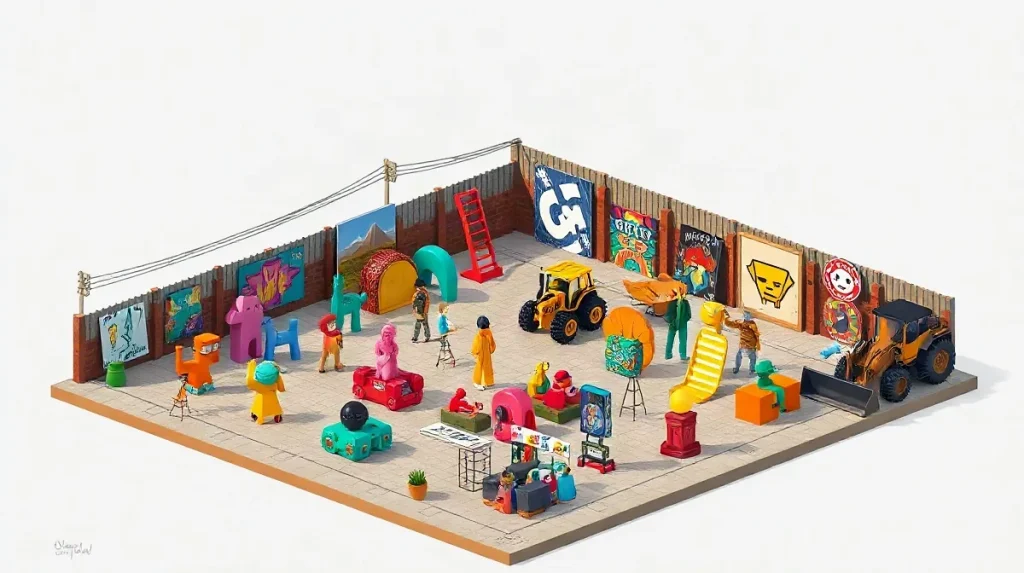
The Bulldozer Exhibition of 1974 stands as a pivotal moment in the history of Soviet art, marking a dramatic confrontation between state authority and artistic freedom. This unauthorized open-air exhibition, organized by nonconformist artists outside Moscow, was violently dismantled by government forces using bulldozers and water cannons. Far from a mere clash over aesthetics, the event symbolized the broader struggle for creative expression under an oppressive regime.
Understanding the Bulldozer Exhibition reveals not only the courage of artists who defied censorship but also the shifting cultural landscape within the Soviet Union during the 1970s. This turning point exposed the limits of official control and galvanized underground art movements, leaving a lasting impact on both Soviet and global perceptions of artistic dissent. The exhibition’s legacy continues to inform discussions about the role of art in society and the enduring quest for freedom of expression.
| Feature | Bulldozer Exhibition (1974) | Izmailovsky Park Exhibition (1974) |
|---|---|---|
| Date | 15 September 1974 | 29 September 1974 |
| Location | Belyayevo urban forest (Bittsa Park) | Izmailovsky Park, northeast Moscow |
| Official Status | Unofficial, underground | Officially sanctioned by Communist Party |
| Police Reaction | Violent dispersal with bulldozers and water cannons | No violent suppression |
| Number of Artists | Approximately 50 artists | Included many from Bulldozer event |
| Significance | Symbol of artistic repression and resistance | First official contemporary art show in USSR |
- 15 September 1974 Date of the Bulldozer Exhibition
- 29 September 1974 Date of the official Izmailovsky Park exhibition
- 2 weeks Time between Bulldozer and Izmailovsky exhibitions
- 100+ Approximate number of artworks shown
- 10+ Number of bulldozers deployed by police
What was the Bulldozer Exhibition and when did it occur?
Event Overview
The Bulldozer Exhibition was an unofficial outdoor art show held on 15 September 1974 in a vacant lot within Moscow’s Belyayevo urban forest, also known as Bittsa Park. This event was organized by a collective of avant-garde artists from Moscow and Leningrad who sought to publicly display experimental and nonconformist artworks that had been systematically rejected by the official Soviet art institutions. The exhibition featured dozens of paintings, sculptures, and installations that challenged the state-sanctioned style of Socialist Realism dominant in Soviet cultural policy at the time. The event’s name derives from the dramatic intervention by Soviet authorities, who deployed bulldozers and water cannons to forcibly disperse the gathering and destroy the artworks on site.
The Bulldozer Exhibition is notable for its scale and the forceful crackdown it provoked. Approximately 20 bulldozers and dozens of police vehicles were involved in dismantling the show within hours. Its significance lies not only in the artworks displayed but also in the international outcry that followed, which pressured Soviet officials to permit a follow-up exhibition on 29 September 1974 in Izmailovsky Park. This subsequent event allowed many of the same artists to present about 70 pieces in a more official setting, marking a rare moment of tacit governmental tolerance toward nonconformist art. Key figures in organizing the original event included painter Oskar Rabin and poet Aleksandr Glezer, who played leading roles in mobilizing this historic confrontation between underground art and Soviet authority.
Who were the key organizers and participants of the Bulldozer Exhibition?
Organizers
The Bulldozer Exhibition was primarily organized by painter Oskar Rabin, a leading figure in the Soviet nonconformist art scene who had long challenged the constraints of Socialist Realism. Alongside Rabin, poet Aleksandr Glezer played a crucial role in coordinating the event, leveraging his connections as an underground art collector to bring together a diverse group of avant-garde artists. The original exhibition took place on 15 September 1974 in Belyayevo urban forest (Bittsa Park), a vacant lot in Moscow, chosen for its relative seclusion from official cultural institutions. This date marked the first large-scale attempt by unofficial artists to publicly display works outside the state-mandated artistic norms, directly defying the Soviet authorities’ rigid control over cultural expression.
Artistic Groups
The participants included artists from both Moscow and Leningrad avant-garde circles, representing a broad spectrum of styles rejected by the official Socialist Realism doctrine. These artists showcased paintings, sculptures, and installations that experimented with abstraction, conceptual art, and other modernist approaches, which were prohibited in state galleries. The event attracted around 20 to 30 artists, including notable figures beyond Rabin and Glezer, united by their resistance to censorship and their commitment to artistic freedom. Their works contrasted sharply with the Soviet standard, which required art to promote socialist ideology and depict idealized workers and leaders.
- Date of exhibition: 15 September 1974
- Location: Belyayevo urban forest, Moscow
- Number of participating artists: Approximately 20-30
- Key organizers: Oskar Rabin (painter), Aleksandr Glezer (poet and collector)
- Artistic styles presented: Avant-garde abstraction, conceptual art, nonconformist modernism
How did Soviet authorities respond to the Bulldozer Exhibition?
Official Suppression
The Soviet authorities responded to the Bulldozer Exhibition with a forceful and immediate crackdown on the opening day, 15 September 1974. A large contingent of police officers, supplemented by bulldozers and water cannons, was deployed to disperse the gathering of avant-garde artists and spectators at the Belyayevo urban forest site. This heavy-handed intervention resulted in the destruction or confiscation of numerous artworks, effectively dismantling the unsanctioned event within hours. The show’s violent suppression attracted widespread international media attention, highlighting the Soviet regime’s intolerance toward nonconformist artistic expression.
Aftermath
Following the global outcry provoked by the demolition of the exhibition, Soviet officials unexpectedly proposed a state-sanctioned contemporary art event to mollify criticism and channel artistic activity into controlled venues. This official exhibition was scheduled for 29 September 1974 in Izmailovsky Park, northeast Moscow. The offer allowed many of the original artists, including key figures like Oskar Rabin and Aleksandr Glezer, to exhibit their works legally for the first time under monitored conditions. This state-endorsed response marked a significant, if cautious, opening for underground art within the Soviet Union.
- Police force: dozens of officers backed by multiple bulldozers and water cannons
- Date of original crackdown: 15 September 1974
- Date of state-sanctioned exhibition: 29 September 1974
- Location of Bulldozer Exhibition: Belyayevo urban forest (Bittsa Park)
- Location of official exhibition: Izmailovsky Park, northeast Moscow
What was the significance of the follow-up exhibition in Izmailovsky Park?
The Izmailovsky Park Exhibition
The follow-up exhibition held on 29 September 1974 in Izmailovsky Park was significant because it was the first officially sanctioned contemporary art event in the Soviet Union, marking a historic concession by Communist Party officials. This exhibition allowed many of the nonconformist artists previously suppressed during the Bulldozer Exhibition to present their work openly for the first time. The event featured around 40 artists, including prominent figures such as Oskar Rabin, whose avant-garde pieces had been forcefully destroyed just two weeks earlier. This official endorsement represented a critical turning point, signaling a cautious but notable shift toward tolerance of non-traditional art forms within the Soviet cultural establishment.
The Izmailovsky Park exhibition set new standards for artistic freedom and public access, with attendance reportedly reaching several thousand visitors over the course of the single-day event. Key measures distinguishing this exhibition included:
- Official approval by the Communist Party, contrasting with the unauthorized status of the Bulldozer Exhibition on 15 September;
- Participation of over 40 artists, many of whom had faced prior censorship;
- Location in Izmailovsky Park, a prominent northeast Moscow venue with greater visibility and accessibility than the previous Belyayevo site;
- The event’s single-day duration, held on 29 September, which contrasted with the earlier attempt at a multi-day outdoor show.
This exhibition’s success helped pave the way for subsequent public displays of avant-garde and underground art in the Soviet Union, marking a milestone in the gradual expansion of artistic freedoms during the 1970s cultural thaw.
What were the limitations and risks faced by nonconformist artists during the Bulldozer Exhibition era?
Challenges Under Soviet Artistic Control
The limitations and risks for nonconformist artists during the Bulldozer Exhibition era were severe, as state censorship strictly controlled all artistic expression, forcing unofficial exhibition outside state-sanctioned venues. On 15 September 1974, when a group of avant-garde artists led by Oskar Rabin attempted to display their works on a vacant lot in Belyayevo urban forest, their event was violently dispersed by a police force equipped with bulldozers and water cannons. This aggressive intervention reflected the constant threat of arrest, harassment, and destruction of artwork that these artists faced, making public display of nonconformist art highly precarious and legally unsupported. The official Soviet art establishment adhered rigidly to Socialist Realism standards, which left no room for experimental or abstract styles prevalent among these artists.
Despite international attention following the Bulldozer Exhibition’s suppression, official acceptance of nonconformist art remained minimal and fragile. The subsequent Izmailovsky Park exhibition on 29 September 1974 was permitted under pressure from Communist Party officials but was closely monitored, reflecting the limited tolerance the regime granted. The risks included sudden police raids, confiscation of artworks, and potential imprisonment. Artists also had to navigate the necessity of exhibiting without formal permits, which was a legal threshold that could result in fines or detentions. These constraints underscored the precarious existence of unofficial art scenes operating under the Soviet Union’s strict cultural policies.
- Date of Bulldozer Exhibition crackdown: 15 September 1974
- Follow-up Izmailovsky Park exhibition date: 29 September 1974
- Police equipment involved: bulldozers, water cannons
- Artistic control standard: Socialist Realism mandated by Soviet authorities
- Risk threshold: Unauthorized exhibitions risking arrest and confiscation
Frequently asked questions
Why was the Bulldozer Exhibition forcibly shut down?
Who was Oskar Rabin and what was his role?
What impact did international pressure have after the Bulldozer Exhibition?
How did the Bulldozer Exhibition influence Soviet art policy?
Key takeaways
- The Bulldozer Exhibition was held on 15 September 1974 in Belyayevo forest, Moscow.
- Oskar Rabin and Aleksandr Glezer were key organizers driving the event.
- Police used bulldozers and water cannons to violently shut down the exhibition.
- A follow-up official exhibition occurred on 29 September 1974 in Izmailovsky Park.
- The event highlighted severe artistic repression but led to partial liberalization.
Sources
- Parallel Chronologies — “Bulldozer and Izmailovsky Park – outdoor exhibitions”
- Pushkin House – Izba Arts — “The Bulldozer Exhibition”
- The Guardian — “Bulldozer: the underground exhibition that revolutionised Russia's art scene | Russia”
- themoscowtimes.com — “40 Years On: When Bulldozers Came to Knock Down an Underground Exhibit”
Topic guide: Exhibitions: The Complete Guide