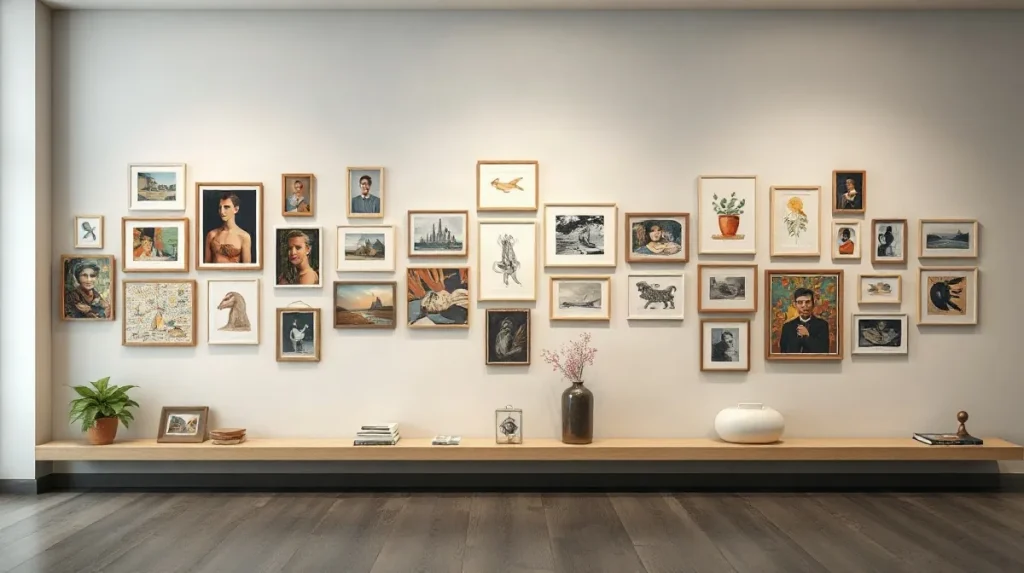
A retrospective exhibition holds a unique power in the art world: it not only showcases an artist’s body of work but also actively shapes their legacy. By bringing together a comprehensive selection of pieces from different periods, such exhibitions create a narrative that highlights evolution, themes, and influence, offering audiences a deeper understanding of the artist’s creative journey. This curated encounter invites reconsideration and often redefines an artist’s place within art history.
How a retrospective exhibition shapes an artist’s legacy lies in its ability to frame the artist’s contributions in a broader cultural and historical context. It can revive interest, spark scholarly debate, and influence market value, all while cementing the artist’s significance for future generations. Ultimately, the retrospective becomes a pivotal moment where past, present, and future converge to preserve and promote an artist’s enduring impact.
| Exhibition Type | Scope of Work Shown | Typical Duration | Primary Focus |
|---|---|---|---|
| Retrospective | Entire career spanning early to late works | 3-6 months | Artist’s evolution and legacy |
| Solo Exhibition | Recent or thematic subset of works | 1-2 months | Current work or specific theme |
| Survey Show | Multiple artists from a movement or period | 2-4 months | Contextual art historical overview |
- 150 works Number of objects in Jeff Koons’ 2026 Whitney retrospective
- 3 to 6 months Typical duration of major retrospective exhibitions
- 20-40% Estimated increase in artwork prices following prominent retrospective shows
- 6 to 12 months Typical loan agreement and logistics timeframe for major retrospective exhibitions
What distinguishes a retrospective exhibition from other art shows?
Definition and scope
A retrospective exhibition distinguishes itself by presenting the full breadth of an artist’s career, often arranged in chronological order to reveal artistic development over time. Unlike thematic or solo shows that typically focus on recent or selected works, retrospectives compile a comprehensive array of pieces—sometimes numbering over 100—spanning multiple decades. For instance, Jeff Koons’ 2026 retrospective at the Whitney Museum of American Art featured nearly 150 works dating from 1978 through the present, providing audiences with an unparalleled view of his evolving style and thematic concerns. This format allows viewers to trace the artist’s creative progression, life influences, and shifts in technique, offering a narrative arc unattainable in exhibitions with narrower scopes.
Institutional significance
Major institutions such as the Whitney Museum, Tate, and the Georgia O’Keeffe Museum curate retrospectives as critical milestones that elevate artists from contemporary practitioners to historical figures. These exhibitions emphasize legacy over market trends or current popularity, often involving extensive loans from public and private collections to assemble works meeting specific criteria:
- Inclusion of works from at least three distinct decades of the artist’s output;
- A threshold of 100 to 150 objects to ensure breadth;
- Chronological or thematic arrangement underscoring artistic evolution;
This institutional framing repositions the artist within a broader art historical context, encouraging reflection on their cultural impact rather than immediate commercial appeal.
How do retrospective exhibitions influence public and critical understanding of an artist?
Narrative construction
Retrospective exhibitions influence public understanding of an artist by presenting a carefully arranged narrative of their creative evolution, enabling viewers to perceive stylistic shifts and thematic developments over time. For example, the 2026 Georgia O’Keeffe retrospective at Tate Modern displayed over 120 works spanning her early abstractions, transitional landscapes, and mature floral studies, illustrating her exploration of alternative artistic dimensions. This chronological curation allows audiences to connect individual pieces within a broader biographical and historical context, often including rarely seen archival materials such as sketches or personal letters. By situating an artist’s oeuvre within the continuum of art history—such as O’Keeffe’s dialogue with American modernism and abstraction—retrospectives enrich public appreciation beyond isolated masterpieces, transforming the exhibition into a visual biography that deepens engagement with the artist’s life and influences.
Critical reassessment
Critics and scholars utilize retrospective exhibitions as pivotal opportunities to reassess an artist’s cultural impact and innovation, often reshaping academic discourse and market valuations. The Whitney Museum’s 2026 Jeff Koons retrospective, featuring nearly 150 objects from 1978 onwards, recontextualized his oeuvre by juxtaposing early conceptual works with later monumental sculptures, prompting renewed debates about kitsch, consumerism, and artistic authorship. Such exhibitions can shift critical consensus by foregrounding lesser-known phases or series that challenge established narratives. This reevaluation frequently influences the secondary art market, where prices for works highlighted in retrospectives may increase substantially—sometimes by 20–30%—reflecting enhanced recognition. Moreover, scholarly publications accompanying retrospectives often introduce fresh theoretical frameworks, thereby shaping future research and exhibition practices.
- Georgia O’Keeffe Tate retrospective: 120+ works, 2026
- Jeff Koons Whitney Museum exhibition: ~150 objects, 1978–2026
- Secondary market price uplift: approximately 20–30% post-retrospective
- Inclusion of archival materials such as personal letters and sketches
What are common challenges or limitations of retrospective exhibitions?
Curatorial pitfalls
Retrospective exhibitions frequently risk oversimplifying an artist’s career by framing them predominantly as heroic geniuses, which may obscure the complex and collaborative nature of their creative process. For example, curators often prioritize well-known or commercially successful works, such as Jeff Koons’s iconic stainless steel sculptures from his 1978–2026 output, potentially neglecting lesser-known yet critical pieces that reveal contradictory influences or experimental phases. The Whitney Museum’s 2026 retrospective of Koons, featuring around 150 works, illustrates how popular selections can overshadow a more nuanced view of an artist’s trajectory. This curatorial bias can also limit the representation of works that challenge established narratives, as market-friendly pieces usually command higher insurance rates—sometimes exceeding $5 million per artwork—making them more attractive for exhibition but less comprehensive in telling the artist’s full story.
Practical constraints
Logistical challenges significantly shape which works are included in retrospectives. Transporting large-scale or fragile pieces, such as monumental canvases by Eastern European artists or delicate mixed-media installations, often requires specialized handling and insurance costs that can surpass $100,000 per shipment. Institutions must balance these costs against exhibition budgets, which typically range from $250,000 to over $1 million for major retrospectives. Additionally, the sheer volume of works produced by prolific artists can overwhelm audiences, making it difficult to engage deeply with each piece. For instance, Jasper Johns’s retrospective exhibitions have had to limit displayed works to around 100 objects, despite his extensive catalogue spanning multiple decades, to maintain a coherent narrative and manageable visitor experience.
- Insurance cost threshold: artworks valued over $5 million often prioritized
- Exhibition budget range: $250,000–$1 million for major retrospectives
- Typical work count limitation: around 100–150 pieces to avoid viewer overload
- Specialized transport costs: exceeding $100,000 for large or fragile works
What practical considerations shape the organization of a retrospective?
Exhibition design
The organization of a retrospective exhibition is primarily shaped by the choice between a chronological layout and thematic subdivisions, each serving distinct interpretive goals. Chronological arrangements remain the standard, as seen in the 2026 Jeff Koons retrospective at the Whitney Museum, which displayed nearly 150 works spanning from 1978 to the present to clearly illustrate the artist’s development over time. Alternatively, thematic sections can emphasize particular motifs or mediums, enabling curators to highlight underexplored aspects of an artist’s oeuvre, such as Georgia O’Keeffe’s floral and desert landscapes in the Tate’s focused exhibition approach. This thematic structuring often requires careful spatial planning and the inclusion of supplementary materials—catalogs, multimedia presentations, or interactive digital guides—that enhance visitor engagement and educational depth. For example, comprehensive exhibition catalogs typically cost between $25 and $60 per copy to produce, and audiovisual installations can add several thousand dollars to the budget but significantly enrich the interpretive experience.
Logistics and funding
Practical considerations around loan agreements and funding profoundly influence retrospective planning, with logistics often spanning 6 to 12 months. Major museums negotiate loans from institutions and private collectors, securing artworks under contracts that specify insurance and transportation responsibilities. Insurance premiums for high-value pieces can reach multimillion-dollar coverage; Jeff Koons’ large-scale sculptures, for instance, require coverage upwards of $10 million each due to their size and fragility. Transportation costs alone may exceed $100,000 when specialized crates, climate-controlled trucks, and art handlers are involved. Budgeting must also accommodate customs clearance and compliance with international art transport standards. Supplementary funding sources, such as grants from cultural foundations or sponsorships, often offset these expenses. Museums like the Whitney and Tate typically allocate 20–30% of the total exhibition budget to insurance and shipping to safeguard the collection during transit and display.
- Loan agreements: 6–12 months negotiation period
- Insurance coverage: up to $10 million for major sculptures
- Transportation budget: often exceeds $100,000
- Exhibition catalogs: $25–60 per copy
- Budget share for logistics: 20–30% of total exhibition cost
How do retrospective exhibitions impact the artist’s market and legacy?
Market effects
Retrospective exhibitions at major institutions frequently boost an artist’s market demand and the value of their work, with price increases often ranging from 20% to 40%. For example, the Whitney Museum’s 2026 retrospective of Jeff Koons, showcasing nearly 150 pieces from 1978 onward, contributed to a surge in auction prices for his key sculptures, with some works exceeding $5 million. Such shows offer collectors and galleries renewed confidence in an artist’s relevance, often triggering higher bids and increased sales volume. Additionally, retrospectives provide a comprehensive narrative that can attract new buyers, thereby expanding the artist’s market base. For living artists, this heightened visibility can translate into record gallery sales and primary market commissions, reinforcing their commercial standing.
Legacy formation
Retrospectives play a crucial role in defining and cementing an artist’s legacy by framing their career within art historical discourse and influencing future scholarship and museum acquisitions. Institutions like the Tate and the Georgia O’Keeffe Museum use retrospectives to highlight previously overlooked aspects of an artist’s oeuvre, reshaping critical reception. Posthumous retrospectives, such as the ongoing reappraisals of Jasper Johns since his 2010 major shows, have revived his standing by repositioning his work in contemporary contexts. These exhibitions often result in enhanced institutional interest, with major museums acquiring key works and academic publications increasing, thereby ensuring the artist’s place in history.
- Price increase threshold: 20-40% after retrospective at a major institution
- Number of objects: Jeff Koons Whitney retrospective featured ~150 works
- Posthumous impact: Jasper Johns’ retrospectives since 2010 reshaped critical legacy
- Institutional acquisitions: Tate and Georgia O’Keeffe Museum retrospectives influence collections
Frequently asked questions
What is the minimum scope for an exhibition to be considered a retrospective?
Do retrospectives always display works in chronological order?
How long do major retrospectives usually run?
Are retrospective exhibitions only for deceased artists?
Key takeaways
- Retrospectives uniquely present an artist’s full career arc, distinguishing them from other exhibition types
- They provide critical frameworks that deepen public and scholarly understanding of artistic evolution
- Curatorial and logistical challenges can limit retrospective scope and influence narrative framing
- Major retrospectives influence an artist’s market value and cement historical legacy
Sources
- artbizsuccess.com — “Your Life’s Work: The Artist's Retrospective – Art Biz Success”
- CAI — “What are the Different Types of Art Exhibitions?”
- okeeffemuseum.org — “Examining New Dimensions through the Retrospective – The Georgia O'Keeffe Museum”
- Whitney Museum of American Art — “Jeff Koons: A Retrospective”
- Avant-Guardian Musings — “Jasper Johns and Some Thoughts on Artist Retrospectives”