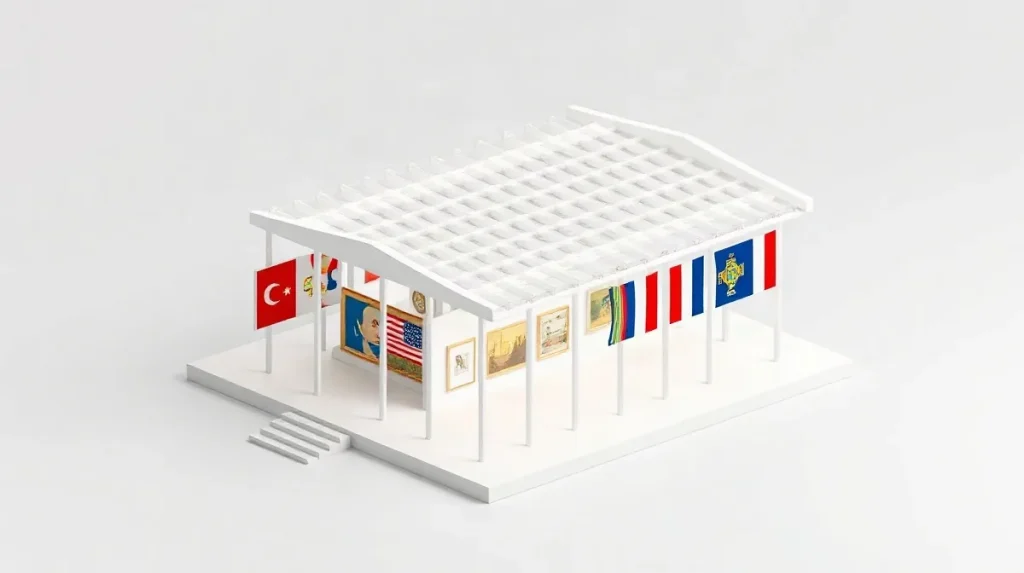
At the heart of every major art biennale lies a complex interplay between national representation and global artistic dialogue. Pavilion commissioners play a pivotal role in this dynamic, acting as curators, cultural diplomats, and visionaries who craft how a nation’s identity is perceived on the international stage. Their choices—ranging from artist selection to thematic framing—directly shape the narratives that define a country’s cultural self-image and its place within contemporary art discourse.
By orchestrating exhibitions that reflect historical memory, social realities, or aspirational futures, pavilion commissioners do more than showcase art; they construct a visual language of national identity. This process reveals how countries negotiate tradition and innovation, internal diversity, and external perception within the global art arena. Understanding how pavilion commissioners shape national identity at art biennales offers insight into the broader dialogue between art, politics, and cultural representation today.
| Aspect | Traditional Role (Pre-1990s) | Contemporary Role (2020s-2026) | Key Challenges |
|---|---|---|---|
| Artist Selection | National artists only | Inclusive, sometimes transnational | Balancing nationalism with global trends |
| Curatorial Focus | Nationalist propaganda | Cultural dialogue and heritage | Avoiding stereotypes |
| Institutional Control | State-driven | More autonomous boards | Managing political expectations |
| Budget | Often limited and state-funded | $100,000–$1 million+, mixed sources | Financial constraints |
| Public Engagement | Limited | Active public debate and discourse | Engaging diverse audiences |
- 1993 Year Achille Bonito Oliva proposed reforming national representation at Venice Biennale
- $100,000–$1,000,000 USD Typical budget range for national pavilions at major art biennales
- 2026 Year Panama Pavilion emphasized heritage and public debate under its commissioners
What are the core responsibilities of a pavilion commissioner at art biennales?
Artist Selection
The pavilion commissioner is primarily responsible for selecting artists and curators who embody the nation’s cultural identity and artistic evolution. For example, the Panama Pavilion’s 2026 co-curators, including returning commissioner Mónica Kupfer, chose talents that integrate Panama’s rich heritage with contemporary perspectives, continuing the approach initiated in 2024. This process often involves reviewing portfolios, conducting interviews, and assessing how well artists’ work aligns with broader national narratives. Financially, commissioners typically operate within budgets ranging from $50,000 to $300,000, depending on the biennale’s scale and institutional support. They must also consider the pavilion’s capacity and representation goals, balancing emerging voices with established figures to capture a multifaceted cultural identity.
Exhibition Curation
Commissioners oversee the thematic and conceptual direction of the pavilion’s exhibition, ensuring it resonates with both national heritage and current artistic discourse. This involves close coordination with national cultural bodies, such as the Panama Pavilion’s collaboration with the Biennale Foundation, to align the project with institutional frameworks and legal statutes governing international cultural exchanges. Logistical responsibilities include managing timelines often spanning over a year, coordinating installation teams, and supervising production expenditures that can reach several hundred thousand dollars. Their role extends to fostering public engagement by integrating dialogue and debate into the exhibition, reflecting a shift from purely nationalist propaganda to dynamic contemporary narratives.
- Budget range: $50,000–$300,000 for artist and exhibition costs
- Coordination period: typically 12–18 months before the biennale opening
- Institutional partners: national cultural ministries and organizations like the Biennale Foundation
- Artist selection criteria: alignment with national identity and contemporary relevance
How has the role of pavilion commissioners evolved since the 1990s?
From Nationalism to Contemporary Narratives
The role of pavilion commissioners has shifted dramatically since the 1990s, moving away from a focus on nationalist propaganda toward curating exhibitions that engage with contemporary cultural narratives and public discourse. A pivotal moment occurred at the 1993 Venice Biennale, when Achille Bonito Oliva advocated for removing strict national representation constraints, encouraging commissioners to select artists without being confined by national borders. This shift is exemplified by the Panama Pavilion in 2026, where co-curator Gabriela Rangel emphasizes integrating national heritage with contemporary art practices to foster public debate. This evolution reflects a broader trend where commissioners now prioritize narratives that resonate beyond mere national symbolism, allowing for more nuanced and critical reflections of identity.
Institutional Autonomy
Today, pavilion commissioners operate within frameworks that grant greater institutional autonomy compared to the state-controlled models of the past. Current statutes often vest the power to maintain relations with participating states in the boards of cultural institutions rather than direct government bodies. For example, the Culture Society’s board holds the authority to engage with foreign countries while allowing them the freedom to align with the institution’s vision without state interference. This autonomy enables commissioners to pursue cross-cultural dialogue and global exchange, shifting the emphasis from purely nationalistic representation to fostering international artistic collaboration.
- 1993 Venice Biennale: Removal of national constraints proposed by Achille Bonito Oliva
- 2026 Panama Pavilion: Emphasis on heritage combined with public debate by co-curator Gabriela Rangel
- Culture Society statutes: Board of directors empowered to maintain international relations, not direct state control
What impact do pavilion commissioners have on national cultural diplomacy?
Cultural Ambassadorship
Pavilion commissioners profoundly influence national cultural diplomacy by curating exhibitions that embody and project their country’s identity to the world. For example, Fernando Gamboa’s leadership of Mexico’s 1950s Venice Pavilion strategically showcased both its rich heritage and modern artistic innovation, setting a precedent for cultural ambassadorship. In 2026, Gayane Umerova, chairperson of the Arts and Culture Development Foundation (ACDF) in Japan, has elevated her national pavilion’s global profile through an ambitious program that includes commissioning works from emerging artists with international resonance. Such commissioners not only select artists and artworks but also negotiate the pavilion’s thematic direction, balancing historical narratives with contemporary concerns. This curatorial authority directly affects how a nation’s cultural soft power is perceived, with budgets often reflecting this importance—Umerova’s 2026 pavilion program reportedly operated within a $750,000 range, demonstrating significant investment in cultural diplomacy.
Public Engagement
Beyond representation, pavilion commissioners play a critical role in stimulating public debate and fostering cross-cultural dialogue. The Panama Pavilion’s co-curator in 2026, who returned after the country’s inaugural presentation in 2024, explicitly integrates heritage and contemporary art to engage both local and international audiences. This dual focus creates a platform for cultural exchange that extends well beyond the exhibition itself. Commissioners like her leverage their position to initiate conversations on national identity, often collaborating with institutions such as the Venice Biennale Foundation, which sets participation standards including a minimum exhibition space of 150 square meters. These parameters ensure sufficient visibility and interaction, making the pavilion a dynamic site of cultural diplomacy rather than a static display.
- Mexico’s 1950s pavilion under Fernando Gamboa as a model of cultural ambassadorship
- Gayane Umerova’s ACDF program budget of approximately $750,000 in 2026
- Panama Pavilion’s minimum exhibition space of 150 square meters as per Venice Biennale standards
- Panama’s 2024 and 2026 biennale participations emphasizing heritage and contemporary art dialogue
What challenges and limitations do pavilion commissioners face?
Financial and Political Constraints
Pavilion commissioners face significant financial and political challenges that directly impact their ability to realize ambitious exhibitions. Budgets for national pavilions at major biennales such as Venice can vary dramatically, often ranging from under $500,000 USD to over $2 million USD depending on state funding and sponsorship. For example, the Panama Pavilion in 2026 operated with a budget below $600,000 USD, which limited the scale of installations and number of participating artists. Politically, commissioners frequently navigate pressures from government bodies or cultural institutions that may impose thematic expectations aligned with national image goals or diplomatic agendas. Such pressures can restrict curatorial freedom, compelling commissioners to balance official narratives against innovative or critical artistic practices.
Curatorial Risks
The risk of oversimplifying or stereotyping national identity is a persistent limitation for commissioners shaping pavilion content. When selecting artists and themes, they must avoid reducing complex cultural histories to clichés or nationalist tropes, a challenge aggravated by the global art market’s demand for clear-cut narratives. For instance, curators must carefully consider how to engage with heritage without resorting to folkloric clichés or exoticization, as seen in the 2026 Panama Pavilion’s effort to intertwine contemporary global art trends with local cultural discourse. Commissioners often weigh criteria such as:
- Inclusion of artists representing diverse regions or ethnicities within a nation;
- Integration of contemporary practices alongside traditional motifs;
- Alignment with international art standards while preserving national specificity;
- Responsiveness to public and critical expectations within and outside the country.
How do commissioners select artists and themes to reflect a country’s identity effectively?
Artist Criteria
Commissioners select artists by prioritizing those whose work critically engages with both historical narratives and pressing social issues within the nation. For instance, the Panama Pavilion in 2026 emphasized artists addressing cultural heritage alongside contemporary public discourse, reflecting a deliberate choice to link past and present identities. Such selections often involve evaluating an artist’s portfolio for thematic depth and societal relevance, with a preference for projects that can provoke dialogue or challenge dominant narratives. This approach was evident in the Panama Pavilion’s curatorial budget of approximately $150,000, which supported artists able to navigate complex cultural dialogues rather than merely showcasing aesthetic appeal.
Collaborative Curation
Collaboration with local cultural institutions and art communities is essential to ensure authenticity and thematic coherence. Commissioners frequently work alongside museums, galleries, and cultural centers to ground exhibitions in locally resonant contexts. For example, the Panama Pavilion’s 2026 team consulted with the National Institute of Culture and the Art History Department at the University of Panama, integrating expert perspectives into the curatorial process. Additionally, advisory boards or co-curators are often engaged to diversify viewpoints and prevent unilateral narratives, a practice that can involve up to five specialists or scholars contributing over several months of preparatory research and consultation.
- Artist portfolios evaluated for engagement with national history and social issues
- Curatorial budgets often ranging from $100,000 to $200,000 to support critical projects
- Consultations with at least two cultural institutions or academic departments per pavilion
- Formation of advisory boards including 3-5 members for diversified thematic input
Frequently asked questions
Who appoints pavilion commissioners for national pavilions at biennales?
How big is the budget for a national pavilion at major biennales?
Can pavilion commissioners choose artists from outside their country?
What is the relationship between pavilion commissioners and government entities?
Key takeaways
- Pavilion commissioners are key cultural diplomats shaping national identity.
- Their role evolved from nationalist propaganda to contemporary cultural narratives since the 1990s.
- Budgets and political pressures significantly influence pavilion curation.
- Collaboration with local institutions ensures authentic representation.
- Commissioners balance heritage and innovation to engage global audiences.
Sources
- on-curating.org — “One Biennale, Many Biennials – ONCURATING”
- neroeditions.com — “The Responsibility Of A Cultural Institution”
- researchgate.net — “(PDF) The Pattern of Artistic Nationalism: Mexico's Pavilion at the”
- linkedin.com — “Pelham Communications Celebrates Venice Biennale Press”
- Bienal de Arte de Venecia — “Panama Pavilion”