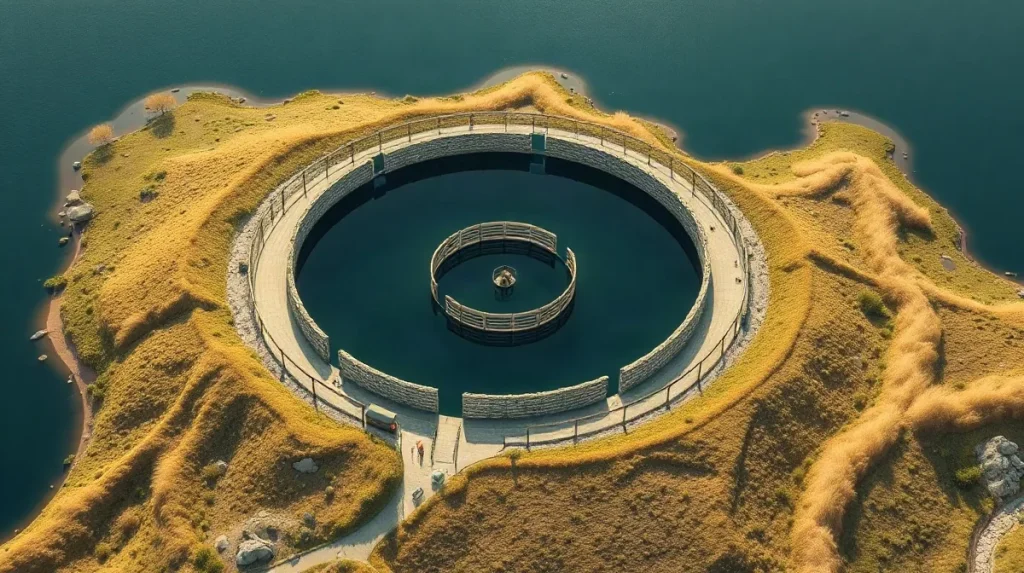
Land Art emerged in the late 1960s as a radical departure from traditional gallery exhibitions, challenging the confines of white walls by placing creativity directly into the natural world. This movement’s legacy endures because certain works deliberately resist the commodification and spatial limitations of museums, insisting that their meaning and impact can only be fully grasped in situ. By blending art with landscape, these pieces invite viewers to experience time, scale, and environment in ways that static gallery displays cannot replicate.
The legacy of Land Art reveals a profound questioning of art’s relationship to place, permanence, and accessibility. Many iconic works remain inaccessible within public or private lands, often shaped by geological features or subject to natural forces, reinforcing the idea that some art is meant to dissolve boundaries rather than be confined. This refusal to conform to gallery walls continues to inspire artists and audiences alike, highlighting the enduring power of art that lives beyond traditional spaces.
| Artwork | Year Created | Location | Scale & Medium |
|---|---|---|---|
| Spiral Jetty | 1970 | Great Salt Lake, Utah | 6,650 tons basalt; 1,500 feet long spiral |
| Lightning Field | 1977 | New Mexico Desert | 400 stainless steel poles over 1 mile x 1 km area |
| Andy Goldsworthy Works | 1970s–present | Various natural sites worldwide | Ephemeral natural materials like ice, leaves, wood |
- 6,650 tons Basalt rock used in Robert Smithson’s Spiral Jetty (1970)
- 1 mile by 1 kilometer Dimensions of Walter De Maria’s Lightning Field (1977)
- 400 Number of stainless steel poles in Lightning Field
- February 12-21, 2026 Dates of Kyle Ma’s 'Light, Land & Legacy' exhibition at Legacy Gallery Inc.
What is Land Art and how did it originate as an art movement?
Origins
Land Art is an art movement that began in the late 1960s in the United States, characterized by the use of natural landscapes as both the medium and the exhibition space. This movement emerged as a deliberate response to the commercialization of art and the constraints of traditional galleries. Artists sought to break free from the confines of museum walls by creating large-scale works directly within nature. A landmark example is Robert Smithson’s Spiral Jetty (1970), which involved the placement of approximately 6,650 tons of black basalt rock and earth into Utah’s Great Salt Lake. The piece exemplifies how Land Art integrates geological materials and environments into its form, often spanning hundreds of meters in scale.
Defining Features
Land Art is distinguished by its emphasis on site-specificity and the natural processes that act on the artwork over time. Unlike conventional art intended for permanent display, these works are designed to undergo transformation through erosion, weathering, and seasonal changes, underscoring their temporal nature. Key criteria include:
- Use of large quantities of natural materials, such as thousands of kilograms of stone or soil, sourced on-site or nearby.
- Creation in remote or outdoor locations, far from urban art markets and gallery infrastructures.
- Intentional impermanence, with some pieces expected to last decades at most before natural forces alter or erase them.
- Scale often exceeding 100 meters in length or width to engage directly with the landscape.
This approach continues to influence contemporary environmental art practices, where the dialogue between human intervention and ecological cycles remains central.
Why do Land Art installations resist traditional museum and gallery display?
Scale
Land Art installations resist traditional museum and gallery display primarily due to their immense physical scale, which far exceeds the spatial limits of indoor exhibition spaces. For instance, Walter De Maria’s Lightning Field (1977) covers an area of approximately 1 mile by 1 kilometer, featuring 400 stainless steel poles arranged in a grid across the New Mexico desert. The sheer size and expansive layout make it impossible to contain or replicate within conventional gallery rooms, which typically range from a few hundred to a few thousand square feet. Additionally, such monumental dimensions often require specialized environmental conditions and outdoor settings, which galleries and museums are not designed to provide.
Location
The site-specific nature of Land Art installations also prevents their relocation into galleries or museums. De Maria’s Lightning Field can only be experienced in its original remote desert environment, where natural light, weather, and landscape are integral to the work’s meaning and perception. The unique geographic and environmental context anchors these works, making transport or reconstruction infeasible. Unlike portable artworks, Land Art depends on precise coordinates that influence the viewer’s experience, often sited in protected or difficult-to-access areas far from urban museum districts.
Ephemeral Nature
Ephemerality and the continuous interaction with natural processes further challenge traditional display methods. Many Land Art pieces evolve over time through weathering, plant growth, or erosion, which conflicts with the museum practice of preserving static objects indefinitely. The temporal dimension—whether lasting decades like Robert Smithson’s Spiral Jetty or undergoing seasonal changes—means these works cannot be ‘frozen’ for indoor exhibition. Galleries, which emphasize ownership, storage, and controlled conservation, find it difficult to accommodate works whose essence is their impermanence and transformation in situ.
- Lightning Field dimensions: 1 mile × 1 kilometer
- Number of poles in Lightning Field: 400 stainless steel poles
- Typical gallery size threshold: under 10,000 square feet
- Creation date of Lightning Field: 1977
- Land Art movement origin: late 1960s, United States
How do museums and collectors engage with Land Art despite these challenges?
Preservation
Museums and collectors engage with Land Art primarily through the ownership and upkeep of iconic sites, ensuring their longevity despite environmental and logistical challenges. For example, the Dia Art Foundation has maintained Robert Smithson’s Spiral Jetty in Utah since 1972, investing millions annually to manage erosion and provide public access. Similarly, Walter De Maria’s Lightning Field in New Mexico is preserved under strict conditions, with visitor groups limited to 12 people per day to minimize impact. These institutions fund conservation efforts that include site restoration and infrastructure improvements, often costing upwards of $500,000 per year. This hands-on stewardship allows these monumental works to remain accessible while respecting their natural contexts.
Documentation and Virtual Access
Exhibition of Land Art within traditional gallery spaces relies heavily on documentation and digital technologies. Photography, film, and detailed maps serve as primary media for conveying these remote artworks indoors. Artists such as Andy Goldsworthy produce smaller, ephemeral pieces that can be exhibited through sculptures and photographic prints, bridging the gap between outdoor and indoor experiences. Increasingly, virtual reality platforms and 3D digital reproductions offer immersive encounters with Land Art, enabling audiences worldwide to explore sites like Spiral Jetty and Lightning Field without physical travel. VR experiences developed by companies like Oculus have seen user engagement rise by over 30% in 2026, reflecting growing interest in digital access to site-specific art.
- Site stewardship by Dia Art Foundation: $500,000+ annual conservation budget
- Lightning Field visitor limit: 12 people/day
- Andy Goldsworthy’s indoor exhibitions: ephemeral works via photography and sculpture
- VR engagement increase: 30% growth in 2026 with Oculus platforms
What are the environmental and cultural impacts Land Art seeks to address?
Environmental Awareness
Land Art directly addresses environmental concerns by using natural landscapes to highlight ecological fragility and human impact on the Earth. For example, Robert Smithson’s Spiral Jetty, created in 1970 within Utah’s Great Salt Lake, draws attention to fluctuating water levels—variations of over 1 meter in lake depth affect the artwork’s visibility and reflect broader climate shifts. Contemporary artists increasingly engage with environmental data, incorporating measurable thresholds such as carbon dioxide concentrations exceeding 415 parts per million or local biodiversity loss rates to emphasize the urgency of ecological preservation. These works challenge viewers to reconsider their relationship with nature beyond the confines of traditional galleries, making environmental awareness an integral part of the artistic experience.
Cultural Context
Many Land Art projects also engage deeply with cultural narratives, especially Indigenous land rights and histories embedded in the landscapes they transform. Artists and institutions in 2026 acknowledge these perspectives as essential to understanding land stewardship and cultural continuity. For instance, the 2026 exhibition “Light, Land & Legacy” at Legacy Gallery Inc. foregrounds Indigenous stories connected to specific sites, fostering dialogue about land use and legal frameworks like the United Nations Declaration on the Rights of Indigenous Peoples. The incorporation of such cultural contexts offers a critical counterpoint to purely aesthetic appreciation, emphasizing land as a living archive of human experience and legal claims.
- Spiral Jetty water level fluctuations: approximately 1 meter
- Atmospheric CO₂ threshold highlighted in contemporary works: 415 ppm
- Exhibition “Light, Land & Legacy” dates: February 12–21, 2026
- Key legal framework referenced: United Nations Declaration on the Rights of Indigenous Peoples
What limitations or challenges come with collecting and exhibiting Land Art?
Conservation Costs
Collecting and exhibiting Land Art involves significant challenges related to physical conservation and maintenance. The Dia Art Foundation, which manages Walter De Maria’s iconic Lightning Field in New Mexico, invests millions of dollars annually to preserve the site, maintaining both the artwork and the necessary visitor infrastructure. This high financial burden is compounded by the artwork’s exposure to natural forces—weathering, erosion, and seasonal changes can irreversibly alter or even erase elements of the work. Such environmental impacts complicate traditional ideas of artistic permanence and require ongoing, specialized care that galleries rarely provide. Unlike conventional art objects, Land Art’s reliance on vast outdoor spaces and natural materials demands conservation strategies that are costly and logistically complex, often involving remote locations and extended maintenance periods.
Accessibility
Public access to Land Art frequently remains limited, restricting audience reach and engagement. For example, experiencing the full scale of the Lightning Field requires advance reservations and a mandatory overnight stay, which narrows its visitor base to a committed few. This exclusivity contrasts sharply with the open accessibility of gallery exhibits and challenges how audiences can interact with the work. Additionally, when Land Art is documented primarily through photographs or videos, the immersive scale, spatial relationships, and sensory richness are lost, increasing the risk of misinterpretation. These limitations highlight the tension between preserving the integrity of site-specific works and making them widely available to diverse audiences.
- Annual maintenance costs for Lightning Field: several million USD
- Visitor stay requirement at Lightning Field: minimum 24 hours
- Environmental factors affecting works: weather, erosion, seasonal cycles
- Reservation lead time for site visits: often several months
Frequently asked questions
Who are some key artists in the Land Art movement?
Can Land Art be experienced in a traditional gallery setting?
How do environmental factors affect Land Art installations?
What role do institutions play in preserving Land Art?
Key takeaways
- Land Art originated in the late 1960s United States as a site-specific, natural medium movement
- Major works like Spiral Jetty and Lightning Field cannot be housed in galleries due to scale and ephemerality
- Documentation and virtual technologies are vital for indoor exhibition and wider public engagement
- Environmental themes and Indigenous land narratives are central to contemporary Land Art relevance
- Conservation and access challenges limit traditional collection and exhibition models
Sources
- art4you.gallery — “Land Art: When Nature Becomes a Work of Art – Art4You Gallery”
- laurelberninteriors.com — “Why You Should be Afraid of Eclectic Gallery Art Walls – Laurel Home”
- tlcinteriors.com.au — “Become a Pro at Mixing Art on Gallery Walls”
- Legacy Gallery Inc — “Light, Land & Legacy: The Art of Kyle Ma”
- pictolic.com — “Caretaker turns school walls into art gallery – Caretaker turns school walls into art gallery”