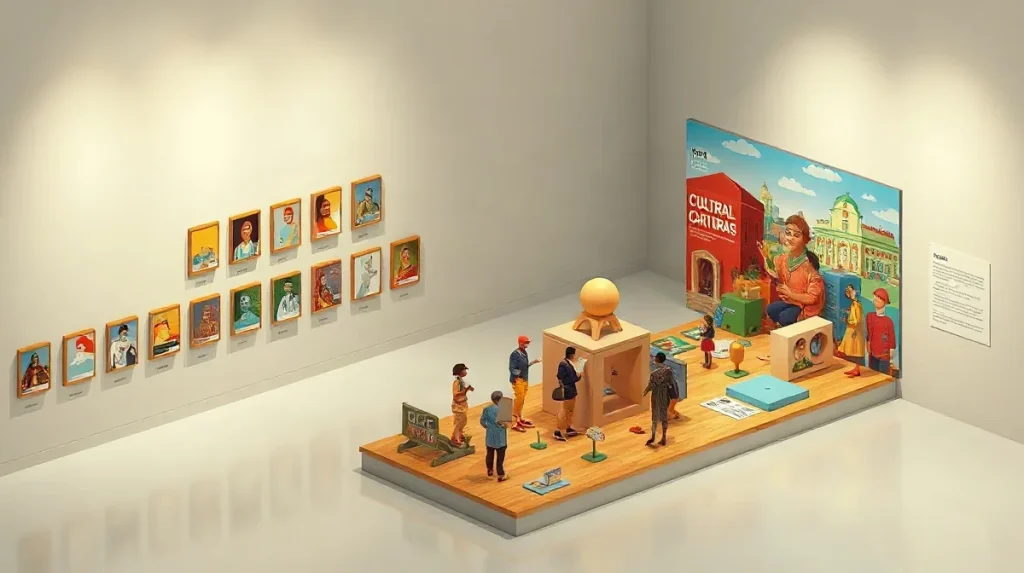
In 2026, the art exhibition landscape continues to distinguish sharply between survey shows and thematic exhibitions, two dominant formats that cater to different curatorial goals and audience experiences. Survey shows aim to provide a broad, comprehensive overview of artistic developments across time or geography, while thematic exhibitions concentrate on conveying a focused idea or narrative through a curated selection of works. Understanding these distinctions is essential for curators, collectors, and visitors seeking meaningful engagement with art.
Scope and Purpose: Broad Representation vs. Focused Narrative
Survey shows are designed to encompass wide-ranging artistic movements, periods, or regions. For instance, the 2026 “New Horizons in Eastern European Art” survey at the International Foundation of Russian and Eastern European Art presents over 150 works spanning five decades, aiming to chart evolving artistic trends comprehensively.
Conversely, thematic exhibitions center on singular ideas or critical concepts. The recent thematic exhibition “Memory and Identity in Post-Soviet Sculpture” at the State Museum of Contemporary Art curated 40 pieces explicitly selected to explore how memory shapes national identity.
Key Differences in Scope
- Survey Shows: Extensive coverage of time periods or geographic regions, often involving multiple artists and styles.
- Thematic Exhibitions: Narrow focus on a central theme supported by subthemes or narratives.
- Survey Shows: Emphasize historical development and contextualization.
- Thematic Exhibitions: Prioritize storytelling and conceptual depth.
| Feature | Survey Shows | Thematic Exhibitions |
|---|---|---|
| Number of Artworks | 100–200 | 30–50 |
| Duration (days) | 90–180 | 30–90 |
| Geographic Coverage | Regional/International | Specific locales or contexts |
| Curatorial Focus | Comprehensive representation | Focused message or idea |
Artwork Selection: Comprehensive Representation vs. Curated Emphasis
The selection process in survey shows involves assembling a broad array of works that collectively illustrate artistic developments or movements. Curators at the Museum of Modern Art in Warsaw, for example, selected over 120 pieces for their 2026 survey of Russian avant-garde art to demonstrate stylistic evolutions and political influences across decades.
Thematic exhibitions require a more selective approach. Each artwork is chosen to reinforce the central theme, such as in Vienna’s 2026 “Echoes of Revolution” exhibition, where 35 artworks were selected specifically to narrate the impact of political upheaval through visual metaphors.
Criteria for Artwork Selection
- Survey Shows: Representativeness of key movements, historical importance, diversity of media.
- Thematic Exhibitions: Conceptual relevance, narrative strength, emotional resonance.
- Survey Shows: Inclusion of canonical and emerging artists.
- Thematic Exhibitions: Cohesion in storytelling and thematic clarity.
Curatorial Strategies: Highlighting Developments vs. Crafting a Story
Survey show curators often emphasize chronological or stylistic progressions. For example, the 2026 survey at the Hermitage Museum traced the trajectory of Soviet-era painting from Socialist Realism to contemporary abstraction, allowing visitors to observe transformations over time.
Thematic exhibitions employ narrative construction techniques. At the 2026 “Feminism and Form” exhibit in London’s Tate Modern, the curators structured the show around the idea of feminist intervention, supported by subthemes like body politics and identity, weaving a coherent story through the arrangement of works.
Curatorial Approaches Compared
- Survey Shows: Chronological sequencing, inclusion of diverse voices.
- Thematic Exhibitions: Narrative arcs, thematic grouping, immersive storytelling.
- Survey Shows: Educational orientation toward art history.
- Thematic Exhibitions: Emotional and conceptual engagement.
Visitor Experience: Broad Exploration vs. Deep Immersion
Survey shows invite visitors to explore a wide range of artworks, encouraging broad educational engagement. The 2026 “Eastern European Art Panorama” at the National Gallery in Prague offered multimedia guides and interactive maps to help visitors navigate the extensive collection of more than 130 artworks over 150 days.
Thematic exhibitions focus on immersive experiences that evoke reflection on specific ideas. The “Climate and Canvas” show at the Museum of Contemporary Art in St. Petersburg in 2026 featured 40 works presented with sensory elements like soundscapes and tactile installations to deepen the visitor’s connection to environmental themes.
Visitor Engagement Techniques
- Survey Shows: Educational panels, chronological layouts, guided tours.
- Thematic Exhibitions: Sensory stimulation, narrative-driven design, interactive media.
- Survey Shows: Facilitate comparative analysis across artworks.
- Thematic Exhibitions: Encourage emotional and intellectual immersion.
Budget and Resource Allocation: Scale and Complexity
Budget plays a crucial role in shaping both types of exhibitions. Survey shows typically require larger budgets due to the volume of artworks, transportation, insurance, and installation efforts. For example, the 2026 “Russian Art Survey” at the Pushkin Museum reportedly had a budget exceeding ₽50 million, reflecting its extensive scope.
Thematic exhibitions, with fewer works and more focused design, may operate on smaller budgets but invest heavily in immersive elements. The “Narratives of Resistance” exhibition in Berlin in 2026 allocated approximately €600,000 to incorporate multimedia installations and interactive displays enhancing thematic storytelling.
Budget Allocation Examples
| Exhibition | Type | Budget | Main Expense |
|---|---|---|---|
| Russian Art Survey (Pushkin Museum) | Survey Show | ₽50 million+ | Artwork loans and insurance |
| Narratives of Resistance (Berlin) | Thematic Exhibition | €600,000 | Multimedia and design |
- 150+ artworks typical in major survey shows
- 30–50 artworks common for thematic exhibitions
- ₽50 million budget scale for large survey exhibitions
- €600,000 investment for immersive thematic shows
- 90–180 days typical duration for survey exhibitions
Frequently asked questions
What is the main goal of a survey show?
How do thematic exhibitions differ in visitor experience?
Are survey shows typically more expensive to produce than thematic exhibitions?
Can thematic exhibitions include multiple themes?
How long do survey shows generally run?
Key takeaways
- Survey shows provide comprehensive, wide-ranging coverage of art movements or regions, often featuring over 100 works.
- Thematic exhibitions focus on a central idea or narrative, typically presenting 30 to 50 carefully selected artworks.
- Curatorial approaches differ: survey shows emphasize historical progression, while thematic shows prioritize narrative and conceptual immersion.
- Visitor experiences vary from broad educational exploration in survey shows to deep, sensory engagement in thematic exhibitions.
- Budget requirements reflect scale and complexity, with survey shows generally costing significantly more due to the number of works and logistics involved.
Conclusion
Understanding the distinctions between survey shows and thematic exhibitions is vital for appreciating their unique contributions to the art world in 2026. Survey shows offer expansive, contextualized overviews that reveal artistic evolution on a macro scale, while thematic exhibitions provide focused, immersive experiences that convey powerful ideas through carefully curated narratives. Both formats enrich cultural discourse, catering to diverse interests and deepening engagement with art’s multifaceted dimensions.
Sources
- on-curating.org — “Feminism Meets the Big Exhibition: Museum Survey Shows since 2005 – ONCURATING”
- museum.bc.ca — “The Art of Storytelling in Exhibitions – BCMA”
- Guild Hall — “What Makes a Great Museum Exhibition?”
- CAI — “What are the Different Types of Art Exhibitions?”
- tgth.pl — “Neuro-Exhibition: How the Method of Display Stimulates the Senses? Analysis and Findings from the Conducted Survey – Together”
Topic guide: Exhibitions: The Complete Guide