Decades-Long Mystery Ends with Recovery of Eastman Johnson Paintings
Two oil paintings by American genre painter Eastman Johnson, stolen in 1978 from New York City galleries, were recovered in 2025 after nearly 50 years missing. The artworks were identified in a private collection on Long Island by art dealer Brandon Levine and returned through collaboration with Connecticut’s Shannon’s Fine Art Auctioneers. This recovery sheds new light on Johnson’s work and provenance, reviving interest in an artist overshadowed by his contemporaries.
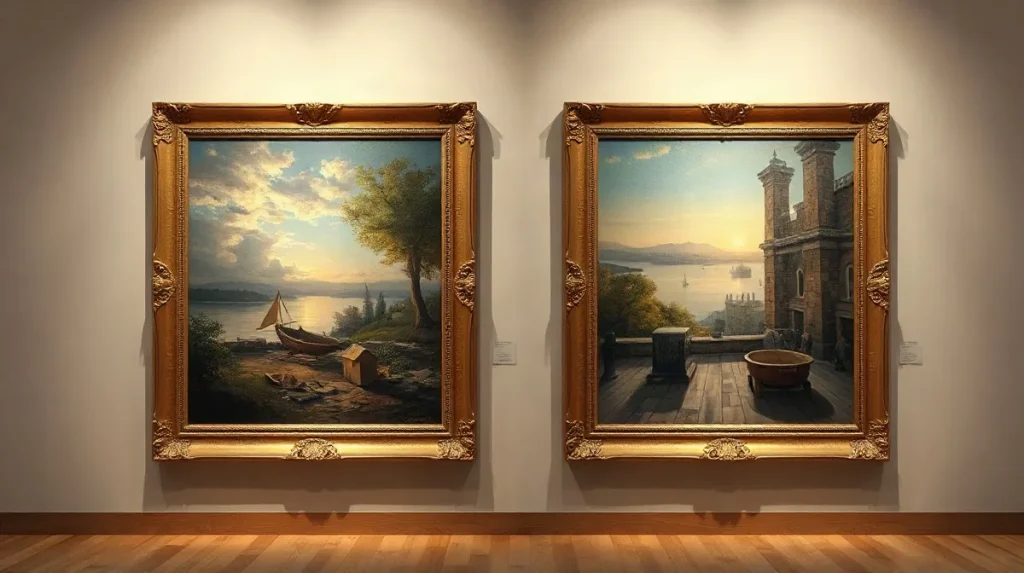
The paintings, “The Young Mother” (circa 1873) and “Mary and Her Lamb” (1877), were stolen separately from Hirschl & Adler Galleries and the now-closed Kenneth Lux Gallery in April and May of 1978. Their resurfacing underscores ongoing challenges in art theft recovery and provenance research within the art market.
Eastman Johnson’s Artistic Legacy and Historical Context
Eastman Johnson (1824-1906) was a prominent 19th-century American artist known for his genre scenes depicting everyday life, shaped by his European studies of Dutch masters during six years abroad starting in 1849. He was a founding trustee of the Metropolitan Museum of Art in 1870 and created nearly 1,500 known works catalogued in a digital raisonné co-authored by Patricia Hills and Abigael MacGibeny.
Johnson’s work often reflected his abolitionist family background, including major paintings featuring Black subjects during the Civil War era. The two recovered paintings represent a more intimate dimension of his oeuvre, inspired by personal family life, particularly his daughter Ethel, born in 1870. This sentimental subject matter contrasts with his more widely known historical and social themes.
Investigation and Provenance Research Leading to Recovery
The discovery by Brandon Levine prompted action by Sandra Germain, owner of Shannon’s Fine Art Auctioneers, who confirmed the paintings’ stolen status through the Art Loss Register and Johnson’s digital catalogue raisonné. The Art Loss Register, the world’s largest private database for lost and stolen art, played a pivotal role in verifying provenance and facilitating restitution.
James Ratcliffe, director of the Art Loss Register, noted that artworks often remain undiscovered for over 50 years, typically reappearing from private homes. The digital nature of Johnson’s catalogue allowed quick updates to the paintings’ entries, reflecting their recovery and current ownership status, demonstrating the importance of accessible, up-to-date records in art theft cases.
Collaboration Among Galleries and Families Ensures Return
Key to the paintings’ return was cooperation between multiple stakeholders. Germain reached out to Hirschl & Adler Galleries and located descendants of Kenneth Lux, who passed away in 2020, enabling smooth restitution. The family who had inherited the paintings was unaware of their stolen status, having acquired them through antique collectors.
Elizabeth Feld, managing director of Hirschl & Adler, praised the collaborative effort as exemplary due diligence within the art world. Such teamwork not only resolved a longstanding theft case but also restored valuable cultural artifacts to rightful ownership, enhancing trust between galleries, collectors, and institutions.
Market Value and Renewed Interest in Johnson’s Work
Experts at Shannon’s estimate the combined value of the two recovered paintings at approximately $200,000, based on comparable sales of Johnson’s genre works. While Johnson’s reputation has historically been eclipsed by contemporaries like Winslow Homer, recent scholarship and exhibitions increasingly recognize his artistic significance.
According to co-author Patricia Hills, interest in Johnson’s art has grown since the 1970s, with the recovery of these sentimental small-format paintings contributing to a broader reassessment. Their return not only enriches collections but also invites renewed appreciation of Johnson’s nuanced portrayals of 19th-century American life.
Takeaway: The recovery of two stolen Eastman Johnson paintings after nearly half a century highlights the vital role of provenance research, collaboration, and digital cataloguing in preserving art heritage.
Sources
- Ocean's Bridge Oil Paintings — “Eastman Johnson Archives”
- Ocean's Bridge Oil Paintings — “Eastman Johnson artwork Archives”
- npr.org — “Paintings Stolen in 1970s San Francisco Recovered : NPR”
- ladailypost.com — “FBI: Stolen Paintings Recovered Decades After Theft”
- csmonitor.com — “Van Gogh paintings recovered 14 years after theft – CSMonitor.com”