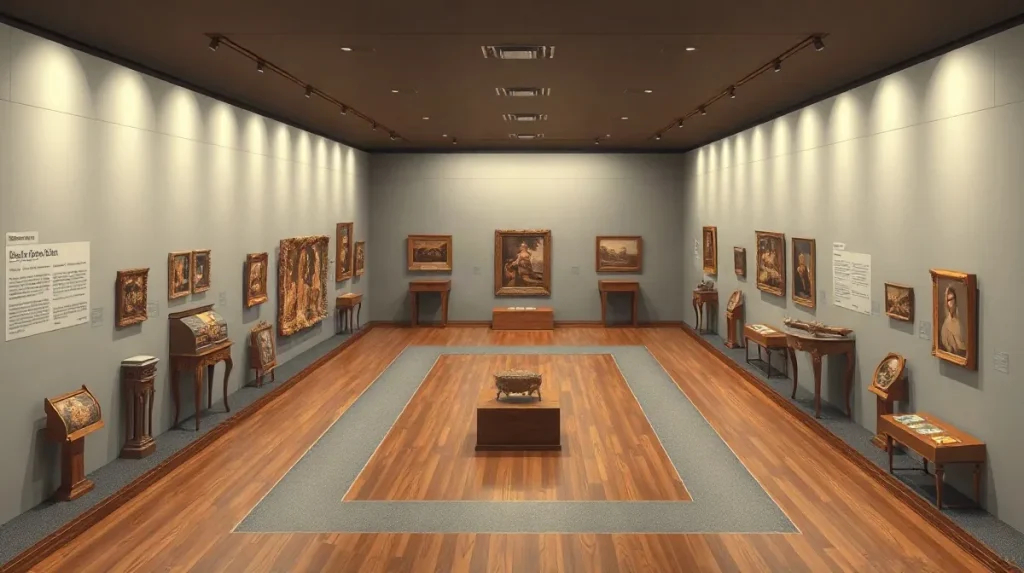
Private art collections become public museums through a complex process involving legal transfer, curatorial planning, and often significant restoration and adaptation of spaces. This transformation requires collaboration between collectors, cultural institutions, and communities to ensure artworks are accessible and preserved for public benefit.
Behind every private collection that opens its doors as a museum lies a fascinating journey of vision, negotiation, and dedication. The journey behind the scenes reveals how personal passion for art expands into a public cultural asset, blending private legacy with public education and enjoyment. These transitions not only safeguard valuable artworks but also enrich the cultural landscape by making art accessible beyond the confines of private ownership.
Understanding how private collections become public museums sheds light on the intricate interplay of art stewardship, philanthropy, and institutional expertise. From selecting suitable venues to establishing governance structures, this process reflects broader trends in art preservation and public engagement, highlighting the vital role private collectors play in shaping the global museum ecosystem.
| Pathway | Examples | Typical Timeline | Key Challenges |
|---|---|---|---|
| Donation | Vatican Museums | Months to years | Legal donor conditions, funding for display |
| State Acquisition | Prince Philip Maritime Collections Centre | Years | Bureaucracy, funding, infrastructure |
| Private Foundation | Some family-run museums | Variable | Sustainability, public engagement |
| Sale to Public Institution | Rare cases | Months | Market value, collector willingness |
- 500+ years Age of Vatican Museums evolving from private papal collections
- Hundreds of thousands of dollars Typical conservation and exhibition costs for large private collections
- 5 years Frequency of conservation reviews for sensitive artworks in museums
What are the main pathways for private collections to become public museums?
Donation and State Acquisition Routes
Private collections most commonly become public museums through formal donations by collectors or their heirs, or via state acquisition aimed at preserving cultural heritage. These pathways ensure artworks transition from exclusive ownership to public accessibility, supported by legal agreements or government intervention.
Donations often involve detailed legal contracts that specify conditions for display, conservation, and public access. For instance, the Vatican Museums originated from papal private collections beginning in the early 1500s, gradually opening to the public while maintaining rigorous curatorial control. Similarly, the Prince Philip Maritime Collections Centre at Royal Museums Greenwich partially formed from private maritime collections gifted over decades, now housing over 100,000 objects accessible through curated exhibitions and behind-the-scenes tours.
- Donation formalization: Legal agreements defining ownership and access rights, typically required for collections valued above $1 million to ensure public benefit.
- State acquisition criteria: Governments often intervene when collections hold significant cultural heritage value, with thresholds based on national heritage laws and appraisal standards.
- Public access standards: Museums like the Vatican require that donated collections be accessible to the public at least 300 days per year to maintain their status.
How do institutions prepare private collections for public display?
Conservation and Documentation
Institutions prepare private collections for public display by undertaking extensive conservation and thorough documentation processes to ensure artworks’ preservation and accurate historical record. At the Prince Philip Maritime Collections Centre, conservation efforts visible during behind-the-scenes tours include stabilizing fragile materials and treating objects to prevent deterioration, often requiring weeks or months per item depending on condition. Cataloguing involves detailed provenance research and condition reporting, a process that can span several years for large collections to meet standards such as those outlined by the International Council of Museums (ICOM) 2024 guidelines.
Documentation requires precise recording of each object’s history, materials, and previous restorations, essential for transparency and scholarly access. For example, a mid-sized collection may require up to 18 months of dedicated research and cataloguing by trained curators and conservators, supported by digital database systems like The Museum System (TMS), which can cost upwards of $50,000 to implement for comprehensive inventory management.
Exhibition Planning
Installation planning balances preservation needs with visitor engagement by complying with strict museum standards for climate control, lighting, and security. Institutions must maintain relative humidity levels between 45-55% and temperatures around 20°C, in line with ASHRAE guidelines for museums, to prevent damage while ensuring comfort. Lighting is carefully calibrated to limit exposure to ultraviolet light below 75 microwatts per lumen to protect sensitive works, often employing LED systems from companies like Zumtobel, which offer adjustable spectrums and energy efficiency.
Security installations include surveillance systems and alarm thresholds calibrated to detect unauthorized environmental fluctuations or physical access. Planning also addresses visitor flow to avoid overcrowding, with some museums limiting exhibition room capacity to 30-50 people simultaneously to avoid microclimate disruption. This meticulous preparation ensures the collection’s long-term preservation and meaningful public accessibility.
- Conservation duration: weeks to months per fragile item
- Cataloguing period: up to 18 months for mid-sized collections
- Climate control: 45-55% relative humidity, ~20°C temperature
- Lighting UV threshold: below 75 microwatts per lumen
- Inventory system cost: $50,000+ for comprehensive digital cataloguing
- Visitor capacity per room: 30-50 persons to maintain environment
What challenges arise during the transition from private collection to public museum?
Legal and Financial Barriers
The transition from private collection to public museum involves navigating complex legal ownership rights and donor-imposed conditions, alongside securing substantial funding for conservation and display. For example, the Prince Philip Maritime Collections Centre invests hundreds of thousands of dollars annually in preservation efforts. Legal agreements often specify conditions on how artworks may be exhibited or loaned, complicating public access. Additionally, compliance with national heritage laws can impose further restrictions, requiring careful legal consultation before opening to the public.
Space and Vision Alignment
Space constraints frequently necessitate costly infrastructure expansions to accommodate large collections, as illustrated by the Vatican Museums’ 2019 gallery renovations that added over 1,200 square meters to display space. Balancing the original collector’s vision with broader educational and public engagement goals also demands careful curatorial planning. Museums must reconcile private thematic intentions with inclusive narratives to serve diverse audiences, often requiring interpretative materials and programming beyond the collector’s original scope.
- Legal ownership rights and donor conditions may restrict exhibition or loan options.
- Conservation and display costs can reach hundreds of thousands of dollars yearly, as with the Prince Philip Maritime Collections Centre.
- Facility expansions, such as the Vatican Museums’ 2019 renovation adding 1,200 square meters, address space limitations.
- Aligning collector vision with public educational goals requires curatorial adaptation and enhanced interpretive resources.
When do private collections not successfully become public museums?
Private collections fail to become public museums when ownership disputes drag on unresolved, funding falls short of essential conservation or access standards, thematic cohesion is absent, or owners impose restrictive conditions limiting public engagement. Such obstacles can indefinitely stall or entirely prevent transformation into public institutions.
Common Barriers to Public Access
- Ownership Disputes: Legal battles lasting over 5 years can freeze a collection’s public debut, as seen in some family estates where heirs contest control.
- Funding Shortfalls: Conservation costs often exceed $500,000 annually, while necessary public infrastructure upgrades require multimillion-dollar budgets, a threshold many private donors cannot meet without external support.
- Thematic Cohesion: Collections lacking a clear historical or cultural narrative struggle to attract institutional backing or public interest, undermining justification for museum status.
- Restrictive Conditions: Private collectors sometimes enforce conditions that limit exhibition scope or visitor numbers, such as capping annual attendance below 10,000 visitors, impeding sustainability as a public museum.
For instance, some collections remain locked away due to unresolved inheritance conflicts, while others face closure because their conservation needs outpace available budgets. The absence of a unifying curatorial vision further complicates institutional support, and private stipulations restricting access can deter public funding and partnerships needed for long-term operation.
How do public museums maintain and enhance collections originating from private owners?
Public museums maintain and enhance collections originating from private owners through systematic conservation reviews, educational programming rooted in provenance, digitization efforts, and scholarly collaborations that ensure both preservation and accessibility. For example, the Prince Philip Maritime Collections Centre conducts conservation assessments approximately every five years, focusing on sensitive maritime artifacts to prevent deterioration.
Sustainability
Conservation practices at institutions like the Vatican Museums adhere to international standards such as those outlined in the 2026 ICOM-CC guidelines, scheduling reviews every five years for vulnerable artworks to maintain their condition. Digitization initiatives, including high-resolution imaging and 3D modeling, expand access beyond physical visitors; the Vatican’s digitization project, launched in 2024, has already catalogued over 30,000 items. Additionally, such museums invest in climate-controlled storage solutions, maintaining temperature thresholds between 18-22°C and relative humidity at 50% ±5% to protect delicate materials.
Engagement
Educational programming leverages the unique provenance of private collections, offering context that enhances public understanding. The Royal Museums Greenwich, for instance, integrates the history of private collector Sir Philip Watts into its maritime exhibitions, attracting over 50,000 visitors annually. Collaborations with scholars and other institutions enable research and temporary exhibitions, exemplified by joint projects between the Vatican Museums and universities that produce thematic shows every two years, thus enriching scholarly discourse and public interest.
- Conservation review interval: 5 years (Prince Philip Maritime Collections Centre)
- Climate control thresholds: 18–22°C temperature, 50% ±5% humidity (Vatican Museums)
- Digitized items in Vatican project: 30,000+ (since 2024)
- Annual visitors attracted by provenance-based programming: 50,000+ (Royal Museums Greenwich)
- Frequency of collaborative thematic exhibitions: every 2 years (Vatican Museums)
What role do tours and public engagement play in transforming private collections into public assets?
Touring
Behind-the-scenes tours play a crucial role in transforming private collections into public assets by providing transparency about collection care and fostering educational engagement. At Royal Museums Greenwich, for instance, visitors can join guided tours at the Prince Philip Maritime Collections Centre, where conservation efforts are demonstrated live. These tours typically last around 90 minutes and cost approximately £25, offering rare access to storage and restoration areas usually closed to the public. Similarly, private tours at the Vatican Museums grant exclusive entry to restricted zones such as the Scala Regia and St. Peter’s Basilica passageways, deepening visitors’ understanding of the collection’s historical context and preservation challenges. Such exclusive access not only enriches the visitor experience but also stimulates public interest and philanthropic support vital for sustaining these institutions.
Public Awareness
Public engagement through tours and educational programs ensures that collections serve broader cultural and educational missions beyond mere display. By opening up private collections like those held by the Vatican Museums and Royal Museums Greenwich, institutions meet legal and ethical thresholds for public benefit, often required for tax-exempt status or public funding eligibility. These efforts help cultivate an informed audience, fostering appreciation that can translate into increased visitor numbers and donor contributions. For example, Royal Museums Greenwich offers discounted tour rates for members, encouraging repeated visits and ongoing involvement. This model of engagement exemplifies how private collections evolve into public cultural assets that educate, inspire, and preserve heritage for future generations.
- Royal Museums Greenwich behind-the-scenes tours: ~90 minutes, £25 per ticket
- Exclusive Vatican Museums private tours: access to restricted areas, personalized licensed guides
- Discounted rates for members to encourage repeat public engagement
- Public benefit thresholds tied to educational outreach and transparency
Frequently asked questions
How long does it typically take to convert a private collection into a public museum?
Are all private collections suitable for becoming public museums?
What costs are involved in making a private collection publicly accessible?
Key takeaways
- Private collections become public museums mainly through donation or state acquisition
- Conservation and cataloguing are essential preparatory steps
- Legal and financial challenges often delay or prevent public access
- Public engagement through tours enhances transparency and education
- Not all private collections meet criteria for public museum transformation
Sources
- heartandsoulwhisperer.com.au — “Private Art Collections That Became Museums”
- Walks Inside Rome — “Vatican Behind the scenes | Private”
- Royal Museums Greenwich — “Behind the scenes tours at The Prince Philip Maritime Collections Centre”