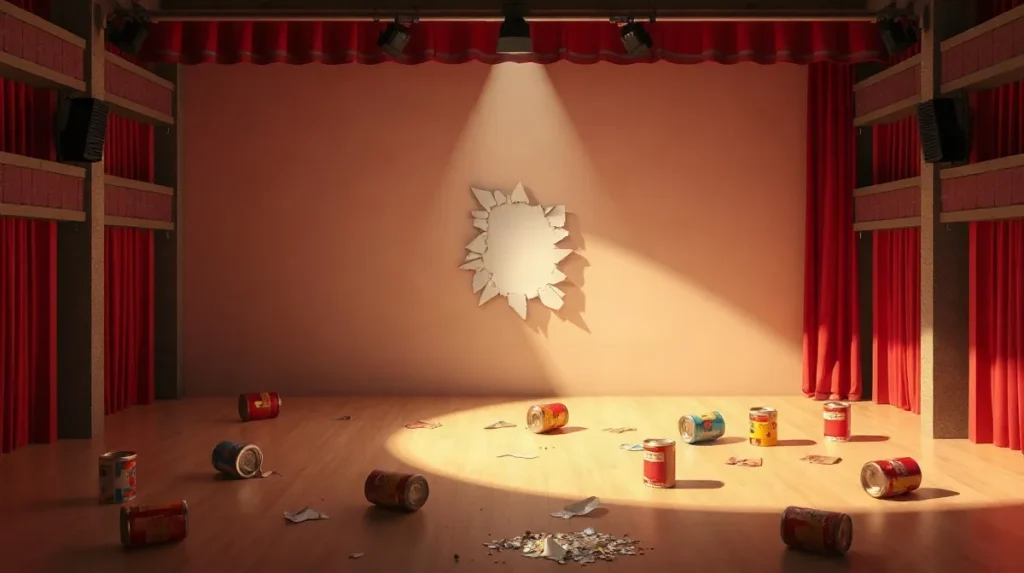
Moscow Actionism directly challenged Soviet artistic norms by rejecting state-sanctioned styles and embracing provocative, ephemeral performances that questioned official ideology and artistic conventions. Through spontaneous, often confrontational acts, these artists disrupted the rigid boundaries of Socialist Realism, asserting individual expression in an environment dominated by censorship and control.
Emerging in the late 1960s and gaining momentum through the 1970s, Moscow Actionism represented a radical departure from the prescribed art forms promoted by Soviet authorities. Unlike traditional painting or sculpture, these actions were transient events that emphasized process over product, often taking place in public or semi-clandestine settings. By doing so, Moscow Actionists not only defied aesthetic expectations but also implicitly critiqued the political system that sought to dictate cultural production.
This movement’s bold interventions highlighted the tension between artistic freedom and ideological conformity in the Soviet Union. Moscow Actionism’s legacy lies in its ability to expose the limitations of official art while inspiring future generations of Russian artists to explore alternative modes of expression beyond the state’s reach. Understanding this movement provides valuable insight into the broader cultural resistance within Soviet society.
| Aspect | Moscow Actionism | Soviet Nonconformist Painting | Samizdat Literature |
|---|---|---|---|
| Primary Medium | Live performance and body art | Visual painting and sculpture | Underground printed texts |
| Censorship Evasion | Ephemeral events outside galleries | Hidden exhibitions in private apartments | Secret distribution of printed material |
| Risk Level | High, including arrest under Article 70 | Moderate, risk of fines and confiscation | High, risk of imprisonment |
| Audience Size | Under 50 due to security | Small private circles | Variable, often larger via secret networks |
- 1967–1972 Active years of Moscow Actionism
- Under 200 ₽ Typical cost of materials used per performance in early 1970s
- Less than 2 hours Typical duration of Moscow Actionist actions
- Fewer than 50 Typical audience size due to venue and security constraints
What was Moscow Actionism and when did it emerge?
Origins
Moscow Actionism emerged in the late 1960s, specifically between 1967 and 1972, as a form of avant-garde performance art that challenged Soviet artistic norms by rejecting official state institutions and traditional gallery settings. Typically lasting from a few minutes up to two hours, these actions were staged in unofficial venues, often in private apartments or public urban spaces, deliberately avoiding state-run galleries that strictly controlled artistic expression under Soviet cultural policies.
Key Participants
The movement was driven by key figures such as Gennady Donskoy and Lev Rubinstein, who played pivotal roles in defining the aesthetic and political dimensions of Moscow Actionism. Their performances emphasized ephemeral presence and direct engagement with the audience, contrasting sharply with the monumental and propagandistic art endorsed by Soviet authorities. This approach reflected a broader push against the rigid artistic hierarchy enforced from 1932 onwards, when Socialist Realism became the mandated style in Soviet art institutions.
- Timeframe: 1967–1972
- Typical duration of actions: a few minutes to 2 hours
- Key artists: Gennady Donskoy, Lev Rubinstein
- Venues: unofficial spaces outside state galleries
How did Moscow Actionism confront Soviet cultural restrictions?
Moscow Actionism directly confronted Soviet cultural restrictions by employing ephemeral, provocative performances that circumvented censorship laws established in 1934. By staging actions outside official art institutions like the Moscow Union of Artists, which tightly controlled exhibitions and artistic output, these artists avoided state oversight and challenged the prescribed socialist realist style.
Methods of Confrontation
The collective used transient performances that often involved bodily risk or the deliberate destruction of objects imbued with Soviet ideological value. This approach bypassed the permanent record required for state approval, rendering censorship enforcement impractical. For example, the 1934 Soviet censorship law mandated strict control over visual art content, but the fleeting nature of Actions made legal intervention difficult. Additionally, artists rejected the Moscow Union of Artists, the dominant institution overseeing exhibition access and enforcing conformity, instead opting for unsanctioned public spaces and private gatherings to stage their works.
Notable Actions
- 1970’s “Violence”: Artists destroyed official portraits of Soviet leaders, symbolically rejecting state propaganda.
- Use of transient materials and bodily endurance: Performances often involved risking physical harm, emphasizing the artist’s vulnerability against institutional power.
What themes and materials defined Moscow Actionist performances?
Themes
Moscow Actionist performances centered on exploring repression, identity crises, and the pervasive control exerted by the Soviet state. Artists engaged with the physical and psychological effects of authoritarian power, often using self-inflicted pain and endurance as metaphors for resistance. The embodiment of suffering and vulnerability was a deliberate challenge to official narratives, reflecting the oppressive social environment of the early 1970s Soviet Union.
Materials and Settings
The performances relied on accessible, inexpensive materials such as newspapers, oil paint, and mannequins, each costing less than 200 ₽ at the time, which allowed artists to create impactful works without official funding. These objects were repurposed to symbolize information control, identity fragmentation, and dehumanization. Performances typically took place in nontraditional venues like private apartments or abandoned buildings, which provided the necessary privacy and freedom absent in state-sanctioned galleries.
- Use of everyday items priced under 200 ₽, such as Soviet-made mannequins and local newspapers
- Incorporation of physical endurance techniques including prolonged stillness and self-inflicted minor injuries
- Performance venues limited to apartments or derelict spaces due to lack of official support
What were the risks and limitations of Moscow Actionism under Soviet rule?
Political Risks
Moscow Actionism operated under severe political danger, as participants were subject to intense surveillance by the KGB and faced imprisonment under Article 70 of the RSFSR Penal Code, which criminalized “anti-Soviet agitation and propaganda.” Arrests often led to sentences spanning several years in labor camps. The threat of legal repercussions forced artists to keep performances extremely brief—typically under two hours—to minimize exposure to police raids. Such repression curtailed the movement’s ability to openly challenge Soviet artistic norms without risking harsh punishment.
Practical Constraints
Aside from political dangers, the movement struggled with material and logistical limitations. Access to artistic supplies was restricted by state-controlled distribution networks, limiting the availability of required materials for large-scale or prolonged actions. Official venues were inaccessible, confining events to small, private spaces with audiences rarely exceeding 50 people. Furthermore, no sanctioned documentation was permitted; as a result, many performances exist only in private photographs or notes, hindering broader dissemination and historical preservation of the works.
- Performances lasted less than 2 hours due to risk of police intervention.
- Audience size was limited to fewer than 50 people by informal constraints.
- Article 70 of the RSFSR Penal Code imposed imprisonment for anti-Soviet activities.
- Materials were scarce due to state-controlled supply chains.
How did Moscow Actionism influence later Russian art movements?
Legacy
Moscow Actionism significantly shaped subsequent Russian art movements by laying a foundation for experimental and conceptual approaches that challenged official Soviet aesthetics. In the 1970s and 1980s, it directly paved the way for Moscow Conceptualism, which emphasized intellectual critique and symbolic gestures over traditional form. The 1987 Manezh Art Exhibition protest, involving over 100 artists publicly opposing state-imposed art policies, drew inspiration from the confrontational spirit fostered by Moscow Actionism’s unauthorized performances and provocations. Furthermore, the movement contributed to the creation of unofficial art spaces in the 1990s, such as the Mitki group studios, which became hubs for artistic freedom outside the state’s artistic institutions.
Contemporary Impact
The influence of Moscow Actionism resonates in today’s Russian art scene, particularly within performance art festivals in Moscow. The 2026 Signal Festival, featuring over 50 performance acts and attracting an audience exceeding 10,000 visitors, exemplifies how Actionism’s legacy endures through contemporary experimental practices. These festivals continue to push boundaries of public engagement and artistic expression, reflecting the movement’s initial challenge to Soviet artistic norms and its insistence on art as social and political commentary.
- Moscow Conceptualism, dominant in the 1970s and 1980s
- 1987 Manezh Art Exhibition protest with participation of 100+ artists
- Mitki group studios as unofficial art spaces in the 1990s
- Signal Festival 2026 hosting 50+ performance acts and 10,000+ attendees
Frequently asked questions
What distinguishes Moscow Actionism from other Soviet underground art?
Were Moscow Actionist performances officially documented?
How did Soviet authorities react to Moscow Actionism?
Can Moscow Actionism be seen in any current Russian art forms?
Key takeaways
- Moscow Actionism emerged in late 1960s as a radical performance art movement
- It directly challenged Soviet censorship and ideological control
- Actions were short, provocative, and often took place outside official venues
- Artists risked imprisonment under Soviet penal laws
- The movement influenced later Russian conceptual and performance art