Record-Breaking Roman Mosaic Debuts in Rome
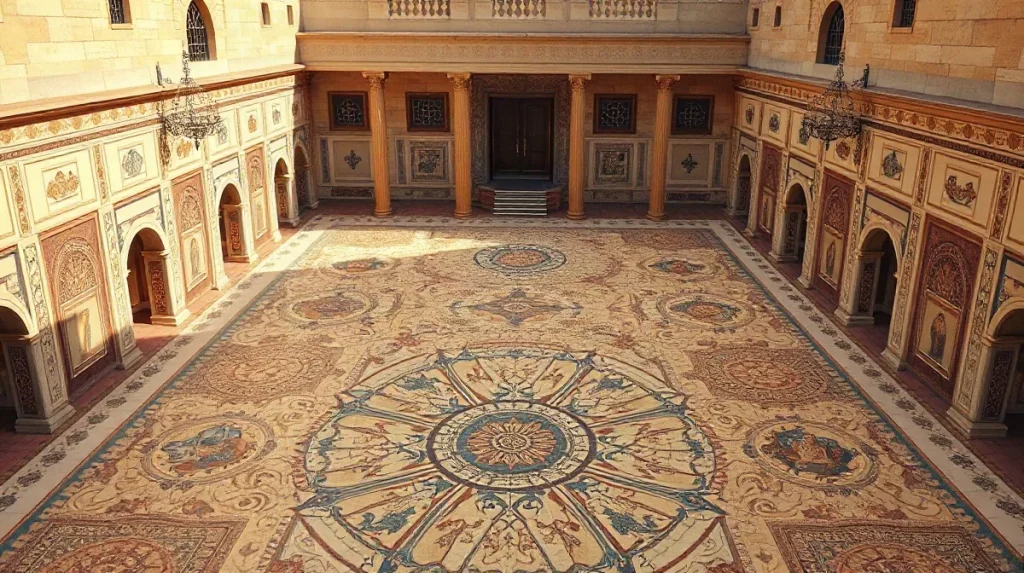
The largest Roman mosaic ever discovered, measuring 33 feet wide by 52.5 feet high, has been unveiled to the public at the Museum of the Baths of Trajan in Rome. This monumental mosaic, known as the “Great Mosaic,” was revealed after years of meticulous excavation and conservation, now accessible to visitors in the early 2nd-century bath complex built by Emperor Trajan.
The museum, opened in 2026, preserves the historic bath complex covering approximately 15 acres on the Oppian Hill, a site rich with imperial Roman history. The mosaic’s scale and intricate design make it an unprecedented archaeological find, offering new insights into Roman artistic and architectural traditions.
Historical Context: From Nero’s Golden House to Trajan’s Baths
The Baths of Trajan were constructed atop remnants of Nero’s Domus Aurea, the opulent “Golden House” built between 64 and 68 C.E. Archaeologists believe elements of the mosaic may have originated from this earlier imperial residence or a lavish dwelling incorporated into the bath complex.
During the baths’ construction, many tesserae—the tiny stone or glass pieces forming the mosaic—were removed and repurposed, which explains some missing sections today. This reuse of materials highlights the layered history of the site, reflecting Rome’s evolving urban fabric and the adaptation of imperial spaces over centuries.
Artistic Features and Themes of the Great Mosaic
The mosaic depicts architectural motifs that resemble a two-level theatrical backdrop, known as a scaenae frons, commonly used in Roman theater. It includes detailed imagery of statues representing the Muses alongside intricate geometric patterns that imitate marble surfaces.
This composition suggests a sophisticated understanding of space and theatricality in Roman art, blending performance and decorative elements. The mosaic’s scale and design complexity underscore its significance as a rare surviving example of large-scale Roman floor art.
Additional Discoveries: The Painted City Fresco
Within the same bath complex, the Museum also showcases the “Painted City,” a remarkable architectural fresco uncovered in the 1990s and displayed publicly for the first time. This fresco presents an aerial perspective of an urban landscape with unique features such as public squares and towers not typical of 1st-century city planning.
The fresco’s depiction may represent either a real port city or an imaginary scene, offering valuable insight into Roman artistic conventions and urban representation. Its presence alongside the mosaic enriches the visitor experience by contextualizing the bath complex as a cultural and social hub.
Ongoing Excavations and Public Accessibility
Archaeological work on the Great Mosaic continues, with a current focus on a section illustrating themes related to wine-making and grape harvesting, shedding light on ancient Roman daily life and economy. Much of the mosaic is now visible from an elevated walkway, allowing visitors to appreciate its scale and detail without disturbing the fragile site.
The museum’s design facilitates educational engagement, providing access to one of the most significant Roman mosaics ever found while preserving the integrity of the historic structure. This approach exemplifies modern archaeological practices balancing conservation with public outreach.
Takeaway: The Baths of Trajan Museum’s opening offers an unparalleled opportunity to experience the largest Roman mosaic ever discovered, deepening understanding of ancient imperial art and architecture.