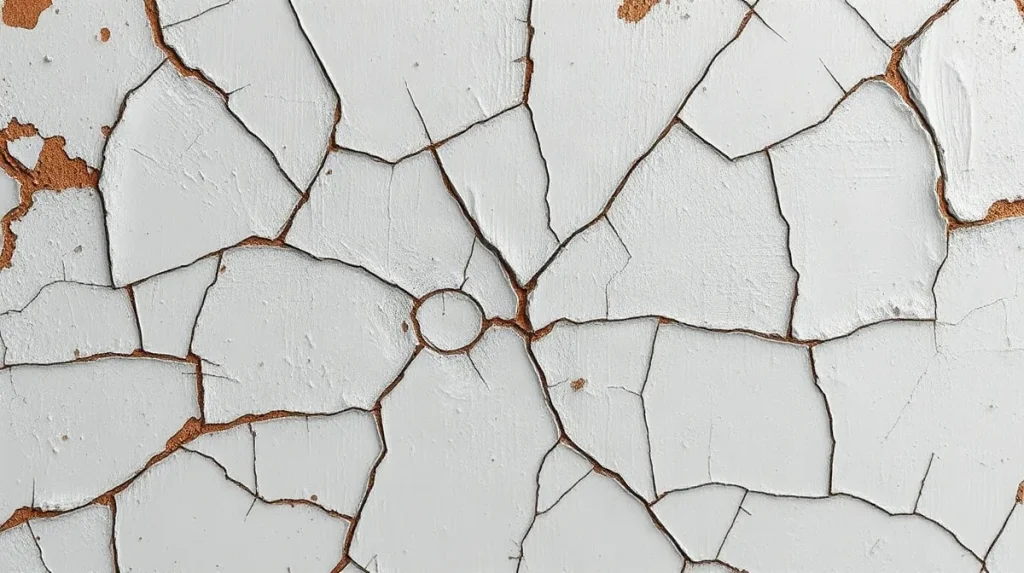
Craquelure—the intricate network of fine cracks that appears on the surface of paintings—serves as a vital indicator of a work’s age and condition. By examining the pattern, depth, and distribution of these cracks, experts can estimate the painting’s historical period, assess its material stability, and identify past restoration efforts.
Understanding what craquelure reveals about the age and condition of paintings offers a fascinating glimpse into the artwork’s life story. These delicate fissures are not merely signs of deterioration but also natural consequences of the materials’ aging processes and environmental influences over time. Each pattern of craquelure is shaped by the artist’s techniques, the medium used, and the conditions the painting has endured.
For conservators, collectors, and art historians alike, studying craquelure provides essential clues that help authenticate artworks and guide preservation strategies. This article explores how the science and art of reading craquelure patterns contribute to our knowledge of a painting’s provenance and ongoing care, deepening our appreciation of these timeless creations.
| Technique | Resolution | Cost Range | Primary Use |
|---|---|---|---|
| Visual Inspection | N/A | $1,000–$5,000 per assessment | Initial condition report |
| Digital Microscopy (Dino-Lite AM4115ZT) | Up to 500x magnification | $600 | Onsite crack pattern examination |
| Optical Coherence Tomography (Thorlabs Telesto III) | 5 µm | $100,000–$200,000 | Measuring crack depth and layer delamination |
| Hyperspectral Imaging (Specim cameras) | Variable, high spectral resolution | $150,000–$200,000 | Detecting artificial cracks and material inconsistencies |
- 15 cracks/cm² Typical craquelure density threshold for paintings made before 1900
- 0.2 mm Crack width above which conservation treatment is recommended
- $500–$3,000 Typical cost range for varnish removal due to fine craquelure
- 5 µm Resolution limit of optical coherence tomography devices used to measure crack depth
How does craquelure form and what does it indicate about a painting’s age?
Formation mechanisms
Craquelure forms primarily due to the differential drying and aging rates of successive paint layers, causing surface tension that results in characteristic cracking patterns. This phenomenon is most common in oil paintings over 100 years old, as documented by the Getty Conservation Institute. Conservators often examine these fine cracks using advanced tools like the Leica DM6 M microscope, which provides up to 500x magnification to reveal details invisible to the naked eye. Such microscopic analysis helps identify the specific mechanical stresses and environmental factors contributing to craquelure development.
Historical patterns
The pattern and density of craquelure vary significantly across artistic periods, offering clues about a painting’s approximate age. For example, 17th-century Dutch paintings typically exhibit fine, dense craquelure, while 19th-century works tend to show wider and more irregular cracks. According to a 2024 study by the National Gallery in London, paintings with a craquelure density exceeding 15 cracks per square centimeter generally date from before 1900. These quantitative thresholds assist experts in dating artworks and assessing their conservation status.
- Paintings older than 100 years commonly show visible craquelure (Getty Conservation Institute).
- The Leica DM6 M microscope enables analysis up to 500x magnification for crack detail.
- Craquelure density above 15 cracks/cm² usually indicates pre-1900 origin (National Gallery, 2024).
- 17th-century Dutch works often feature fine, dense craquelure patterns.
- 19th-century paintings display wider, less uniform cracking.
What specific craquelure features help conservators assess a painting’s preservation needs?
Crack dimensions and depth
The width and depth of craquelure cracks are key indicators used by conservators to evaluate a painting’s structural stability and preservation needs. Cracks wider than 0.2 millimeters typically suggest underlying instability that may require consolidation treatments to prevent further damage. To measure crack depth with precision, conservators employ optical coherence tomography (OCT) devices such as the Thorlabs Telesto III, which can resolve features as small as 5 micrometers. This technology enables detection of paint layer delamination, a critical factor in deciding intervention strategies.
Surface area impact
The extent of craquelure coverage on a painting’s surface also informs conservation priorities. According to the International Institute for Conservation (IIC) guidelines issued in 2025, when craquelure affects more than 30% of the surface area, the painting is considered at higher risk for paint loss and requires closer monitoring or treatment. Additionally, the presence of ‘crazing’—a dense network of very fine, shallow cracks—commonly occurs in aged varnish layers and often triggers varnish removal or replacement. Such varnish treatments can cost between $500 and $3,000 per painting, depending on size and complexity.
- Crack width threshold: 0.2 mm
- OCT resolution capability: 5 µm (Thorlabs Telesto III)
- Craquelure surface risk threshold: 30% (IIC guidelines, 2025)
- Varnish treatment cost range: $500–$3,000
How do conservators use craquelure patterns to differentiate authentic paintings from forgeries?
Natural vs artificial craquelure
Conservators distinguish authentic paintings from forgeries by analyzing craquelure patterns, as natural cracks display varied depths and irregularity, whereas artificial craquelure is typically uniform and superficial. A 2025 case study by the J. Paul Getty Museum found that genuine cracks measured between 0.1 and 0.3 mm in depth, while artificially induced cracks failed to exceed 0.05 mm. This measurable difference in crack depth serves as a key indicator of authenticity during examination.
Additionally, natural craquelure forms over decades or centuries, resulting in complex networks unique to each painting’s materials and aging process. In contrast, forged craquelure often lacks this intricate variability and can appear overly consistent or repetitive, betraying its artificial origin.
Technological tools
Advanced imaging technologies enhance conservators’ ability to detect forgeries by revealing details invisible to the naked eye. Hyperspectral cameras from companies such as Specim enable detailed spectral imaging that uncovers inconsistencies in crack formation, such as abrupt transitions or unnatural surface reflections. These nuances help experts confirm whether craquelure developed naturally or was artificially applied.
- J. Paul Getty Museum (2025): authentic cracks 0.1–0.3 mm depth; artificial cracks ≤ 0.05 mm
- Specim hyperspectral cameras: reveal crack inconsistencies beyond visual inspection
- Rijksmuseum’s craquelure database: provides pattern references for matching authentic works
What are the limitations and common pitfalls of relying on craquelure for dating and condition assessment?
Environmental influences
Relying on craquelure for dating and condition assessment is limited by environmental factors that can alter crack patterns long after a painting’s creation. Fluctuations in humidity are particularly influential; a 2023 report by the Canadian Conservation Institute highlighted that relative humidity changes above 10% can significantly distort craquelure morphology. Such post-creation modifications complicate efforts to assign an accurate age based solely on crack networks, as environmental stress can accelerate or modify cracking unrelated to the original paint drying process.
Restoration interference
Restorations and overpainting pose another major challenge by obscuring or imitating craquelure, which can lead to erroneous conclusions about a painting’s age or state of preservation. Infrared reflectography is often necessary to detect underlying original layers beneath modern interventions. Additionally, some contemporary artists deliberately simulate craquelure to evoke antiquity, reducing its reliability as a standalone dating method. Consequently, experts recommend combining craquelure analysis with pigment composition studies and provenance documentation to achieve more accurate dating and condition assessments.
- Humidity fluctuation threshold: ±10% relative humidity alters craquelure, per Canadian Conservation Institute (2023)
- Infrared reflectography: essential for detecting obscured craquelure in restored paintings
- Modern artists’ simulated craquelure: common in works produced post-2000, complicating dating
- Comprehensive dating approach: integrate craquelure with pigment analysis and provenance research
How much does craquelure analysis cost and what equipment is commonly used in conservation labs?
Cost of analysis
Craquelure analysis typically costs between $1,000 and $5,000 when included in a standard conservation condition report. This basic visual assessment is part of a broader evaluation performed by conservators to determine a painting’s state. More advanced imaging methods, such as optical coherence tomography (OCT) and hyperspectral imaging, require specialized equipment valued between $50,000 and $200,000, generally available only in major institutions like the Museum of Fine Arts, Boston.
Common tools
Conservation labs use a range of instruments to examine craquelure, from portable to high-end devices. Portable digital microscopes like the Dino-Lite AM4115ZT, retailing for about $600, allow detailed onsite inspection of crack patterns. For detailed analysis, software applications such as the free ImageJ platform and proprietary programs from companies like Zeiss help quantify crack density and spatial distribution, aiding in the objective assessment of the painting’s condition.
- Basic visual craquelure analysis: $1,000–$5,000 per painting
- Advanced imaging equipment (OCT, hyperspectral): $50,000–$200,000
- Portable digital microscope model: Dino-Lite AM4115ZT, approx. $600
- Pattern analysis software: ImageJ (free), Zeiss proprietary tools
Frequently asked questions
Can craquelure patterns alone determine the exact age of a painting?
Does craquelure always indicate damage or poor condition?
Are there modern paintings that have craquelure intentionally added?
What technological methods help analyze craquelure beyond visual inspection?
Key takeaways
- Craquelure density above 15 cracks/cm² usually indicates pre-1900 origin
- Cracks wider than 0.2 mm require conservation treatment to prevent paint loss
- Artificial craquelure is often uniform and less deep than natural cracking
- Environmental factors and restorations can distort craquelure patterns
- Advanced imaging tools costing up to $200,000 enhance crack analysis