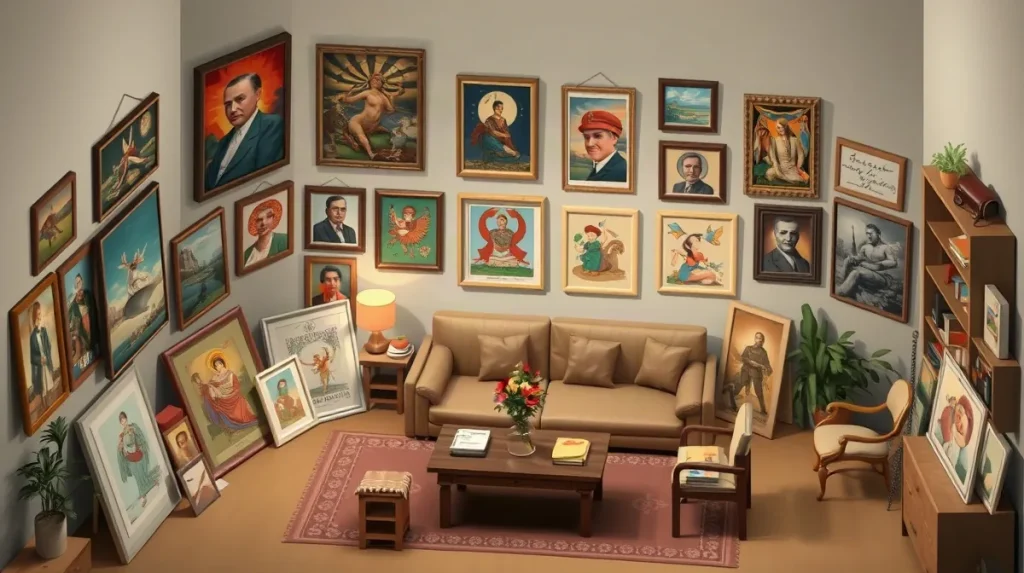
The Soviet Unofficial Art Movement, often overshadowed by its official counterpart, emerged as a powerful response to the constraints imposed by the state during the Soviet era. This movement, thriving from the 1950s to the fall of the Soviet Union, offered a platform for artists to express their individuality and dissent in a climate of censorship and repression. Understanding the key figures and contributions of this movement not only sheds light on the rich tapestry of Eastern European art but also highlights the resilience of artistic expression in the face of adversity.
Artists like Ilya Kabakov, Oleg Kulik, and Natalia Nesterova became pivotal in shaping this underground movement, creating works that challenged the status quo and resonated with a generation yearning for authenticity. Their contributions transcended mere aesthetics, encapsulating the struggles, hopes, and complexities of life under Soviet rule. By exploring the nuances of the Soviet Unofficial Art Movement, we gain insight into a vibrant subculture that continues to influence contemporary art and discourse, making it a vital area of study for those invested in the evolution of global art history.
Origins of the Unofficial Art Movement
The emergence of the Soviet Unofficial Art Movement can be traced back to the oppressive socio-political climate that characterized the Soviet Union throughout the 20th century. Following the establishment of the Soviet regime, the state sought to control all aspects of cultural expression, imposing strict guidelines on artistic production. This culminated in the dominance of socialist realism, a style that mandated art to glorify the ideals of communism and to portray an idealized vision of Soviet life. Artists were often forced to conform to these rigid standards, which stifled creativity and encouraged a culture of censorship. As a reaction to this artistic repression, many artists began to seek alternative avenues for expression, leading to the genesis of a vibrant unofficial art scene.
In the shadows of state-sanctioned art, informal gatherings of artists took root. These meetings often took place in private homes, where like-minded individuals shared their work and ideas away from the watchful eye of the authorities. Collectives formed organically, fostering a sense of community among artists who were united by their rejection of the official artistic narrative. This underground movement allowed for experimentation and the exploration of diverse themes, reflecting the artists’ complex relationships with their environment and their personal experiences. Notable figures such as Alexander (Shura) Bandzeladze and Eric Bulatov emerged from this milieu, each developing distinctive styles that served as both personal expression and a form of sociopolitical protest against the constraints of socialist realism.
The impact of these gatherings extended beyond mere artistic expression; they became crucial spaces for dialogue and the exchange of ideas. These informal exhibitions provided a platform for artists to showcase their work without the constraints of censorship, allowing them to critique societal issues and engage with topics that were often considered taboo. The lack of formal recognition from the state only fueled the resolve of these artists, who sought to carve out their own identity in a cultural landscape dominated by ideological conformity. This spirit of resistance and innovation laid the groundwork for a significant cultural movement that would come to define a crucial chapter in Soviet art history, as artists sought to reclaim their voices and assert their individuality in the face of oppression.
Key Figures: Alexander (Shura) Bandzeladze
Alexander (Shura) Bandzeladze, a pivotal figure in the Soviet unofficial art movement, was born in Tbilisi, Georgia, where he cultivated his artistic sensibilities amidst the vibrant cultural backdrop of the region. Bandzeladze’s work is characterized by a profound engagement with themes of identity and resistance, reflecting a keen awareness of the sociopolitical climate of his time. His artistic philosophy diverged sharply from the state-mandated realism, favoring instead a more personal, expressive visual language that resonated with the complexities of individual experience. This divergence was not merely aesthetic but served as a form of protest against the oppressive artistic norms imposed by the Soviet regime.
Bandzeladze played a crucial role in forging a unique visual language that encapsulated both personal and collective narratives. He was instrumental in the development of an art community that embraced nonconformity, often exhibiting works in private apartments and alternative spaces, where artists could showcase their creations away from the scrutiny of official channels. His approach combined traditional Georgian motifs with contemporary themes, creating a dialogue between the past and the present. This synthesis not only highlighted his national heritage but also positioned him as a critical voice within the broader narrative of Soviet art.
Significant works by Bandzeladze demonstrate his innovative approach and profound impact on the unofficial movement. His pieces often feature bold colors and abstract forms, exemplifying a departure from the monotonous color palette typical of socialist realism. Notable exhibitions, such as those organized in the 1980s, showcased his art alongside that of like-minded contemporaries, solidifying his status within the movement. Through these exhibitions, Bandzeladze not only pushed the boundaries of artistic expression but also fostered a sense of community among artists who were eager to challenge the status quo.
In summary, Alexander Bandzeladze’s contributions to the Soviet unofficial art movement are marked by his unique artistic vision and his role in cultivating a vibrant network of nonconformist artists. His ability to blend personal narrative with broader sociopolitical commentary rendered him a seminal figure in the evolution of contemporary art in the region, influencing generations of artists beyond the confines of Soviet ideologies.
Key Figures: Dmitry Bulatov
Dmitry Bulatov emerged as a pivotal figure within the Soviet unofficial art movement, carving a unique path that was shaped by his profound engagement with the socio-political landscape of the time. Born in the 1930s, Bulatov was influenced by the rich tapestry of Russian culture and the harsh realities of life under a regime that stifled artistic expression. His work often reflected a deep-seated critique of the oppressive political climate, showcasing an array of styles that defied the constraints of socialist realism. Bulatov’s artistic journey was marked by a commitment to representing the complexities of human emotion and the struggle for individual identity, themes that resonated deeply with his contemporaries.
Among Bulatov’s iconic works, “The Last Judgment” stands out as a striking commentary on the disillusionment of Soviet society. In this piece, Bulatov juxtaposes religious iconography with modern imagery, creating a visual dialogue that questions the morality of the state and its impact on the individual. His ability to blend traditional motifs with contemporary concerns challenged the prevailing political ideals, making his art a powerful form of resistance. The emotional depth of Bulatov’s work is further evident in pieces like “The Blue Sky,” which evokes a sense of longing and melancholy, reflecting the collective yearning for freedom and self-expression that characterized the era.
The reception of Bulatov’s art during his lifetime was a testament to the tension between artistic innovation and political constraint. While his works were often met with skepticism by the official art world, they found a receptive audience among the underground circles of Moscow and Leningrad. This duality—of being celebrated in private exhibitions while being marginalized by the state—illustrated the complexities of the unofficial art movement. His contributions not only enriched the cultural landscape of Soviet art but also provided a lens through which to view the struggles of a generation caught between tradition and the quest for personal expression. Bulatov’s legacy continues to influence contemporary artists, serving as a reminder of the power of art to challenge authority and convey profound truths about the human experience.
The Role of Private Exhibitions
The Soviet unofficial art movement, characterized by its resistance to the constraints of socialist realism, found a vital platform in private exhibitions. These gatherings, often held in the intimate settings of artists’ apartments, became essential for the promotion and sustenance of creativity and community among nonconformist artists. They provided a safe haven where innovative ideas could flourish away from the prying eyes of the state. The informal atmosphere fostered genuine dialogue and collaboration, allowing artists like Alexander Bandzeladze and others to explore their individual styles while also engaging in collective sociopolitical expression.
Organizing these unofficial exhibitions came with significant logistical challenges. Artists had to navigate a landscape fraught with censorship and the constant threat of state intervention. The selection of venues was crucial; apartments offered both privacy and a sense of community, but they also posed risks, as gatherings could attract unwanted attention from authorities. The artists often relied on word-of-mouth invitations to keep attendance discreet and limited. Despite these challenges, the determination of artists to showcase their work led to a vibrant network of support, where sharing art became an act of defiance against the oppressive cultural policies of the time.
Notable exhibitions during this period had a profound impact on the broader art landscape. The Gazanevsky exhibitions, for instance, helped to crystallize a collective identity among artists and drew attention to the importance of nonconformist art in Soviet culture. These shows not only highlighted the innovative techniques and perspectives of participating artists but also served as a catalyst for change, influencing younger generations and even provoking discussions within more traditional artistic circles. As a result, private exhibitions played an instrumental role in redefining the boundaries of art in the Soviet Union, allowing for a rich tapestry of expression that continues to resonate in contemporary discussions of art history.
In conclusion, the role of private exhibitions in the Soviet unofficial art movement cannot be overstated. They were not merely spaces for displaying art but rather hubs of creativity, resistance, and community that shaped the trajectory of nonconformist art in a repressive regime. Through these exhibitions, artists forged connections that transcended the limitations imposed upon them, leaving an indelible mark on the cultural landscape of their time.
Themes and Styles in Unofficial Art
Unofficial art in the Soviet Union emerged as a potent form of expression during a time when state-sponsored artistic movements, particularly socialist realism, dominated the cultural landscape. As a reaction to the oppressive political atmosphere, artists utilized recurrent themes of identity, resistance, and the absurd to convey their experiences and critique the status quo. The exploration of personal and national identity became a central motif, with many artists grappling with their roles within a society that often suppressed individual expression in favor of collective ideology. This quest for identity was not merely personal; it resonated on a broader cultural level, reflecting the struggles of a nation grappling with its past and present in the shadow of totalitarian control.
Resistance manifested in various forms, as artists employed diverse styles ranging from expressionism to conceptual art, each uniquely tailored to communicate their dissent. The aesthetic choices of artists such as Alexander Bandzeladze and Oleg Tselkov, for instance, often incorporated vivid colors and distorted forms to evoke emotional responses and challenge viewers’ perceptions. In contrast, others leaned towards minimalism and abstraction, using such approaches to convey profound messages with subtlety and depth. This stylistic diversity was crucial in creating a rich tapestry of unofficial art that defied the constraints of socialist realism, allowing artists to explore complex ideas and emotions freely.
Irony and satire also played significant roles in this movement, serving as effective tools for subverting official narratives. Many artists cleverly employed humor and absurdity to highlight the contradictions and failures of the state, often masking serious critiques behind playful imagery or whimsical presentations. By doing so, they not only engaged their audience but also invited them to question the veracity of the propaganda they encountered daily. This interplay of humor and critique allowed unofficial artists to navigate the treacherous waters of censorship while still making potent statements about the societal conditions around them. The result was a vibrant and multifaceted art scene that thrived in the margins, fostering an enduring legacy that continues to inspire contemporary artists today.
Impact on Contemporary Art
The legacy of the Soviet unofficial art movement continues to resonate within contemporary art, especially among artists in the post-Soviet space. This movement, characterized by its defiance against the rigid constraints of socialist realism, has inspired a new generation of creators who explore themes of identity, freedom, and sociopolitical critique. Key figures such as Alexander Bandzeladze and Eduard Burchuladze, who carved out their individual artistic voices while engaging in collective resistance, laid the groundwork for contemporary practices that challenge authority and celebrate personal expression. Their works, often exhibited in private settings, cultivated a culture of nonconformity that still inspires artists today.
In today’s context, the influence of these unofficial artists is visible in various contemporary art movements. For instance, the rise of conceptual art in Eastern Europe often echoes the subversive spirit of the Soviet era, as artists seek to question societal norms and confront historical narratives. Through installations, performances, and multimedia projects, contemporary creators draw from the rich tapestry of unofficial art, reinterpreting its themes for a modern audience. The focus has shifted towards not only aesthetic considerations but also the socio-political implications of art, echoing the sentiments expressed by their predecessors.
Moreover, the ongoing relevance of Soviet unofficial art can be seen in the resurgence of interest in Eastern European art within global exhibitions and art fairs. The dialogue between past and present is enriched by the works of artists who reference the visual language and methodologies of the unofficial movement, often integrating them into their contemporary practices. By doing so, they not only pay homage to the struggles and innovations of their forebears but also foster an ongoing conversation about the role of art in society.
In summary, the impact of the Soviet unofficial art movement is profound and multifaceted, influencing both the thematic concerns and the methodologies of current artists. As they navigate the complexities of identity and freedom in a rapidly changing world, these artists remain connected to a legacy that continues to inspire and challenge, ensuring that the spirit of nonconformity and creative exploration thrives.
International Recognition and Legacy
The journey of Soviet unofficial artists from obscurity to international recognition has been both intricate and profound. During the latter part of the 20th century, artists like Alexander Bandzeladze and Dmitri Bulatov emerged as pivotal figures in this movement, often working in defiance of the state’s strict adherence to socialist realism. Their art was not merely a rebellion against imposed aesthetics but also a poignant commentary on the sociopolitical landscape of the time. Through private exhibitions and underground galleries, they fostered a community that thrived on individual expression and collective dissent, laying the groundwork for what would eventually capture global attention.
Key exhibitions and retrospectives have played a significant role in introducing Soviet unofficial art to a wider audience. Events such as the “Soviet Nonconformist Art” exhibition in the West and various showcases in major European cities helped to illuminate the creativity and resilience of these artists. By presenting their work in contexts untethered from Soviet censorship, curators provided a platform for dialogue about the nature of art under authoritarian regimes and the value of artistic freedom. These exhibitions not only celebrated the unique visual languages developed by these artists but also contextualized their contributions within a broader narrative of cultural resistance.
As we move deeper into 2026, the study and appreciation of Soviet unofficial art continue to gain traction within art history. Scholars and curators are increasingly recognizing the importance of this movement as a lens through which to examine the complexities of artistic expression in oppressive environments. Academic research, gallery installations, and public discussions are fostering a renewed interest in these artists and their legacies. Institutions are actively acquiring works from this period, ensuring that the contributions of Soviet unofficial artists are preserved and celebrated for future generations. The ongoing dialogue surrounding their work not only affirms their place in the annals of art history but also serves as a reminder of the enduring power of art to challenge and inspire.
Challenges and Resilience
The Soviet unofficial art movement emerged as a courageous response to the oppressive constraints of the state-sanctioned artistic narrative. Artists faced significant personal and professional challenges within the rigid framework of the Soviet system, where socialist realism dominated the cultural landscape. This mandated style not only dictated the form and content of artistic expression but also enforced an ideological conformity that stifled individual creativity. Artists like Alexander (Shura) Bandzeladze and Dmitry Bulatov found themselves navigating a treacherous terrain of censorship and repression, where deviation from the accepted norm could lead to severe consequences, including harassment, surveillance, and even imprisonment.
In this environment of uncertainty, resilience became a defining characteristic of the movement. Artists adapted their practices to circumvent censorship, often employing subtle subversion and coded messages in their works. The clandestine nature of their exhibitions—held in private apartments or underground venues—allowed for the cultivation of a vibrant community that fostered mutual support and collaboration. These informal gatherings not only provided a platform for showcasing innovative art but also became vital spaces for dialogue and solidarity among like-minded individuals. The bonds formed in these settings became a source of strength, enabling artists to withstand the pressures of state scrutiny while continuing to assert their artistic identities.
The significance of community support in this period cannot be overstated. It was within these intimate networks that artists could share resources, critique one another’s works, and collaborate on projects that pushed the boundaries of artistic expression. This collective spirit was instrumental in the survival of their practices, as it provided both emotional reinforcement and practical assistance. By standing together, these artists created a cultural resistance that challenged the prevailing narratives and inspired future generations to explore the complexities of identity, freedom, and expression within a repressive regime. The legacy of the Soviet unofficial art movement is not only found in its artistic achievements but also in the resilience and courage of those who dared to envision an alternate reality through their art.
Frequently asked questions
What is unofficial art in the context of the Soviet Union?
Who were some notable artists in the Soviet unofficial art movement?
How did artists display their work despite censorship?
What themes are prevalent in Soviet unofficial art?
What is the legacy of the Soviet unofficial art movement today?
Key takeaways
- The Soviet unofficial art movement was a crucial response to state censorship.
- Key artists like Bandzeladze and Bulatov shaped the cultural landscape through innovative styles.
- Private exhibitions played a vital role in fostering artistic community and expression.
- Themes of resistance and identity remain relevant in contemporary art.
- The legacy of unofficial art continues to impact artists and movements globally.
Sources
Dodge Collection, en.wikipedia.org, cdclv.unlv.edu, MARCH 1968, dl.tufts.edu
