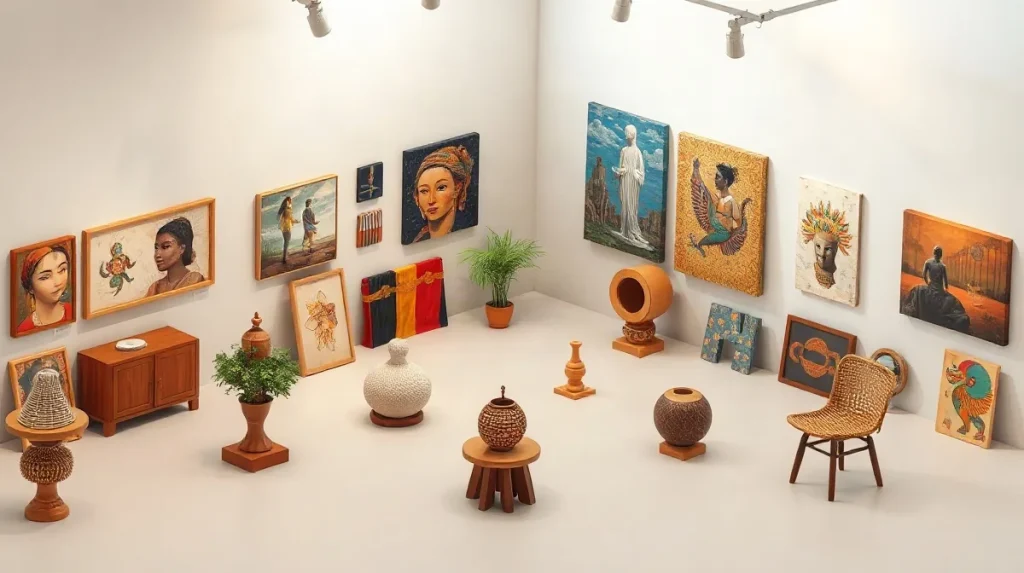
The São Paulo Biennial stands as one of the foremost contemporary art events globally, offering a dynamic platform for artists from Russia, Eastern Europe, and beyond to engage with diverse audiences. Since its inception, it has fostered cross-cultural dialogue and showcased groundbreaking works that reflect the complexities of our time. Understanding the São Paulo Biennial is essential for appreciating how international art scenes intersect and evolve in response to shifting social and political landscapes.
This vital platform not only highlights established figures but also elevates emerging voices, making it a barometer of current artistic trends and innovations. Its role extends beyond exhibition; it serves as a catalyst for critical discourse, collaboration, and the redefinition of artistic narratives across continents. For collectors, curators, and enthusiasts alike, the São Paulo Biennial offers an unparalleled glimpse into the vibrant pulse of contemporary art today.
| Biennial | Founded | Primary Sponsor | Focus/Scope | Location |
|---|---|---|---|---|
| São Paulo Biennial | 1957 | Petrobras | Latin American & Global Contemporary Art | São Paulo, Brazil |
| Venice Biennale | 1895 | Italian Government | International Contemporary Art | Venice, Italy |
| Documenta | 1955 | Kassel City & Public Funds | International Contemporary Art | Kassel, Germany |
| Berlin Biennale | 1998 | Berlin Senate | Emerging Contemporary Art | Berlin, Germany |
- 1957 Year the São Paulo Biennial was founded
- 36 Current edition number of the São Paulo Biennial as of 2026
- January 2026 Scheduled end date of the 36th São Paulo Biennial
- Petrobras Main corporate sponsor of the São Paulo Biennial
What is the historical significance of the São Paulo Biennial?
Origins and founding goals
The São Paulo Biennial holds historical significance as one of the earliest platforms dedicated to introducing contemporary art to Brazil and connecting it with the global art scene since its inception in 1957. Founded by the Fundação Bienal de São Paulo, its mission was to establish São Paulo as a vital international art hub through recurring exhibitions that foster cultural exchange. Sponsored by Petrobras, a leading Brazilian energy company with a history of supporting the arts, the Biennial has consistently aimed to bring Brazilian artists into conversation with major world art centers. For example, the 28th edition in 2008 explicitly emphasized Brazil’s living contact with global art communities, echoing the original curator Lourival Gomes Machado’s vision of the event’s role in bridging the local and international art worlds.
Political and cultural challenges
The Biennial’s historical impact is also marked by its resilience amid political pressures, particularly evident during the 12th edition in 1973. Despite government interference during Brazil’s military dictatorship, the Fundação Bienal repeatedly asserted its commitment to freedom of expression, navigating tensions between artistic freedom and state interests. The event served as a platform where cultural resistance could emerge, even as entities such as the Banco Nacional de Habitação influenced the exhibition’s context. This demonstrated the Biennial’s role not only as a showcase for contemporary art but also as a space for negotiating political and social challenges in Brazil’s evolving cultural landscape.
- Founded in 1957 to promote contemporary art in Brazil
- Petrobras sponsorship underlines cultural support
- 12th Biennial (1973) confronted government censorship
- 28th Biennial (2008) highlighted global artistic exchange
How does the São Paulo Biennial function as a platform for cultural exchange?
Sponsorship and institutional support
The São Paulo Biennial functions as a dynamic platform for cultural exchange largely through the robust backing of Petrobras and the Fundação Bienal de São Paulo, which provide both financial and organizational foundations. Petrobras, a leading Brazilian energy company, reinforces the event’s cultural significance by investing millions of reais annually in sponsorship, underscoring corporate commitment to the arts. Meanwhile, the Fundação Bienal de São Paulo manages the event’s infrastructure, ensuring seamless coordination across venues and programs that facilitate international artist participation and public engagement. This institutional framework allows the Biennial to transcend its role as a mere exhibition, enabling dialogue and collaboration between diverse cultural actors on a scale spanning the entire city.
The 2026 edition as a contemporary case
The 36th São Paulo Biennial, running through January 2026, exemplifies how the event functions as an active site for cultural interaction by featuring over 90 internationally recognized contemporary artists from more than 40 countries. This edition’s expansive programming includes city-wide installations, workshops, and panel discussions designed to engage both local communities and global visitors. The Biennial’s structure fosters exchange through:
- Curated dialogues that connect Brazilian and international art practices
- Collaborative projects supported by Fundação Bienal’s logistical expertise
- Public accessibility initiatives offering free entry and outreach events in São Paulo’s diverse neighborhoods
Such measures highlight the Biennial’s role as a living platform where cultural perspectives converge, generating ongoing conversations that extend beyond the exhibition’s physical and temporal boundaries.
What are the main roles and objectives of the São Paulo Biennial today?
Promotion and internationalization
The São Paulo Biennial’s main role today is to serve as a dynamic platform that promotes Brazilian contemporary art within the global art scene while simultaneously introducing international artists to Brazil. As one of the longest-running art events since its inception in 1957, the Biennial actively fosters cultural exchange by showcasing over 200 artists from more than 50 countries in its current 36th edition, which runs through January 2026. Supported by Petrobras and organized by the Fundação Bienal de São Paulo, it consolidates São Paulo’s reputation as Latin America’s leading art hub, attracting approximately 300,000 visitors per edition. The Biennial’s internationalization strategy includes partnerships with major institutions such as the Museum of Modern Art (MoMA) in New York and Tate Modern in London, facilitating artist residencies and collaborative exhibitions that expand Brazil’s contemporary art visibility worldwide.
Artistic innovation and curatorship
Another key objective of the São Paulo Biennial is to highlight cutting-edge curatorial approaches and emerging artistic practices, positioning itself as a laboratory for contemporary art experimentation. The 36th Biennial emphasizes interdisciplinary works that challenge traditional media, featuring installations, digital art, and socially engaged projects curated by a team led by a prominent international curator. This edition also prioritizes innovation through criteria such as inclusion of artists under 40 years old and projects that address environmental sustainability, reflecting global art trends. The selection process demands that at least 30% of exhibited works incorporate new media or interactive elements, underscoring the Biennial’s commitment to evolving artistic dialogues and forward-thinking narratives.
- Over 200 artists representing more than 50 countries
- Approximately 300,000 visitors per edition
- At least 30% of works featuring new media or interactive components
- Emphasis on artists under 40 years old
- Key institutional partnerships with MoMA and Tate Modern
What limitations or challenges does the São Paulo Biennial face?
Funding and political balance
The São Paulo Biennial faces significant challenges from political and economic pressures that affect artistic freedom and financial stability. Petrobras, Brazil’s largest oil company, has been a principal sponsor since the early 2000s, contributing millions of reais annually—around ₽50 million in recent cycles—to sustain the event. While this backing ensures operational continuity, it raises concerns about cultural commodification and potential influence over curatorial decisions. Additionally, fluctuating government support linked to Brazil’s political landscape sometimes threatens the biennial’s budget, which has hovered between $3 million and $5 million USD in recent editions. Maintaining a balance between upholding artistic autonomy and navigating sponsorship demands is an ongoing tension for the Fundação Bienal de São Paulo, the institution managing the event.
Curatorial and infrastructural challenges
Curating the São Paulo Biennial involves negotiating the representation of local Brazilian artists alongside a diverse international roster, which can lead to curatorial tensions. The 36th edition, running until January 2026, continues to grapple with this balance, as the curators aim for inclusivity without overshadowing Brazil’s rich contemporary art scene. Logistically, the biennial’s venue in Ibirapuera Park requires constant investment to maintain its infrastructure, including exhibition halls spanning over 30,000 square meters. Audience engagement is another hurdle, as the metropolitan scale of São Paulo demands innovative outreach to attract visitors beyond the core art community. This includes digital initiatives and educational programs designed to reach tens of thousands annually, yet sustaining this momentum requires ongoing resources and strategic planning.
- Petrobras sponsorship: ₽50 million annually
- Biennial budget range: $3–5 million USD
- Exhibition space: 30,000+ square meters
- Audience targets: tens of thousands per edition
How does the São Paulo Biennial compare to other major international art biennials?
Age and historical precedence
The São Paulo Biennial is one of the oldest international art biennials, founded in 1957, making it second only to the Venice Biennale, which began in 1895. This places São Paulo among the pioneering platforms shaping contemporary art exhibitions globally for nearly seven decades. Its long history has allowed it to play a crucial role in introducing Latin American contemporary art to the world while fostering cultural exchange. For example, the 36th edition, running until January 2026, continues this tradition by engaging with both local and international artists, maintaining its position as a vital cultural institution on the global art calendar.
Sponsorship and scale
Unlike many major biennials that rely predominantly on government funding or private patrons, the São Paulo Biennial benefits from the sponsorship of Petrobras, Brazil’s leading energy company, which underscores its commitment to cultural promotion. This contrasts with events like the Venice Biennale, which is primarily state-supported, or the Whitney Biennial, backed by private foundations and donors. The São Paulo Biennial’s scale is notable for spanning multiple venues across São Paulo city, integrating the exhibition into the urban fabric and engaging a broader public. Its reach extends beyond the central pavilion, activating diverse cultural spaces over several months, thus enhancing the city’s profile as an international art hub.
- Founded in 1957, second oldest after Venice Biennale (1895)
- Sponsored by Petrobras, a major national energy company
- 36th Biennial runs until January 2026
- Exhibition spread over multiple venues in São Paulo city
- Focus on Latin American contemporary art with global participation
Frequently asked questions
When does the 36th São Paulo Biennial run?
Who sponsors the São Paulo Biennial?
What is the primary goal of the São Paulo Biennial?
How does the São Paulo Biennial impact São Paulo’s cultural status?
Key takeaways
- The São Paulo Biennial is a cornerstone of Latin American contemporary art since 1957
- Petrobras’s sponsorship demonstrates strong corporate support for Brazilian culture
- The event fosters dialogue between Brazilian and international artists
- Political and funding challenges impact the biennial’s operations
- It remains one of the world’s most prestigious and historically significant biennials
Sources
- biennialfoundation.org — “Bienal de São Paulo – Biennial Foundation”
- sleek-mag.com — “The Master of Grandeur Gestures – Wanderings Between the 36th São Paulo Bienal and its City. The Master of Grandeur Gestures – Wanderings Between the 36th São P”
- Tate — “How to Talk About Biennials That Don’t Exist: Reassembling the Twelfth São Paulo Biennial (1973) – Tate Papers”
- 36.bienal.org.br — “About the 36th – 36ª Bienal de São Paulo”
- Frieze — “28th São Paulo Biennial”
Topic guide: Exhibitions: The Complete Guide