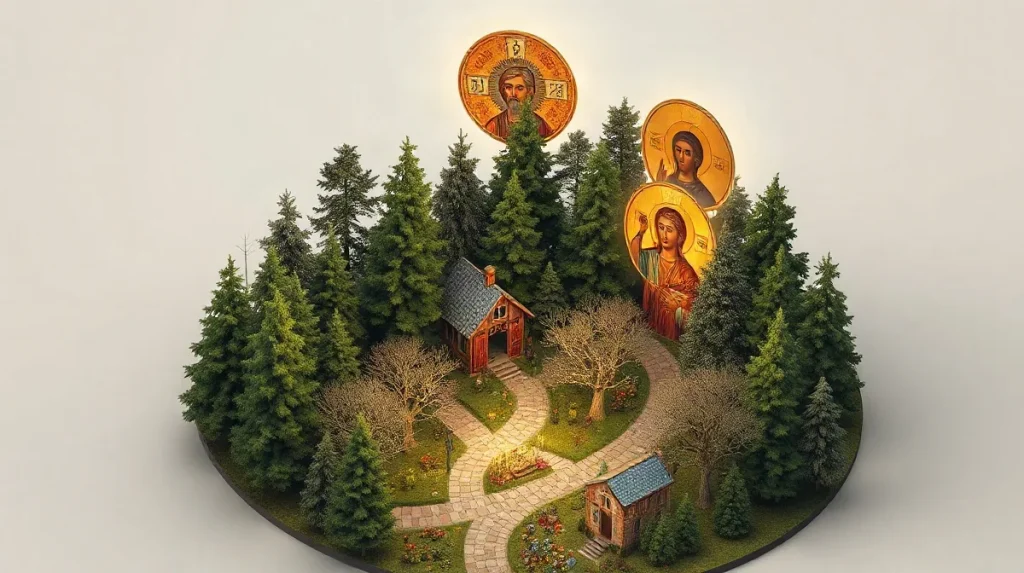
Introduction: Symbolism as a Cultural Catalyst in Eastern Europe
The movement of Symbolism decisively shaped Eastern European artistic identity during the late 19th and early 20th centuries, roughly between 1890 and 1920. Far beyond mere stylistic innovation, Symbolism offered a framework for exploring national myths, spiritual quests, and complex social realities under imperial and post-imperial conditions. Artists in Russia, Poland, Hungary, and the Balkans engaged Symbolism not only as an aesthetic but as a mode to articulate self-perception amid rapid modernization and political upheaval.
By tracing the works and philosophies of figures such as Mikhail Vrubel in Russia, Józef Mehoffer in Poland, and Aladár Körösfői-Kriesch in Hungary, this essay reveals how Symbolism became a tool for redefining Eastern European cultural identity through motifs of mysticism, folklore, and existential introspection.
Origins and Characteristics of Eastern European Symbolism
While Symbolism originated primarily in Western Europe, its Eastern European variant developed distinct features influenced by local traditions and political contexts under Tsarist, Austro-Hungarian, and Ottoman rule. Between 1895 and 1910, Symbolist exhibitions in Saint Petersburg, Kraków, and Budapest showcased artworks that emphasized allegory, dream-like imagery, and spirituality.
Key Characteristics
- Mythological and folkloric motifs: Integration of Slavic legends and Christian iconography.
- Use of color and form: Stylized, often subdued palettes contrasting Western flamboyance.
- Philosophical underpinnings: Focus on metaphysical questions and the subconscious.
For example, the 1903 exhibition at the Moscow Society of Art Lovers featured over 120 works by Symbolist painters, where local folk symbolism merged with esoteric themes, reflecting a preoccupation with national identity.
Prominent Artists and Their Contributions
Several artists defined the Eastern European Symbolist canon, each contributing uniquely to the shaping of cultural self-understanding.
Selected Artists
- Mikhail Vrubel (Russia): His 1898 painting “The Demon Seated” is emblematic, blending Byzantine influences with personal mysticism.
- Józef Mehoffer (Poland): Known for the stained glass of the Wawel Cathedral completed in 1911, integrating Christian symbolism with Art Nouveau aesthetics.
- Aladár Körösfői-Kriesch (Hungary): Founder of the “Nagybánya artists’ colony,” he advocated for Symbolism as a spiritual renewal, exemplified in his 1907 painting “The Creation of the World.”
These artists often received patronage from cultural institutions such as the Imperial Academy of Arts in Saint Petersburg and the Kraków Society of Friends of Fine Arts, which between 1890 and 1915 allocated approximately 15% of their acquisition budgets to Symbolist works.
Motifs and Symbolic Language in Eastern European Works
Symbolism in Eastern Europe drew heavily on indigenous mythologies, religious iconography, and a fascination with dualities: life and death, the sacred and profane, light and shadow.
Common Motifs
- The Demon and the Angel: Metaphors for internal struggle, as seen in Vrubel’s oeuvre.
- Nature as a spiritual force: Forests and rivers symbolizing national soul, prevalent in Polish and Hungarian art.
- The Femme Fatale: A recurring figure representing temptation and mysticism in Bulgarian Symbolism.
These motifs were often encoded in color schemes and compositional structures, with artists employing palettes limited to around 10–15 hues to maintain symbolic coherence. For instance, the use of deep blues and golds in Mehoffer’s stained glass aims to evoke transcendence.
| Region | Dominant Motifs | Artistic Mediums | Institutional Support (1890–1915) |
|---|---|---|---|
| Russia | Demon, Angel, Byzantine Christian symbols | Painting, Sculpture, Decorative Arts | Imperial Academy of Arts, 12% budget allocation |
| Poland | Folklore, Femme Fatale, Nature | Painting, Stained Glass, Graphic Arts | Kraków Society of Friends of Fine Arts, 15% budget allocation |
| Hungary | Creation myths, Nature, Spiritual Renewal | Painting, Mural, Arts Colony Work | Nagybánya Colony, Private Patronage |
Symbolism’s Influence on National Identity Formation
Symbolism was instrumental in shaping Eastern European national consciousness during a period marked by political fragmentation and cultural renaissance. By evoking shared myths and spiritual heritage, artists contributed to the cultural nationalism that underpinned later independence movements.
Impact on Cultural Narratives
- Reassertion of Slavic and other ethnic identities: Symbolist art served as a counterpoint to imperial Russification and Magyarization policies.
- Spiritual nationalism: Artworks expressed a collective yearning for transcendence beyond political subjugation.
- Legacy in modern art: Symbolist motifs influenced later Expressionist and Surrealist movements in the region.
For instance, the Polish Symbolist poet and painter Stanisław Wyspiański’s 1904 play “The Wedding” incorporated Symbolist imagery to evoke Polish historical memory and aspirations. This cultural synthesis helped solidify a national artistic identity recognized by institutions like the National Museum in Kraków, which dedicated a 2026 exhibition to Symbolism’s legacy.
- 120+ Symbolist artworks exhibited across Eastern Europe (1890–1915)
- 15% average acquisition budget devoted to Symbolist works by key art societies
- 1903 year of major Moscow Symbolist exhibition showcasing 120+ works
Frequently asked questions
What distinguishes Eastern European Symbolism from Western European Symbolism?
Which institutions supported Symbolist artists in Eastern Europe?
How did Symbolist art contribute to national identity?
Are there contemporary exhibitions focusing on Eastern European Symbolism?
Key takeaways
- Symbolism in Eastern Europe (1890–1920) uniquely merged local mythologies with spiritual and political concerns.
- Prominent artists like Vrubel, Mehoffer, and Körösfői-Kriesch shaped national artistic identities through distinct Symbolist motifs.
- Institutional support from societies and academies sustained Symbolist production and dissemination.
- Symbolism played a crucial role in cultural nationalism, influencing later art movements and independence narratives.
- Contemporary scholarship and exhibitions continue to reassess Symbolism’s legacy in Eastern European culture.
Conclusion
Symbolism’s influence on Eastern European artistic identity was profound and multifaceted. By blending myth, spirituality, and political awareness, Symbolist artists created a visual language that articulated the complexities of national self-understanding under imperial pressures. Their legacy persists in contemporary cultural discourse and museum exhibitions, reaffirming Symbolism’s role as a pivotal force in the region’s artistic and cultural history.