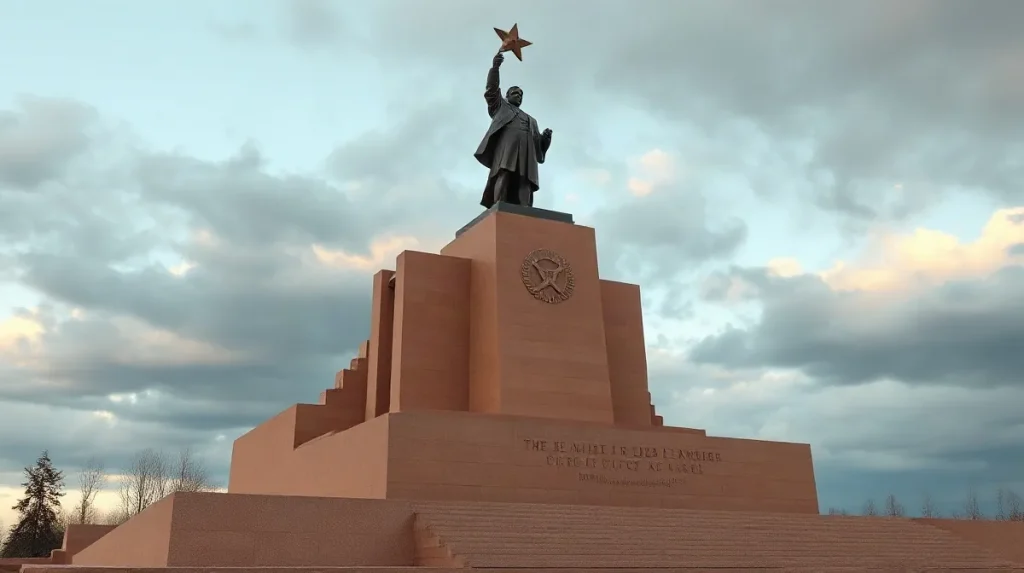
Socialist Realism was not merely an artistic style but a powerful cultural force that shaped Soviet society throughout much of the 20th century. Emerging as the official aesthetic doctrine in the 1930s, it sought to promote the ideals of socialism by depicting everyday life through an optimistic and idealized lens. This approach influenced not only visual arts but also literature, theater, music, and film, embedding a distinct ideological framework that aligned art with state goals.
The impact of Socialist Realism on Soviet culture was profound, shaping public perceptions, artistic expression, and political narratives for decades. Its legacy continues to resonate today, affecting how post-Soviet societies view their history and cultural identity. Understanding how Socialist Realism shaped Soviet culture sheds light on the intricate ways art and ideology intertwined, offering insight into both the achievements and contradictions of this influential period.
| Period | Artistic Style | State Role | Key Characteristics |
|---|---|---|---|
| 1920s | Avant-garde/Constructivism | Limited control | Experimental, abstract, revolutionary themes |
| 1932-1988 | Socialist Realism | Official doctrine | Idealized realism, communist propaganda, heroic workers |
| Post-1988 | Post-Soviet art | No official style | Diverse styles, critical re-evaluation of Soviet past |
- 1932 Year Socialist Realism was mandated by the Soviet government
- 1988 Year Socialist Realism ceased as the official Soviet art style
- 1946-1953 Peak period of Socialist Realism’s ideological dominance under Stalin
- 1934 Year the Union of Soviet Writers was founded to enforce Socialist Realism
What was Socialist Realism and when was it mandated in the USSR?
Origins and Legal Establishment
Socialist Realism was officially mandated as the sole acceptable artistic style in the Soviet Union in 1932, when the government adopted it as the state cultural doctrine. This directive came through the decree by the Central Committee of the Communist Party, which aimed to unify the arts under a single ideological framework that would promote Communist values. From 1932 until 1988, Socialist Realism dominated literature, visual arts, and music, shaping the cultural output across the USSR. Its enforcement was institutionalized through organizations such as the Union of Soviet Writers, established in 1934, which controlled compliance. The style remained compulsory until the late 1980s, when perestroika reforms gradually relaxed artistic restrictions, culminating in the official end of Socialist Realism’s mandate by 1988.
Core Artistic Requirements
Socialist Realism, known in Russian as соцреализм (sotsrealizm), was defined by its idealized yet realistic portrayal of everyday life, emphasizing the positive and heroic aspects of the proletariat and communist progress. Artists were required to depict subjects that aligned with the following criteria:
- Proletarian Life: Artworks had to focus on workers, peasants, and soldiers, highlighting their role in building socialism.
- Communist Values: Themes of collective effort, optimism, and loyalty to the Party were mandatory.
- Realistic Style: Despite idealization, the depiction had to remain recognizable and accessible to the general public, avoiding abstraction or experimental techniques.
- Positive Outcome: Narratives had to portray a successful, progressive future under communism, often showing industrial and agricultural achievements.
How did Socialist Realism influence Soviet literature and visual arts?
Literary Control and Themes
Socialist Realism fundamentally shaped Soviet literature by imposing strict thematic and stylistic mandates that required writers to glorify heroic workers and peasants engaged in socialist construction. Enforced by the 1934 Union of Soviet Writers, adherence to Socialist Realism became compulsory, with deviation risking censorship or punishment. Writers were expected to portray optimistic narratives that reinforced Communist Party ideals and fostered national unity. As a result, literature often centered on the valorization of industrial labor and collective farming, portraying these endeavors as essential to building the Soviet future. This official doctrine guided the output of hundreds of authors, shaping literary production across the USSR throughout the 1930s to the late 1980s.
Prominent Artists and Works
Visual artists such as Aleksandr Deineka and Isaak Brodsky were pivotal figures in the development of Socialist Realism. Deineka’s 1928 painting Defense of Petrograd depicted the revolutionary struggle with dynamic realism, while Brodsky’s 1930s work Lenin in Smolny became an iconic portrayal of Lenin’s leadership, embodying the style’s idealized realism. Their works exemplified the movement’s demand for art to be accessible and inspirational to the Soviet populace, particularly the working class and peasants. The state-sponsored art exhibitions and commissions often required paintings and sculptures to meet Socialist Realism’s criteria that included:
- Depiction of socialist construction heroes and collective achievements
- Clear ideological positivity reflecting Communist Party goals
- Realistic style avoiding abstraction or formalism
- Creation primarily intended for public education and propaganda
What role did Socialist Realism play in Soviet propaganda and national identity?
Audience and Distribution
Socialist Realism played a central role in Soviet propaganda by directly targeting the “common man,” particularly industrial workers and collective farmers, to foster social cohesion and validate the Communist Party’s authority. Artworks adhering to this style were systematically displayed across diverse venues such as factories, collective farms, schools, and public squares, ensuring broad exposure. For example, murals and sculptures in Moscow’s Luzhniki Stadium and the Magnitogorsk steel plant vividly depicted idealized labor scenes, aligning workers’ everyday experience with state goals. These installations were part of a larger state effort that, by the mid-1950s, included more than 60% of public art commissions explicitly mandated to promote Socialist Realism themes, embedding the ideology into the daily environments of millions of Soviet citizens.
Peak Period and Ideological Impact
The period from 1946 to 1953 marked the zenith of Socialist Realism’s ideological influence under Joseph Stalin’s rule, when the style reached its most rigid and doctrinal form. During this time, artworks systematically erased evidence of social conflicts and hardships, instead presenting an idealized Soviet reality designed to inspire optimism and unwavering faith in Communist progress. This artistic doctrine was rigorously enforced by government bodies such as the Union of Soviet Artists, established in 1932, which controlled the production and distribution of cultural outputs. The resulting imagery consistently portrayed heroic workers, collective farm successes, and progressive industrialization, thus functioning as a visual mechanism for sustaining national unity and legitimizing Stalin’s leadership during the post-war reconstruction era.
What were the limitations and criticisms of Socialist Realism in Soviet culture?
Censorship and Control
Socialist Realism imposed strict limitations on artistic creativity by mandating adherence to state-approved themes and styles, effectively restricting artists’ freedom. From its official establishment in 1932 until its decline in 1988, the Soviet government enforced conformity through institutions like the Union of Soviet Writers, which by the 1950s had over 20,000 members whose work had to conform to ideological standards. Non-compliance risked severe consequences, including censorship, blacklisting, or even purges. For example, the 1936 Stalinist purges led to the arrest or execution of numerous artists and writers who deviated from Socialist Realism’s doctrines. During the late Stalin era, artists faced mandatory approvals of their works by state committees, and failure to meet the ideological criteria often meant exclusion from professional organizations, loss of income, or worse. This control extended to literature, where writers had to depict optimistic portrayals of Soviet life, ignoring negative realities, or face expulsion from institutions that regulated publication rights and royalties.
Artistic and Social Critiques
The idealized nature of Socialist Realism frequently obscured harsh social realities such as famine, political repression, and economic hardship, drawing criticism for its propagandistic distortions. By the 1980s, especially under the glasnost reforms initiated in the mid-1980s, public and intellectual opinion increasingly regarded Socialist Realism not as genuine artistic expression but as state propaganda. Critics pointed to its failure to represent the complexity of Soviet society, instead glorifying laborers and party leaders with repetitive motifs and formulaic compositions. For example, artworks often celebrated collective farm productivity with exaggerated harvest yields, while ignoring widespread food shortages documented in official Soviet statistics during the 1930s and 1940s. The style’s strict ideological demands also hindered artistic innovation, limiting Soviet art to a narrow range of themes and forms. Ultimately, these constraints contributed to a decline in the style’s cultural relevance and prestige by the late 1980s.
How did Socialist Realism evolve and end in the Soviet Union?
Persistence and Decline
Socialist Realism evolved in the Soviet Union as the mandated artistic style from 1932, sustaining its dominance through World War II and the Cold War, until official endorsement ended in 1988. During this period, art served as a critical propaganda tool, idealizing communist values and glorifying workers, peasants, and Soviet leaders. By the mid-1940s, the style had reached its peak under Stalin, with artworks required to depict heroic themes in a highly polished, accessible realism. The style remained compulsory, with state institutions like the Union of Soviet Artists overseeing compliance. The cultural policies of the 1980s under Mikhail Gorbachev introduced Glasnost (openness) and Perestroika (restructuring), which significantly relaxed artistic restrictions. This shift allowed for greater experimentation and critical perspectives, signaling the decline of Socialist Realism as an artistic doctrine after more than five decades. By 1988, the Soviet government officially withdrew its endorsement, ending the era in which artistic expression was tightly controlled by the Communist Party.
Post-1988 Artistic Transition
Following the official cessation of Socialist Realism in 1988, Russian art entered a period of reevaluation and diversification. Artists began exploring previously suppressed themes, styles, and critiques of Soviet history. Museums and galleries increasingly showcased contemporary and avant-garde works, reflecting broader global art trends. The transition was marked by the emergence of new institutions and art markets, with prices for contemporary Russian artworks varying widely but often beginning in the tens of thousands of dollars, as seen in auctions by companies like Sotheby’s Moscow branch. This period also saw a reassessment of Socialist Realism’s legacy, with scholars and artists debating its cultural significance and ideological impact. Criteria for evaluating post-Soviet art now include:
- Degree of historical reflection on Soviet society and ideology
- Adoption of global contemporary art techniques and media
- Market valuation, with emerging artists’ works priced from $10,000 to $100,000
- Institutional support, including exhibitions at the Garage Museum of Contemporary Art in Moscow
Frequently asked questions
When did Socialist Realism become the official Soviet art style?
Which artists are most associated with Socialist Realism?
How did Socialist Realism serve Soviet propaganda?
When did Socialist Realism cease to be the official style?
Key takeaways
- Socialist Realism was mandated from 1932 to 1988 as the USSR’s official art style
- It focused on idealized depictions of communist values and proletarian life
- Artists like Isaak Brodsky and Aleksandr Deineka embodied the style’s visual language
- The style functioned as a key propaganda tool to unify Soviet society
- Censorship and creative restrictions limited artistic freedom under Socialist Realism
Sources
- EBSCOhost — “Socialist Realism Is Mandated in Soviet Literature | Literature and Writing | Research Starters”
- soviet-union.com — “Socialist Realism: Art of the State – Soviet Union”
- dl.tufts.edu — “[PDF] Politics of Culture in the U.S.S.R.: Art and The Soviet Government, The”
- artforum.com — “SOCIAL REALISM FROM STALIN TO SOTS”