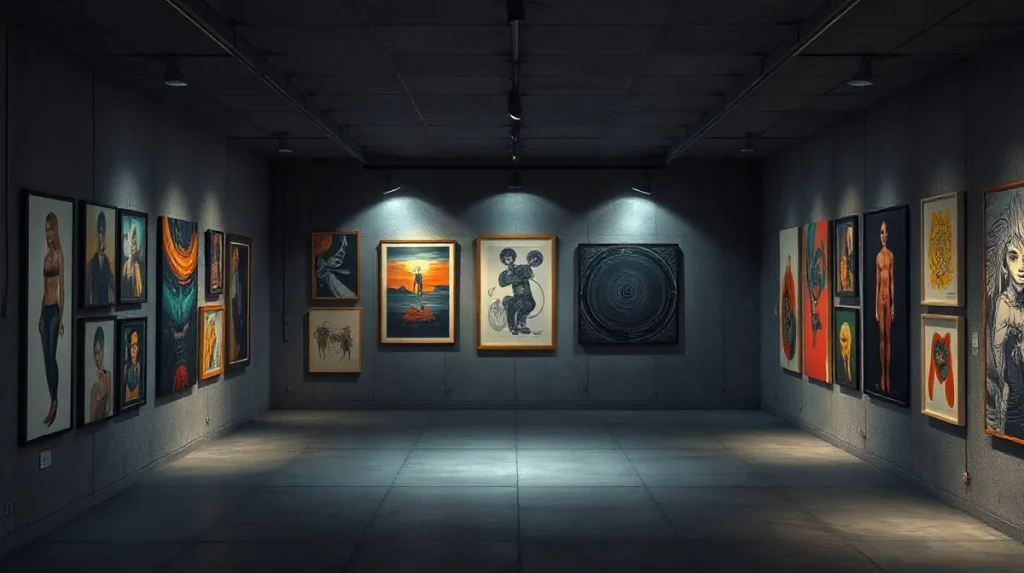
The Soviet unofficial art scene from 1956 to 1986 represents a compelling chapter in the history of Eastern European creativity, marked by artists who operated beyond the strict confines of state-sanctioned styles. During these three decades, a diverse group of painters, sculptors, and graphic artists challenged official doctrines, seeking personal expression and innovative forms despite censorship and limited public exposure. This underground movement not only fostered artistic experimentation but also reflected broader social and political undercurrents within the Soviet Union.
Exploring the Soviet unofficial art scene from 1956 to 1986 reveals a rich tapestry of resistance and resilience, where artists navigated a complex landscape of ideological control and cultural repression. Their work, often circulated through private exhibitions and informal networks, offers a unique insight into the evolving identity and aspirations of Soviet society. Understanding this period sheds light on how creativity persisted and flourished away from the public eye, ultimately influencing both Russian art history and contemporary global perspectives on artistic freedom.
| Aspect | Official Art | Unofficial Art |
|---|---|---|
| Permitted Styles | Socialist Realism only | Abstract, Conceptual, Experimental |
| Exhibition Venues | State galleries and museums | Private studios, communal apartments |
| Artistic Freedom | Strict censorship and ideological control | Limited but creative resistance |
| Public Recognition | State-sponsored acclaim | Mostly underground, minimal recognition |
| Material Access | Official supply chains | Scarce, often improvised materials |
- 1956-1986 Period of major Soviet unofficial art activity
- 2018 Year of 'Soviet Alternative Art 1956-1988' Thessaloniki exhibition
- 1975-1991 Years marking evolution of communal apartments as creative spaces
- Hundreds Number of artworks featured in Thessaloniki exhibition
What defined the Soviet unofficial art scene between 1956 and 1986?
Origins
The Soviet unofficial art scene between 1956 and 1986 emerged in direct response to the limitations imposed by state-mandated Socialist Realism, which dominated official art institutions. Beginning shortly after Nikita Khrushchev’s 1956 “Thaw,” this period saw a marginal loosening of ideological control, yet artists like Pyotr Ossovsky and Keti Chukhrov deliberately rejected the prescribed aesthetics. Instead, they pursued alternative artistic expressions outside government-sanctioned galleries, which remained heavily censored. By the mid-1970s, many unofficial artists were working in private communal apartments or studios in Moscow, spaces that became incubators for experimental visual languages. These environments facilitated the production of abstract, conceptual, and experimental works that could not be exhibited publicly due to strict state regulations forbidding nonconformist art. This underground network provided crucial support for artists to sustain their creative practices over three decades, despite the official art market’s estimated annual revenues remaining under 1 million Soviet rubles for nonconformist pieces—far below state-sponsored art sales.
Characteristics
The defining features of Soviet unofficial art from 1956 to 1986 included a strong emphasis on abstract, conceptual, and experimental styles, which were systematically excluded from official exhibitions. These artists rejected the figurative and propagandistic focus of Socialist Realism, often employing nontraditional materials and forms to explore philosophical and political themes. The communal apartments where artists worked typically consisted of rooms shared by several creatives, fostering collaboration and exchange while circumventing state control. A notable example is the “Soviet Alternative Art 1956-1988” exhibition held in Thessaloniki, which showcased works spanning this era and highlighted the variety of artistic approaches developed underground. The unofficial scene also functioned within constraints such as an unofficial threshold of visibility—artists risked persecution if their works were publicly displayed, thus limiting formal sales and public engagement. This tension between innovation and repression shaped the unique trajectory of unofficial Soviet art during these three transformative decades.
Who were the prominent artists of the Soviet unofficial art movement?
Notable Figures
Prominent artists of the Soviet unofficial art movement included Pyotr Ossovsky, Keti Chukhrov, and Mikhail Smirnov, each contributing distinctively to the underground scene between 1956 and 1986. Pyotr Ossovsky was especially known for his conceptual paintings during the 1970s that critically challenged Soviet ideological norms, often operating outside official exhibition circuits. Keti Chukhrov emerged as a central figure in Moscow’s underground art circles, integrating philosophical inquiry with artistic practice, which marked her work as intellectually rigorous and symbolically rich. Meanwhile, sculptor Mikhail Smirnov, active predominantly in the 1960s and 1970s, drew inspiration from Permian Plastics masters such as ST Konenkov and GI Motovilov, developing a unique style of wooden sculpture that diverged from state-approved aesthetics.
Many artists within this movement chose anonymity or pseudonyms to evade Soviet censorship and persecution, which were significant risks for unauthorized creative expression. The underground art community often operated through informal networks, private showings, and samizdat publications, circumventing official Soviet institutions that controlled artistic production. The works of these artists were rarely sold openly; when they were, prices ranged broadly depending on rarity and recognition, with some pieces eventually reaching several thousand US dollars in private sales abroad by the mid-1980s. Exhibitions such as “Soviet Alternative Art 1956-1988,” held in Thessaloniki, have since recognized the importance of these artists in shaping post-Soviet art history.
- Pyotr Ossovsky’s conceptual paintings primarily produced in the 1970s
- Keti Chukhrov’s integration of philosophy and art within Moscow’s underground scene
- Mikhail Smirnov’s wooden sculptures influenced by Permian Plastics masters
- Artworks often circulated in private networks to avoid Soviet censorship
- Prices for unofficial works ranged from several hundred to thousands of US dollars by the 1980s abroad
How did exhibitions showcase Soviet unofficial art internationally?
International Recognition
The international showcasing of Soviet unofficial art played a crucial role in legitimizing this underground movement and drawing global attention to artists whose work was suppressed in the USSR. A landmark example is the 2018 exhibition “Soviet Alternative Art 1956-1988” held at the State Museum of Contemporary Art in Thessaloniki, which presented over 300 works across painting, sculpture, and installation media. This extensive display highlighted the diverse creative approaches outside the official socialist realism style, emphasizing the spirit of artistic dissent that flourished despite state censorship. By engaging audiences beyond Soviet borders, such exhibitions helped secure a lasting place for these artists within the broader narrative of 20th-century art history.
Platforms like e-flux have been instrumental in publicizing exhibitions of post-Soviet art internationally, ensuring sustained visibility for the movement. These announcements promote not only historical retrospectives but also contemporary reinterpretations of unofficial art from Russia and Eastern Europe. Key factors contributing to the success of these exhibitions include:
- The inclusion of multiple media forms, such as wooden sculptures influenced by figures like Mikhail Smirnov, to showcase the breadth of unofficial art practices.
- Exhibition durations typically exceeding three months, allowing broader public engagement and scholarly discourse.
- Collaboration between international museums and post-Soviet art institutions to provide authentic provenance and contextualization of works.
What were the common spaces and practices for Soviet unofficial artists?
Communal Spaces
The common spaces for Soviet unofficial artists were primarily the communal apartments, known as “kommunalkas,” which served as both living quarters and creative hubs. Between 1975 and 1991, these rooms transitioned from purely collective spaces into semi-private studios where artists could experiment away from official scrutiny. In Moscow, for instance, nonconformist artists often shared a single room that ranged from 15 to 25 square meters, allowing them to pool scarce materials such as oil paints and canvases that individually cost up to 50 rubles—an expensive sum given the average monthly salary of approximately 150 rubles. These communal environments were essential not only for practical reasons, such as affordability and resource sharing, but also symbolized a subtle form of resistance against Soviet cultural control, as they operated outside state-sanctioned institutions.
Creative Practices
Within these shared quarters, unofficial artists developed informal practices to circumvent censorship and the official art establishment. Communal rooms became venues for private exhibitions and critical discussions, often attracting audiences ranging from a handful to several dozen people. These gatherings bypassed state censorship by avoiding public galleries and instead relied on word-of-mouth networks. The artists exchanged ideas, critiqued each other’s work, and coordinated participation in unofficial exhibitions such as those documented in the “Soviet Alternative Art 1956-1988” shows. The collective practice of sharing limited supplies and knowledge, combined with the use of these intimate settings, fostered a vibrant underground culture that sustained nonconformist art throughout the restrictive Soviet period.
- Communal room size: 15–25 square meters
- Oil paint price: up to 50 rubles per tube
- Average Soviet monthly salary (1970s-80s): ~150 rubles
- Period of evolution: 1975–1991
- Audience size at informal exhibitions: 5–50 people
What challenges and limitations did unofficial artists face under Soviet rule?
Risks
Unofficial artists under Soviet rule faced significant dangers, including persecution and surveillance by the KGB, creating a climate of fear that profoundly shaped their creative output. Exhibiting unofficial art publicly was risky, as detection could lead to arrest, interrogation, or confiscation of artworks. For example, during the 1960s and 1970s, KGB operations frequently targeted underground exhibitions, sometimes resulting in artists spending weeks in detention or losing their works permanently. These risks forced many artists to work covertly, often in private apartments or communal spaces, limiting their ability to gain public recognition or financial support.
Restrictions
The dominance of Socialist Realism as the only state-sanctioned style severely restricted access to official art institutions, materials, and formal training for unofficial artists. State art schools and supply stores prioritized Socialist Realism, leaving nonconformist artists struggling to obtain quality canvases, paints, and brushes, often resorting to improvised or substandard materials. Moreover, distribution of unofficial artworks was confined to private circles, with many pieces circulated hand-to-hand or hidden away, resulting in scarce contemporary documentation. For instance, the state’s strict control meant that exhibitions like the “Soviet Alternative Art 1956-1988” could only occur decades later, outside the USSR, highlighting the underground nature of this art scene.
- KGB surveillance operations intensified especially between 1965 and 1980
- State art institutions exclusively endorsed Socialist Realism from the 1930s through the 1980s
- Unofficial exhibitions were often limited to private apartments accommodating fewer than 30 attendees
- Art materials such as oil paints and quality brushes were rationed or restricted to official artists
Frequently asked questions
When did the Soviet unofficial art movement primarily develop?
Who organized the 'Soviet Alternative Art 1956-1988' exhibition in Thessaloniki?
Why did unofficial artists use communal apartments for their work?
What styles distinguished Soviet unofficial art from official Soviet art?
Key takeaways
- The Soviet unofficial art scene thrived despite strict ideological constraints from 1956 to 1986.
- Artists like Pyotr Ossovsky and Keti Chukhrov shaped the movement’s conceptual and philosophical depth.
- Communal apartments were crucial creative hubs enabling the underground art practices.
- International exhibitions such as Thessaloniki 2018 brought global recognition to suppressed Soviet artists.
- Unofficial artists faced censorship, limited resources, and personal risk throughout the Soviet era.
Sources
- academia.edu — “(PDF) “Oluşumlar, dönüşümler, bozunumlar” Moskova nonkoformist sanatçıları ve işleri peşinde komün oda ve mimarisinin izini sürmek 1975-1991”
- e-flux.com — “Soviet Alternative Art 1956”
- soviet-art.ru — “Soviet Art, USSR culture”
- artfocusnow.com — “Curator Tomáš Glanc on Exploring Soviet and Eastern European Art – Art Focus Now”