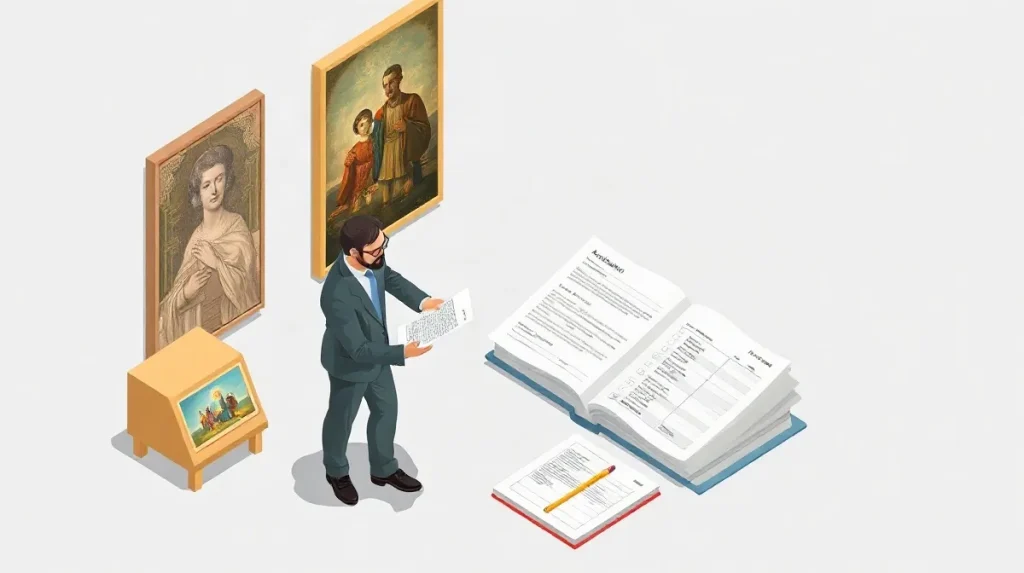
What is the first step when a museum receives an offer of artwork?
The initial step in acquiring artwork is receiving and documenting the offer. Museums typically require a formal proposal or donation letter that provides provenance details, condition reports, and stated value. For example, the Museum of Modern Art (MoMA) in New York mandates submission within 30 days of intent to offer, ensuring timely review.
Documentation includes artist background, authenticity certificates, and any prior exhibition history. The offer is logged into the collections management system to track progress and communications.
Criteria for offer acceptance
- Completeness of provenance and authenticity documentation
- Condition report confirming the artwork’s stability
- Alignment with the museum’s collecting policy
- Donor or seller’s legal ownership status
How do museums evaluate artworks before acquisition?
Evaluation involves expert review and condition assessment. Curators assess artistic significance relative to existing holdings, while conservators inspect physical state. At the Tate Modern, artworks valued over £50,000 must undergo a conservation report and curatorial assessment before any acquisition committee review.
Market value appraisal is also conducted, often referencing auction results from Sotheby’s or Christie’s to determine fair acquisition cost. This process can take from several weeks up to three months depending on the complexity.
Key evaluation elements
- Artistic relevance and rarity
- Physical condition and restoration needs
- Market value and price estimates
- Legal and ethical provenance checks
What legal and ethical checks are involved before accession?
Legal review is a critical stage ensuring clear title and compliance with international laws such as the UNESCO 1970 Convention against illicit trafficking of cultural property. Museums like the Getty conduct provenance research spanning up to 75 years to avoid acquiring looted art.
Ethical considerations include donor intentions, conflict of interest, and adherence to institutional acquisition policies. Institutions typically require signed deeds of gift or purchase contracts that legally transfer ownership.
Legal safeguards and documentation
- Title verification and previous ownership history
- Compliance with national and international cultural property laws
- Signed legal agreements: deeds of gift or purchase contracts
- Ethical review by acquisition committees
How are acquisition decisions finalized and documented?
Final acquisition decisions are made by museum acquisition committees, often comprising curators, legal advisors, and trustees. They review all prior reports and votes before approving accession. For example, the Smithsonian Institution’s committee meets quarterly to approve acquisitions formally.
Once approved, accession numbers are assigned, and the artwork is legally recorded as part of the collection. Documentation includes detailed records of provenance, condition, acquisition method, and donor information, all entered into the museum’s collections database.
Steps in finalizing acquisitions
- Committee review and formal vote
- Assignment of accession number
- Entry into collections management system
- Public announcement or exhibition planning
| Museum | Initial Offer Documentation | Evaluation Duration | Legal Review | Committee Approval |
|---|---|---|---|---|
| MoMA, New York | 30 days | 4-8 weeks | 2-4 weeks | Quarterly meetings |
| Tate Modern, London | Immediate | 6-12 weeks | 3-6 weeks | Monthly meetings |
| Getty Museum, Los Angeles | 15 days | 8-16 weeks | 4-8 weeks | Quarterly meetings |
What costs and funding mechanisms support acquisitions?
Acquisitions can range from gifts to purchases costing several million dollars. Funding often comes from dedicated acquisition budgets, endowments, or specific donor funds. The Metropolitan Museum of Art, for instance, allocates over $10 million annually for new acquisitions.
Additional costs include conservation preparation, insurance premiums—frequently 1-2% of artwork value per year—and logistics for transport. Museums sometimes rely on art fairs or auction house collaborations to negotiate favorable purchase terms.
Funding sources and typical cost structure
- Annual acquisition budgets ($500k to $10m+ depending on institution)
- Donor-sponsored acquisition funds
- Insurance costs (1-2% of artwork value annually)
- Conservation and transport expenses
- $10M average annual acquisition budget at large museums
- 1-2% typical insurance premium of artwork value
- 3 months average total acquisition timeline
- 75 years provenance research period recommended by Getty
Frequently asked questions
How long does it take for a museum to acquire an artwork?
Can museums reject offered artworks?
What is accessioning in museum acquisitions?
Are donations tax-deductible?
Who decides whether to acquire an artwork?
Key takeaways
- Museum acquisition starts with documented offers assessed for provenance and condition.
- Expert evaluation includes curatorial review, conservation reports, and market value appraisal.
- Legal and ethical reviews ensure clear title and compliance with cultural property laws.
- Final accession is approved by committees and involves formal documentation and numbering.
- Acquisitions are funded through various mechanisms, with costs including purchase price, conservation, and insurance.
Conclusion
The journey from an offered artwork to its official accession into a museum collection is a rigorous, multi-step process designed to uphold legal, ethical, and scholarly standards. Each stage—from initial documentation through evaluation, legal review, and committee approval—ensures the work enriches the museum’s mission and public trust. Understanding these procedures reveals the careful stewardship behind every artwork displayed and preserved for future generations.