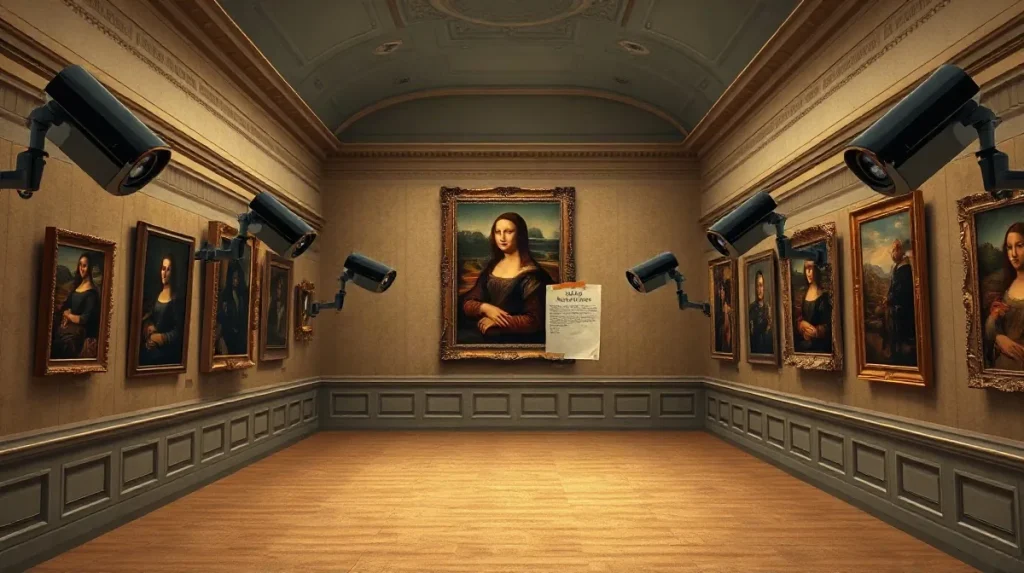
Unauthorized Artwork Placed Near Mona Lisa
Two German nationals were detained at the Louvre Museum in Paris on September 19, 2026, after they affixed two of their own paintings to the walls of the Salle des États, the gallery housing Leonardo da Vinci’s Mona Lisa. The paintings, each approximately 11.8 by 15.7 inches, depicted one suspect in a suit of armor and both suspects with a woman. The Mona Lisa itself, a masterpiece drawing visitors from museum opening to closing, was unharmed during the incident.
The Louvre security team initially detained the visitors before police arrested them for damaging the museum’s walls. According to police reports, the suspects claimed their actions were done in jest. This event highlights the delicate balance museums must maintain between welcoming visitors and protecting priceless artworks.
Security Concerns Amid Rising Museum Thefts
French museums, including the Louvre, have heightened security vigilance over the past year following a series of high-profile thefts. Notably, nearly a year prior, thieves stole crown jewels valued at approximately $102 million from the Galerie d’Apollon, located near the Mona Lisa’s gallery. This brazen daylight heist intensified scrutiny of museum security protocols nationwide.
Subsequent thefts at various European museums have kept security concerns in focus. While recent incidents involve visitors adding unauthorized art rather than removing pieces, they reveal vulnerabilities in museum oversight. The Louvre’s experience underscores the ongoing challenge of protecting cultural treasures in public spaces.
Security System Audits and Leadership Changes
Following the crown jewels theft, a government audit criticized the Louvre’s security as “outdated and inadequate,” citing repeated delays in planned upgrades. These findings precipitated the resignation of Laurence des Cars, the museum’s first female president-director, in February 2026. Christophe Leribault succeeded her immediately after.
In a July 2026 address to the French Senate, Leribault described the Louvre as “at the end of its ropes,” facing urgent structural and security challenges. He committed to addressing these issues, including the installation of a new perimeter video surveillance system scheduled for January 2027. This proactive response aims to reinforce security ahead of increased visitor traffic.
Major Renovation Plans Underway
The Louvre is embarking on a comprehensive renovation termed the “New Louvre Renaissance,” with a projected budget exceeding €1 billion (approximately $1.2 billion). This extensive project includes constructing a new 33,000-square-foot exhibition space dedicated to the Mona Lisa, which will feature its own entrance to help alleviate overcrowding in the existing galleries.
After a temporary pause earlier in 2026, the Louvre confirmed its architectural team in May to lead the renovation efforts. These improvements reflect the institution’s commitment to enhancing visitor experience while simultaneously upgrading infrastructure critical to artwork preservation and security.
Implications for Museum Visitor Conduct and Security
The incident with the two visitors affixing unauthorized paintings near the Mona Lisa adds to a broader conversation about visitor behavior and museum security worldwide. Institutions must navigate increasing visitor numbers—such as the Louvre’s millions annually—while safeguarding priceless collections from both theft and damage.
The Louvre’s response, including rapid detention and police involvement, demonstrates the seriousness with which such actions are treated. This event serves as a reminder of the ongoing need for museums to balance accessibility with protection, a challenge intensified by evolving risks in cultural heritage spaces.
Takeaway: The Louvre’s swift action against unauthorized artwork near the Mona Lisa underscores persistent security and visitor conduct challenges facing leading art institutions globally.