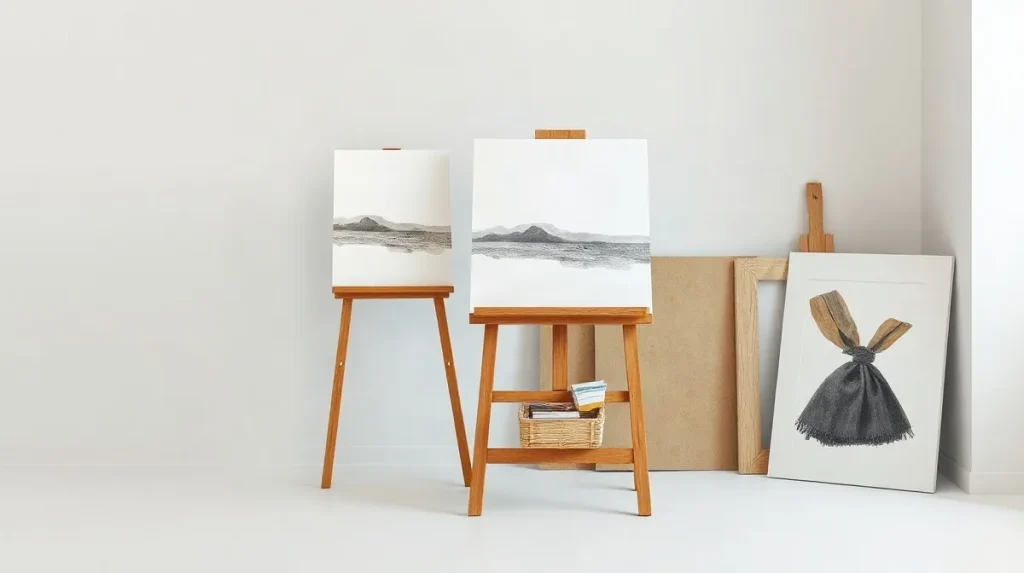
A study collection in painting serves as a focused assemblage of artworks or sketches that artists and scholars use to explore techniques, themes, and historical contexts. It provides valuable insights into the creative process, artistic development, and influences behind finished masterpieces, enriching both practice and education.
Understanding the purpose and value of a study collection in painting goes beyond simply viewing isolated works; it reveals the layered experimentation and evolution that inform an artist’s final compositions. These collections often include preparatory drawings, color tests, or thematic variations that highlight the technical and conceptual groundwork essential for deeper appreciation.
By examining a study collection, painters and art enthusiasts gain a clearer perspective on how ideas are refined over time and how different approaches contribute to a painting’s success. This exploration fosters a greater respect for the discipline and offers a critical resource for learning, teaching, and curating within the broader art world.
| Condition | Study Works (Paper/Sketches) | Finished Paintings (Oil on Canvas) |
|---|---|---|
| Humidity | 50% ±5% | 40-60% recommended |
| Temperature | 18-22°C | Stable at 20°C |
| Light Exposure | Below 50 lux | Up to 150 lux permissible |
| Storage Materials | Acid-free folders and boxes | Canvas stretchers with climate control |
| Handling Frequency | Minimal to preserve fragility | Careful but more tolerant |
- 5,000 pieces Number of study works held by Tate Britain
- 118 ml for $25 Cost and volume of Golden Heavy Body acrylic paint used in studies
- 50% ±5% Optimal relative humidity for preserving paper-based study works
- 50 lux Maximum recommended light exposure for study sketches on paper
- 20°C Standard stable temperature for oil painting preservation
What is a study collection in painting and what does it include?
Definition
A study collection in painting is a curated set of preliminary artistic works such as sketches, color tests, and compositional drafts that remain separate from finished paintings. These collections document the creative process and often include unfinished oil sketches, charcoal drawings, and watercolor experiments, offering insight into the artist’s developmental stages.
Typical contents
Institutions like Tate Britain maintain extensive study collections, with over 5,000 pieces spanning from the 18th century to contemporary times. The works typically vary in size from small sheets measuring approximately 20×25 cm to mid-sized boards around 50×70 cm. The collection includes diverse media—oil sketches that capture early ideas in paint, charcoal drawings used for initial composition planning, and watercolor tests exploring color palettes and techniques.
- Size range: 20×25 cm to 50×70 cm
- Quantity example: Tate Britain’s study collection exceeds 5,000 items
- Media types: unfinished oil sketches, charcoal drawings, watercolor experiments
- Historical span: from the 18th century to the present day
How do study collections support artists’ creative practice?
Experimentation
Study collections support artists’ creative practice by providing a space to experiment with composition and color schemes before executing larger works. Artists like J.M.W. Turner created hundreds of preliminary sketches, many housed in the Tate’s study collections, demonstrating how iterative development can span weeks or even up to 30 days for a single study. This process allows reflection and revision over time, enabling artists to refine their ideas without the pressure or cost of working on a final canvas immediately.
Material economy
Using study collections helps artists reduce the cost of materials significantly, potentially saving up to 40% on supplies. For example, acrylic paints such as Golden Heavy Body, priced around $25 for a 118 ml tube, make small-scale studies an affordable practice tool. By experimenting on smaller formats with these high-quality but reasonably priced paints, artists can test palettes and techniques efficiently before committing to larger, more expensive canvases.
- Cost savings of up to 40% on paint and canvas materials
- Golden Heavy Body acrylic paint price approximately $25 per 118 ml
- Iterative study development can take as long as 30 days
- J.M.W. Turner’s hundreds of preliminary sketches preserved at Tate
What role do study collections play in art historical research?
Process insight
Study collections play a crucial role in art historical research by revealing an artist’s creative process, including revisions and techniques not evident in finished paintings. For example, The Metropolitan Museum of Art’s collection of over 3,000 sketches from the 19th century provides visual evidence of changes in composition and brushwork, offering direct insight into how painters developed their ideas. These preliminary works often bear annotations or dates, which are invaluable for establishing a chronological framework for an artist’s output.
Provenance
In addition to tracing artistic development, study collections aid provenance research and attribution. The detailed records and preserved sketches at institutions like The Met help confirm authenticity and ownership history, which are essential for both scholarship and valuation. Study works also facilitate tracking shifts in artistic styles, such as the Impressionist focus on capturing transient light effects, helping historians situate artworks within broader movements and timelines.
- The Metropolitan Museum of Art’s 3,000+ sketches from the 19th century, used for provenance and attribution.
- Annotations and dates on study works that establish precise timelines.
- Documentation of stylistic evolution, for instance, Impressionism’s light-focused techniques.
When and why should study collections be kept separate from finished paintings?
Preservation
Study collections should be kept separate from finished paintings primarily to ensure optimal preservation tailored to each type’s material needs. Studies, often executed on paper or delicate supports, require controlled humidity levels around 50% ±5% to prevent warping or mold growth, whereas oil paintings demand stable temperatures near 20°C to avoid cracking or paint layer damage. Since 2015, institutions like the Rijksmuseum have maintained dedicated study storage rooms featuring archival acid-free folders, specifically designed to protect fragile media and support long-term conservation.
Curatorial clarity
Separating study works from completed paintings also prevents confusion during exhibitions and scholarly research. Preliminary sketches or experiments can be mistaken for final compositions if displayed together, potentially distorting an artist’s oeuvre interpretation. This distinction allows curators to present finished works as definitive artistic statements while reserving studies for educational or contextual purposes. Furthermore, targeted conservation efforts are facilitated by this separation, as studies often require more frequent condition assessments and specialized interventions compared to robust oil paintings.
- Humidity control threshold for studies: 50% ±5%
- Temperature standard for oil paintings: approximately 20°C
- Rijksmuseum’s dedicated study storage implementation: since 2015
- Use of archival acid-free folders in study preservation
What are common limitations or challenges in managing study collections?
Managing study collections in painting involves significant challenges such as undervaluation, fragile condition, and storage limitations. Studies often sell for between $100 and $2,000 depending on the artist and condition, which can lead to their being discarded or sold cheaply. Additionally, delicate media on paper require strict environmental controls to prevent deterioration.
Valuation and conservation challenges
The market undervalues many study works, sometimes leading owners to sell them for as low as $100, despite their artistic and historical importance. Provenance issues arise due to insufficient documentation, complicating authentication without resorting to costly scientific methods. Fragile paper-based studies are particularly susceptible to light damage, necessitating display conditions that do not exceed 50 lux to avoid fading or discoloration. Institutions must also struggle with limited storage space, balancing public access with preservation requirements.
- Market price range for studies: $100–$2,000 depending on artist and condition
- Maximum recommended light exposure for paper studies: 50 lux
- Need for scientific authentication when provenance is unclear
- Storage space constraints in institutions limiting collection accessibility
Frequently asked questions
Why are preliminary sketches important to artists?
How do museums preserve study works differently from finished paintings?
Can study collections increase the value of an artist’s work?
Are all study works by famous artists preserved in museums?
Key takeaways
- Study collections preserve artists’ experimental works separate from finished paintings
- They reduce material costs and support creative refinement
- Art historians rely on them to trace artistic development and verify provenance
- Proper conservation requires distinct environmental controls for studies
- Market value of studies is generally lower but crucial for scholarly understanding