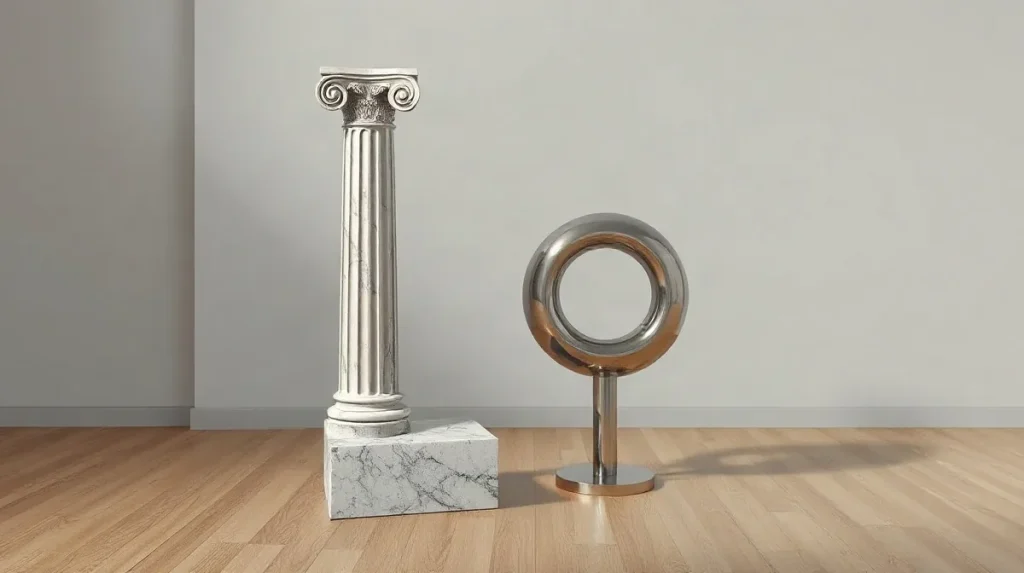
Neoclassicism is an art movement grounded in the revival of classical ideals, emphasizing harmony, simplicity, and proportion, which profoundly shaped sculpture and installation by reintroducing ancient forms and themes with contemporary clarity and restraint. Its principles fostered a renewed focus on narrative, symmetry, and balanced composition, influencing artists to create works that convey timeless beauty and moral seriousness.
Emerging in the mid-18th century as a reaction against the excesses of Baroque and Rococo, Neoclassicism sought inspiration from the art and culture of ancient Greece and Rome. This return to classical aesthetics provided a framework for sculptors and installation artists to explore universal themes through disciplined craftsmanship and formal rigor. The movement’s impact is evident not only in monumental statues and reliefs but also in the way installation art adopted classical motifs to engage viewers in spatial and historical dialogue.
Understanding Neoclassicism’s principles and its influence on sculpture and installation offers insight into how artists have balanced tradition and innovation. By studying this movement, one can appreciate how the revival of classical ideals continues to inform contemporary artistic practices, shaping the visual language and conceptual approaches that resonate in galleries and public spaces worldwide today.
| Aspect | Neoclassical Sculpture | Contemporary Installation Art |
|---|---|---|
| Primary Materials | Marble, bronze | Mixed media including composites and traditional materials |
| Themes | Classical mythology, idealized anatomy | Reinterpretation of classical themes, conceptual narratives |
| Scale | Typically life-size or smaller | Often large-scale, immersive environments |
| Cost Range | $50,000–$300,000 for marble pieces | Varies widely, can be higher due to technical complexity |
| Institutional Venues | Royal Academy, Louvre, Metropolitan Museum | Tate Modern, Guggenheim, Venice Biennale |
- 1787 Year Antonio Canova completed 'Psyche Revived by Cupid’s Kiss'
- 150–200 kg Typical weight range of Canova’s marble sculptures
- $50,000–$300,000 Cost range for contemporary marble sculptures
- 1836 Completion year of the Arc de Triomphe, a Neoclassical monument
- 500+ Number of Neoclassical sculptures in major museum collections
What are the defining characteristics of Neoclassicism in sculpture?
Neoclassical sculpture is defined by its strict adherence to symmetry and proportion inspired by Vitruvian principles from the 1st century BCE, classical subject matter drawn from Greco-Roman mythology, and a preference for marble as the primary medium, emphasizing idealized human anatomy consistent with 18th-century academic standards.
Material and Form
Marble is the preferred material in Neoclassical sculpture, exemplified by Antonio Canova’s works, which typically weigh between 150 and 200 kilograms, reflecting both durability and a polished finish. The form emphasizes balanced composition guided by Vitruvius’s architectural ideas on proportion and symmetry, ensuring figures embody harmony and clarity. This strict geometry was reinforced by the Academy of Fine Arts in Paris during the 18th century, which mandated idealized human anatomy that conformed to classical ideals of beauty and physical perfection.
Classical Themes
Neoclassical sculptors frequently chose subjects from Greco-Roman mythology, with Antonio Canova’s 1787 masterpiece, Psyche Revived by Cupid’s Kiss, serving as a quintessential example. These mythological narratives provided moral and aesthetic models, emphasizing virtues like love, heroism, and sacrifice. The thematic focus aligns with the period’s intellectual movement that sought to revive ancient cultural values in art.
- Vitruvian principles of proportion from 1st century BCE
- Marble sculptures weighing 150–200 kg, as seen in Canova’s works
- Academic standards of idealized anatomy set by the Paris Academy, 18th century
- Classical subjects from Greco-Roman mythology exemplified by Canova’s 1787 sculpture
How did Neoclassicism emerge and when did it peak historically?
Historical Context
Neoclassicism emerged in the mid-18th century, gaining prominence between 1750 and 1830 as a reaction against Baroque and Rococo styles. This movement was sparked significantly by the archaeological discoveries of Pompeii and Herculaneum beginning in 1748, which renewed European fascination with ancient Roman art and culture. These excavations provided artists and patrons with authentic classical models, inspiring a return to the clarity, symmetry, and restrained ornamentation characteristic of antiquity. The movement’s peak influence is exemplified by monumental projects such as the Arc de Triomphe in Paris, completed in 1836, which embodies Neoclassical ideals in public sculpture and architecture.
Institutional Support
Key institutions played a crucial role in promoting Neoclassicism during its formative and peak years. The Royal Academy of Arts in London, established earlier in 1768, actively encouraged classical principles in art education and exhibition standards. Similarly, the French Académie Royale de Peinture et de Sculpture endorsed Neoclassical aesthetics, reinforcing its dominance in official art circles. These academies set rigorous criteria for artistic excellence, emphasizing adherence to classical form and historical themes. This institutional backing ensured that Neoclassicism was not only an aesthetic preference but also a dominant cultural force shaping sculpture and installation throughout the late 18th and early 19th centuries.
- Archaeological discoveries at Pompeii and Herculaneum starting in 1748 reignited interest in Roman art
- Prominence of Neoclassicism chiefly between 1750 and 1830
- Royal Academy of Arts (London, 1768) and French Académie Royale de Peinture et de Sculpture as primary promoters
- Arc de Triomphe in Paris, completed 1836, as a landmark Neoclassical monument
In what ways does Neoclassicism influence contemporary sculpture and installation art?
Modern Materials and Themes
Neoclassicism influences contemporary sculpture and installation art through the adoption of classical symmetry, mythological narratives, and the revival of traditional materials blended with modern composites. Artists like Jeff Koons and Anish Kapoor integrate these principles in works featured at Tate Modern since 2010, where mythological themes and balanced compositions prevail. Installations often combine marble and bronze—materials synonymous with Neoclassical sculpture—with cutting-edge synthetics, reflecting a dialogue between past and present artistic practices.
For example, the Guggenheim Museum’s exhibitions include pieces where marble, weighing up to several hundred kilograms, is paired with resin composites, enhancing durability while preserving classical aesthetics. This hybrid material approach allows artists to explore Vitruvian ideals of ‘firmness, commodity, and delight’ by creating sculptures that uphold structural integrity, functional space, and visual pleasure simultaneously.
Institutional Exhibitions
Major art institutions reinforce Neoclassical impact on large-scale installations, emphasizing harmony and balance. The 2024 Venice Biennale showcased installations explicitly inspired by Neoclassical principles, with spatial arrangements reflecting symmetry and proportion foundational to the movement. The Smithsonian American Art Museum has commissioned works that revive Vitruvius’s triad, ensuring that pieces fulfill criteria of structural soundness, practical use, and aesthetic appeal.
- Jeff Koons and Anish Kapoor’s mythologically themed works at Tate Modern (2010 onwards)
- Use of marble and bronze alongside modern composites in Guggenheim exhibitions
- 2024 Venice Biennale installations highlighting symmetry and balance
- Smithsonian American Art Museum commissions emphasizing Vitruvian principles
What are the limitations or challenges when applying Neoclassical principles in contemporary art?
Cost and Material Constraints
Applying Neoclassical principles in contemporary art faces significant cost and material barriers, particularly with traditional marble sculptures. Material expenses for authentic marble works can range from $50,000 to $300,000 depending on the size and quality of the stone, limiting accessibility for emerging artists who often lack such budgets. The Carrara marble, historically favored in Neoclassical sculpture, remains costly due to extraction and shipping expenses. This financial burden restricts the widespread use of classical materials in installation art, where alternative media might offer more economical solutions.
Moreover, the physical weight of heavy materials like marble presents logistical challenges in installation settings, often requiring specialized equipment and structural support that increase the overall project cost. These constraints mean that artists must carefully weigh the financial and practical implications when incorporating Neoclassical elements into large-scale installations.
Conceptual and Technical Challenges
Strict adherence to classical form can limit creative expression and innovation in installation art, where contemporary audiences expect conceptual experimentation and diversity. Neoclassicism’s emphasis on idealized proportions and symmetry risks being perceived as outdated or elitist within the 2026 art market, which increasingly values interdisciplinary and participatory works. Artists attempting to merge heavy traditional materials with delicate modern elements encounter technical difficulties requiring advanced engineering solutions.
- Integration of marble (weighing hundreds of kilograms) with lightweight materials like acrylic sheets or LED components demands precise load distribution and anchoring systems.
- Combining solid marble bases with fragile glass or textiles challenges stability standards outlined in the International Building Code (IBC) for temporary structures, requiring expert consultation.
These technical and conceptual hurdles necessitate collaboration between artists, engineers, and curators to successfully realize Neoclassical-inspired contemporary installations that resonate with present-day audiences.
How is the legacy of Neoclassicism preserved and promoted today?
Museum Collections
Major museums actively preserve and promote Neoclassicism by maintaining extensive collections of its sculptures, offering scholars and the public direct access to these works. The Louvre in Paris and the Metropolitan Museum of Art in New York each hold over 500 Neoclassical sculptures, representing a substantial portion of their classical art holdings. These collections include masterpieces by artists such as Antonio Canova and Bertel Thorvaldsen, providing a tangible link to Neoclassical principles and aesthetics. By displaying these works in dedicated galleries, these institutions ensure ongoing visibility and scholarly engagement with Neoclassical art.
Education and Conservation
Academic institutions and restoration initiatives play a crucial role in sustaining Neoclassical traditions and preserving its monuments. The École des Beaux-Arts in Paris continues to teach classical sculpture techniques, emphasizing craftsmanship and form, thus passing Neoclassical methods to new generations of artists. Concurrently, conservation projects backed by cultural agencies like the Getty Foundation invest millions annually—often exceeding $3 million per major project—in restoring and maintaining Neoclassical monuments worldwide. Such efforts not only protect physical heritage but also underline the movement’s historical and artistic significance.
- École des Beaux-Arts: ongoing classical sculpture curriculum since the 19th century
- Getty Foundation: annual funding exceeding $3 million for Neoclassical restoration projects
- Louvre and Metropolitan Museum: each holds 500+ Neoclassical sculptures
- Art Basel and other biennials: platforms regularly featuring artists inspired by Neoclassical aesthetics
Frequently asked questions
What distinguishes Neoclassical sculpture from Baroque sculpture?
Why is marble the preferred material in Neoclassical sculpture?
Are Neoclassical principles relevant to contemporary installation art?
What is a common challenge artists face when using Neoclassical styles today?
Key takeaways
- Neoclassicism centers on symmetry, proportion, and classical mythology
- It peaked between 1750 and 1830, inspired by archaeological finds
- Contemporary artists adapt Neoclassical ideals in major museums and biennials
- Material costs and stylistic rigidity pose challenges for modern practitioners
- Preservation efforts and art education sustain its legacy globally