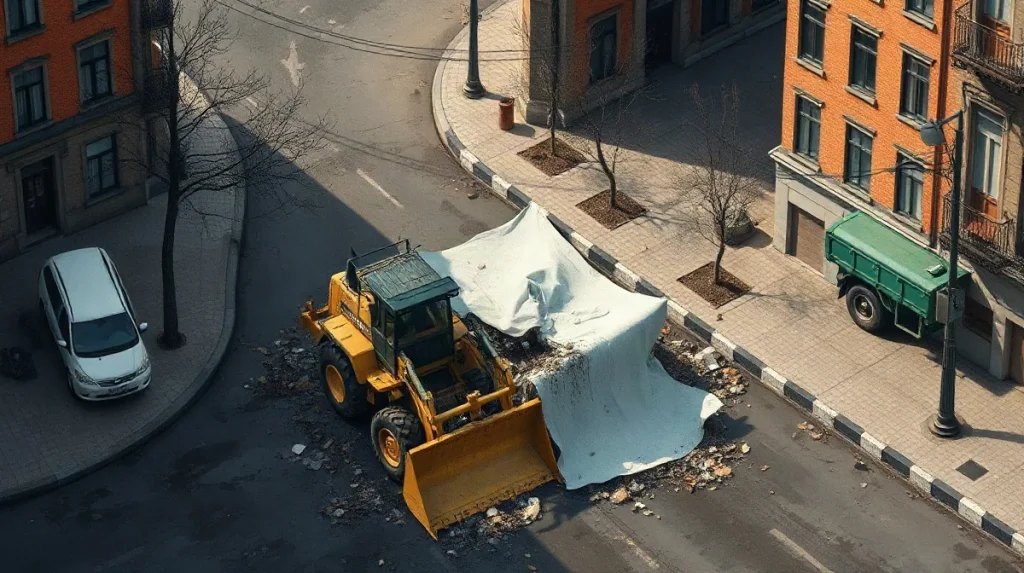
The Bulldozer Exhibition of 1974 was a pivotal moment that exposed the Soviet regime’s harsh repression of unofficial art and galvanized underground artists by drawing international attention to their struggle for creative freedom. Its violent suppression underscored the political risks faced by nonconformist artists and ultimately intensified the underground art movement in the USSR.
Organized by a group of Soviet avant-garde artists seeking to present their work outside state-sanctioned venues, the Bulldozer Exhibition was forcibly broken up by authorities using bulldozers and water cannons. This dramatic crackdown not only highlighted the regime’s intolerance of artistic dissent but also brought the Soviet underground art scene into the global spotlight. The event became a symbol of resistance against cultural censorship and inspired greater solidarity among unofficial artists.
Understanding the Bulldozer Exhibition’s impact is essential to grasping the evolution of Soviet unofficial art, which thrived despite—or because of—state opposition. This article explores how the exhibition’s suppression shaped the trajectory of nonconformist creativity, challenged the boundaries of artistic expression under authoritarian rule, and influenced subsequent generations of artists inside and beyond the Soviet Union.
| Aspect | Official Exhibitions | Bulldozer Exhibition (Unofficial) |
|---|---|---|
| Venue | State-run galleries and museums | Belyayevo forest open-air site |
| Art Style | Socialist Realism mandated | Abstract, avant-garde, nonconformist works |
| State Approval | Required and strictly controlled | Organized without permission |
| Security Response | Police surveillance and censorship | Use of bulldozers and arrests |
| Audience Access | Widely publicized and attended | Limited due to sudden dispersal |
| Financial Outcome | Artists paid by state or through commissions | No official sales; art often destroyed |
- 20 artworks Number of pieces exhibited before destruction
- 2 bulldozers Heavy machinery used to destroy the exhibition
- September 15, 1974 Date of the Bulldozer Exhibition
- About 12 arrests Number of artists and spectators detained by authorities
- September 29, 1974 Date of the subsequent officially permitted exhibition in Izmailovsky Park
What was the Bulldozer Exhibition of 1974 and when did it occur?
Event Overview
The Bulldozer Exhibition of 1974 was an unofficial open-air art show held on September 15, 1974, in the Belyayevo forest near Moscow, organized by about 20 nonconformist Soviet artists. Among the key organizers were Oscar Rabin and Alexander Gleser, who displayed approximately 20 artworks that challenged the state-approved artistic norms of the time. This event was significant as a rare public manifestation of underground art during an era when Soviet cultural policy strictly controlled artistic expression.
Authorities’ Response
The Soviet authorities reacted to the exhibition with force, deploying two bulldozers and water cannons to violently disperse the gathering and destroy the displayed artworks. This aggressive crackdown demonstrated the regime’s intolerance toward unauthorized artistic expression and its readiness to use heavy machinery against peaceful cultural events. The destruction of the exhibition underscored the broader repression faced by unofficial artists who resisted conforming to Socialist Realism.
- Date of event: September 15, 1974
- Location: Belyayevo forest near Moscow
- Number of artists involved: Approximately 20
- Artworks displayed: Around 20 pieces
- Means of suppression: Two bulldozers and water cannons
How did the Bulldozer Exhibition challenge Soviet artistic norms?
The Bulldozer Exhibition directly challenged Soviet artistic norms by publicly defying the mandated Socialist Realism style and state censorship, showcasing unofficial, abstract, and avant-garde artworks banned from official galleries. This 1974 event revealed the severe restrictions on artistic freedom under Soviet cultural policies and the artists’ determination to exhibit without government approval.
Artistic Context
Since the 1930s, Socialist Realism was the exclusive state-sanctioned art style in the USSR, promoting ideologically driven, realistic depictions of Soviet life. The Bulldozer Exhibition broke this monopoly by displaying nonconformist art that included abstract forms and experimental techniques explicitly forbidden in institutions like the State Tretyakov Gallery. Artists participating in the exhibition rejected the official artistic criteria, which demanded adherence to heroic and optimistic imagery supporting the Communist Party’s narrative.
Censorship Defiance
The exhibition was organized without state approval, directly opposing Soviet laws that restricted public art displays to government-sanctioned venues. On September 15, 1974, authorities violently disrupted the outdoor show using bulldozers and water cannons, demonstrating the regime’s intolerance for unsanctioned expression. This crackdown highlighted the absence of legal protections for artistic freedom and exposed the cultural repression inherent in Soviet policy.
- Socialist Realism enforced since the 1930s as the sole artistic style
- September 15, 1974: date of the Bulldozer Exhibition and its forceful closure
- Use of bulldozers and water cannons by Soviet authorities to destroy artworks
- Ban on abstract and avant-garde art from official galleries like the Tretyakov
What were the immediate consequences of the Bulldozer Exhibition for Soviet underground art?
The immediate consequences of the Bulldozer Exhibition for Soviet underground art included the arrest of about a dozen artists and spectators during and after the event, widespread international media coverage, and an unprecedented official permission for a legal open-air exhibition on September 29, 1974. These developments significantly expanded underground art networks and stimulated alternative channels for exhibiting and disseminating unofficial art.
Repression and Arrests
Authorities responded swiftly by detaining approximately twelve individuals linked to the Bulldozer Exhibition, including both artists and attendees. This crackdown demonstrated the state’s intent to suppress unofficial art movements forcibly. The severity of these arrests underscored the risks faced by nonconformist artists, yet also galvanized the community to seek safer platforms and methods for sharing their work.
Global Attention and Subsequent Exhibitions
The event attracted international attention, with Western newspapers such as The New York Times reporting on the incident, amplifying awareness of Soviet artistic dissent. This exposure contributed to a rare concession from Soviet officials, who allowed a sanctioned open-air exhibition in Izmailovsky Park on September 29, 1974. Following these events, underground artists increasingly relied on informal networks and samizdat-like dissemination to circulate their art beyond official restrictions.
- Number of individuals arrested: about 12
- Date of official open-air exhibition: September 29, 1974
- Location of legal exhibition: Izmailovsky Park, Moscow
- International media coverage: included The New York Times
Why did Soviet authorities use bulldozers and what does this reveal about their approach?
Symbolism of Force
Soviet authorities used bulldozers at the 1974 Bulldozer Exhibition to physically demolish unsanctioned artworks, signaling their ruthless stance against unofficial art. The deployment of two heavy bulldozers and water cannons exemplified a deliberate choice to obliterate rather than confiscate, emphasizing total destruction. This method went beyond mere removal, aiming to visibly erase dissenting cultural expressions from public memory and space, thereby deterring others. The public spectacle of destruction, carried out during the exhibition’s opening day in September 1974, was intended as a stark warning to artists about the severe consequences of defying state-imposed artistic norms.
Policy of Cultural Control
The harsh tactics reflected a zero-tolerance policy entrenched in Soviet cultural governance, where unofficial art was perceived as a threat to ideological conformity. Rather than allowing clandestine circulation of such works, authorities enforced strict measures to eliminate them outright. This approach aligns with broader Soviet practices during the 1970s, where control over cultural production was maintained through laws and administrative orders limiting artistic freedom, such as the 1934 Union of Soviet Artists’ standards enforcing Socialist Realism. The bulldozer intervention highlighted the regime’s preference for visible, forceful suppression over subtle censorship, reinforcing an environment in which unofficial art was systematically marginalized and criminalized.
- Two bulldozers and water cannons used on 15 September 1974
- Destruction prioritized over confiscation or covert removal
- Enforcement of Socialist Realism standards since 1934 Union of Soviet Artists regulations
What limitations and risks did participants face in organizing unofficial exhibitions like the Bulldozer show?
Legal and Economic Risks
Participants in unofficial exhibitions like the 1974 Bulldozer show faced severe legal and economic dangers, including potential arrest, harassment by authorities, and the loss of their ability to work as artists under Soviet regulations. The Soviet Union’s 1934 Law on Protection of State Secrets also extended to cultural control, restricting artists’ freedom to exhibit work outside state-sanctioned venues. Organizers and artists risked detention for up to 15 days or longer, with some facing official blacklisting that barred them from earning a livelihood in art institutions such as the Moscow Union of Artists. Economic losses were substantial because unofficial exhibitions lacked access to official galleries and sales networks. Artists could not legally sell their work through state channels, which controlled nearly 100% of art sales, limiting their income and professional visibility.
Impact on Artistic Production
The destruction of artworks during the Bulldozer show—when bulldozers and water cannons were used to demolish the exhibition—led to irreversible material and financial losses for many participants. The loss of canvases, sculptures, and installations meant not only the destruction of creative output but also the elimination of potential earnings, as artworks could fetch prices ranging from several hundred to a few thousand rubles on the unofficial market. Public gatherings of this kind were also vulnerable to violent dispersal, severely restricting audience exposure despite a growing underground demand for nonconformist art. The inability to secure official exhibition space forced artists to rely on covert venues, often accommodating fewer than 50 viewers, which hindered broader recognition and circulation.
- Detention risk: up to 15 days under Soviet administrative codes
- Official art sales controlled by the Moscow Union of Artists
- Destroyed artworks valued at hundreds to thousands of rubles each
- Unofficial venues limited to small audiences, often fewer than 50 people
How did the Bulldozer Exhibition influence the development of underground art movements in the USSR?
Legacy in Artistic Networks
The Bulldozer Exhibition catalyzed greater solidarity and organizational efforts among Soviet nonconformist artists, fundamentally shaping underground art movements throughout the 1970s and 1980s. This 1974 event galvanized groups in Moscow and Leningrad to form more cohesive networks outside official Soviet institutions, fostering alternative art scenes that relied on mutual support and shared resources. Notably, the immediate aftermath saw a surge in private apartment exhibitions, with informal venues becoming critical spaces for artist gatherings and performances, circumventing state censorship. These home-based shows often featured artists excluded from state-sanctioned galleries, contributing to an expanding unofficial circuit that maintained momentum even under intense political scrutiny.
Long-term Cultural Impact
By challenging the Soviet art establishment, the Bulldozer Exhibition helped pave the way for glasnost-era cultural liberalization beginning in the mid-1980s. Its influence extended into policy shifts that allowed a modest increase in unofficial art visibility, marking a break with prior total artistic repression. Underground exhibitions during this period typically operated with extremely low budgets, often under 100 rubles per event, supported by small collectives or sympathetic patrons. The event’s legacy is also evident in the development of notable alternative organizations such as the Moscow Artists’ Union of 1976, which provided a semi-official platform for nonconformist art. As a result, the Bulldozer Exhibition stands as a seminal moment that emboldened Soviet artists to assert creative independence, laying groundwork for the broader cultural thaw that followed.
- Rise of apartment exhibitions as unofficial venues after 1974
- Formation of the Moscow Artists’ Union in 1976
- Typical underground exhibition budgets under 100 rubles
- Onset of glasnost-era cultural liberalization mid-1980s
Frequently asked questions
What made the Bulldozer Exhibition unique compared to other Soviet art events?
Who were some key artists involved in the Bulldozer Exhibition?
What was the international reaction to the Bulldozer Exhibition?
Did the Bulldozer Exhibition lead to any changes in Soviet cultural policy?
Key takeaways
- The Bulldozer Exhibition was violently broken up on September 15, 1974, near Moscow.
- Soviet authorities used two bulldozers and water cannons to destroy around 20 artworks onsite.
- The event exposed strict censorship and lack of artistic freedom under Socialist Realism.
- International media coverage increased global awareness of Soviet unofficial art struggles.
- The exhibition inspired underground artistic networks that grew until glasnost reforms.