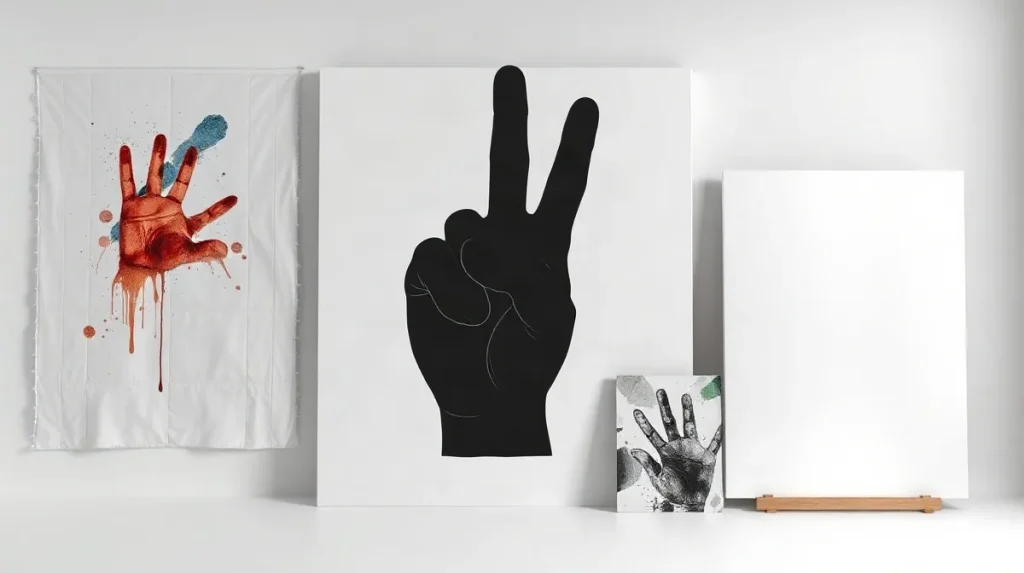
Christine Sun Kim, Rodney McMillian, Vincent Valdez and Chip Thomas are among the 20 recipients of 2026 MacArthur Fellowships, the John D. and Catherine T. MacArthur Foundation announced September 29. Each receives an unrestricted award of $800,000, paid in quarterly installments over five years. The four artists’ practices span multimedia work, painting and community-based murals, bringing distinct approaches to communication, racial and socioeconomic injustice, and public art into this year’s cohort.
Four practices, distinct materials
Berlin-based Christine Sun Kim examines the politics of communication through billboards, murals, performances and other multimedia work. A Deaf sound artist, she moves between American Sign Language and American English; in her 2020 video Palm Reader, animated signs for words including “state” and “rule” make language and authority part of the work’s subject.
Rodney McMillian, who is based in Los Angeles, draws on materials such as secondhand quilts, thrifted household objects and a cast-iron piggy bank. His 2026 exhibition A Son of the Soil at the Columbia Museum of Art brought him back to his hometown of Columbia, South Carolina, for an investigation of the American South and the persistence of racial and socioeconomic injustice.
Painting as confrontation
Houston-based Vincent Valdez combines Chicano art traditions with narrative painting. His canvases often approach mural scale, pressing viewers to confront the injustice, inequity and stereotypes experienced by the people he depicts rather than treating those subjects as distant or abstract.
In the eight-foot-tall painting So Long, Mary Ann (2019), Valdez portrays a tattooed man with clasped hands. The scale and attentive presentation give the figure space and dignity, reflecting the artist’s use of portraiture to complicate the assumptions that can attach to his subjects.
Murals rooted in community
Chip Thomas’s art has been intertwined with his work as a primary care physician for the Navajo Nation; he retired from medicine in 2023. In collaboration with Diné people, he has made murals and incorporated black-and-white photography into structures on Navajo Nation land, placing art within the built environments of the communities involved.
Thomas also founded the Painted Desert Project, which ran from 2012 to 2022. The initiative connected public artists with local communities through mural contributions, a model that situates artistic production in collaboration rather than separating it from the people and places it addresses.
How the fellowship works
The foundation describes the fellowship as a no-strings-attached award for people whose work shows exceptional creativity and the possibility of further achievement. The $800,000 grant is not restricted to a specified project, and its quarterly payments over five years give each fellow support across a sustained period.
Fellows are nominated by external parties and chosen by an independent committee. The 2026 cohort includes 20 recipients across fields; alongside the four visual artists named here are poet Layli Long Soldier, fiction writer Bryan Washington, dancer and choreographer Trajal Harrell, and saxophonist and composer Immanuel Wilkins.
A long-running, cross-disciplinary award
The foundation has awarded 1,195 MacArthur Fellowships since 1981. Its areas of recognition have included art history, visual culture, writing, health policy, anthropological research, musical performance and entrepreneurship, placing the four artists within a programme that extends well beyond the visual arts.
This year’s recognition links artists working in different places and forms: Kim’s language-based multimedia practice, McMillian’s material investigations, Valdez’s large-scale paintings and Thomas’s community collaborations. Their work makes the fellowship’s cross-disciplinary reach concrete while keeping attention on the varied ways art can engage social experience.
Takeaway: The 2026 MacArthur Fellowships give four artists $800,000 each in unrestricted support, recognising practices that range from sign-language-based video to collaborative murals.
