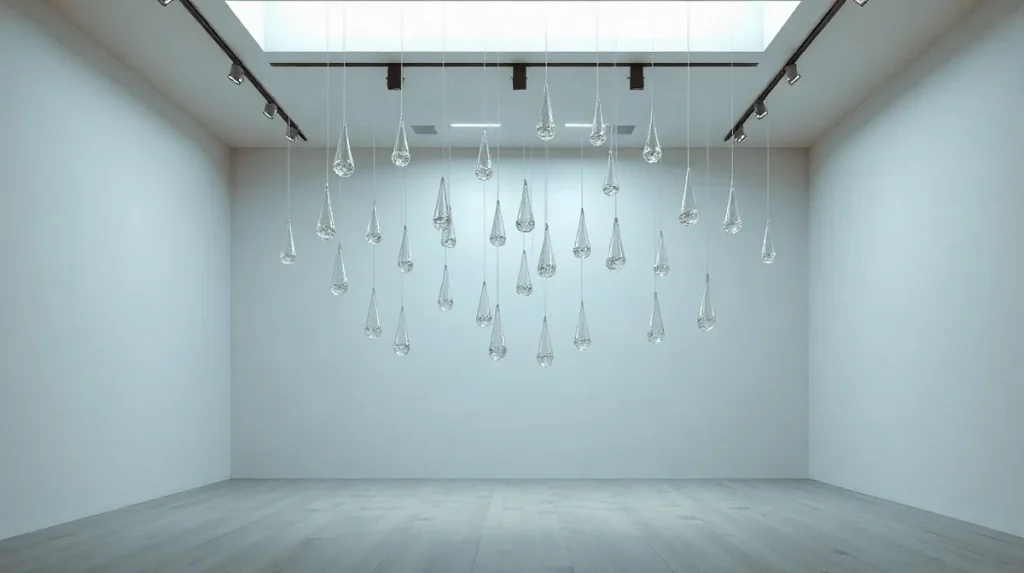
Kinetic rain sculptures harness controlled movement and shifting forms to explore the interplay of temporality and space, transforming static materials into dynamic, ever-changing artworks. These sculptures invite viewers to experience time visually and physically, emphasizing motion as an integral element of artistic expression.
By integrating mechanical or natural forces, kinetic rain sculptures break from traditional static art, offering a sensory journey where droplets or panels move rhythmically, revealing patterns that evolve continuously. This exploration of movement and temporality challenges conventional notions of sculpture, blurring boundaries between form, time, and perception, and encouraging audiences to engage with art as a living process.
For those interested in the broader relationship between sculpture and cultural meaning, further reading is available in our detailed analysis of the Prada Marfa Sculpture: An In-Depth Exploration of Its Artistic and Cultural Significance. This contextualizes how site-specific installations similarly redefine space and viewer interaction, complementing the dynamic nature of kinetic rain works.
| Criterion | Kinetic Rain Sculptures | Static Site-Specific Sculptures (e.g., Prada Marfa) |
|---|---|---|
| Movement | Programmed, dynamic sequences | None, fixed structure |
| Temporality | Evolving over time (5-15 min cycles) | Permanent, unchanging |
| Location | Indoor, climate-controlled venues | Outdoor, site-specific natural environment |
| Materials | Lightweight metals, motors, cables | Concrete, steel, architectural materials |
| Cost Range | Hundreds of thousands to millions USD | Generally lower, depending on scale |
| Viewer Engagement | Interactive temporal experience | Visual and contextual permanence |
- 1,216 units Number of droplets in Singapore Changi Airport’s Kinetic Rain sculpture
- 7 x 9 meters Dimensions of the Kinetic Rain installation at Changi Airport
- $2 million USD Estimated cost of the Changi Airport Kinetic Rain sculpture
- 5-15 minutes Typical duration of a kinetic rain sculpture movement cycle
- 1,000 kg Approximate weight of the Changi Airport Kinetic Rain sculpture
What defines kinetic rain sculptures and how do they function mechanically?
Mechanical design
Kinetic rain sculptures operate through computer-controlled motors and cable systems that move hundreds to thousands of suspended elements in choreographed sequences. For example, the Kinetic Rain installation at Singapore Changi Airport features 1,216 copper-plated droplets, each individually motorized to slide along fine cables. Movement cycles for these sculptures typically range from a few minutes up to over ten minutes per programmed sequence, allowing the sculpture to emphasize temporality in the viewer’s experience. Precision engineering firms like Art+Com Studios specialize in these installations, integrating synchronized motors and advanced software to coordinate the intricate motions of each suspended element.
Material choices
The materials used in kinetic rain sculptures prioritize lightweight metals and durability to ensure smooth, reliable motion. Common choices include aluminum and copper, with the iconic Changi Airport sculpture employing copper-plated droplets to balance aesthetic appeal and weight. These metals are combined with precision-engineered components crafted by specialists in kinetic art, such as Art+Com Studios, to achieve both structural integrity and fluid movement. The selection of lightweight metals like aluminum helps keep the total weight manageable while enabling rapid and precise repositioning of elements within sequences lasting several minutes.
How do kinetic rain sculptures contrast with static site-specific works like Prada Marfa?
Static permanence vs. dynamic temporality
Prada Marfa, established in 2005, embodies static permanence as a site-specific installation fixed in the Texas desert, designed to resist change and symbolize enduring presence. In contrast, kinetic rain sculptures prioritize dynamic temporality through precisely choreographed motion, typically engineered within indoor spaces, creating an ever-evolving visual experience that unfolds over minutes or hours.
The static Prada Marfa installation spans approximately 15 feet in length, constructed with durable materials to withstand desert conditions indefinitely. Meanwhile, kinetic rain sculptures, such as those installed by artists like ART+COM in Singapore’s Changi Airport, operate with hundreds of suspended droplets moving in complex sequences, emphasizing fluidity over fixed form.
Context and environment
- Prada Marfa: Located in a remote desert environment, its architectural scale and isolation amplify its permanence and provoke reflection on consumer culture and place-specific identity.
- Kinetic Rain Sculptures: Typically housed indoors, these installations depend on controlled environments and mechanical precision, inviting repeated engagement to witness shifting patterns and temporal change.
This contrast highlights how kinetic sculptures engage viewers through movement and temporality, while static works like Prada Marfa rely on immutability and site specificity to create a singular, lasting impression.
What are the key artistic and experiential impacts of kinetic rain sculptures?
Time and transformation
Kinetic rain sculptures primarily impact art by introducing time as a dynamic medium, allowing the form to evolve visually and conceptually over cycles lasting between 5 and 15 minutes. This temporal dimension transforms static sculpture into a performance, with suspended copper droplets or acrylic elements moving in choreographed sequences. For instance, the kinetic rain installation at Singapore Changi Airport consists of 1,216 copper droplets that move to create ever-changing shapes, illustrating how movement shapes spatial perception and artistic narrative through temporality.
The transformation of the sculpture’s shape and rhythm invites viewers to engage repeatedly, each viewing revealing new patterns and emotional nuances. The mechanical precision required to synchronize motion across hundreds of elements is often achieved using specialized motors and software systems developed by companies like Art+Com Studios, known for their work since 2001. These systems manage fluid transitions that enhance the artwork’s conceptual depth and aesthetic complexity.
Sensory engagement
Beyond visual transformation, kinetic rain sculptures stimulate sensory and emotional responses by mimicking natural rain patterns and harnessing light interaction. Materials such as reflective copper and translucent acrylic amplify ambient lighting effects, creating a luminous interplay that shifts as droplets move. The installation at Singapore Changi Airport exemplifies this, with its carefully designed lighting optimized for both daylight and evening conditions to enhance audience immersion.
- Use of copper droplets for reflective quality, weighing approximately 200 grams each in the Changi Airport sculpture
- Cycle duration of 5 to 15 minutes to create evolving sensory experiences
- Integration of ambient lighting design to maximize the interplay of light and shadow on moving elements
Audience interaction is spatial and temporal, encouraging viewers to explore different vantage points as the sculpture’s form continuously shifts, thus deepening the emotional and perceptual impact of the artwork’s naturalistic simulation.
What are common limitations and challenges in creating kinetic rain sculptures?
Cost and upkeep
Kinetic rain sculptures face significant financial challenges due to their high production and maintenance costs. For example, the renowned Kinetic Rain installation at Singapore’s Changi Airport reportedly cost over $2 million USD initially and requires continuous servicing to maintain motor functionality and prevent mechanical failures. This ongoing maintenance involves specialized technicians and can lead to substantial annual expenses, which often limits such artworks to well-funded institutions or commercial settings.
Technical and environmental constraints
The creation of kinetic rain sculptures demands complex technical collaboration among artists, engineers, and software programmers, restricting their development to specialized teams. This complexity is compounded by environmental requirements; these sculptures typically need controlled indoor conditions to shield delicate mechanical parts from weather, dust, and humidity. Additionally, motion programming must avoid repetitive or overly long cycles to prevent viewer fatigue, requiring sophisticated choreography to keep audiences engaged.
- Production cost: Over $2 million USD for Kinetic Rain at Changi Airport
- Maintenance: Regular servicing essential to preserve motor function
- Team requirements: Collaboration between artists, engineers, and programmers
- Environmental needs: Controlled indoor settings to protect components
- Motion design: Carefully choreographed cycles to avoid viewer disengagement
When and where have notable kinetic rain sculptures been installed?
Singapore Changi Airport
The most renowned kinetic rain sculpture was installed at Singapore Changi Airport’s Terminal 1 in 2012. Measuring 7 by 9 meters and weighing about 1,000 kilograms, this installation consists of 1,216 individual droplets made of aluminum and coated with copper, moving in coordinated patterns to create dynamic shapes. It is a signature work of Art+Com Studios, showcasing the fusion of art, technology, and architecture in a high-traffic public space.
Global installations
Beyond Singapore, kinetic rain sculptures by Art+Com Studios have been commissioned for various airports, hotels, and museums across Europe and Asia since the early 2010s. These installations typically occupy large indoor venues where visitor flow justifies the scale and complexity of kinetic art. They often measure several meters in height and width and weigh hundreds to over a thousand kilograms depending on the design.
- Common locations include international airports and luxury hotels, emphasizing art integration within commercial and transit environments.
- Appearances in art biennials and new media exhibitions highlight their role in contemporary installation art since 2010.
- Art+Com’s kinetic sculptures balance artistic expression with architectural constraints, requiring site-specific engineering and installation periods often spanning several months.
How much do kinetic rain sculptures typically cost to produce and maintain?
Budget ranges
Kinetic rain sculptures typically cost between several hundred thousand and multiple million US dollars to produce, influenced heavily by size and mechanical complexity. For example, the well-known installation at Singapore’s Changi Airport reportedly exceeded $2 million USD, reflecting its scale with over a thousand moving droplets and advanced programming. Key cost drivers include the choice of materials—copper-plated droplets generally cost more than aluminum ones—and the total number of moving components, which can range from a few hundred to more than a thousand elements spanning several to tens of square meters. Commissioning such a work often demands multi-year planning and budgeting phases, due to the intricate engineering and software integration involved.
Maintenance expenses
Annual maintenance budgets for kinetic rain sculptures can reach tens of thousands of US dollars to ensure smooth operation. These funds cover routine servicing of motors, periodic software updates, and replacement of worn mechanical parts. The complexity and scale of the installation affect ongoing costs; larger sculptures with more moving elements require more frequent motor servicing and software calibration. Maintenance is essential to preserve the temporal and kinetic qualities that define these sculptures as dynamic art forms.
- Production cost range: several hundred thousand to over $2 million USD
- Droplet materials: copper-plated vs. aluminum affecting cost
- Moving elements: from hundreds to more than 1,000 parts
- Installation scale: several to tens of square meters
- Annual maintenance budget: up to tens of thousands USD
- Maintenance activities: motor servicing, software updates, parts replacement
- Planning and commissioning timeline: multiple years due to engineering demands
Frequently asked questions
What makes kinetic rain sculptures different from traditional sculptures?
Are kinetic rain sculptures suitable for outdoor installation?
Who are the primary creators of kinetic rain sculptures?
How long do movement sequences in kinetic rain sculptures usually last?
Key takeaways
- Kinetic rain sculptures integrate time and movement using hundreds of motorized elements.
- They contrast static site-specific works like Prada Marfa by emphasizing dynamism over permanence.
- High costs and technical complexity limit production to specialized studios and indoor venues.
- Notable examples include the 1,216-droplet installation at Singapore Changi Airport from 2012.
- Movement cycles range from 5 to 15 minutes to balance visual impact and viewer attention.