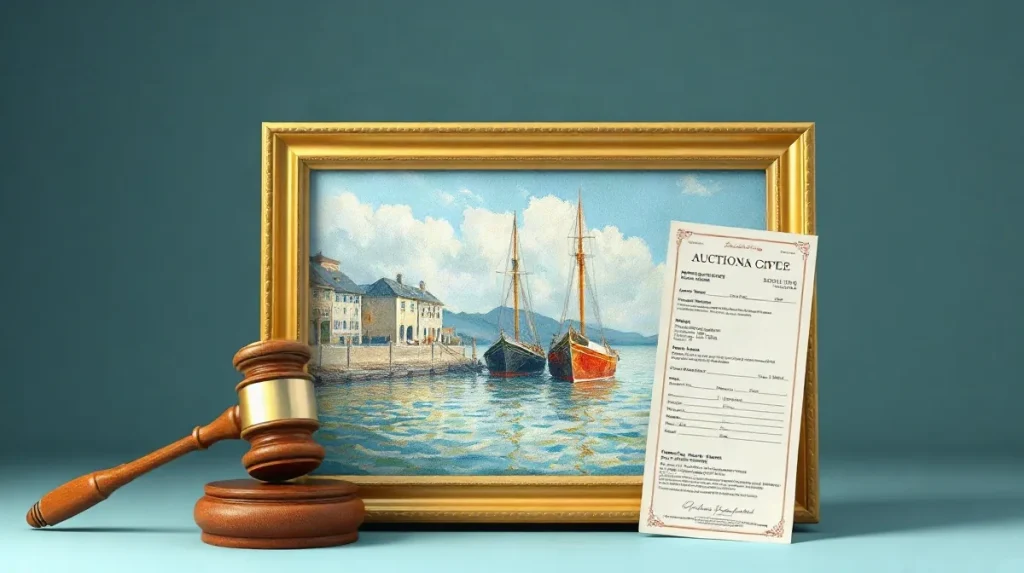
A Paris court has voided the 2024 Sotheby’s sale of a Camille Pissarro painting and ordered its return to the heirs of Jewish banker Salomon Flavian. The 5 November ruling found that the work was looted in Paris in 1941 and gives Sotheby’s two months to disclose the buyer’s identity, with a €1,000 daily penalty for delay.
The painting and the sale
Darse de pêche et bassin Duquesne, a 1902 view of Dieppe’s port in Normandy, sold at Sotheby’s London on 25 June 2024 for £1.2 million. The auction catalogue recorded Flavian as an owner from 1935 and noted that the painting appeared in the French government’s 1947 Répertoire des biens spoliés, a register of looted property.
Still, the catalogue said the work was being offered under a settlement between its owner and Flavian’s heirs. Sotheby’s told the court that the Toronto-based Mondex Corporation, which specialises in the return of looted art, had secured the family’s consent.
Why the court rejected the sale
At a hearing on 18 September, Corinne Hershkovitch, representing seven Flavian heirs, argued that only two relatives had signed the agreement and that the others had not been consulted. The court accepted the family’s case that the painting had been taken during the Nazi seizure of Flavian’s collection in 1941.
Sotheby’s and Mondex relied on a study arguing that British artist and collector Edward Le Bas acquired the Pissarro from dealer Paul Rosenberg in the late 1930s. The judges found no direct, convincing evidence for those transactions. They said the family’s research presented a coherent body of evidence for wartime looting; the reference to Le Bas in a 1939 catalogue edited by Rosenberg was one of several conflicting elements, not proof of a sale.
The court also rejected Sotheby’s challenge to its authority over a sale held in London. Under French law, it ruled, annulling the acts that dispossessed Flavian in 1941 makes later sales of the painting void. The ruling does not, however, cancel the separate settlement between Mondex and the two heirs who waived their rights in exchange for a share of the sale proceeds.
Buyer’s identity and possible appeals
Sotheby’s must provide the buyer’s complete identity within two months or face the daily fine. The auction house said it was disappointed by the restitution decision but welcomed the dismissal of claims against it. It also said client confidentiality mattered and that a procedure would be needed to enforce the ruling in the United Kingdom.
Mondex lawyer Melina Wolman said the company intends to appeal, arguing that the judgment creates difficulties in assessing historical evidence. Sotheby’s is considering whether to join an appeal. The ruling therefore orders restitution, but the painting’s return and the buyer’s disclosure remain subject to the next legal steps.
What restitution would involve
If the heirs succeed in recovering the painting, they will have to deal with its current possessor, who may seek compensation from Sotheby’s. The auction house could in turn pursue Mondex and the work’s consignor. An indemnity clause in the settlement signed by Mondex and the seller may be relevant to that dispute, according to people close to the case.
The court’s order settles the status of the sale under French law; enforcement in the UK and any appeal are still ahead. Sotheby’s has two months to identify the buyer under the ruling.
Sources
- artnews.com — “A Court Rules Sotheby’s Must Facilitate Return of Nazi-Looted Pissarro”
- Macau Business — “French court orders return of Pissarro painting looted by Nazis”
- timesofindia.indiatimes.com — “Heirs of Jewish banker have sued Sotheby’s over £1.2m painting sale, claiming artwork was looted by Nazis during World War II; a Parisian court to soon give rul”
- Meron — “Paris Court Orders Sotheby’s to Return Looted Pissarro”
- theartnewspaper.com — “Was this Pissarro painting—sold at Sotheby's in 2024—looted by Nazis? A Paris court deliberates – The Art Newspaper – International art news and events”