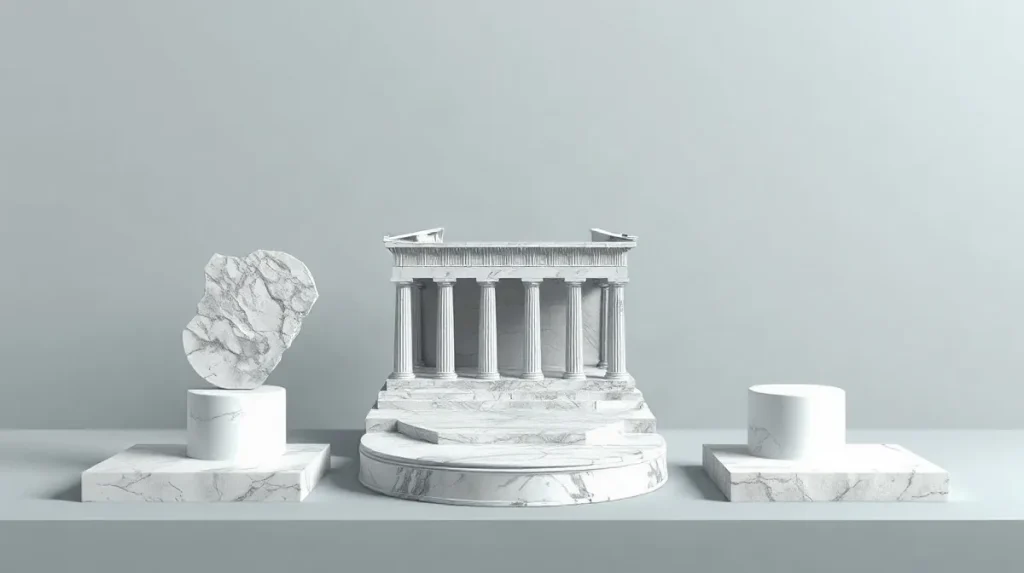
Greek Prime Minister Kyriakos Mitsotakis has pledged to intensify Greece’s campaign to bring the Parthenon Marbles back from the British Museum, saying talks on their future have stalled. Speaking at a conference in Athens, he said Greece would press both the museum and the British government, and raise the issue with UK Prime Minister Andy Burnham. The announcement renews the dispute over sculptures removed from the Parthenon more than 200 years ago and still held in London.
Talks stalled as Athens prepares to press its case
Mitsotakis said discussions about a possible arrangement had not advanced. The proposal under consideration was described as a hybrid deal: the fifth-century BCE sculptures would return to Greece, while other antiquities would be offered in exchange. Those objects would come from Athens’s National Archaeological Museum, which is closed for renovations.
The prime minister said Greece would step up its claims not only with the British Museum but also with the UK government. His remarks put renewed emphasis on securing a political conversation with Burnham, whom Mitsotakis said had supported the sculptures’ return before taking the premiership. He indicated he would make Greece’s case directly when the two leaders meet.
A dispute over a monument’s dispersed sculptures
The Parthenon Marbles are sculptures created for the Parthenon, the ancient Greek monument on the Acropolis. Lord Elgin, then Britain’s ambassador, removed them more than two centuries ago; the pieces remain in the British Museum’s collection. Greece’s campaign seeks to reunite the sculptures in Athens, where the monument they were made to adorn stands.
Mitsotakis has presented reunification as more than a bilateral question. He argued that the sculptures’ future matters to Europe as well as Greece, linking the debate to Britain’s relationship with the European Union. His comments also frame a return as a possible cultural partnership between Greece and the UK, including the British Museum, rather than solely as a demand for the transfer of objects.
Burnham becomes a focus of the renewed appeal
Mitsotakis pointed to Burnham’s earlier support for restitution and said he would take up the issue with him. Burnham had served as culture secretary under a previous administration, and Greek officials had regarded his longstanding backing for return as a reason for optimism. Mitsotakis also referred to Burnham’s reported comments about closer UK ties with the European Union.
The Greek leader suggested that a stronger relationship between Britain and Europe could provide a constructive setting for talks. He argued that reunification in Athens could establish a distinctive cultural partnership between Greece and the British Museum. The immediate obstacle remains the lack of progress on the hybrid proposal, while the planned appeal to the UK prime minister offers a route to revive discussion at government level.
Arguments about keeping works together
The campaign has also challenged comparisons between the Parthenon sculptures and the Bayeux Tapestry. Mitsotakis has argued that both were conceived as unified works, but that the marbles have an additional connection to the architecture of the Parthenon: they were made as elements of that specific monument. The distinction underpins Greece’s case for displaying them together in Athens.
In an earlier argument, Mitsotakis questioned whether dividing the surviving Bayeux Tapestry between London and Bayeux would allow audiences to understand it adequately. He used that comparison to press the case that the Parthenon sculptures should likewise be seen as a whole. His latest pledge signals that Greece intends to continue making this case to both the British Museum and the UK government.
Takeaway: Mitsotakis’s pledge raises the pressure for renewed talks, but the proposed arrangement remains unresolved.
What this piece draws on
- inkl.com — “Greece will not 'borrow' its own treasures, Mitsotakis…”
- BBC — “Elgin Marbles: British Museum loan 'an affront to the Greek”
- The Guardian — “Turkey rejects claim Lord Elgin had permission to take”
- The New York Times — “Stone Fragment Is Found in Wreck of Ship That Carried”
- The Guardian — “Britain would not cut up the Bayeux tapestry. So seize this”
