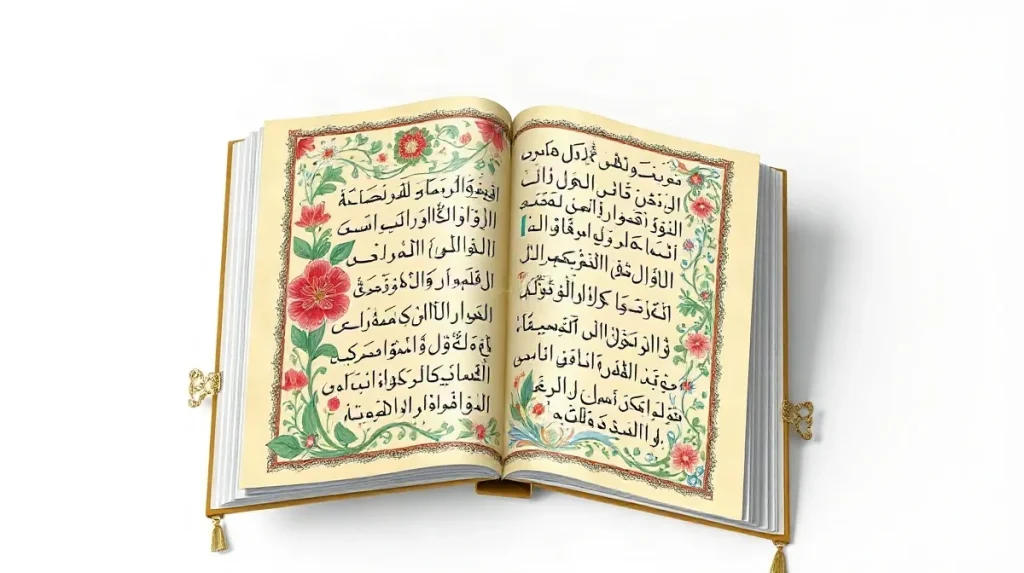
Introduction: What Defines Persian Manuscript Illumination?
Persian manuscript illumination, known as Tazhib, is a sophisticated art form centered on the decoration of manuscripts with intricate gold leaf and vibrant colors. This tradition has flourished for over a millennium, especially within religious and literary texts, reflecting distinct historical styles and cultural values. In 2026, Tazhib remains a vital expression of Iranian artistic heritage, preserved in rare collections and actively practiced by contemporary artists.
Historical Evolution of Tazhib
The art of Tazhib evolved through several key historical periods, each contributing unique stylistic elements. The Seljuk period (11th–14th century) introduced bold geometric patterns and rich color contrasts, while the Safavid era (16th–18th century) refined illumination with delicate floral motifs and intricate arabesques. By the 17th century, artists like Mu’īn Muṣavvir, active from 1635 to 1697, elevated the precision of manuscript decoration, as seen in his works preserved in Princeton University’s Islamic manuscript collection dated 1673–1674.
Key Historical Periods and Their Characteristics
- Seljuk Era: Bold geometric shapes, heavy use of gold leaf
- Timurid Era: Incorporation of fine floral and vegetal motifs
- Safavid Era: Delicate arabesques, balanced color palettes
- Qajar Period: Revival with increased naturalism and color vibrancy
Techniques and Materials in Persian Illumination
Tazhib artisans employ specialized materials and techniques that have remained largely unchanged for centuries. Gold leaf application is a defining feature, requiring meticulous layering and burnishing to achieve a luminous effect. Pigments are traditionally derived from minerals and plants, processed into vibrant hues like lapis lazuli blue and vermilion red. In 2026, the cost of high-quality gold leaf suitable for illumination averages around $120 per gram, reflecting the material’s premium status in art creation.
Steps in Creating a Tazhib Manuscript
- Preparation of paper or parchment with a smooth surface
- Sketching initial designs using charcoal or ink
- Applying gold leaf in thin sheets and burnishing
- Painting with mineral and vegetable pigments
- Final detailing with fine brushes and tools
Major Collections and Their Significance
The global appreciation for Persian illuminated manuscripts is reflected in prestigious collections housing these masterpieces. UNESCO’s Memory of the World program includes 71 rare Persian manuscripts highlighting royal ateliers from the 14th century onward. The Metropolitan Museum of Art in New York and the British Library in London maintain extensive Persian illumination holdings, with some pieces valued at over $1 million in 2026 art market estimates.
| Institution | Manuscripts Held | Notable Periods | Estimated Collection Value (2026, USD) |
|---|---|---|---|
| UNESCO Memory of the World | 71 | 14th–18th Century | Over $50 million |
| Metropolitan Museum of Art | 50+ | Safavid, Qajar | Approximately $45 million |
| British Library | 60+ | Timurid, Safavid | About $40 million |
Contemporary Practice and Preservation Efforts
In 2026, Persian manuscript illumination is experiencing a revival among Iranian artists and international scholars. Workshops and tutorials, such as those by the Art of Islamic Illumination organization, provide step-by-step guidance on traditional techniques. Preservation initiatives by museums and cultural institutions are critical, with conservation projects extending over several years to stabilize fragile manuscripts. For example, the British Library’s recent restoration of a 16th-century Persian illuminated manuscript took 450 hours and cost approximately £75,000.
Current Challenges and Opportunities
- Securing funding for long-term conservation
- Training new generations of illuminators in traditional methods
- Digitization efforts to make manuscripts accessible worldwide
- Balancing preservation with active artistic innovation
Market and Collecting Trends in 2026
The art market for Persian illuminated manuscripts remains robust, driven by collectors valuing authenticity and historical significance. Auction houses report prices ranging from $100,000 for smaller folios to several million dollars for rare complete manuscripts. The increasing interest in Islamic and Middle Eastern art globally has raised the profile of Tazhib, making it both a cultural treasure and a sought-after collectible. Prices for contemporary illuminated works by skilled artists typically range between $5,000 and $25,000 depending on complexity and materials used.
- $120 average price per gram of gold leaf for illumination
- 71 manuscripts in UNESCO’s Persian collection
- 450 hours restoration time for a 16th-century illuminated manuscript
- $1 million+ valuation for top-tier historic manuscripts in 2026
- $5,000–$25,000 price range for contemporary illuminated works
Frequently asked questions
What materials are essential for Persian manuscript illumination?
How old are the oldest Persian illuminated manuscripts?
Are there modern artists still practicing Tazhib?
What are the main challenges in preserving illuminated manuscripts?
Where can one view Persian illuminated manuscripts today?
Key takeaways
- Tazhib is a centuries-old Persian art form involving gold and color manuscript decoration.
- Distinct historical periods shaped unique styles, notably Seljuk, Safavid, and Qajar eras.
- Gold leaf and mineral pigments remain essential materials, with gold costing about $120 per gram in 2026.
- Major collections include UNESCO’s 71 manuscripts, valued collectively over $50 million.
- Contemporary artists maintain and innovate Tazhib, supported by conservation and educational efforts.
- The market values historic manuscripts up to several million dollars, with contemporary works priced from $5,000 to $25,000.
Conclusion
Persian manuscript illumination, or Tazhib, continues to captivate scholars, artists, and collectors in 2026 through its intricate beauty and historical depth. Rooted in centuries of artistic evolution, this luminous craft bridges tradition and modernity. As preservation efforts safeguard fragile masterpieces and contemporary practitioners breathe new life into the form, Tazhib remains a vital cultural legacy illuminating the past and inspiring the future.
Sources
- irandoostan.com — “Read All About Persian Illuminated Manuscript – Irandoostan”
- unesco.org — “Persian Illustrated and Illuminated Manuscripts – Memory of the World”
- Art of Islamic Illumination — “Persian Illuminations Tutorial”
- Digital PUL — “Illuminated Manuscripts”