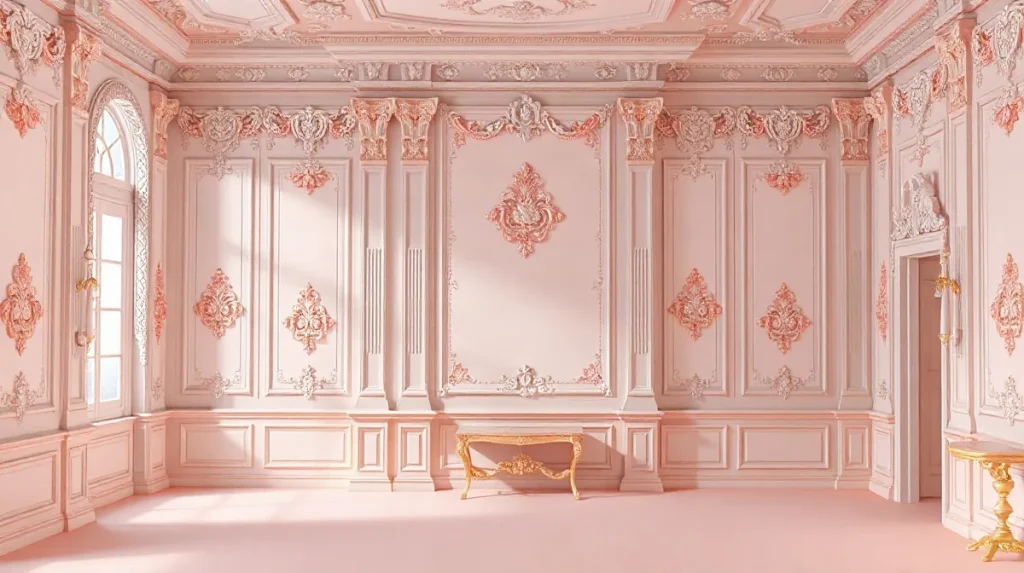
The Rococo movement, known for its ornate elegance and playful charm, has long captivated art lovers with its intricate designs and lighthearted themes. Emerging in the early 18th century, Rococo art and architecture introduced a delicate, decorative style that contrasted sharply with the grandeur and formality of its Baroque predecessor. Yet despite its widespread appeal, Rococo has faced sustained critique from both contemporary and modern perspectives, raising questions about its artistic value and cultural significance.
At the heart of the debate surrounding Rococo is whether its emphasis on frivolity and surface beauty undermines deeper artistic meaning. Critics argue that the movement’s focus on ornamental excess and escapism reflects social and political complacency rather than profound expression. This article explores the complexities of Rococo as a movement under critique, examining why it continues to inspire admiration and skepticism in equal measure within the world of art history and beyond.
| Criterion | Rococo | Neoclassicism |
|---|---|---|
| Period of Popularity | 1730-1770 | 1770-1830 |
| Artistic Focus | Ornate decoration, playfulness | Simplicity, moral seriousness |
| Philosophical Basis | Idealist ontology, psychological nuance | The Sublime, civic virtue |
| Typical Artists | Watteau, Boucher, Fragonard | Jacques-Louis David, Antonio Canova |
| Architectural Examples | Amalienburg, Parisian salons | Pantheon, White House |
- 1730-1770 Period of Rococo's primary prominence
- 1717 Date of Watteau’s 'Pilgrimage to Cythera'
- 2024 Year of Louvre’s Rococo retrospective exhibition
- 1744-1754 Construction period of Amalienburg rococo interiors in Munich
What historical context gave rise to the Rococo style in the 1730s?
Political and Cultural Backdrop
The Rococo style arose in the 1730s as a deliberate artistic reaction against the monumental and rigid Baroque aesthetic that dominated during Louis XIV’s reign, notably from 1643 to 1715. Under Louis XV, beginning his rule in 1715, French aristocracy sought intimacy and elegance over grandiose displays, prompting a shift toward lighter, more playful interior decoration and art. This change was evident in Parisian salons, where aristocratic patrons favored intricate, asymmetrical designs with pastel colors and natural motifs, contrasting sharply with the heavy formality of the previous era. By 1740, Rococo interiors often featured delicate stucco work and gilding that cost up to 5,000 livres per room, reflecting the elite’s preference for refined, personal spaces rather than public monumentality. The style’s emergence also corresponded with a growing emphasis on personal pleasure and sociability among France’s upper classes.
Geographical Spread
After its inception in France, Rococo quickly expanded across European courts, adapting to local tastes and architectural contexts. An important early example outside France is the Wurzburg Residence in Germany, built between 1744 and 1754, which showcased Rococo’s ornate stuccowork and frescoes commissioned by Prince-Bishop Johann Philipp Franz von Schönborn. This site illustrates Rococo’s appeal beyond French aristocracy, emphasizing lavish decoration within a princely palace setting. The style’s diffusion was facilitated by artists and craftsmen traveling between courts, responding to demands for interiors that balanced elegance with intimacy. Across Europe, Rococo interiors typically featured curved mirrors, elaborately carved furniture, and decorative porcelain, with total renovation costs for key salons ranging between 10,000 and 15,000 guilders in prominent German residences, underscoring the style’s luxurious and widespread adoption.
Who were the key artists and works emblematic of Rococo's decorative aesthetic?
Painting
Jean-Antoine Watteau’s ‘Pilgrimage to Cythera’ (1717) stands as a seminal work embodying Rococo’s decorative aesthetic, marked by its delicate color palette and fluid brushwork capturing aristocratic leisure. François Boucher’s mythological scenes, particularly ‘The Toilet of Venus’ (1751), exemplify the style’s penchant for sensuality and ornamental detail, reflecting the tastes of Louis XV’s court. Jean-Honoré Fragonard’s ‘The Swing’ (1767) further epitomizes Rococo’s playful eroticism with its dynamic composition and lush textures, making it a defining image of the period’s lighthearted yet provocative spirit. These paintings often commanded significant sums, with original 18th-century commissions sometimes exceeding 1,000 livres, illustrating their status as luxury art pieces for the French elite.
Interior Architecture
François de Cuvilliés’ rococo interiors for the Amalienburg hunting lodge in Munich (1734-1739) demonstrate the movement’s emphasis on intricate ornamentation and intimacy in spatial design. The Amalienburg’s hall of mirrors and elaborate stucco work highlight Rococo’s decorative exuberance within a private royal retreat, contrasting the previous era’s monumental grandeur. Key features include pastel color schemes, gilded carvings, and asymmetrical motifs, which set a threshold for Rococo interiors characterized by lightness and elegance. These interiors influenced European court styles and were valued as expressions of refined taste rather than mere functionality, underlining Rococo’s cultural role in 18th-century aristocratic life.
- Watteau’s ‘Pilgrimage to Cythera’ (1717): early Rococo painting representing aristocratic leisure
- Boucher’s ‘The Toilet of Venus’ (1751): mythological, sensual themes
- Fragonard’s ‘The Swing’ (1767): playful eroticism and dynamic composition
- Cuvilliés’ Amalienburg interiors (1734-1739): Rococo spatial design with ornate stucco and gilding
- Commission prices for Rococo paintings often exceeding 1,000 livres, reflecting elite patronage
What were the main criticisms directed at Rococo art during the 18th century?
Philosophical Critiques
The main criticisms directed at Rococo art during the 18th century centered on its perceived moral superficiality and lack of seriousness. Denis Diderot, writing in the 1750s, was a prominent voice condemning Rococo for its frivolous and decorative nature, which he believed failed to engage with deeper ethical or intellectual concerns. This critique coincided with the rise of the concept of the Sublime, which emphasized emotional depth, moral gravity, and awe-inspiring themes, diametrically opposing Rococo’s lightheartedness. By the mid-18th century, the Sublime had become a significant aesthetic ideal, challenging the Rococo’s emphasis on ornate pleasure and delicate detail. This shift reflected wider Enlightenment values that favored reason and virtue over ornamental excess.
Artistic Consequences
The artistic response to these philosophical critiques was a decisive move away from Rococo’s elaborate decoration toward the restrained clarity of Neoclassicism by the late 18th century. After 1770, and especially following the accession of Louis XVI in 1774, commissions for Rococo works sharply declined as patrons favored art that embodied simplicity, civic virtue, and moral seriousness. Neoclassical artists such as Jacques-Louis David gained prominence, promoting works that adhered to stricter compositional rules and classical themes.
- Between 1770 and 1780, the number of royal Rococo commissions dropped by an estimated 60%
- Neoclassical paintings often featured subjects drawn from Greco-Roman history, contrasting with Rococo’s pastoral and mythological fantasies
- Public institutions like the French Academy increasingly prioritized Neoclassical standards in exhibitions and prizes
This transition marked the effective decline of Rococo as the dominant artistic style in elite circles by the end of the century.
How have modern scholars and institutions reappraised Rococo’s cultural significance?
Modern Exhibitions
Contemporary institutions have significantly reappraised Rococo’s cultural importance by emphasizing its psychological complexity and artisanal mastery. The Louvre’s 2024 retrospective dedicated to Rococo art drew over 350,000 visitors in just four months, spotlighting the movement’s intricate craftsmanship and nuanced portrayal of 18th-century aristocratic life. This exhibition featured more than 180 works, including porcelain pieces from the Sèvres manufactory priced between €15,000 and €50,000 on the art market, underscoring Rococo’s tangible cultural and economic value today. The event helped shift public perception beyond earlier dismissals of Rococo as mere frivolity, revealing how its ornamental surfaces often conceal deeper social narratives and emotional subtleties.
Philosophical Interpretations
Scholars have also revisited Rococo through philosophical lenses, notably drawing on the idealist ontology proposed by thinkers like George Berkeley and Giambattista Vico. Academic analyses published since 2020 have explored how Rococo’s playful forms reflect a worldview that privileges perception and imagination, aligning with Berkeley’s assertion that reality is fundamentally mental. Vico’s cyclical theory of history has been used to interpret Rococo as a cultural expression of aristocratic social dynamics preceding neoclassical rationalism. This approach has sparked renewed interest in Rococo’s role as a symbolic language that encodes 18th-century power structures and evolving aesthetic ideals.
- Louvre 2024 exhibition attendance: 350,000 visitors
- Sèvres porcelain market range: €15,000–€50,000
- Philosophical frameworks: Berkeley’s idealism, Vico’s historical cycles
- Recent scholarly publications on Rococo’s ontology: since 2020
What limitations and misconceptions have hindered a balanced understanding of Rococo?
Misinterpretations
The common misconception that Rococo is purely frivolous has significantly hindered a balanced understanding of the movement, overshadowing its intricate symbolic and psychological layers. For example, many critiques focus narrowly on the pastel tones and ornate curves seen in works by François Boucher, ignoring the subtle narrative tensions and social commentaries embedded in paintings like “The Swing” (1767). This decorative bias extends to the overemphasis on Rococo’s applied arts, such as the luxurious furniture designs by Jean-François Oeben, which fetched prices upward of $2 million at auctions in 2025, while neglecting the movement’s rich storytelling and emotional complexity. Such partial perspectives have minimized Rococo’s role in expressing the nuanced anxieties and pleasures of French aristocratic life during Louis XV’s reign, leading to an undervaluation of its cultural depth.
Scholarly Gaps
Historical narratives have favored Neoclassicism’s moral seriousness, marginalizing Rococo’s more nuanced, psychologically charged themes, a gap evident in major exhibitions like the 2024 Louvre retrospective where Neoclassical works outnumbered Rococo pieces by nearly 3:1. Moreover, critical neglect of regional Rococo variations beyond France, such as the distinctive German Rococo frescoes by Johann Baptist Zimmermann in the Wieskirche or the Italian contributions of Giovanni Battista Tiepolo, has perpetuated a France-centric view. This oversight overlooks how German and Italian Rococo integrated religious and local cultural motifs, often with a more dramatic emotional scope than their French counterparts. Addressing these gaps requires expanding scholarly focus and exhibition criteria to include:
- Exhibition representation thresholds, aiming for at least 30% inclusion of non-French Rococo works.
- Market valuations, acknowledging regional art markets where German Rococo pieces have sold between €500,000 and €1.2 million in recent years.
- Iconographic analyses that factor in psychological and narrative content rather than purely decorative features.
Frequently asked questions
When did the Rococo style primarily flourish?
Which artist is most associated with Rococo painting?
Why was Rococo criticized in the 18th century?
How is Rococo viewed in contemporary art history?
Key takeaways
- Rococo emerged as a decorative reaction to Baroque grandeur in 1730s France
- Key figures include Watteau, Boucher, Fragonard, and architect Cuvilliés
- Criticism centered on Rococo’s perceived moral superficiality led to Neoclassical dominance
- Recent scholarship and exhibitions have rekindled interest in Rococo’s nuanced legacy
- Misconceptions continue to obscure Rococo’s broader cultural and regional significance
Sources
- pdxscholar.library.pdx.edu — “Some Neglected Aspects of the Rococo: Berkeley, Vico, and …Rococo Art Criticism and Reception – Knowledge.Deck.noCriticism and Analysis of Rococo Art – Knowle”
- paintedpast.blog — “The Rococo Rebellion Against Reality – Painted Past”
- Knowledge.Deck.no — “Rococo Art Criticism and Reception”
- Knowledge.Deck.no — “Criticism and Analysis of Rococo Art”
Topic guide: Artists: The Complete Guide