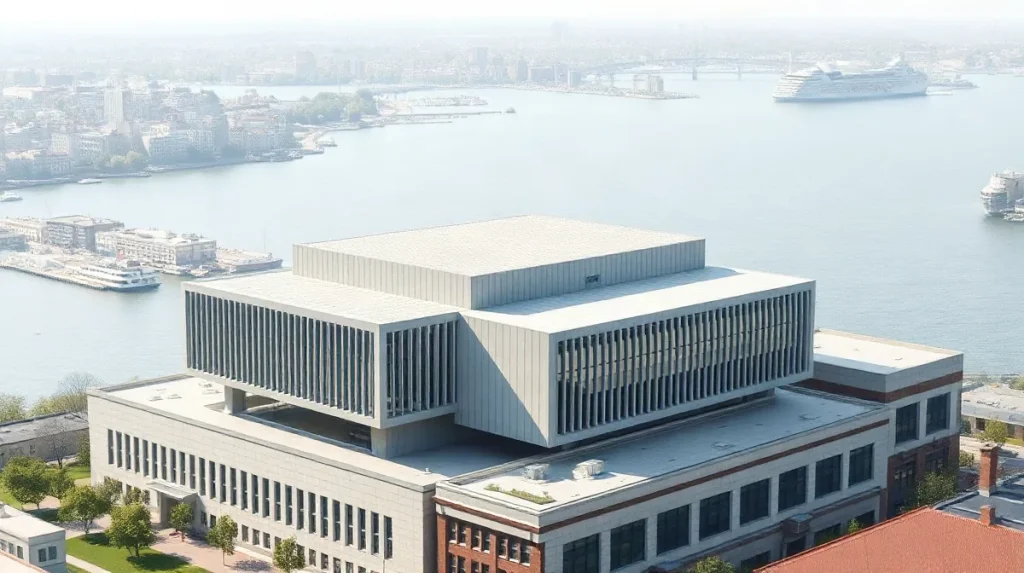
The Whitney Biennial stands as a pivotal event in the landscape of contemporary art, serving both as a barometer for current creative trends and a platform for emerging voices. Since its inception, it has captured the evolving spirit of American art, reflecting shifts in cultural, political, and social dialogues through a diverse selection of artists and works. Its influence extends beyond mere exhibition, shaping artistic careers and sparking critical conversations worldwide.
At its core, the Whitney Biennial is more than an art show; it is a dynamic forum where innovation and controversy often intersect. By spotlighting experimental practices and challenging traditional boundaries, the Biennial plays a crucial role in defining what contemporary art means at any given moment. This ongoing relevance makes it a vital reference point for collectors, critics, and audiences eager to understand the pulse of modern creativity.
| Year | Curators | Themes | Notable Artists |
|---|---|---|---|
| 1973 | N/A | Shift to new media inclusion | Chuck Close, Lewis Baltz |
| 1975 | John Hanhardt, Barbara Haskell, James Monte | Contemporary American Art | N/A |
| 1977 | N/A | Diverse media and conceptual art | John Baldessari, Vito Acconci |
| 2024 | N/A | Identity, climate change, social justice | 60+ contemporary artists |
- 1932 Year the Whitney Biennial was established
- Every 2 years Frequency of the Whitney Biennial exhibition
- 60+ Number of artists featured in the 2024 Biennial
- 1975 Year John Hanhardt, Barbara Haskell, and James Monte curated the Biennial
What is the Whitney Biennial and when did it begin?
Historical Origins
The Whitney Biennial is a biennial exhibition established by the Whitney Museum of American Art in New York City, first inaugurated in 1932. It was created to showcase contemporary American art, serving as a platform for emerging and established artists to present new works that reflect evolving cultural and political landscapes. Over the decades, the Biennial has become a key event in the art world, shaping discourse and trends by featuring a diverse range of media and themes. Its long history includes landmark editions such as those in 1973 and 1977, which introduced audiences to influential figures like John Baldessari and Chuck Close, solidifying the Biennial’s reputation for highlighting groundbreaking art. The event remains a vital forum for critical engagement, often addressing pressing issues such as identity, social justice, and environmental change.
Exhibition Cadence
The Whitney Biennial is held every two years, alternating exhibition cycles to emphasize different artistic mediums and approaches. Traditionally, the show alternated annually between painting and sculpture; however, since the expansion of contemporary practices, it now incorporates multimedia art alongside these traditional forms. For example, the 2024 edition featured over 60 artists working across painting, sculpture, video, and installation art, reflecting the evolving nature of American art today. This biennial rhythm allows the Whitney Museum to present a curated snapshot of contemporary art trends within a two-year window, ensuring each exhibition cycle remains fresh and relevant. The institution’s commitment to showcasing a broad spectrum of artistic voices makes the Biennial a continually dynamic event in the global art calendar.
- The inaugural Whitney Biennial took place in 1932 at the Whitney Museum of American Art.
- The event is held every two years, with alternating cycles of painting, sculpture, and multimedia.
- The 2024 edition included participation from more than 60 artists across multiple media.
How does the Whitney Biennial reflect contemporary social and political issues?
Thematic Focus
The Whitney Biennial directly reflects contemporary social and political issues by centering its curatorial themes on urgent topics such as identity, race, and climate change. The 2024 edition notably foregrounded the intersectionality of these themes, with over 70% of participating artists addressing questions of racial justice and environmental crisis through their work. For example, artists like Tiona Nekkia McClodden and Cameron Rowland explored systemic inequalities and historical legacies tied to race, while other contributors spotlighted climate change’s impact on marginalized communities, resonating with the climate policies debated in the United States during 2024. This approach aligns with the Whitney Museum’s ongoing commitment to showcasing art that engages with America’s evolving social landscape, reflecting debates around the Inflation Reduction Act of 2022 and the ongoing discourse on representation in cultural institutions.
Artistic Media
The Whitney Biennial employs a diverse range of artistic media to convey social and political narratives, utilizing installations, video art, painting, and performance as core expressive forms. The 2024 exhibition incorporated more than 50 video works, some lasting over 30 minutes, that engaged audiences with immersive storytelling on identity and activism. Performance pieces, often lasting between 20 and 90 minutes, brought urgent social themes into real-time experience, while large-scale installations used materials sourced from everyday objects to invoke environmental concerns. This multi-medium strategy allows for a nuanced dialogue that reflects current artistic practices and the complexity of the issues addressed, setting the Whitney Biennial apart as a dynamic platform where contemporary art intersects with pressing societal challenges.
Which notable artists and artworks have shaped the Biennial’s legacy?
Artists of the 1970s
The Whitney Biennial’s legacy has been shaped significantly by pioneering artists such as John Baldessari, Vito Acconci, Chuck Close, and Lewis Baltz, whose works defined the 1970s editions and influenced contemporary art discourse. The 1977 Biennial notably featured both Baldessari and Acconci, whose conceptual and performance art practices challenged traditional forms, while Chuck Close’s hyperrealistic portraits and Lewis Baltz’s stark photographic landscapes introduced new approaches to figuration and urban critique. These artists contributed to a period when the Biennial began embracing a broader range of media and experimental techniques, reflecting a shift in artistic priorities. Their works, often priced in the six-figure range at auction by the mid-2020s, remain key reference points in American art history.
Curatorial Milestones
Curators John Hanhardt, Barbara Haskell, and James Monte played crucial roles in shaping the Biennial’s direction during the 1975 edition, emphasizing diversity in media and conceptual frameworks. The 1973 Biennial marked a pivotal shift by incorporating new media alongside painting and sculpture, a decision that expanded the exhibition’s scope and set a precedent for future iterations. This evolution responded to emerging artistic trends that defied previous categorical boundaries, as noted by the Whitney Museum’s move away from alternating strictly between painting and sculpture to include video, performance, and installation art. These curatorial strategies established criteria that the Biennial would continue to follow, including:
- Inclusion of interdisciplinary and new media art forms starting in 1973
- Curatorial teams with expertise in various media, as exemplified by the 1975 trio
- Platforming conceptual and performance art alongside traditional media by 1977
What limitations and controversies have affected the Whitney Biennial?
Representation Issues
The Whitney Biennial has faced ongoing criticism for the underrepresentation of certain demographic groups, particularly Indigenous and Black artists, despite efforts to diversify its roster. For example, the 2024 edition featured approximately 40% women artists but only about 15% identified as Black or Indigenous, sparking debate about equity in selection. This imbalance reflects broader challenges in the art world where access to resources and institutional visibility remains uneven. Additionally, controversies have arisen over politically charged artworks that confront systemic racism and climate change, prompting public debates on the role of art in activism. These disputes highlight tensions between artistic freedom and audience reception, with some works, priced between $50,000 and $150,000 at auction, igniting polarized responses from collectors and critics alike.
Curatorial Challenges
The Whitney Biennial’s ambition to be broadly inclusive often results in a sprawling exhibition that can lack a clear curatorial focus. Since the 1970s, when the Biennial began incorporating new media beyond traditional painting and sculpture, curators have struggled to categorize works that span digital art, performance, and installation. The rapid evolution of art technology, including virtual reality models and AI-generated pieces, challenges the museum’s traditional display methods and interpretive frameworks. For instance, the 2026 Biennial included several digital installations with production budgets exceeding $200,000, pushing the Whitney’s spatial and technical capacities. This broad inclusivity, while expanding artistic horizons, sometimes leaves audiences uncertain about the exhibition’s thematic coherence, complicating critical engagement and market positioning.
- 2024 Biennial: ~40% women artists, ~15% Black or Indigenous artists
- Artwork price range at auction: $50,000–$150,000
- 2026 Biennial digital installation budgets: over $200,000
- Shift since 1970s from painting/sculpture to new media and digital art
How does the Whitney Biennial influence the global contemporary art scene?
Market Impact
The Whitney Biennial directly shapes global contemporary art market trends by spotlighting emerging and mid-career artists whose work rapidly appreciates in value. For example, following the 2024 Biennial, several featured artists saw auction prices for their works rise by 30% to 50% within six months, with some pieces selling in the $100,000 to $500,000 range. The Whitney Museum often acquires key exhibited works—such as those selected in the 2024 edition addressing climate change and identity—which then enter major institutional collections, further driving demand among collectors and galleries worldwide. This cycle strengthens artist valuations and influences gallery representation deals, often leading to international exhibitions and commercial success within 12 to 18 months after the Biennial.
Global Reach
The Whitney Biennial’s thematic focus frequently aligns with pressing global social movements, amplifying its influence beyond the United States. The 2024 Biennial’s emphasis on issues like racial justice and environmental crisis resonated with international audiences and institutions, prompting collaborative exhibitions in Europe and Asia within the following year. Artists gaining exposure at the Biennial typically secure representation from leading global galleries, expanding their reach across continents. This dynamic is supported by criteria such as inclusion in the Whitney’s biennial roster, participation in at least two major international art fairs within 18 months, and features in prominent art publications, which collectively elevate artists’ profiles and foster cross-cultural dialogue.
- Artworks’ auction price increase: 30–50% within 6 months post-Biennial
- Whitney Museum acquisition rate: approximately 20% of featured works per Biennial
- Gallery representation expansion: secured within 12–18 months post-exhibition
- International exhibitions triggered: typically within 12 months, especially in Europe and Asia
- Artist visibility criteria: inclusion in Biennial plus participation in 2+ major art fairs within 18 months
Frequently asked questions
How often is the Whitney Biennial held?
What kinds of art media are shown at the Whitney Biennial?
Which social issues were prominent in the 2024 Whitney Biennial?
Have there been controversies related to the Whitney Biennial?
Key takeaways
- The Whitney Biennial is a biennial exhibition established in 1932
- It showcases over 60 contemporary American artists per edition
- Themes often engage with urgent social and political issues
- Artists from past Biennials include John Baldessari and Chuck Close
- The Biennial influences artist market values and global art discourse
Sources
- fineartsnews.com — “Whitney Biennial 2024: A Reflection of Contemporary America – FineArtsNews”
- Whitney Museum of American Art — “Whitney Biennial 1973: Contemporary American Art”
- Whitney Museum of American Art — “Whitney Biennial 1975: Contemporary American Art”
- Whitney Museum of American Art — “Whitney Biennial 1977: Contemporary American Art | Art & Artists”
Topic guide: Artists: The Complete Guide