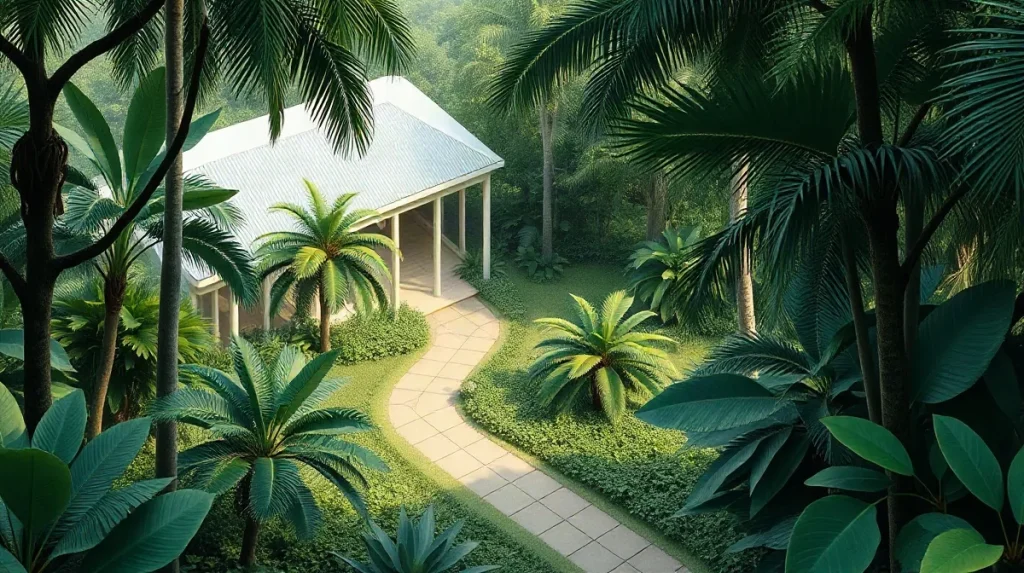
Inhotim, the contemporary art museum and botanical garden in Brumadinho, Brazil, is marking 20 years open to the public with record attendance and a program aimed at shaping its future beyond founder Bernardo Paz. The institution welcomed 365,000 visitors in 2025, its highest annual total, and says its next phase will combine new commissions with a reassessment of its collection and permanent galleries. Paz donated the site and its art to Inhotim in 2022 and is no longer involved in its operations.
A milestone and a change in leadership
Collector Bernardo Paz conceived Inhotim on a large scale, with artist-specific pavilions, monumental works and paths across 346 acres. The museum opened to the public in 2006, roughly 37 miles southeast of Belo Horizonte; since then, it has welcomed nearly 5 million visitors from around the world. Its current record of 365,000 annual visitors suggests that the destination has become a major draw well beyond its local setting.
Paz, a former mining magnate, funded acquisitions, large-scale projects and pavilions for more than a decade. A board established in 2012 took on decision-making, donations and fundraising; Paz stepped down as its chair in 2017. In 2022, he donated the institution, including its art and 140-hectare botanical garden. His departure has not meant an end to the founder’s presence in the area: he has announced plans for another museum next door, on land Inhotim had planned to use for expansion.
A distinct model for art and landscape
Inhotim now has 19 galleries displaying more than 900 works. Twelve spaces are permanently dedicated to individual artists, while seven host temporary exhibitions. The institution’s scale allows works to be made in close relation to architecture and landscape, rather than simply transferred into a conventional gallery setting.
Pavilions devoted to Yayoi Kusama, Adriana Varejão, Hélio Oiticica, Doug Aitken and Tunga are among the museum’s best-known features. Their immersive installations, monumental works and site-specific projects make the setting part of the experience. The model is also a local economic presence: nearly 70 percent of Inhotim’s staff live in Brumadinho, where the museum is one of the main employers alongside mining companies.
Anniversary exhibitions rooted in Brazil
Three exhibitions opened in April, connecting the anniversary program with Brazilian artists and the museum’s history. The largest is “Dupla Cura,” a survey of Dalton Paula curated by Beatriz Lemos. It brings together work dating from 1999 to the present across painting, installation, photography and video, addressing Black memory, Afro-Brazilian spirituality, childhood and healing.
Two other presentations use place and material to frame their subjects. Laís Myrrha’s outdoor work Contraplano is a concrete structure inspired by an Oscar Niemeyer building in Belo Horizonte, set within a landscape shaped by mining. In “Tororoma,” davi de jesus do nascimento draws on the São Francisco River, north of Inhotim, combining paintings, video, carved riverboat figureheads known as carrancas and roots cast from trees in his hometown of Pirapora.
Looking outward while revisiting the collection
Inhotim’s curatorial direction is broadening from a strong base in Brazilian art. Curator Deri Andrade has described a continuing commitment to Brazilian artists alongside increased attention to Latin America and a diverse program looking at the world more widely. The shift puts the museum’s regional identity in conversation with a wider international remit.
Andrade has also identified the collection itself as a priority: Inhotim holds fewer than 1,000 works, and the museum plans to reconsider both its holdings and permanent galleries, structurally as well as curatorially. The anniversary calendar continues on November 14 with “À Céu Aberto,” drawing on archival research and collection works, and the reopening of Janet Cardiff’s The Murder of Crows. New commissions remain central to the institution’s founding approach, but the next phase will also ask how existing works can be presented anew.
Building a sustainable next chapter
The transition away from founder-led operations has also changed how Inhotim sustains itself. Asked whether Paz’s departure had cost the museum sponsors, Andrade said it had instead begun raising money through cultural incentive laws at municipal, state and federal levels. The source material does not specify the amounts raised, but it makes clear that public incentive mechanisms now form part of the institution’s funding strategy.
The museum’s challenge is to maintain the qualities that made it distinctive while broadening its institutional base. Record attendance, a workforce closely tied to Brumadinho and a program spanning commissions, collection displays and Latin American art give that effort concrete foundations. Paz’s planned neighboring museum makes the separation visible; Inhotim’s board, funding approach and curatorial plans indicate that its future is being developed as an institution in its own right.
Takeaway: At 20, Inhotim is using record attendance and a renewed focus on its collection and commissions to define a future beyond Bernardo Paz.
