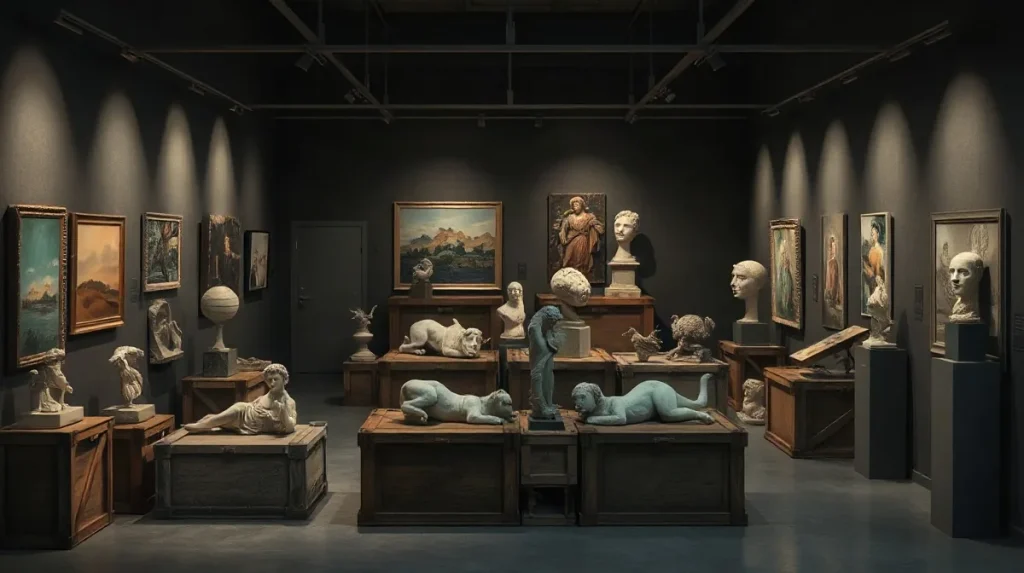
Why do museums keep masterpieces in storage rather than displaying them for the public to admire? This question reveals a surprising truth about the workings of art institutions around the world. Despite housing some of the most iconic works of art, museums often show only a fraction of their collections at any given time. The hidden logic behind this practice involves careful preservation, rotating exhibitions, and curatorial decisions aimed at protecting and contextualizing these cultural treasures.
Masterpieces are more than just beautiful objects; they are fragile artifacts that require controlled environments to prevent deterioration. Museums balance the desire to share art with the necessity of conservation, often limiting exposure to light, humidity, and handling. Furthermore, storage allows institutions to organize thematic or chronological displays, ensuring that artworks are presented in meaningful narratives rather than overwhelming visitors with sheer volume. Understanding why museums keep masterpieces in storage invites a deeper appreciation of the delicate stewardship that sustains our global artistic heritage.
| Factor | Display Considerations | Storage Considerations | Impact |
|---|---|---|---|
| Space | Limited gallery area (5%-10% collection shown) | Larger storage vaults with dense packing | Display limited by physical constraints; storage maximizes capacity |
| Conservation | Strict light and humidity controls, rotation to prevent damage | Stable, controlled environment for preservation | Display risks damage; storage ensures longevity |
| Curatorial Vision | Works selected to fit thematic narratives and visitor interest | Stored works await appropriate exhibition context | Display creates storylines; storage holds potential |
| Audience Engagement | Popular or interactive works prioritized for display | Digital catalogs improve access to stored pieces | Display drives attendance; storage supports scholarship |
| Cost | High renovation and maintenance expenses ($50M+) | Investment in climate control systems ($1-2M) | Budget impacts what can be exhibited or preserved |
- 5%-10% Percentage of museum collections typically on display
- $50 million Approximate cost of major museum expansion projects
- 50 lux Maximum light exposure for sensitive artworks
- 20°C and 50% humidity Standard environmental conditions for art storage
- 3 million Number of items in the State Hermitage Museum collection
What spatial and budget constraints limit museum display capacity?
Space limitations
Museums face significant spatial constraints that restrict the percentage of their collections on public display, often limiting exhibition capacity to just 5%-10% of total holdings. For example, the State Hermitage Museum in St. Petersburg, which houses over 3 million items, exhibits approximately 66,000 artworks at any given time, reflecting this typical ratio. Physical gallery space is finite and must accommodate not only artworks but also visitor circulation, lighting, and climate control systems necessary for preservation. Expanding exhibition areas is a complex undertaking, with renovation costs frequently surpassing $50 million, resulting in lengthy project timelines and delayed opportunities to showcase more of the collection. The need to balance storage, conservation, and display means many masterpieces remain in storage until suitable conditions or resources allow their rotation into the galleries.
Financial constraints
Budgetary factors further limit museums’ ability to increase display capacity, as exhibition-related expenses commonly consume 30%-40% of annual operating budgets. These costs include staffing for curatorial and conservation work, installation, security, and environmental controls essential for protecting sensitive artworks. Given the high financial threshold for expanding or upgrading exhibition spaces—often exceeding tens of millions of dollars—many institutions prioritize maintaining existing galleries rather than expanding them. Financial pressures also influence decisions about which pieces to display, favoring works that maximize visitor engagement and institutional prestige within constrained budgets.
- Exhibition space expansion costs: typically over $50 million
- Percentage of collection displayed: generally 5%-10%
- Annual display-related budget share: 30%-40% of operating expenses
- Example institution: State Hermitage Museum—3 million items total, ~66,000 exhibited
How do conservation needs influence which artworks are displayed or stored?
Environmental controls
Conservation needs significantly shape whether artworks are displayed or stored, as many fragile pieces demand strictly regulated environments to prevent deterioration. For example, works on paper and textiles require stable conditions around 50% relative humidity and a temperature near 20°C to preserve their integrity. Sensitive pigments on these pieces limit light exposure to a maximum of 50 lux, far below typical gallery lighting, which forces museums to rotate such works in and out of display to minimize fading and damage. Institutions like the Metropolitan Museum of Art allocate over $5 million annually toward preventive conservation measures, including climate control systems and specialized storage facilities designed to maintain these precise thresholds. Without these controls, masterpieces risk irreversible harm, making storage a safer option until exhibition conditions can be optimized.
Restoration priorities
Restoration efforts also dictate whether artworks remain in storage for extended periods, sometimes spanning decades. Museums prioritize pieces based on their condition and the availability of appropriate restoration technology or expertise. Some masterpieces are held back from public view while awaiting treatment that can stabilize or repair them, or until environmental standards in galleries improve to levels that ensure their long-term preservation. This approach reflects a strategic balance between public access and the artwork’s physical survival.
- Relative humidity is maintained at 50%
- Temperature is controlled at approximately 20°C
- Light exposure is limited to 50 lux for delicate pigments
- The Metropolitan Museum of Art’s conservation budget exceeds $5 million annually
By adhering to these criteria, museums protect their collections against degradation during storage, enabling future generations to experience these cultural treasures under optimal conditions.
What role does curatorial vision play in selecting artworks for public exhibition?
Narrative coherence
Curatorial vision plays a crucial role in selecting artworks for public exhibition by shaping narratives that resonate with contemporary themes and institutional goals. For example, the Tate Modern rotates about 1,000 works annually, carefully choosing pieces that maintain thematic coherence and reflect current cultural conversations. Curators prioritize artworks that support specific narratives, such as exhibitions aligned with cultural anniversaries or thematic explorations like post-war abstraction or feminist art movements. This selective approach ensures that temporary exhibitions can draw up to 30% of their displayed works from storage, thereby renewing public engagement and offering fresh perspectives on the museum’s vast holdings.
Long-term planning
Effective exhibition planning demands foresight, often extending 2 to 3 years ahead, to coordinate artwork loans, conservation needs, and installation logistics. Museums like the Tate Modern must balance the readiness of masterpieces for display with preservation standards, scheduling exhibitions to coincide with ideal environmental and conservation conditions. Curators weigh factors such as loan agreements’ duration and conservation thresholds—like acceptable light exposure levels or humidity ranges—to decide when and which artworks can be brought out of storage. This long-term strategy enables museums to optimize limited display space while ensuring masterpieces are exhibited under conditions that safeguard their longevity.
- Tate Modern: rotates approximately 1,000 artworks annually
- Temporary exhibitions: up to 30% of displayed works sourced from storage
- Exhibition planning horizon: typically 2–3 years in advance
- Conservation criteria: environmental thresholds for light and humidity to protect artworks
How does audience engagement impact display decisions?
Visitor preferences
Museum display decisions are strongly influenced by audience engagement data, with institutions prioritizing works that consistently attract large visitor percentages. For example, Picasso’s paintings regularly draw between 20% and 25% of visitors in major exhibitions, prompting museums to feature his work prominently. This visitor concentration means some masterpieces are rotated out of galleries to make room for artists with proven drawing power, balancing crowd appeal with collection diversity. Seasonal shifts in audience interests also lead curators to adjust displays, alternating blockbuster shows with lesser-known artists to maintain visitor interest throughout the year.
Technological outreach
Museums like Moscow’s Pushkin State Museum have embraced digital catalogs to boost visibility of stored artworks, allowing the public to explore pieces not currently on physical display. However, integrating interactive or multimedia installations—which often require dedicated space and advanced equipment—reduces the area available for traditional paintings. This spatial trade-off compels curators to make strategic choices, balancing digital engagement tools with the physical presence of masterpieces. For instance, allocating gallery space for immersive exhibits might limit the number of paintings exhibited from a collection exceeding 10,000 works.
- Picasso’s works draw 20%-25% of visitors in featured exhibitions
- Pushkin Museum’s digital catalog increases access to stored pieces
- Multimedia installations require dedicated space, reducing room for traditional displays
- Seasonal audience trends influence exhibition rotations to balance blockbuster and niche shows
When do museums choose to keep masterpieces in storage, and what are the trade-offs?
Protection versus access
Museums choose to keep masterpieces in storage primarily to protect them from environmental degradation while managing limited exhibition space. For instance, advanced climate control systems like those from the company Munters, which can cost between $1 million and $2 million per facility, maintain stable temperature and humidity levels critical to preservation. However, this protective approach limits public access and scholarly study, as many works remain unseen for years. Critics argue that prolonged storage diminishes a piece’s cultural impact and reduces public awareness, counterbalancing the benefits of conservation. The Louvre’s experience illustrates this trade-off: a reported 15% increase in minor damage incidents occurred in their poorly ventilated vaults, underscoring the necessity of proper storage conditions even when works are not on display.
Storage facility challenges
Overcrowding in storage spaces poses significant risks to the safety of artworks. Museums often face budget constraints that prevent expanding or upgrading storage facilities, leading to cramped conditions where accidental damage is more likely. The Louvre’s data on increased damage incidents highlights the consequences of inadequate ventilation and overcrowding. Balancing display needs with preservation requires not only expensive climate control but also strict adherence to standards such as those outlined in the American Institute for Conservation’s (AIC) environmental guidelines, which set thresholds for temperature at 20±2°C and relative humidity at 50±5%. Museums must weigh these factors when deciding which pieces to exhibit or store, often prioritizing works that can handle exposure without compromising long-term integrity.
- Climate system cost per storage facility: $1–2 million (Munters models)
- Temperature threshold for artwork preservation: 20±2°C (AIC guidelines)
- Relative humidity threshold: 50±5% (AIC guidelines)
- Louvre’s increase in minor damage incidents in storage: 15%
Frequently asked questions
Why can’t museums just display all their artworks at once?
How often do museums rotate their displayed artworks?
What environmental controls are essential for artwork preservation in storage?
How do museums decide which artworks to include in special exhibitions?
Does storing artworks affect public engagement negatively?
Key takeaways
- Only 5%-10% of museum collections are displayed due to space and budget limits
- Conservation standards mandate strict environmental controls, influencing display rotations
- Curatorial planning aligns artworks with thematic narratives years in advance
- Audience data guides which masterpieces receive prime exhibition placement
- Storage protects art but reduces public and scholarly access, demanding costly facilities
Sources
- wsj.com — “After 30 Years and $100000, I Finally Let Go of My Storage”
- The New York Times — “I Think Someone Is Living in the Storage Unit Next to Mine”
- PNNL — “Grid Storage Launchpad”