When museums loan artworks, the process is far more complex than simply packing a painting into a crate and shipping it off. Behind the scenes, a meticulous choreography unfolds, involving curators, conservators, registrars, and logistics experts working together to ensure that priceless pieces travel safely and arrive in pristine condition. This intricate collaboration balances the artwork’s preservation with the desire to share cultural treasures beyond their home institutions.
What really happens behind the scenes when museums loan artworks reveals a world of detailed planning, risk assessment, and specialized care. From climate-controlled transport to rigorous security measures, every step is designed to protect the art while enabling audiences worldwide to experience masterpieces that would otherwise remain out of reach. Understanding this process sheds light on the unseen efforts that make traveling exhibitions possible and highlights the dedication museums have to both their collections and the public.
| Role | Primary Responsibility | Typical Time Spent | Key Tools/Standards |
|---|---|---|---|
| Art Technician | Packing, installation, condition reports | Up to 20 hours per item | Museum-grade crates, environmental monitoring devices |
| Conservator | Pre-shipment stabilization and treatment | Several weeks if needed | Conservation labs, scientific analysis tools |
| Registrar | Documentation, loan coordination | Ongoing throughout loan process | ICOM loan agreements, digital tracking systems |
| Courier | On-site handling and transit supervision | Duration of transit (2-10 days) | Specialized transport vehicles, handling protocols |
- 45-55% Optimal relative humidity range maintained during art transport
- 20 hours Average technician preparation time per loaned artwork (Hull Museums estimate)
- $1 million+ Typical insurance coverage value for high-profile artwork loans
- 2-10 days Common transit time range for international art shipments
How are artworks physically prepared and transported between museums?
Packing and Crating
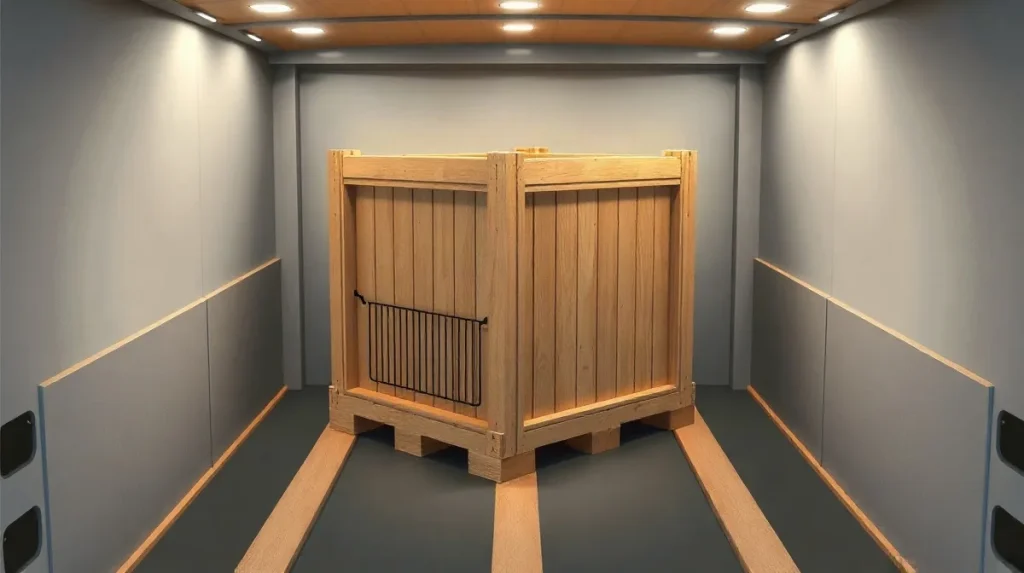
Artworks are physically prepared for transport by being secured inside museum-grade crates specifically designed to maintain environmental stability and protect against physical shocks. These crates are lined with foam cushioning and include climate control materials that keep relative humidity consistently within a 45-55% range, critical for preserving sensitive surfaces and preventing warping or mold growth. For example, the widely used Goppion crates incorporate microclimate technology to regulate temperature and moisture levels. The overall packing process can take several days, factoring in the need for custom crate fabrication and thorough condition reporting before shipment.
Transport Vehicles and Courier Roles
Specialized art shipping companies, such as Fine Art Shippers, employ vehicles outfitted with advanced suspension systems and GPS tracking to ensure smooth transit and real-time monitoring. These vehicles minimize vibrations and sudden jolts that could damage delicate artworks. Transit durations typically range from 2 to 10 days depending on the distance and customs procedures involved. For extremely valuable or fragile pieces, museums often assign a dedicated courier who accompanies the shipment throughout the journey, overseeing handling and verifying environmental conditions at every stage. This human presence adds an extra layer of security and immediate response capability if any issues arise during transport.
- Relative humidity range in crates: 45-55%
- Typical transit time: 2–10 days
- Specialized shipper example: Fine Art Shippers
- Crate model example: Goppion microclimate crates
- Vehicles feature: shock-absorbing suspension and GPS tracking
What legal and contractual frameworks govern these art loans?
Loan Agreements
Art loans are governed primarily by detailed loan agreements that outline strict conditions including insurance coverage, environmental controls, and exhibition schedules. These contracts enable museums to decline loans if the borrowing institution cannot meet specified standards. Many museums adopt standardized templates such as the International Council of Museums (ICOM) loan agreement forms, which were last updated in 2025 to reflect contemporary best practices. These agreements typically require borrowers to maintain temperature and humidity levels within narrow limits—for example, 20–22°C and 45–55% relative humidity—to protect sensitive works. Exhibition periods are also defined precisely, often ranging from a minimum of 30 days to a maximum of 180 days, ensuring the artwork’s safe and manageable circulation.
Insurance and Legal Compliance
Insurance arrangements for loaned artworks vary widely but commonly cover values from $500,000 to over $10 million per piece, depending on appraised worth. Coverage extends to risks during transit and display, with specialized art insurers providing policies tailored to these needs. Additionally, loans must comply with international laws such as the Convention on International Trade in Endangered Species of Wild Fauna and Flora (CITES) when relevant, particularly for natural history objects involving ivory or rare materials. Export and import licenses are mandatory, requiring museums to coordinate closely with customs authorities to avoid delays. This regulatory framework ensures artworks cross borders lawfully and remain protected throughout their journey.
- ICOM loan agreement templates updated in 2025
- Exhibition timeline typically between 30 and 180 days
- Environmental standards: 20–22°C temperature, 45–55% humidity
- Insurance coverage ranging from $500,000 to $10 million+
- Compliance with CITES and export/import licenses
Who are the specialists involved behind the scenes, and what roles do they play?
Technicians and Conservators
Art technicians and conservators are essential specialists who ensure the safety and integrity of artworks during loans. Technicians at Hull Museums, for example, dedicate up to 20 hours per loan item on tasks such as condition reporting, custom packing, precise installation, and careful deinstallation. Their work includes selecting museum-grade materials like Ethafoam padding and acid-free tissue to shield objects from vibration and environmental damage. Conservators conduct thorough assessments and stabilization treatments that can last several weeks before shipment; these treatments may involve consolidating fragile paint layers or controlling humidity levels to meet the strict standards set by the American Institute for Conservation (AIC) guidelines.
Registrars and Couriers
Registrars manage the complex documentation and logistics that underpin every loan, coordinating with lending and borrowing institutions to ensure compliance with international legal frameworks such as the UNESCO 1970 Convention. They track loan status meticulously, handle customs paperwork, and verify insurance coverage that often ranges from $100,000 to multi-million-dollar valuations per artwork. Specialized couriers, employed by companies like Fine Art Shippers or Crozier, accompany high-value shipments personally. These couriers adhere to rigorous handling protocols, including temperature-controlled vehicle transport and 24/7 supervision, to safeguard artworks worth millions throughout the journey.
- Technicians spend up to 20 hours preparing each loan piece (Hull Museums).
- Conservation treatments can extend over several weeks (AIC standards).
- Insurance coverage commonly exceeds $100,000 per artwork.
- Couriers provide continuous supervision during transport of multi-million-dollar pieces.
- Loan agreements comply with UNESCO 1970 Convention and international customs laws.
What are the common challenges and limitations museums face in loaning artworks?
Fragility and Risk
Museums face significant challenges in loaning artworks due to the fragility of many pieces and the risks involved during transport and display. Extremely delicate works, such as 17th-century oil paintings on fragile wood panels or early Soviet avant-garde paper collages, often cannot be loaned unless transport conditions meet stringent standards. For instance, the use of museum-grade shock-absorbing crates, like those manufactured by Artlogistics Ltd., is mandatory to minimize vibration damage. Additionally, fragile objects traveling internationally frequently require a dedicated museum courier to oversee environmental controls—temperature must be maintained within ±2°C and relative humidity within 45-55% throughout transit, monitored by devices like the Sensitech Solo Logger. Failure to maintain these parameters can lead to irreversible damage, so institutions often refuse loans if these cannot be guaranteed. This necessity sharply limits the circulation of delicate artworks, especially those vulnerable to light exposure or microclimatic fluctuations.
Costs and Regulatory Hurdles
High insurance premiums and complex legal requirements are another major barrier restricting loans primarily to well-funded institutions. Insurance costs alone can range from $50,000 to over $200,000 per loan depending on artwork value and transit route, often pricing out smaller museums. Furthermore, navigating customs regulations—such as compliance with the 1970 UNESCO Convention on cultural property—often adds weeks to transit times due to mandatory import/export certificates and inspections. For example, loans between Russia and EU countries must adhere to specific export licenses and CITES documentation for certain materials, which can cause unpredictable delays of two to four weeks. Environmental control systems during exhibition, including HVAC units calibrated to meet ISO 11799 standards for museum storage, must also be rigorously maintained, incurring additional operational costs. These factors combine to make artwork loans a costly and logistically complex endeavor, feasible mainly for major institutions with dedicated conservation and legal departments.
- Temperature control threshold: ±2°C during transport
- Relative humidity range: 45-55%
- Insurance cost range: $50,000–$200,000 per loan
- Customs transit delays: 14–28 days for international loans
- Compliance standards: ISO 11799 for environmental controls
Why are art loans crucial despite these challenges?
Cultural and Educational Benefits
Art loans are essential because they enable museums worldwide to share masterpieces that might otherwise remain locked within a single institution’s collection. For instance, in 2026, the Hermitage Museum in Saint Petersburg loaned over 50 works by Russian avant-garde artists to the Tate Modern, allowing diverse audiences to engage with this pivotal movement firsthand. These loans underpin thematic exhibitions, such as the National Gallery’s 2026 “Revolution and Identity” show, which contextualized over 40 loaned paintings from Eastern European collections, enriching public understanding and academic discourse. By avoiding permanent acquisitions—often costing upwards of $1 million per major artwork—museums optimize limited gallery space and budgetary constraints, while enhancing visitor experience with fresh narratives and perspectives.
Institutional Collaboration
Beyond public access, art loans foster vital institutional partnerships that advance research and shared expertise. Negotiations for loans typically involve adherence to international standards, like the 2023 ICOM Code of Ethics, ensuring artworks’ safety and provenance transparency. For example, the Pushkin State Museum of Fine Arts and the Museum of Modern Art in New York formalized a joint research project on conservation methods after their 2026 loan exchange featuring over 30 works. These collaborations often extend over years, facilitating knowledge exchange and sometimes leading to co-published catalogues or conservation grants exceeding $250,000. Thus, loans serve as a cornerstone for both cultural diplomacy and the scholarly ecosystem.
- Loaned artworks in 2026 ranged from small paintings (under 5 kg) to large-scale sculptures requiring climate-controlled crates costing up to $15,000 each.
- Typical loan durations vary from 3 months to over 1 year, with some agreements stipulating a minimum 60-day transit inspection period.
- Institutions must comply with international transport protocols, such as CITES for protected materials, to secure loan approval.
Frequently asked questions
How long does a typical museum art loan last?
What happens if an artwork is damaged during transit?
Are all types of artworks eligible for loan?
Who pays for the shipping and insurance costs in art loans?
Key takeaways
- Museum-grade packing and climate control are essential to protect artworks during transit.
- Loan agreements ensure rigorous legal and insurance safeguards for both lenders and borrowers.
- Specialists like conservators, registrars, and couriers are crucial to the success of art loans.
- High costs and regulatory issues limit the frequency and scope of loans.
- Art loans enrich global cultural dialogue and foster institutional collaborations.
Sources
- fineartshippers.com — “How Museums Transport Artworks Safely: A Guide on Logistics”
- Hull Museums and Galleries — “Behind the Scenes: From a Technician’s Perspective”
- Royal Museums Greenwich — “Art and culture”
- drpaulmccarthy.com — “The Hidden Struggles of Football Loan Players: What Really Happens Behind the Scenes”
- bluefieldgroup.com — “What Happens Behind the Scenes During Mortgage Underwriting”