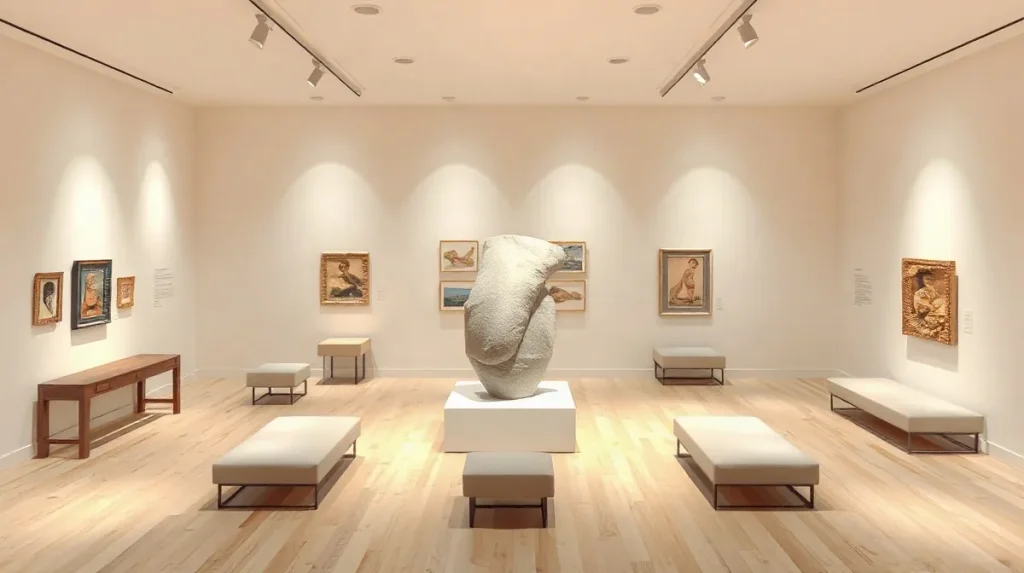
Installation views fundamentally shape the spatial experience of sculpture exhibitions by directing how viewers navigate, perceive scale, and engage with artworks in three-dimensional space. The arrangement, lighting, and contextual elements within the exhibition environment transform static sculptures into dynamic encounters that influence emotional and intellectual responses.
Understanding how installation views affect the presentation of sculpture reveals the curatorial strategies behind spatial storytelling. Rather than merely displaying objects, these views orchestrate a dialogue between the artwork, the surrounding architecture, and the audience’s movement. This interaction enhances the meaning and impact of sculptures, making the spatial experience a crucial component of contemporary exhibitions.
Exploring the role of installation views in shaping sculpture exhibitions uncovers the subtle yet powerful ways space influences art perception. It highlights how curators and artists collaborate to create immersive environments that challenge traditional notions of viewing sculpture, inviting visitors to experience form, texture, and volume from multiple perspectives.
| Element | Purpose | Typical Specification | Example |
|---|---|---|---|
| Scale Reference | Conveys size and spatial relationships | Human figure or measuring marker | Venice Biennale 2024 installation photos |
| Lighting | Highlights material and form | 300–500 lux LED lighting | ARRI SkyPanel S60-C at Guggenheim 2025 |
| Photographic Resolution | Captures fine surface details | At least 24 MP; Canon EOS R5 (45 MP) | Museum of Modern Art archives |
| Path Width | Ensures visitor circulation | Minimum 2.5 meters wide | Guggenheim New York 2025 sculpture show |
| Ceiling Height | Accommodates large works and lighting | 3–5 meters | Tate Modern Turbine Hall installations |
- 2 meters Diameter of Anish Kapoor’s 'Descension' whirlpool at Tate Modern
- 300–500 lux Typical gallery lighting intensity for sculpture exhibitions
- $4,500 Price of professional ARRI SkyPanel S60-C LED light used in gallery lighting
- 3–6 months Typical duration of sculpture exhibitions
- 45 megapixels Resolution of Canon EOS R5 camera commonly used for installation photography
What is an installation view and why does it matter in sculpture exhibitions?
Definition and Historical Context
An installation view is a photographic or visual record capturing the placement and spatial arrangement of sculptures within an exhibition setting, including the impact of lighting and architectural features. This concept became prominent in exhibition catalogues starting in the 1970s, coinciding with the rise of large-scale installations as a defining element of contemporary sculpture. Major institutions such as MoMA in New York and Tate Modern in London routinely produce installation views for exhibitions featuring artists like Richard Serra and Anish Kapoor, whose works often engage dynamically with the surrounding space.
Purpose in Documentation and Interpretation
Installation views serve dual roles as archival records and interpretive aids by illustrating spatial relationships and scale between sculptures and their environment. They enable curators, scholars, and audiences to understand how positioning influences perception and meaning. For example, Serra’s monumental steel works demand precise spatial context to convey their physical and emotional impact, which installation views help preserve beyond the exhibition’s temporary presence. These images also guide future presentations and scholarly analysis, providing a visual standard for comparing different exhibition strategies.
- MoMA and Tate Modern regularly archive installation views for exhibitions with sculptures exceeding 3 meters in height or occupying over 100 square meters of floor space.
- Installation views typically document lighting conditions, often including spotlights of 500 lux or more to highlight material textures and volume.
How do installation views help audiences experience sculptural works?
Installation views help audiences experience sculptural works by providing visual context that clarifies scale, spatial arrangement, and material qualities, enabling deeper understanding and appreciation beyond the physical exhibit. They also extend accessibility to remote viewers after exhibitions close, bridging temporal and geographic gaps.
Scale and Spatial Relationships
Installation views offer crucial visual cues about the size and positioning of sculptures within their exhibition space. For instance, Anish Kapoor’s 2016 Tate Modern installation ‘Descension’ featured a 2-meter diameter whirlpool, a detail made evident through contextual photographs that communicate its immersive scale. Similarly, the 2024 Venice Biennale’s central pavilion displayed multiple works spaced between 1.5 and 4 meters apart, revealing the intended dialogue and tension among sculptures. This spatial information aids audiences in grasping how artworks interact physically, influencing movement and perception within the gallery.
Lighting and Material Perception
Installation views also guide viewers by showcasing how lighting and perspective affect the appearance of materials. For example, images highlighting bronze sculptures under soft lighting emphasize patinas’ subtle textures, while polished steel surfaces reflect surrounding light differently depending on angle. These visual cues help audiences appreciate the nuanced surface qualities that are often altered by exhibition lighting setups. Furthermore, installation photographs serve remote audiences, providing access to exhibitions that typically last between 3 and 6 months, thus prolonging engagement beyond the physical event.
- Anish Kapoor’s ‘Descension’ (2016 Tate Modern): 2-meter diameter whirlpool
- 2024 Venice Biennale central pavilion: sculpture distances from 1.5 to 4 meters
- Typical exhibition duration: 3–6 months, facilitating post-show remote viewing
How do curators use installation views in planning and presenting sculpture exhibitions?
Curators use installation views as essential tools to strategically plan visitor circulation and spatial arrangement, ensuring safe movement and optimal viewing experiences in sculpture exhibitions. For instance, the Guggenheim New York’s 2025 sculpture show utilized installation plans featuring 2.5-meter wide pathways to accommodate visitor flow and prevent congestion around up to 20 sculptures.
Visitor Flow and Sightline Planning
Installation views enable curators to assess sightlines meticulously, avoiding visual interference between sculptures that might disrupt appreciation of individual works. This is especially crucial in exhibitions hosting multiple large-scale pieces, where overlapping perspectives can diminish impact. The Guggenheim’s 2025 show exemplified this by spacing sculptures to maintain clear sightlines, balancing proximity with distinct visual fields.
- Path width: 2.5 meters, as applied in the Guggenheim 2025 exhibition
- Maximum sculptures per exhibition: approximately 20, requiring detailed spatial coordination
Lighting Design and Documentation
Installation photographs play a vital role in documenting lighting setups, which often feature professional LED systems such as the ARRI SkyPanel S60-C, retailing around $4,500 per unit in 2026. These images assist curators in replicating optimal lighting conditions and serve as valuable assets for marketing campaigns and digital archives that extend the exhibition’s reach beyond physical attendance.
When do installation views fail to fully capture the sculptural experience?
Limitations of Photography
Installation views often fail to fully capture the sculptural experience because photographic images reduce three-dimensional works to flat, two-dimensional representations, distorting scale and spatial relationships. For example, wide-angle lenses commonly used in gallery photography can exaggerate proximity and alter the perceived size of sculptures, misleading viewers about the true spatial dynamics. Additionally, the lighting conditions in photographs rarely match in-person viewing; typical gallery lighting standards hover around 300–500 lux, yet photos may use artificial or flash lighting that misrepresents surface qualities like glossiness or translucence, critical to understanding materials.
- Wide-angle lenses with focal lengths under 24mm often exaggerate depth and scale in installation photography.
- Standard gallery illumination ranges from 300 to 500 lux, but photographic lighting may exceed this, altering visual texture.
Loss of Tactile and Interactive Elements
Photographs cannot convey the tactile and interactive dimensions integral to many sculptures, resulting in a diminished sensory experience. Dynamic or kinetic sculptures that rely on movement or viewer interaction lose essential aspects when reduced to static images. The inability to perceive texture by touch or experience scale through bodily presence means that installation views omit fundamental perceptual information, especially in works where materiality or motion is central.
- Interactive sculptures requiring viewer participation cannot be experienced through fixed images.
- Material properties such as translucence or surface texture are often misunderstood without direct sensory engagement.
What technical standards or practices guide the creation of installation views?
Photography Equipment and Resolution
Professional installation views rely on high-resolution cameras to accurately capture the spatial relationships and details of sculptures within exhibition spaces. In 2026, photographers commonly use models like the Canon EOS R5, which offers a 45-megapixel sensor, surpassing the baseline standard of 24 megapixels necessary for museum-quality documentation. Such resolution ensures that textures, shadows, and intricate sculptural forms are sharply rendered in images intended for publication or archival purposes.
Lighting and Scale References
Lighting standards for installation views prioritize both preservation and faithful color representation, with gallery illumination typically maintained between 300 and 500 lux. This range balances artifact safety and visual clarity, crucial for conveying the sculptural work’s true appearance. To provide viewers with a spatial context, installation views incorporate scale references such as human figures or measurement markers, especially important given that typical exhibition ceilings range from 3 to 5 meters in height. Documentation follows protocols aligned with the International Council of Museums (ICOM) guidelines, standardized since 2019, to ensure consistent and reliable presentation of spatial experience across institutions.
- Camera resolution threshold: minimum 24 megapixels, with Canon EOS R5 at 45 MP
- Gallery lighting standard: 300–500 lux
- Exhibition ceiling height: typically 3–5 meters
- Documentation standards: ICOM guidelines, standardized since 2019
Frequently asked questions
Why do installation views matter more for sculpture than for painting?
Can installation views replace visiting a sculpture exhibition in person?
How long do sculpture exhibitions typically last, influencing installation view relevance?
Key takeaways
- Installation views document spatial relationships critical to sculpture interpretation.
- Lighting and scale references in views guide audience perception remotely.
- Curators use installation views to plan visitor flow and sightlines.
- Photographic limitations mean installation views complement but don’t replace in-person experience.
- Standardized photographic and lighting protocols ensure consistent documentation.