Painting Restored to Heir After Eight Years of Claims
The Bavarian State Painting Collections in Munich officially returned the 1892 painting Music (Arcadian Scene) by Albert Lang to Paul Laporte, great-grandson of the original Jewish owner Sofie Heilbronner, on September 22, 2026. The artwork had been lost since 1938 when Heilbronner fled Nazi Germany, and its restitution marks a significant rectification of a historical injustice.
The ceremony took place at the German Embassy in Washington, DC, highlighting international cooperation in addressing Nazi-era art restitution. The painting had been held by the Munich museum after being discovered in a former Army barracks warehouse, identified as looted but without clear provenance documentation until Laporte’s efforts.
Background of the Artwork and Forced Loss
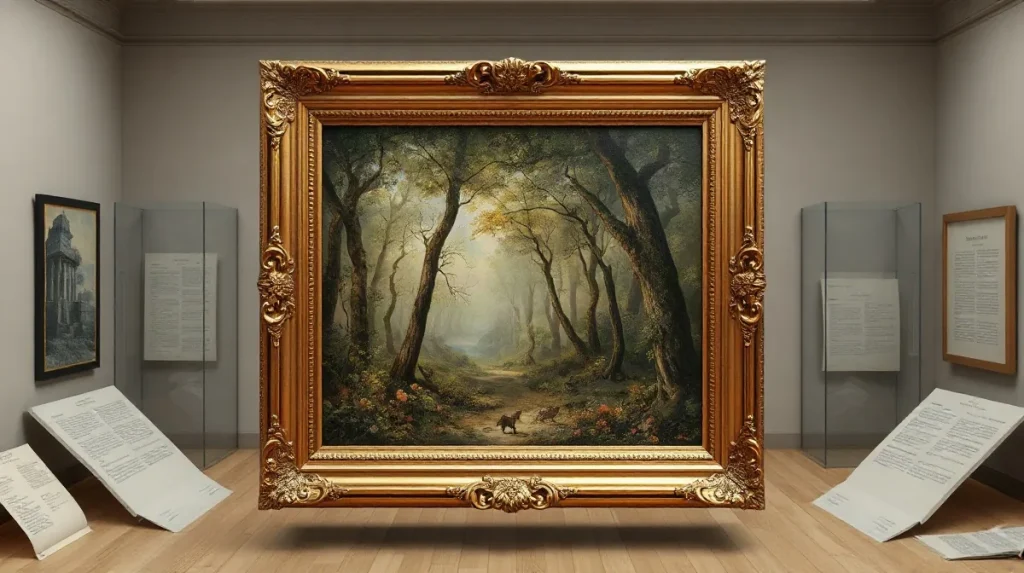
Music (Arcadian Scene) is a gold-framed bacchanalian scene depicting a nude reclining figure surrounded by musicians in a forest, painted by German artist Albert Lang in 1892. Sofie Heilbronner, a well-to-do Jewish collector in Munich, had prepared to sell her artworks in New York before fleeing Germany in 1938 due to Nazi persecution.
Instead of sale, the German government seized her collection, auctioning off pieces including Lang’s painting. The artwork eventually entered public collections without acknowledgement of its forced loss. The seizure reflects the broader pattern of Nazi confiscation of Jewish property during that period.
Research and Recovery Process
Paul Laporte spent eight years tracing the painting’s history, beginning with records from the Heinemann Gallery in Munich, which had appraised but declined to purchase the artwork. Digital archives played a crucial role in uncovering the painting’s journey, culminating in its location within the Bavarian State Painting Collections.
Shipping the painting from Munich to Laporte’s home in Maryland cost approximately $3,000. Though the style does not personally appeal to him, Laporte regards the painting as a vital link to his family’s heritage and pre-Holocaust life in Germany.
Significance of the Restitution
Laporte described the return as correcting a longstanding historical wrong and restoring an important piece of family heritage. He emphasized that the painting serves as a tangible witness to the family’s life before persecution and displacement caused by the Holocaust.
The restitution was made possible through the diligence of museum officials and international restitution frameworks that aim to identify and return looted art. This case exemplifies ongoing efforts to reconcile cultural losses stemming from Nazi crimes.
Broader Context and Implications
The return of Music (Arcadian Scene) highlights the continuing importance of provenance research in museums worldwide, especially regarding artworks with complex histories from the Nazi era. Institutions like the Bavarian State Painting Collections have increasingly committed resources to identifying looted art and restoring it to rightful heirs.
This restitution also underscores the lasting impact of Nazi-era confiscations on families and cultural heritage. It illustrates how recovered artworks can serve as historical witnesses and help heal generational trauma by reconnecting descendants with lost legacies.
Takeaway: The return of Albert Lang’s painting to Paul Laporte restores a stolen family legacy and exemplifies ongoing global efforts to address Nazi-era art looting.