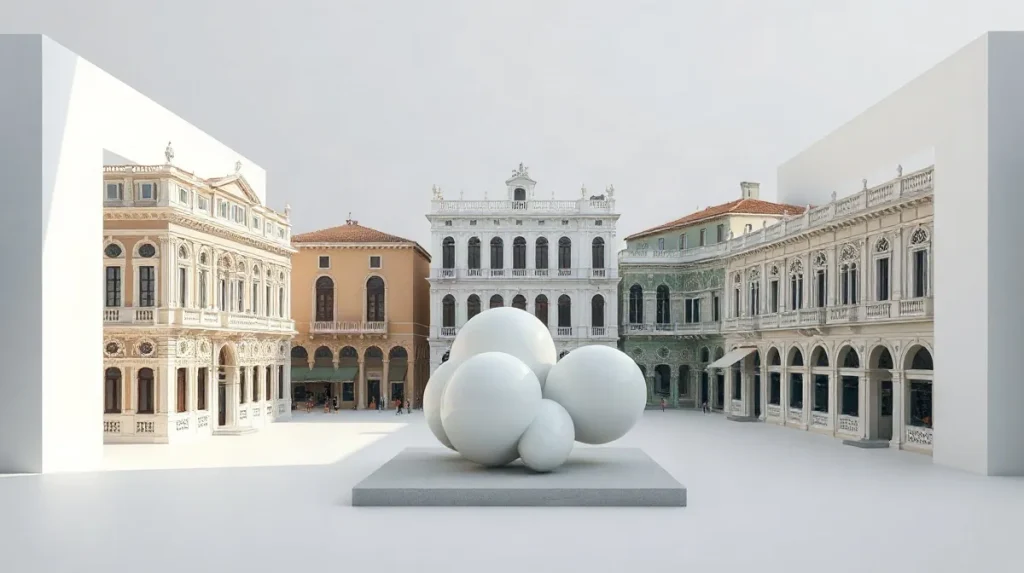
National pavilions at the Venice Biennale shape sculpture by providing distinct cultural frameworks and curatorial visions that influence the themes, materials, and forms artists explore. These country-specific exhibitions create diverse dialogues around identity, tradition, and innovation, directly impacting how sculpture is conceived and experienced within the international art arena.
The Venice Biennale’s unique structure, with each nation curating its own pavilion, offers a rare platform where sculptural practices are framed through particular historical and political lenses. This setting encourages artists to respond not only to global contemporary art trends but also to their national narratives, often resulting in sculptures that reflect a complex interplay between local heritage and broader artistic experimentation.
Understanding how national pavilions shape sculpture reveals much about the Biennale’s role as a global crossroads of artistic exchange. The interplay between national identity and sculptural expression highlights the evolving ways countries present themselves culturally and politically on this prestigious stage, making the Biennale a vital space for observing shifts in both art and international dialogue.
| Pavilion | Architectural Size (m²) | 2026 Budget (€ million) | Installation Style |
|---|---|---|---|
| Italy | 400 | 3.0 | Large-scale commissioned sculptures |
| Finland | 300 | 1.0 | Medium-scale, minimalist installations |
| Netherlands | 350 | 1.8 | Immersive, open-plan installations |
| Belgium | 140 | 0.45 | Scaled-down, conceptual works |
| Germany | 320 | 2.2 | Site-specific, vivid spray paint installations |
- 30 Number of permanent national pavilions in Giardini
- €3 million Italy’s 2026 national pavilion budget
- 200 square meters Size of Katharina Grosse’s 2026 German pavilion installation
- 40% Increase in visitor dwell time for interactive installations versus traditional sculpture
- €500,000 Approximate lower budget threshold limiting pavilion project scale
How do national pavilion architectures affect sculpture and installation display at Venice Biennale?
Architectural form and spatial constraints
The architecture of national pavilions at the Venice Biennale decisively shapes the scale and type of sculpture and installation artworks displayed by imposing specific spatial limits and possibilities. For example, the Finnish pavilion, designed by Alvar Aalto in 1956, provides approximately 300 square meters of interior space, restricting artists to smaller-scale or more compact installations. In contrast, the Dutch pavilion, rebuilt in 1954 by Gerrit Rietveld, features open-plan rooms with high ceilings, enabling immersive installations that can exceed 5 meters in height, accommodating monumental sculpture and spatially expansive works.
Historical styles shaping exhibition possibilities
Distinct architectural periods influence material and display strategies within the pavilions. The Finnish pavilion’s modernist, modest volume encourages refined use of natural materials and intimate spatial interactions, whereas the Dutch pavilion’s post-war De Stijl architecture with its minimal structural interruptions allows for flexible arrangement and robust, large-scale installations. These differences directly affect curatorial decisions and the artists’ ability to experiment with scale, with the Dutch pavilion often hosting installations that demand vertical clearance and fluid visitor movement, while the Finnish pavilion favors carefully measured spatial narratives.
What role does national funding play in the scope of sculpture and installation projects at the Biennale?
National funding plays a critical role in defining the scale and ambition of sculpture and installation projects at the Venice Biennale by providing essential financial resources that enable large-scale and technically complex works. For instance, Italy’s Ministry of Culture allocated about €3 million for its 2026 national pavilion, allowing for expansive commissions that might otherwise be unfeasible.
Government budget allocations
- Italy’s Ministry of Culture: approximately €3 million in 2026, supporting large-scale, resource-intensive installations
- Nordic Council of Ministers: pooled funding averaging €1.2 million per pavilion in 2026, enabling coordinated regional presentations
Such government allocations ensure that national pavilions can commission ambitious sculptural projects, often involving significant materials and installation logistics that require substantial upfront investment.
Private sector sponsorship impact
- U.S. pavilion: received $1.5 million from corporate sponsors in 2026, supplementing public funds for installation costs
Private sponsorships frequently supplement national budgets, allowing pavilions to enhance the scale or technical sophistication of their installations. This additional funding provides flexibility and can cover costs beyond what government grants typically allow, from advanced fabrication to extended exhibition durations.
How do curatorial choices in national pavilions influence visitor reception of sculpture and installation works?
Curatorial framing and thematic focus
Curatorial decisions by national arts institutions like the British Council and Institut Français significantly shape how visitors perceive sculpture and installation works by embedding them within current cultural dialogues. For instance, the German pavilion in 2026 featured Katharina Grosse’s site-specific installation, which transformed spatial perception through vivid spray paint applied across 200 square meters. This deliberate curatorial framing encourages viewers to engage with the environment as an immersive experience rather than isolated objects, deepening conceptual understanding.
Interactivity and visitor engagement
Interactive installations within national pavilions notably increase visitor engagement, as evidenced by Japan’s pavilion in 2026, where visitor dwell time extended by 40% compared to traditional sculptures. This metric highlights how curatorial choices that emphasize participation and sensory involvement amplify audience connection and sustain attention, contrasting with more static displays. Such engagement statistics guide curators in balancing innovative interactive works with conventional sculptural forms to maximize visitor impact.
- German pavilion’s Katharina Grosse installation: 200 square meters of spray paint (2026)
- Japan pavilion interactive installations: 40% longer visitor dwell time than traditional sculpture (2026)
- Selection by British Council and Institut Français emphasizes current cultural dialogues
When do national pavilion presentations limit the impact of sculpture and installation art at Venice Biennale?
Spatial and financial limitations
National pavilions with limited space or modest funding often constrain the scale and complexity of sculpture and installation artworks. For instance, the 2026 Belgian pavilion, spanning under 150 square meters, necessitated a significant reduction in the size of its centerpiece installation, limiting its monumental impact. Additionally, pavilions operating with budgets below €500,000 frequently face compromises in material quality and conceptual ambition, as these financial ceilings restrict the feasibility of large-scale or technically demanding works. Such restrictions affect the physical presence and immersive potential of sculptures and installations, shaping how audiences experience them.
Narrative constraints and artistic freedom
Strict adherence to national narratives can hinder experimental or critical approaches in pavilion presentations, affecting how sculpture and installation art resonate with viewers. For example, Russia’s 2026 pavilion prioritized traditional themes aligned with official cultural narratives, eschewing avant-garde or politically challenging practices. This approach limits opportunities for artists to engage with innovative or provocative ideas that might challenge prevailing perspectives. Consequently, the reception of these works may be more conservative, reducing their potential to stimulate dialogue or reinterpret cultural identities on an international stage.
- Belgian pavilion area under 150 m² in 2026
- Budget threshold around €500,000 limiting scope
- Russia 2026 pavilion favoring traditional themes over avant-garde
How does the national pavilion system compare to collateral events in shaping the Biennale’s sculpture and installation landscape?
Official pavilions vs. collateral exhibitions
The national pavilion system at the Venice Biennale primarily represents official, state-sanctioned art projects, while collateral exhibitions provide a platform for more experimental and often non-nationally affiliated works. For example, the 2026 collateral event ‘Personal Structures’ at Palazzo Mora showcases emerging artists presenting installations typically under 50 square meters, emphasizing intimate, innovative spatial engagements rather than grand national narratives. In contrast, national pavilions focus on representing their countries’ cultural identities through carefully curated sculpture and installation works.
Budget and scale differences
National pavilions generally operate with significantly higher budgets and greater visibility compared to collateral events. The French pavilion’s 2026 budget of approximately €2.5 million exemplifies the scale and resources invested by official delegations. By comparison, collateral exhibitions usually function with budgets below €200,000, limiting the scope and scale of their installations. This financial disparity influences the size, technical complexity, and promotional reach of works featured, with pavilions often commanding larger physical spaces and broader media attention.
- Collateral event ‘Personal Structures’ installations: under 50 m² each
- French pavilion 2026 budget: €2.5 million
- Typical collateral exhibition budget: under €200,000
Frequently asked questions
Why are national pavilions important for sculpture at the Venice Biennale?
How much funding do national pavilions typically receive for sculptures?
Can smaller pavilions support large-scale installations?
Do national narratives affect the types of sculptures shown?
Key takeaways
- National pavilion architecture defines sculpture scale and style
- Government and private funding directly impact installation scope
- Curatorial strategy shapes visitor engagement and thematic framing
- Small or underfunded pavilions restrict ambitious works
- Collateral events provide alternative platforms with smaller budgets