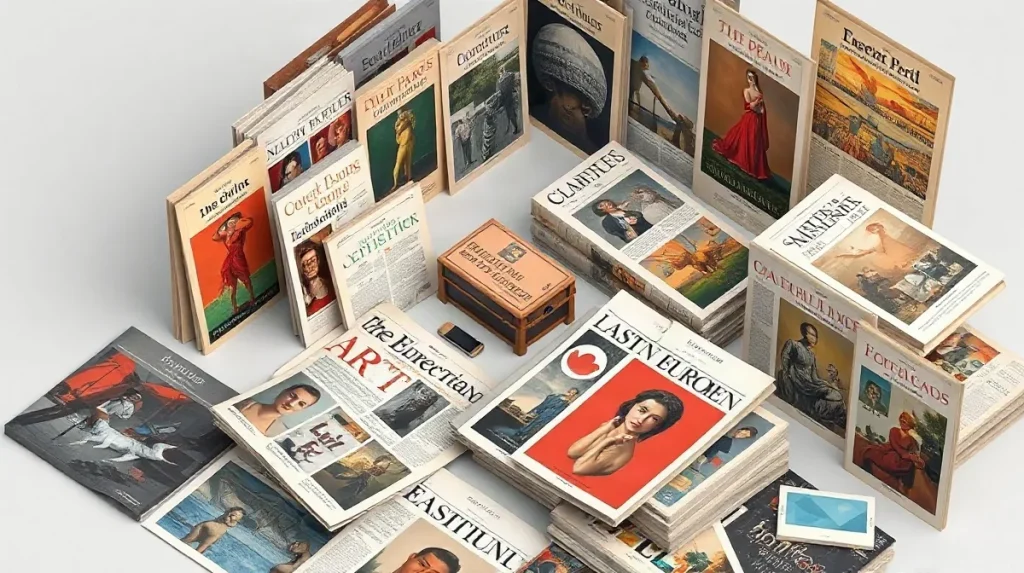
The press has long played a pivotal role in capturing and conveying the dynamic evolution of Eastern European art movements. Through critical reviews, exhibition coverage, and artist interviews, journalists document the shifting aesthetics and cultural contexts that define this vibrant region’s artistic output. By bridging local creativity with global audiences, the press helps shape how these movements are understood and appreciated worldwide.
From the post-Soviet avant-garde to contemporary multimedia experiments, Eastern European art movements have often reflected complex historical and social narratives. The press not only reports on these developments but also interprets their significance, providing insight into how artists respond to political change, identity, and tradition. This ongoing documentation ensures that the rich diversity of Eastern European art continues to gain recognition and influence far beyond its geographic origins.
| Medium | Reach | Typical Content | Limitations |
|---|---|---|---|
| Print Magazines | Regional (100,000+ readers) | In-depth critiques, artist interviews | Declining budgets, slower dissemination |
| Online Platforms | Global (millions monthly) | Virtual tours, multimedia features | Digital misinformation, variable quality |
| Social Media | Global, immediate | Artist exposure, event announcements | Short format limits depth, authenticity issues |
| Documentary Films | Niche audiences | Historical context, artist profiles | High production costs, limited distribution |
| Academic Books | Specialized readership | Scholarly analysis, historical documentation | Limited accessibility, longer publishing cycles |
- 30% Eastern European art press content translated into English
- 200 Journalists attending the 2026 Eastern European Art Fair in Berlin
- 60 Years since the Czech New Wave art movement’s inception (2026 anniversary)
How does the press highlight key Eastern European artists and movements?
Key Publications
The press highlights key Eastern European artists and movements through detailed scholarly publications that trace the evolution of avant-garde and contemporary art. Amy Bryzge’s 2017 book Performance Art in Eastern Europe from the 1960s, published by Manchester University Press, serves as a significant academic resource, focusing on experimental performance artists across several countries. Similarly, Piotr Piotrowski’s 2009 work In the Shadow of Yalta: Art and the Avant Garde in Eastern Europe offers a comprehensive survey of artistic developments from the 19th century up to the Cold War era, emphasizing political and cultural contexts. These publications provide in-depth analysis, often spanning hundreds of pages, and are frequently cited by art historians, museums, and critics worldwide.
Exhibition Press Coverage
Exhibitions organized by institutions such as the International Foundation of Russian and Eastern European Art play a vital role in amplifying artists’ public profiles through targeted press releases and media engagement. The Foundation’s 2025 New York showcase garnered extensive coverage in major Eastern European art magazines like ArtEast and Galeria, which offer critiques, artist interviews, and contextual essays. These specialized publications regularly review exhibitions, often dedicating 10-15 pages per issue to highlight emerging trends and individual artists, thereby shaping both local and international perceptions of Eastern European contemporary art.
- Amy Bryzge’s 2017 monograph, 320 pages, Manchester University Press
- Piotr Piotrowski’s 2009 publication, 450 pages
- International Foundation’s 2025 New York exhibition, featured in ArtEast and Galeria magazines
- Magazine issues dedicating up to 15 pages for exhibition reviews and artist interviews
What role does the press play in facilitating cultural exchange in Eastern European art?
International Media Partnerships
The press plays a pivotal role in facilitating cultural exchange in Eastern European art by fostering collaboration between media outlets across regional and Western European capitals. For instance, Warsaw-based magazines regularly work with art journals in Paris and London to translate and publish artist interviews and critical essays, expanding the reach of Eastern European voices. The 2026 Eastern European Art Fair held in Berlin attracted over 200 journalists, including representatives from internationally recognized publications like ArtReview and The Art Newspaper, significantly boosting the visibility of emerging and established artists from this region. This cross-border journalistic presence helps contextualize artistic movements within broader European trends and encourages dialogue among artists, curators, and collectors.
Digital Press and Virtual Access
Online platforms have become essential for disseminating Eastern European art beyond geographic limitations. ArtNet’s dedicated Eastern European section, for example, publishes monthly features and hosts virtual tours that attract a global audience, reaching tens of thousands of readers worldwide. Press coverage also highlights innovative cross-border initiatives such as the 2024 Prague-Moscow artist exchange program, which was widely reported in digital art magazines and social media, illustrating how residencies and collaborative projects are instrumental in nurturing transnational artistic networks. These virtual and digital media outlets provide sustained access to exhibitions and critical discourse, which physical galleries alone cannot achieve.
- Over 200 journalists attended the 2026 Eastern European Art Fair in Berlin, representing major international outlets.
- ArtNet’s Eastern European section publishes monthly features, maintaining global engagement with the region’s art scene.
- The Prague-Moscow artist exchange program (2024) exemplifies press-highlighted cross-border collaborations fostering cultural dialogue.
- Translation partnerships between Warsaw and Western European journals increase accessibility of Eastern European art criticism and interviews.
How does the press contribute to preserving the historical context of Eastern European art movements?
Archival Journalism
The press contributes to preserving the historical context of Eastern European art movements primarily through archival journalism that gathers and presents firsthand accounts and critiques from the past. A notable example is the 2023 special edition of the Eastern European Art Journal, which compiled interviews with artists active between the 1960s and 1980s alongside contemporaneous reviews, offering a vivid snapshot of the era’s cultural climate. These archival collections serve as invaluable resources for researchers and enthusiasts, maintaining continuity between past and present artistic dialogues. Additionally, print archives maintained by institutions such as the National Library of Poland safeguard editions of foundational art periodicals dating back to the early 20th century, ensuring ongoing public access to primary documentation that contextualizes artistic developments within their historical milieu.
Institutional Documentation
Institutional efforts also play a critical role in sustaining historical narratives of Eastern European art through press dissemination. Projects funded by organizations like the International Foundation of Russian and Eastern European Art leverage press coverage to keep these narratives in the public eye, often through documentary initiatives that highlight underrepresented movements. For instance, the 60th anniversary of the Czech New Wave art movement in 2026 received extensive press attention, framing contemporary exhibitions and works within the movement’s transformative historical framework. Such institutional engagement elevates public understanding by connecting current artistic expressions to their historical antecedents, enriching cultural appreciation and scholarly study alike.
- 2023 special edition of Eastern European Art Journal compiling 1960s–1980s artist interviews and reviews
- National Library of Poland’s print archives with early 20th-century art periodicals
- International Foundation of Russian and Eastern European Art’s documentary projects supporting press dissemination
- 2026 press coverage of the 60th anniversary of the Czech New Wave art movement
What are the limitations and challenges of the press in documenting Eastern European art?
The documentation of Eastern European art by the press faces significant limitations due to language barriers and limited accessibility. Approximately 30% of the region’s art press content is available in English, which restricts the reach of Eastern European art movements to a broader global audience. This linguistic gap often confines coverage to local or regional media outlets, while major international art publications may overlook key developments. Additionally, digital platforms hosting unauthorized reproductions and misinformation frequently distort the original context of artworks, complicating efforts to provide accurate representation and critical analysis. These challenges hinder the effective transmission of nuanced artistic narratives beyond native-speaking communities.
Language and Accessibility
The scarcity of English-language resources significantly impacts the international visibility of Eastern European art. With only about 30% of art press content translated or produced in English, major platforms like Artforum or Frieze rarely cover emerging artists from the region in depth. Furthermore, social media sites such as Instagram and VKontakte often circulate images without proper attribution or context, contributing to digital misinformation. Efforts like the International Foundation of Russian and Eastern European Art’s translation initiatives aim to increase accessibility but face budgetary constraints, typically operating with annual funds below $200,000.
Political and Economic Constraints
Political censorship remains a serious obstacle in several Eastern European countries, where coverage of politically sensitive artworks can be delayed or suppressed altogether. For example, recent exhibitions addressing state surveillance or authoritarianism have faced official restrictions, stalling timely press documentation. Moreover, since 2020, declining print media budgets—often reduced by 20-40%—have led to fewer dedicated art journalists in the region, resulting in less comprehensive coverage. Independent outlets and NGOs struggle to fill this gap, yet their resources are limited compared to state-supported media, exacerbating the challenge of thorough art journalism.
How have technological advancements impacted press documentation of Eastern European art?
Virtual and Social Media Coverage
Technological advancements have transformed the press documentation of Eastern European art by enabling immersive virtual exhibitions and real-time social media exposure. Since 2022, specialized outlets have covered virtual reality exhibitions such as the VR showcase hosted by the National Gallery of Slovenia, which attracted over 15,000 global viewers in its first month. This innovation allows audiences worldwide to experience detailed 3D representations of artworks without geographic constraints. Meanwhile, platforms like Instagram and TikTok serve as immediate press channels, with galleries like Moscow’s Winzavod reporting a 40% increase in visitor engagement after launching targeted Instagram campaigns featuring Eastern European contemporary artists. These platforms facilitate direct communication between artists and audiences, bypassing traditional media gatekeepers and accelerating the dissemination of art news and trends.
Digital Archiving
Digital archiving initiatives have significantly enhanced press access to and preservation of Eastern European art. The Museum of Modern Art in Warsaw’s digital archive, launched in 2024, provides free online access to over 5,000 high-resolution images alongside critical essays, enabling journalists to source accurate visual materials and contextual information quickly. Additionally, data analytics tools employed by press organizations help refine editorial strategies by tracking audience engagement metrics, such as average reading time and click-through rates on Eastern European art coverage, allowing for more targeted content creation. These technologies collectively contribute to a more efficient, comprehensive, and interactive documentation process, expanding the global reach and historical record of Eastern European art movements.
- National Gallery of Slovenia VR exhibition: 15,000 viewers, 2022
- Moscow Winzavod gallery Instagram engagement increase: 40%
- Museum of Modern Art in Warsaw digital archive: 5,000+ images, launched 2024
- Press data analytics: audience engagement metrics like average reading time and click-through rates
Frequently asked questions
Which publications are most influential in covering Eastern European art?
How do language barriers affect press coverage of Eastern European art?
What role do digital platforms play in the press documentation of these art movements?
Are there political challenges in documenting Eastern European art through the press?
Key takeaways
- Amy Bryzge’s 2017 book exemplifies scholarly press documenting 1960s Eastern European performance art.
- The 2026 Eastern European Art Fair in Berlin attracted 200+ journalists, boosting cultural exchange.
- Only about 30% of Eastern European art press is available in English, limiting global reach.
- Virtual reality exhibitions since 2022 have transformed press coverage with immersive experiences.
- Archival journalism preserves art history through special editions and institutional documentation.
Sources
- usahistorytimeline.com — “The Role of Art in Documenting the Reconstruction Era”
- The Artifice — “Gavazov and the Eastern European Art Scene”
- PDF — “The Role of Art in Documenting Public Health Crises (”
- leaveydesign.com — “The Role of Art in Documenting Political Unrest – Leavey Design”
- nonsuchfoundation.com — “The Role of Art in Social Movements”