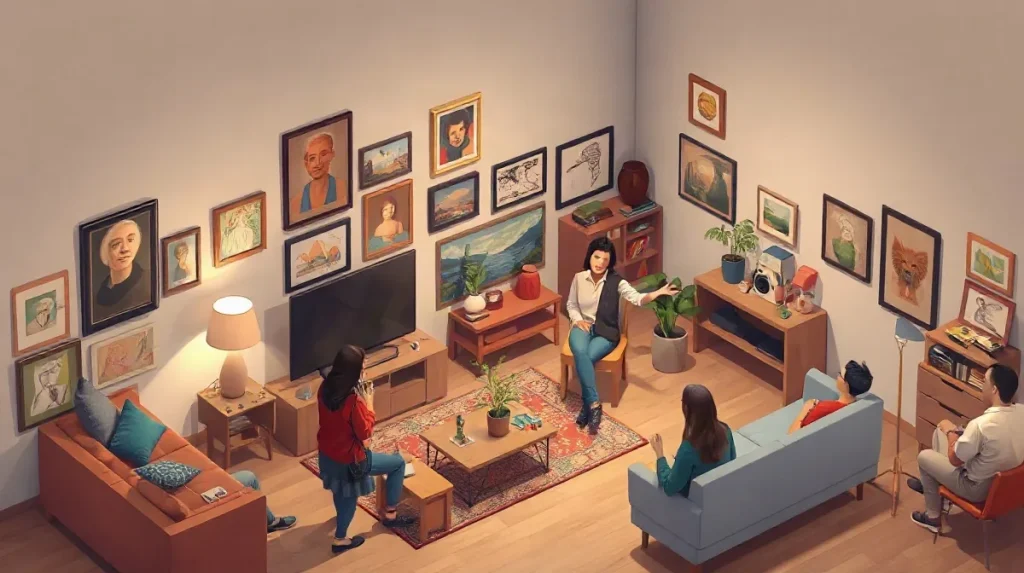
Apartment exhibitions have emerged as a vital and dynamic form of unofficial art spaces, offering an intimate alternative to traditional galleries and museums. These exhibitions transform private living spaces into creative hubs where artists can showcase experimental works, engage directly with audiences, and bypass institutional constraints. In 2026, such grassroots initiatives continue to thrive worldwide, fostering vibrant communities and redefining how art is experienced and shared.
Unlike formal art venues, apartment exhibitions embody a sense of immediacy and personal connection, often reflecting the unique character of their hosts and neighborhoods. They allow emerging and established artists alike to present projects that might not fit conventional exhibition formats, encouraging innovation and dialogue. This primer explores the significance, challenges, and enduring appeal of apartment exhibitions as a crucial component of contemporary art culture beyond official channels.
| Criteria | Apartment Exhibitions | Traditional Galleries |
|---|---|---|
| Space | Private living area, limited capacity | Dedicated commercial space, larger capacity |
| Access | Informal, invitation or word-of-mouth | Public, advertised widely |
| Artworks | Experimental, minimal, ephemeral | Varied, often commercial |
| Regulations | Residential zoning constraints | Commercial zoning compliance |
| Community Role | Close-knit, social engagement | Broader, market-driven audience |
| Funding | Volunteer-based, low budget | Institutional or commercial funding |
- 10-30 visitors Typical maximum visitors accommodated comfortably in an apartment exhibition
- 1960s–1980s Period when Eastern European unofficial art spaces flourished under restrictive regimes
- 5 decades Span of George Ciscle’s documented unofficial art contributions in Baltimore
- $0-$10 Typical donation or entry range for many apartment exhibitions to cover minimal costs
What defines an apartment exhibition compared to traditional galleries?
Setting and atmosphere
Apartment exhibitions are defined primarily by their location within private living spaces rather than traditional commercial galleries, creating an intimate and informal environment. For example, Kea de Buretel’s 2026 “Musik” series took place inside a Bushwick loft that combines residential and industrial elements, diverging from the typical white-cube gallery model. Visitors might walk through a host’s living room or kitchen to reach the exhibit, blending everyday domestic spaces with the art display. This multi-purpose use contrasts with strict gallery layouts, where walls are optimized for lighting and viewing. The absence of formal exhibition infrastructure often means lower overhead costs—entry or participation fees can range from $0 to under $20—making these shows more accessible for emerging artists and audiences alike.
Artist-audience interaction
Unlike traditional galleries where spectator movement is generally linear and regulated, apartment exhibitions encourage relaxed, spontaneous engagement between artists and visitors. The setting allows for direct conversations in casual settings, such as around a kitchen table or in a living room corner, fostering community connections and immediate feedback. This proximity often leads to more dynamic exchanges, as seen in New York’s Teen Party space, where attendees mingle freely in shared domestic spaces. Such exhibitions typically bypass commercial pressures, emphasizing creative experimentation and social interaction over sales metrics, with artworks frequently priced below $1,000 to reflect this ethos.
- Location: Private residence or loft instead of commercial gallery
- Cost: Entry or participation fees typically under $20
- Artwork price range: Often below $1,000 to maintain accessibility
- Spatial use: Multi-purpose living areas, e.g., kitchens, living rooms
- Visitor flow: Informal and non-linear movement through the space
How do apartment exhibitions foster community and alternative artistic practices?
Social dynamics
Apartment exhibitions foster community by transforming private living spaces into social hubs where visitors engage beyond conventional gallery boundaries. For example, events at Teen Party in New York encourage guests to linger in areas like kitchens or balconies, extending interactions beyond the formal exhibition room. These weather-permitting gatherings often last several hours, with attendance typically ranging from 30 to 50 people, creating a relaxed atmosphere conducive to dialogue and connection. This approach echoes the community-driven programming seen in Eastern Europe during the Gorbachev era, where unofficial art spaces hosted panel discussions and educational talks that contributed to social openness. Such events not only showcase art but also cultivate shared experiences, strengthening local networks and fostering inclusivity within the art community.
Artistic innovation
Apartment exhibitions provide artists with opportunities to experiment with unconventional and ephemeral works that challenge traditional art forms. For instance, Kea de Buretel’s 2026 show “Musik” in a Bushwick loft featured minimalistic wall sculptures resembling everyday apartment fixtures like rubber door bumpers, blurring the line between art and domestic objects. This flexibility allows artists to explore alternative materials and formats without the constraints of commercial gallery expectations or high rental costs, which in New York can range from $3,000 to $8,000 per month for small commercial spaces. By leveraging the intimacy of home environments, artists can present site-specific installations and interactive pieces that invite viewers to reconsider the boundaries of art and everyday life.
- Visitor capacity in apartment shows: typically 30–50 people per event
- New York commercial gallery rents: approximately $3,000–$8,000/month for small spaces
- Historical roots: Gorbachev-era unofficial art spaces (mid-1980s to early 1990s)
- Notable example: Kea de Buretel’s 2026 “Musik” exhibition in Bushwick loft
What are notable examples of apartment exhibitions influencing local art scenes?
New York’s apartment galleries
Apartment exhibitions in New York, such as the Teen Party gallery, have influenced the local art scene by merging domestic and exhibition environments, creating an intimate and dynamic atmosphere that traditional galleries often lack. At Teen Party, visitors navigate through a 90-square-meter living space, including the kitchen and lounge areas, before reaching the back room dedicated to art. This layout fosters spontaneous social interactions among artists and audiences, contributing to a unique energy that energizes both creation and reception. For example, the 2026 exhibition “Musik” by Kea de Buretel featured minimalist sculptures resembling everyday apartment fixtures, which blurred the boundaries between art and lived experience. The affordability of hosting exhibitions in such spaces—operating costs under $2,000 per month compared to typical commercial gallery rents exceeding $10,000—makes these venues accessible to emerging artists and curators, promoting experimental practices and community engagement.
Baltimore’s unofficial art legacy
Baltimore’s unofficial art scene owes much to the archives and initiatives associated with artist George Ciscle, whose documentation covers over five decades of apartment and alternative exhibitions that contributed to the city’s cultural openness during and after the Soviet era. These unofficial spaces, often functioning under informal legal statuses, provided a refuge for avant-garde artists and educational programs during restrictive periods, notably from the 1970s through the 1990s. They catalyzed a local art ecosystem that resisted institutional constraints and encouraged dialogue about social and political change. Key factors in these spaces’ influence include the longevity of some exhibitions—lasting several months instead of days—and their integration of panel discussions and film screenings, which broadened audience engagement beyond visual art alone. The George Ciscle archives, maintained by The Contemporary institution in Baltimore, highlight how these underground exhibitions helped shape a resilient and diverse artistic community that persists today.
- Exhibition space size: 90 m² in New York’s Teen Party apartment gallery
- Monthly operating cost: Under $2,000 for apartment galleries vs. over $10,000 for commercial galleries
- Duration of exhibitions: Several months common in Baltimore’s unofficial spaces vs. typical days in commercial galleries
- Programming diversity: Panel discussions and film screenings included in Baltimore’s unofficial exhibitions
- Archival coverage: 50 years documented by George Ciscle archives in Baltimore
What limitations or challenges do apartment exhibitions face?
Capacity and regulation
Apartment exhibitions face significant space constraints that directly limit the number of visitors they can accommodate. A typical apartment gallery comfortably hosts between 10 and 30 guests at a time, depending on the layout and safety considerations. This capacity restriction often shapes the intimacy and exclusivity of the viewing experience but can hinder larger audience engagement. Additionally, residential zoning laws and building regulations impose strict limits on public access and commercial activities within private dwellings. For example, many city ordinances restrict gatherings exceeding 25 people in residential buildings without special permits, and fire safety codes often prevent the use of exits and corridors for public events beyond a certain scale. These legal frameworks require apartment exhibitors to carefully navigate compliance to avoid fines or forced closures.
Operational sustainability
Without formal funding or institutional backing, apartment exhibitions rely heavily on volunteer labor and personal resources, which constrains both the scale and duration of shows. Many such projects operate on budgets under $1,000 per exhibition cycle, covering materials, promotion, and modest artist fees. This financial limitation often results in shorter exhibitions, typically lasting from one to three weeks, as maintaining continuous programming is challenging without steady income. Moreover, the absence of professional infrastructure—such as climate control, security systems, and lighting equipment like the ARRI Skypanel S60-C—can affect the quality and preservation of artworks. Organizers must balance these constraints while fostering community engagement and alternative artistic expression in unconventional spaces.
- Visitor limit: 10–30 people per showing
- Maximum public gathering in many residential zones: 25 people without permit
- Typical exhibition budget: under $1,000
- Exhibition duration range: 7–21 days
- Standard professional lighting model often absent: ARRI Skypanel S60-C
How do apartment exhibitions relate to broader socio-political contexts?
Historical precedents
Apartment exhibitions in Eastern Europe during the 1960s to 1980s were directly shaped by the restrictive political regimes that limited official cultural expression, making these unofficial spaces critical sites for alternative artistic voices. For example, the Photo Manifesto program in the late 1980s, supported by emerging liberal policies under Gorbachev, combined exhibitions with educational talks and film screenings to push the boundaries of creative freedom. These events often took place in private apartments or informal venues, bypassing state-controlled galleries where censorship was strict. In Moscow and Budapest, such exhibitions typically lasted between one and two weeks and were organized by collectives who paid modest rents, often under $50 monthly, for their apartments, turning them into hubs of underground culture. The constrained environment fostered a sense of community and resistance, with artists experimenting in photography, conceptual art, and performance, thereby creating alternative narratives outside official Soviet art endorsed by Socialist Realism.
Contemporary political impact
In 2026, apartment exhibitions continue to reflect and respond to the socio-political climate, particularly in Eastern Europe where governments like Hungary’s under Viktor Orbán have adopted illiberal policies affecting cultural spaces. These exhibitions resist the dominance of commercial galleries by emphasizing communal engagement and alternative artistic narratives rather than market-driven success, often charging no entrance fee or modest contributions under 2,000 HUF (approximately $6). The affordability and informality of these spaces contrast sharply with mainstream galleries in cities like Budapest or Warsaw, where average exhibition costs can exceed $5,000 for venue rental and promotion. Additionally, unofficial venues provide artists a platform to critique or circumvent restrictive cultural laws and funding cuts imposed since 2010, maintaining a vital cultural dialogue despite political pressures. This grassroots approach allows apartment exhibitions to serve as both artistic incubators and subtle forms of socio-political commentary, sustaining diverse creative expressions outside sanctioned institutional frameworks.
- Photo Manifesto program: 1980s, lasted 7–14 days, organized in private apartments
- Monthly rent for exhibition apartments in 1980s Eastern Europe: under $50
- Entrance fee for contemporary apartment exhibitions in Hungary: usually under 2,000 HUF ($6)
- Mainstream gallery exhibition costs in Budapest/Warsaw: often over $5,000 per show
- Orbán government cultural policy impact period: since 2010
Frequently asked questions
What types of artworks are typically shown in apartment exhibitions?
Are apartment exhibitions legal in residential areas?
How do apartment exhibitions impact local art communities?
Can apartment exhibitions replace traditional galleries?
Key takeaways
- Apartment exhibitions transform living spaces into intimate art venues
- They enable experimental and community-centered art beyond commercial galleries
- Regulatory and spatial limitations restrict large-scale public access
- Historical unofficial spaces influenced post-Soviet cultural openness
- Current political climates affect unofficial art venue viability
Sources
- artsy.net — “Running a Gallery in My Apartment Showed Me a Different Side of the Art World”
- news.artnet.com — “The Best New Galleries in New York Are in Someone’s Apartment”
- georgeciscle.com — “The Contemporary — George Ciscle Explore the rich legacy of George Ciscle through curated archives of art exhibitions, educational insights, and significant con”
- Downtown Phoenix Arts Guide — “First Friday Art Walk”
- artforum.com — “Susan Snodgrass on “Multiple Realities:Experimental Art in the Eastern Bloc,1960s”
Topic guide: Exhibitions: The Complete Guide